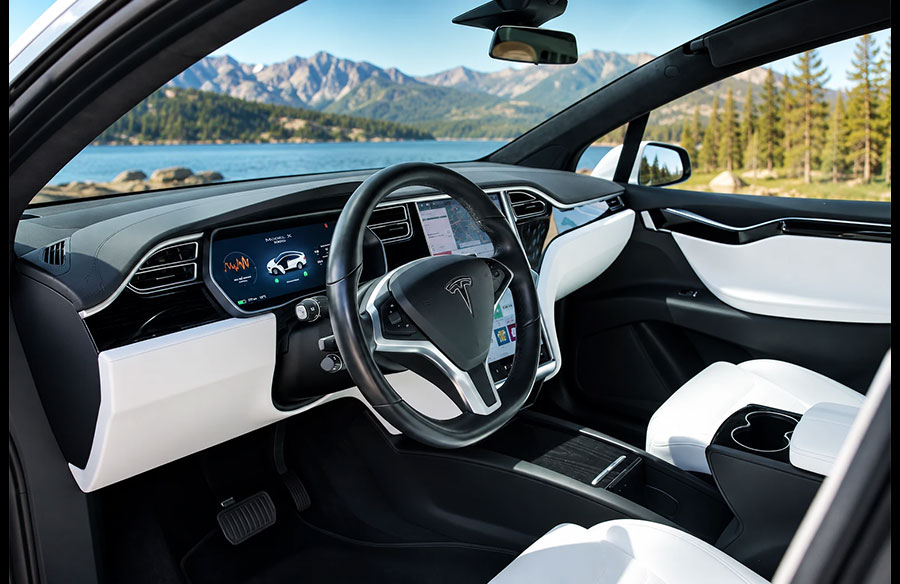
Tesla is now the most available electric vehicle in Miami’s rental market. Every major agency at MIA carries at least the Model 3 or Model Y, Turo hosts hundreds of private listings, and delivery-only operators will drop a fully charged Tesla at your hotel door for under $100 a day. The appeal is obvious: no gas costs, Autopilot on the highway, and a tech-forward driving experience that feels current in a city that values current. But between the listing price and the actual experience, there is a gap filled with details that first-time EV renters rarely anticipate. Charging logistics, range anxiety on longer trips, Supercharger locations (and the ones that are inside paid parking garages), and the real cost of electricity versus gasoline all affect the equation. If you want to rent tesla Miami options and compare rates across providers, Rent.Cars aggregates listings by model, daily price, and pickup location in one view. This guide covers every practical detail you need to budget accurately and avoid the surprises that turn a smart rental choice into a stressful one.
Key Takeaways
- Tesla Model 3 rentals in Miami start at $45 to $89 per day depending on the provider; Model Y runs $70 to $115; Model X and Model S sit at $97 to $200+; the Cybertruck lists at $85 to $228 on peer-to-peer platforms
- Charging a Tesla at a Miami Supercharger costs roughly $0.30 to $0.45 per kWh at peak hours and as low as $0.17/kWh during off-peak (before 10 AM and after 8 PM)
- A full Supercharger session from 10% to 80% takes about 25 to 40 minutes and costs $8 to $18 depending on battery size and time of day
- Miami-Dade County has over a dozen Tesla Supercharger locations, including stations in Brickell (SW 7th Street, 13 stalls), South Dixie Highway (12 stalls), and Miami Beach (Pennsylvania Avenue garage, 10 stalls)
- Tesla’s real-world range in Miami’s heat is 10 to 15 percent lower than the EPA estimate; a Model 3 Long Range rated at 358 miles will deliver closer to 300 to 320 miles with AC running
- The drive to Key West (160 miles one way) is possible in any Long Range Tesla model without charging, but the return requires a Supercharger stop in Florida City or Homestead; there are no Superchargers in the Keys
- Most rental Teslas arrive with 80 to 100 percent charge and must be returned at 80% or above; failing to do so triggers a $25 to $50 recharging fee from the provider
 What a Tesla Rental Actually Costs in Miami
The headline daily rate for a Tesla rental varies significantly by model, provider type, and season. Here is a realistic breakdown of what you will pay across the main channels.
| Model | Major Agency (Hertz/Sixt) | Turo (Peer-to-Peer) | Delivery Operator | Weekly Average |
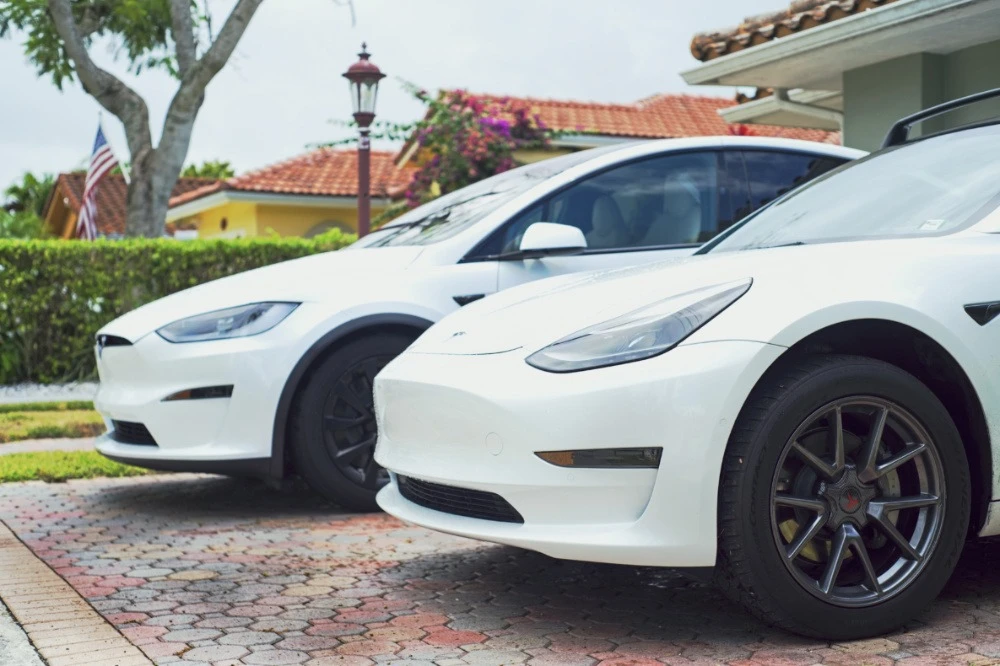
| Model 3 | $45-80/day | $67-135/day | $89-100/day | $315-550 |
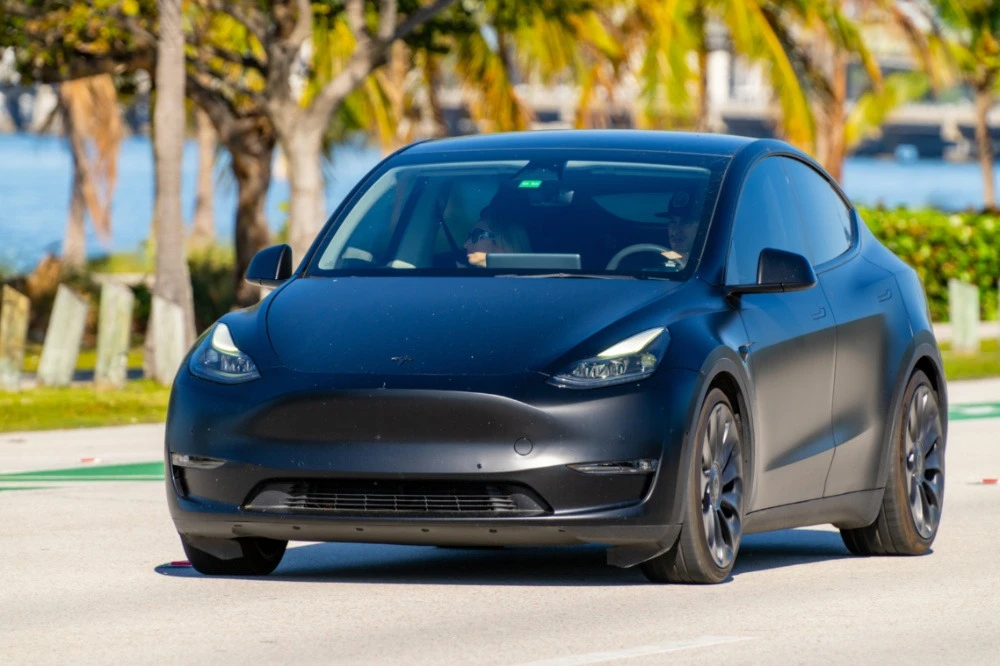
| Model Y | $55-100/day | $74-115/day | $99-120/day | $385-650 |
| Model X | $88-130/day | $97-200/day | N/A most providers | $550-900 |
| Model S | $100-200/day | $120-293/day | N/A most providers | $700-1,400 |
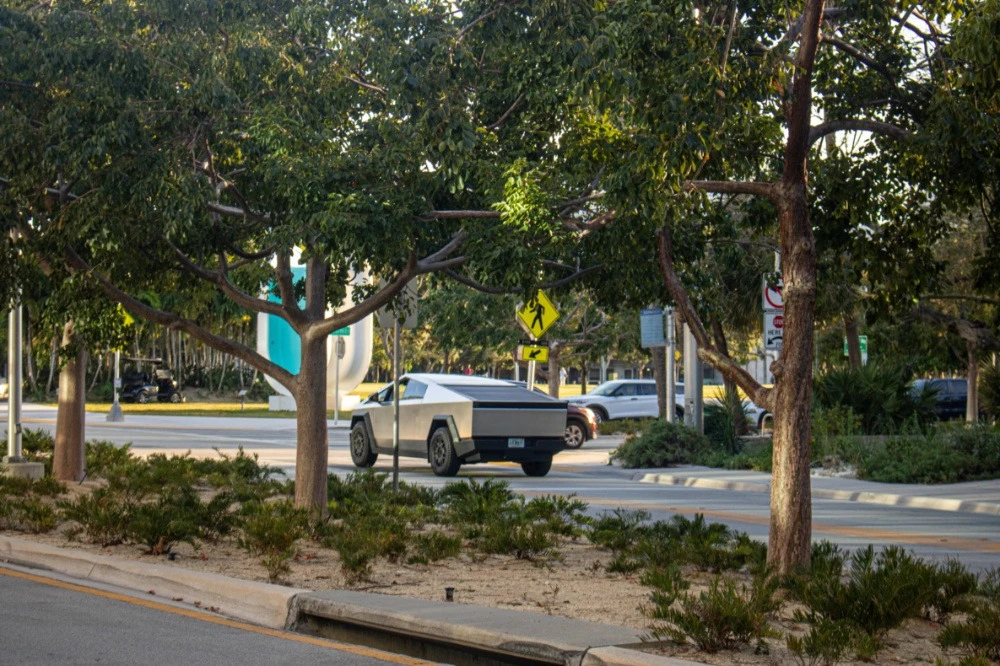
| Cybertruck | N/A at agencies | $85-228/day | Varies | $600-1,500 |
Major agencies tend to offer the lowest daily rates but charge for extras that close the gap: $13 to $15 per day for insurance waiver, $5 per day for SunPass, and sometimes a flat fee if you return the car below the required charge level. Turo rates include the host’s pricing plus a 15 to 35 percent guest service fee that is added at checkout. Delivery operators have a transparent base rate but charge a $100 to $120 delivery fee (often waived for rentals of 7+ days).
The hidden cost advantage of a Tesla over a gas rental is fuel. A week of typical Miami driving (150 to 250 miles) costs $12 to $25 in Supercharger fees, compared to $50 to $80 in gasoline for a comparable mid-size sedan. Over a five-day rental, the electricity savings offset roughly one full day’s rental rate.
Charging in Miami — Where, How Long, and How Much
This is where most first-time Tesla renters get nervous, and the nervousness is understandable but mostly unnecessary if you know the layout.
Supercharger Locations in Miami-Dade
Miami has a solid Supercharger network. The key stations are:
Brickell (SW 7th Street) has 13 V3 stalls rated at up to 250 kW, available 24/7 in a parking garage near downtown. This is the most convenient station for anyone staying in Brickell, downtown, or Coconut Grove.
South Dixie Highway (8312 South Dixie Hwy) has 12 stalls at up to 72 kW in a parking garage near Dadeland. Free parking while charging. Good for trips headed south toward the Keys or Homestead.
Miami Beach (1661 Pennsylvania Avenue) has 10 stalls inside the municipal parking garage near Lincoln Road and the New World Center. This is the only Supercharger on the beach side and gets busy on weekends. Parking garage rates apply.
Coral Way has a newer V3 station that serves the Coral Gables and Little Havana area. Kendall has a station near the Turnpike for trips headed west toward Naples.
Additional stations exist in Doral, Homestead, and along the Turnpike corridor heading north toward Fort Lauderdale and Palm Beach.
How Long a Charge Takes
At a V3 Supercharger (250 kW max), a Model 3 or Model Y charges from 10% to 80% in about 25 to 30 minutes. From 20% to 80% takes closer to 20 to 25 minutes. The last 20% (80 to 100%) slows dramatically and can take another 20 to 30 minutes, which is why Tesla recommends charging to 80% for daily driving.
At an older V2 station (72 kW), the same 10-to-80% charge takes 45 to 60 minutes. The South Dixie Highway station is a V2, so plan accordingly.
 What It Costs
Supercharger pricing in Miami is time-of-use based. Peak hours (roughly 10 AM to 8 PM) charge $0.30 to $0.45 per kWh. Off-peak (before 10 AM and after 8 PM) can drop to $0.17 per kWh. A typical 50 kWh session (roughly 20% to 80% on a Model 3 Long Range) costs $8.50 to $15 at off-peak and $15 to $22 at peak.
For comparison: filling a Toyota Camry from empty costs about $50 to $55 at current Miami gas prices. A full week of Tesla charging costs less than a single Camry fill-up.
Range Reality in Miami’s Heat
Tesla’s EPA range ratings are tested under ideal conditions, and Miami’s climate is not ideal conditions. The combination of heat, air conditioning load, and stop-and-go city driving reduces real-world range by 10 to 15 percent on a typical day and up to 20 percent in extreme summer heat.
| Model | EPA Range | Real-World Miami (AC on) | City Driving | Highway 70 mph |
| Model 3 Standard Range | 272 miles | 230-245 miles | 240-260 miles | 210-230 miles |
| Model 3 Long Range | 358 miles | 300-320 miles | 310-340 miles | 280-310 miles |
| Model Y Long Range | 310 miles | 260-280 miles | 270-295 miles | 245-270 miles |
| Model X Long Range | 348 miles | 290-310 miles | 300-325 miles | 270-295 miles |
| Model S Long Range | 405 miles | 340-365 miles | 350-385 miles | 315-345 miles |
For city driving in Miami (South Beach, Brickell, Wynwood, Coconut Grove), any Tesla model provides more than enough range for a full day without charging. A Model 3 Long Range can handle two to three days of city-only driving on a single charge.
The issue arises on longer trips. The drive to Key West is 160 miles one way. A Model 3 Long Range with a full charge can make it there, but it will arrive with roughly 40 to 50 percent battery remaining. The return trip requires a charge. The problem is that there are no Tesla Superchargers anywhere in the Florida Keys. The nearest Supercharger south of Miami is in Florida City/Homestead, about 30 miles south of downtown Miami and 130 miles north of Key West. You must charge there on the return, adding 25 to 40 minutes to the trip. Plan for it.
The Keys Trip in a Tesla — A Detailed Breakdown
The Miami-to-Key-West drive is the most common road trip from the city, and in a Tesla it requires specific planning that a gas car does not.
Leave Miami with 100% charge. Drive to Key West (160 miles). Arrive with approximately 40 to 55% battery depending on model, speed, AC usage, and wind. Spend the day. For the return, you need at least 55 to 60% battery to reach the Homestead/Florida City Supercharger (130 miles north of Key West). If your battery is below 50% when you are ready to leave Key West, you have a problem.
The solution: charge at one of the Level 2 destination chargers in Key West. Several hotels and public lots have them, but Level 2 charging adds only 20 to 30 miles of range per hour. Topping up from 35% to 60% takes roughly 3 to 4 hours at Level 2. This is fine if you are spending the night; it is a scheduling problem if you are doing a day trip.
The practical approach for a day trip: leave Miami at 100%, drive conservatively (keep AC at 72, not 65; use cruise control at 55 to 60 mph where legal), arrive in Key West with 50%+, limit driving on the island, and leave with enough charge to reach the Florida City Supercharger. Charge for 25 minutes there, and you are home.
For the Model 3 Standard Range (272 miles EPA, 230 to 245 real-world), the Keys day trip is tight. You can make it to Key West, but the return without a long Level 2 stop is risky. If the Keys are on your itinerary, book the Long Range model.
Tesla vs. Gas Rental — The Real Cost Comparison
The full-week comparison is where the Tesla’s economics become clear.
| Cost Category | Tesla Model Y (7 days) | Toyota RAV4 (7 days) | Difference |
| Rental rate | $385-650 | $320-500 | Tesla +$65-150 |
| Fuel / charging | $15-30 | $65-95 | Tesla saves $50-65 |
| Insurance (if needed) | $70-105 | $70-105 | Even |
| Tolls (SunPass) | $20-35 | $20-35 | Even |
| Parking | Same | Same | Even |
| Total 7-day cost | $490-820 | $475-735 | Tesla +$15-85 |
The Tesla costs slightly more for the week in most scenarios, but the gap is smaller than the daily rate difference suggests because of fuel savings. For a two-week rental, the Tesla often breaks even or costs less due to compounding electricity savings.
The non-financial advantages matter too. No gas station stops (charge overnight at your hotel if it has a destination charger, or Supercharge while grabbing lunch). Autopilot on I-95 and the Turnpike reduces highway fatigue. The silent cabin is noticeably more relaxing in Miami traffic than a combustion engine idling in the heat.
 What Rental Companies Do Not Tell You
A few details that consistently surprise first-time Tesla renters in Miami.
The car arrives with 80 to 100 percent charge, and you must return it at 80 percent or higher. If you return it at 50 percent, most providers charge $25 to $50 for a recharging fee. Some Turo hosts charge $1 per percent below the required level. Check the return policy before your last drive and plan a Supercharger stop on the way back if needed. A 20-minute stop solves it.
Autopilot is included on virtually all rental Teslas, but Full Self-Driving (FSD) is not. If the listing says “Autopilot,” that means adaptive cruise control and lane centering on highways. It does not mean the car will navigate city streets autonomously. FSD is an additional subscription ($99/month on Tesla’s end) and is rarely activated on rental vehicles.
The frunk (front trunk) is a useful extra storage space that most renters forget exists. It holds a carry-on suitcase or a day bag and keeps valuables out of sight. Use it.
Regenerative braking feels different from a gas car. When you lift off the accelerator, the Tesla decelerates noticeably (one-pedal driving). This is efficient and normal, but it startles first-time EV drivers, especially in Miami stop-and-go traffic. Give yourself 10 minutes to adjust before merging onto I-95.
The glass roof on Model 3 and Model Y lets in significant heat and UV. Tesla’s glass has a UV coating, but in direct Miami sun, the cabin temperature can reach 130°F+ when parked. Always use the climate control “keep” feature when leaving the car, or pre-condition the cabin from the Tesla app before returning to it.
Miami Beach Supercharger (Pennsylvania Avenue garage) charges parking garage rates on top of the Supercharger cost. If the garage is $3 per hour and your charge takes 30 minutes, you still pay for the full hour. The Brickell station (SW 7th Street) and South Dixie Highway station do not have this issue.
FAQ
How much does it cost to rent a Tesla in Miami per day?
Model 3 starts at $45 to $89 per day depending on provider. Model Y runs $55 to $115. Model X and S range from $88 to $200+. The Cybertruck lists at $85 to $228 on Turo. Major agencies (Hertz, Sixt) tend to have the lowest base rates; peer-to-peer platforms add service fees of 15 to 35 percent on top of the listed price.
Can I drive a Tesla rental to Key West?
Yes, with planning. Any Long Range Tesla model can make the 160-mile drive on a full charge. The critical detail: there are no Superchargers in the Keys. You must charge at the Florida City/Homestead station on the way back (130 miles north of Key West). Budget 25 to 40 minutes for that stop. Standard Range models make the trip tight and are not recommended for a Key West day trip.
Where do I charge a Tesla rental in Miami?
Miami-Dade has over a dozen Supercharger stations. The most convenient are Brickell (SW 7th Street, 13 stalls), South Dixie Highway near Dadeland (12 stalls), and Miami Beach at the Pennsylvania Avenue garage (10 stalls). The Tesla navigation system shows all nearby Superchargers in real time, including current availability and estimated wait time.
Do I need to return the Tesla fully charged?
Most providers require 80 percent or above in return. Falling below triggers a recharging fee of $25 to $50. Some Turo hosts are stricter. Check the return policy at pickup and plan a 15 to 20 minute Supercharger stop before drop-off if needed. The Brickell station is the most convenient for MIA airport returns.
Is Autopilot included in Tesla rentals?
Basic Autopilot (adaptive cruise control and lane centering on highways) is included on virtually all rental Teslas. Full Self-Driving (FSD), which adds navigation on autopilot, auto lane changes, and city street driving, is not included on most rentals and requires a separate subscription. Do not assume FSD is active; test Autopilot on a low-traffic highway first to understand its behavior.
A Tesla rental in Miami makes more financial sense than most people expect, especially over a full week. The fuel savings are real, the Supercharger network in South Florida is dense enough for city and suburban driving, and the technology makes Miami’s congested highways noticeably less tiring. The one scenario that demands extra planning is the Keys trip, where the absence of Superchargers south of Homestead forces a mandatory stop on the return. To account for that, charge the car the night before drop-off, and the rest is a quieter, cheaper, and arguably more enjoyable version of the standard Miami rental experience.