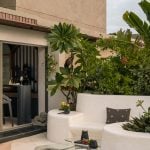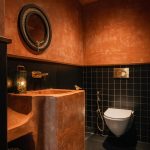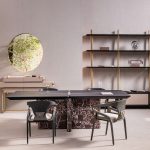
For this Ahmedabad home, the terrace was never just an outdoor appendage. It was the family’s unofficial host, the first to welcome and the last to wind down. Evenings here had a way of stretching. Birthdays dissolved into laughter, casual dinners turned into unplanned gatherings and the lines between occasion and everyday life blurred effortlessly. As Shweta puts it, “We didn’t want a ‘new’ space. We wanted the same stories to unfold, just a little more beautifully.”
Project Name: The Lime Lounge
Studio Name: SPACE KARMA Design Studio
Location: Ahmedabad, Gujarat
Month & Year of Completion: 2025
Project Area: 2200 sq ft
Photography Credits: Murtaza Gandhi
Stylist: Saniya Tadha and
Furniture: Yellow Brick Route
The brief, therefore, wasn’t about reinvention. It was about translation. Carrying forward the emotional weight of the terrace while refining how it works. At the same time, it came with a quiet responsibility: to design consciously, choosing materials and methods that would endure rather than simply impress.
Interestingly, the homeowners brought two distinct design sensibilities to the table. One leaned toward restraint – clean, modern, minimal. The other found comfort in layers, textures and expressive details. Instead of negotiating between the two, the design embraces this contrast. “Why dilute personality when you can design with it?” Shweta adds. And so, the space becomes a conversation between opposites – calm and vibrant, subtle and rich.
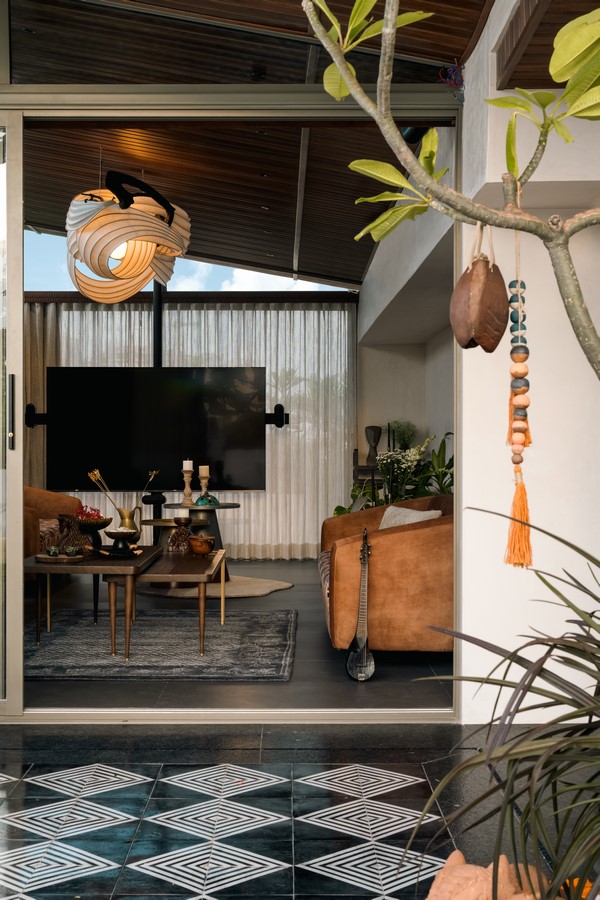
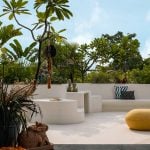
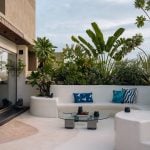
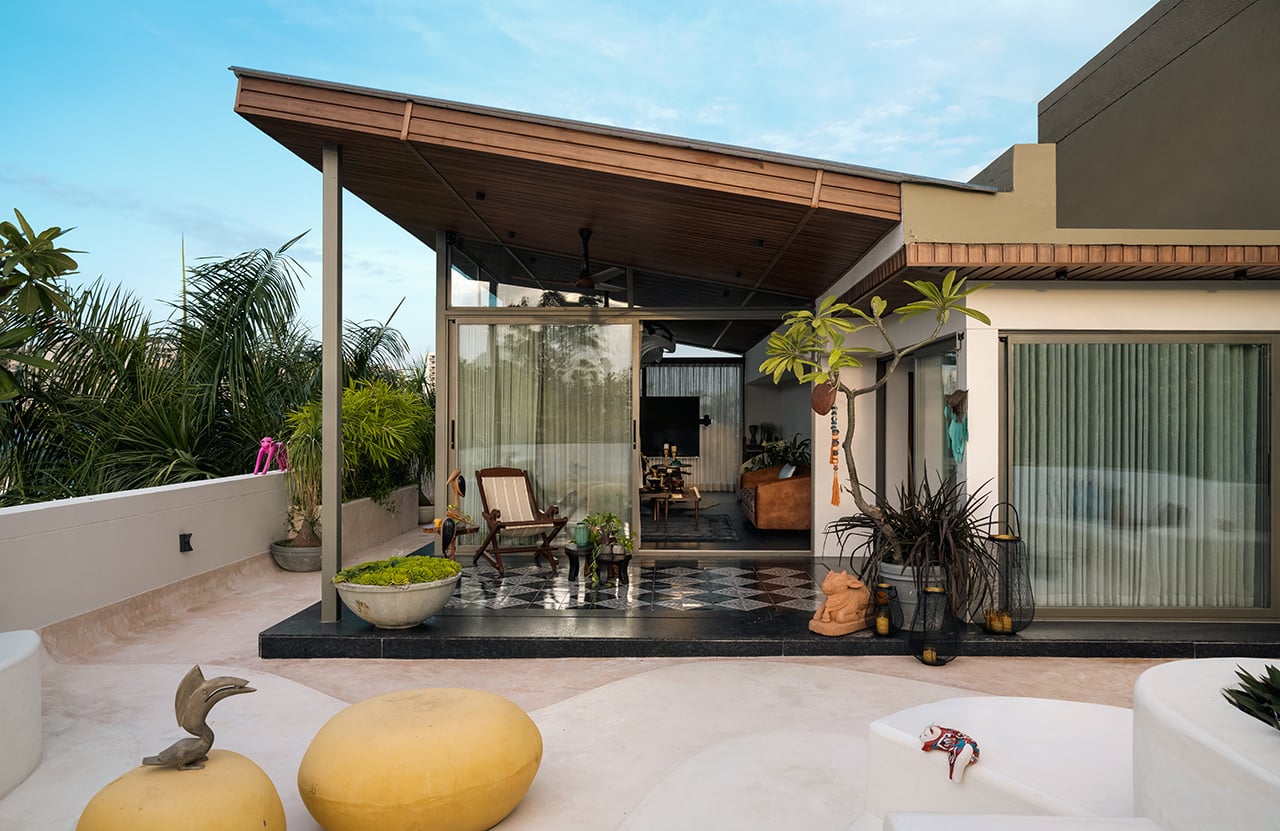
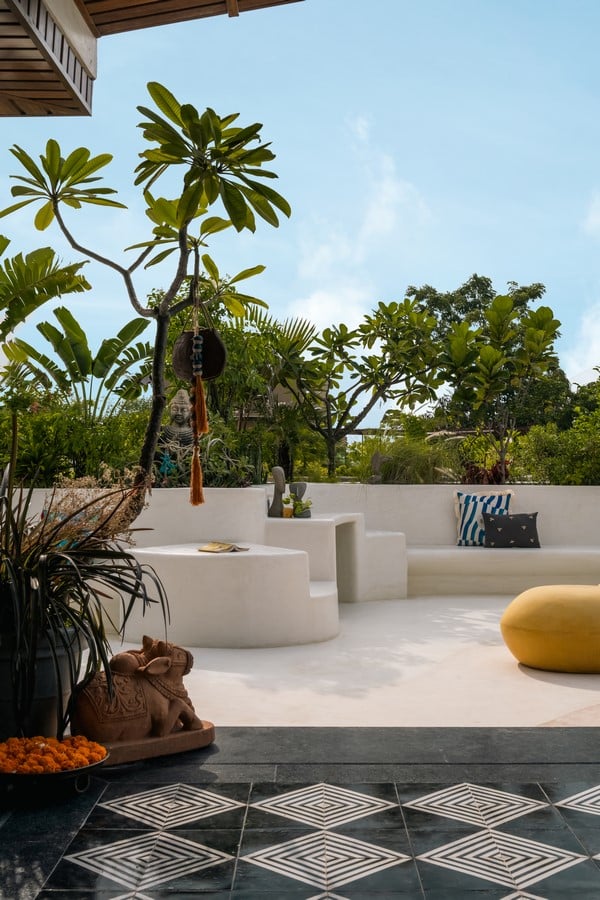
Originally, the terrace existed as a singular, uninterrupted plane. The intervention began not by dividing it, but by gently choreographing it. The openness was retained, yet shaped into a series of experiential pockets. Fluid zones that hold different moods without ever feeling disconnected. An open terrace, semi-open spill-out, an enclosed lounge, a lively bar and supporting functions like a pantry and powder room now coexist within this framework, offering multiple settings for the same celebration to evolve.
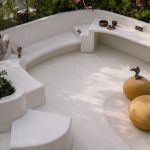
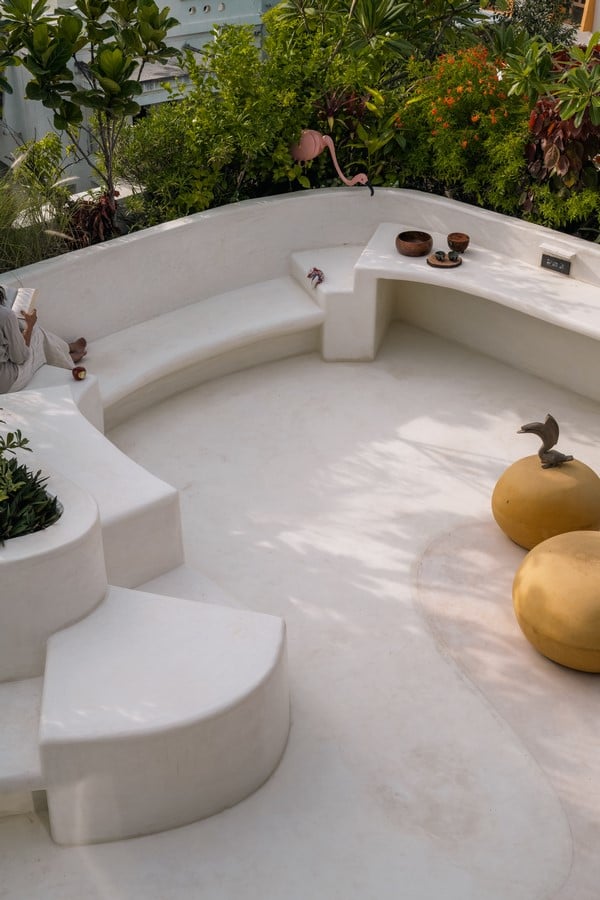
At the core of the project lies a material that predates most contemporary solutions – Lime. Known locally as chuna, and traditionally crafted as gutai in Rajasthan, it is as much a process as it is a finish. Prepared on-site by skilled artisans using a mix of jaggery, fenugreek, haldi and other natural binders, it is applied in layers that are hand-worked to achieve strength, smoothness and breathability.
But lime does more than complete a surface. It alters how a space feels. In Ahmedabad’s unforgiving summers, where most flooring materials absorb and radiate heat, lime remains unexpectedly cool & comfortable even under bare feet. It breathes, self-heals and matures with time, gradually enhancing its cooling properties. “It’s one of those rare materials that gives back more than it takes,” Shweta notes – a quiet but powerful contributor to the terrace’s microclimate.
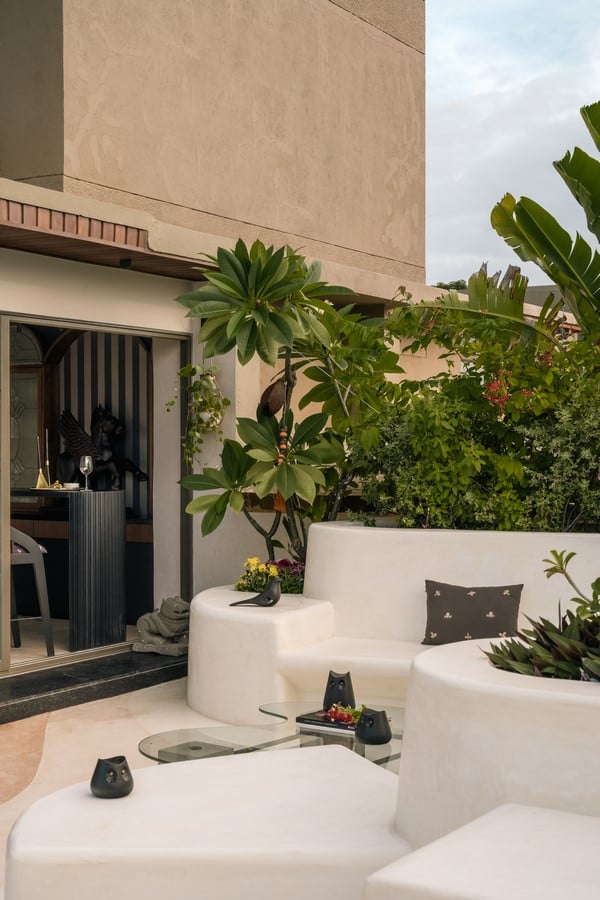
 The spatial experience is further enriched through gentle level variations that are as intuitive as they are functional. These shifts aren’t merely visual cues but thoughtful interventions shaped around how the space is actually used. One can settle comfortably on a step, while the slightly higher level beside it becomes a natural surface to rest a drink, a platter, or anything within easy reach. In moments of gathering – especially the lively, unstructured ones – this simple gesture quietly eliminates the need for additional tables or furniture, allowing the space to remain open, fluid, and effortlessly accommodating.
The existing greens, rather than being replaced, were reimagined. Once arranged in strict linearity, they now soften into curves, wrapping around seating pockets and blurring edges. This biophilic layer adds a sense of ease, making the terrace feel equally at home under the afternoon sun or an evening sky.
As one moves inward, the mood shifts.
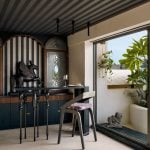
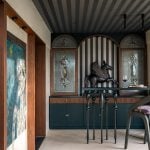
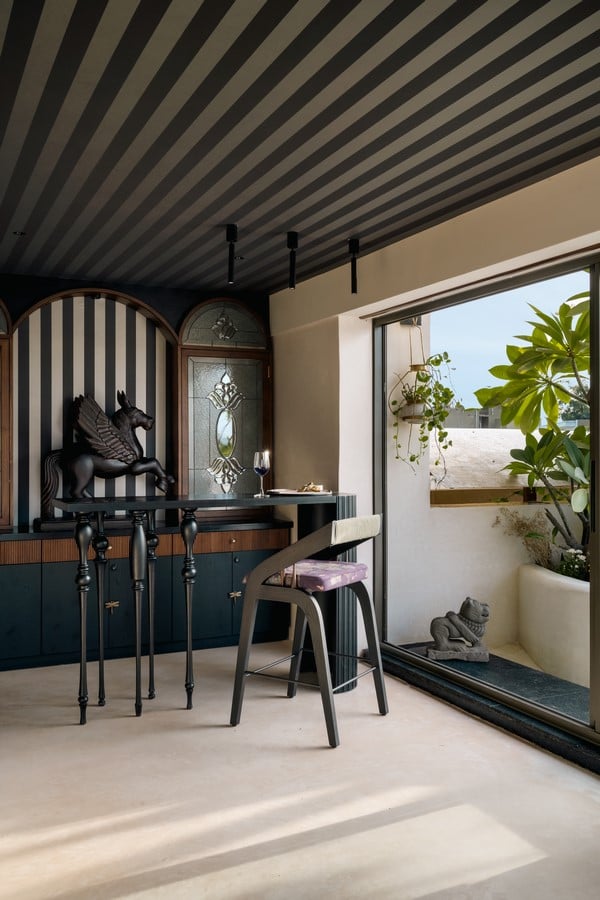
The bar unfolds as the most expressive corner of the space — richly layered, tactile, and unapashedly maximal. It stands in deliberate contrast to the terrace’s breezy calm, offering a more immersive, high-energy setting. Conceived as a social anchor, its layout is designed for interaction, keeping everything within easy reach so the host remains part of the moment rather than apart from it.
 A key aspect of this zone is its collaborative making. The bar cabinet, with its intricate stained glass detailing, was developed closely with the client’s furniture practice, Yellow Brick Route, infusing the space with a sense of vintage nostalgia. The customised bar table, featuring Egyptian-style inlays and crafted through the same dialogue, brings in a layer of richness and artistry, making the bar not just a functional hub, but a statement in craftsmanship and co-creation.
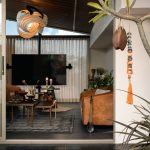
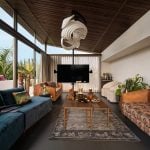
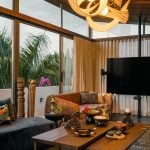
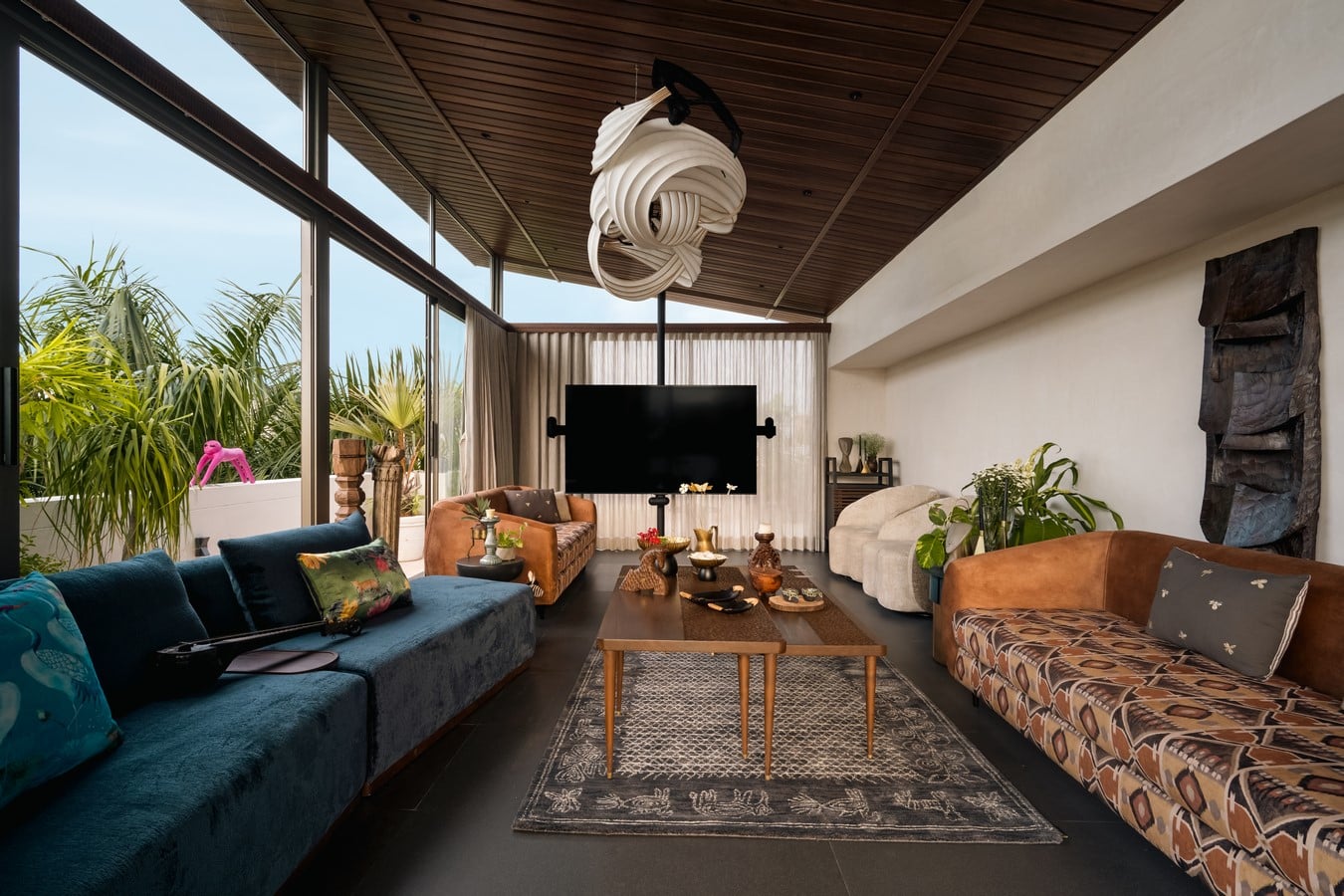
Beyond the energy of the bar lies the enclosed lounge – a more introspective, intimate setting. Here, the palette deepens. Lighter walls hold the space together, while a saturated floor grounds it. A rust-toned sofa introduces warmth, and handcrafted Naga panels lend a raw, textural edge. Each piece of furniture, again developed collaboratively, feels intentional and deeply personal. Nothing is overly coordinated, yet everything belongs.
The architecture of the room plays its part quietly. A sloping roof opens up the volume, preventing the darker tones from ever feeling heavy. The full glass façade maintains a visual dialogue with the outdoors, inviting daylight to animate the space through the day. Wooden ceilings add warmth, balancing the openness with intimacy. Even at full capacity, the room remains breathable – physically and visually.
The powder washroom, though compact, continues the larger narrative. Finished entirely in lime, it carries forward the project’s sustainable ethos. The basin counter, built through brick masonry and crafted from scratch, integrates storage and utility seamlessly. Soft, diffused lighting replaces harsh illumination, allowing the space to feel calm.
Ultimately, The Lime Lounge isn’t just about designing a place to celebrate. It’s about rethinking how celebrations inhabit space. It proves that sustainability doesn’t have to announce itself, and that good design often works in the background – shaping comfort, enabling connection and ageing gracefully over time.
Or, as Shweta sums it up best: “If a space can host a great party and still feel good the morning after – for both people and the planet – you know you’ve done something right.”