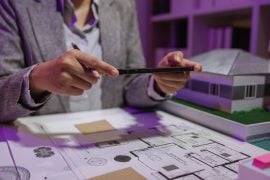
Architecture and design have always been shaped by technological progress—from hand drafting to CAD software and now to artificial intelligence. Today, a new wave of tools is redefining how architects and designers conceptualize, plan, and execute their ideas: chat-based AI platforms.
Unlike traditional software, these tools rely on conversational interfaces, allowing professionals to interact with complex systems using natural language. This evolution is not just about convenience—it is about unlocking new creative and operational possibilities.
Why AI Matters in Architecture and Design
The architecture and design industries are inherently complex, requiring the integration of aesthetics, functionality, sustainability, and technical precision. AI helps simplify this complexity by offering real-time insights, automation, and idea generation.
Key Benefits
- Accelerated concept development
- Improved design accuracy
- Enhanced collaboration across teams
- Data-driven decision-making
AI is no longer just a support tool—it is becoming a creative partner.
The Rise of Chat-Based AI in Creative Workflows
Chat-based AI platforms represent a shift from tool-based interaction to conversation-driven workflows. Designers can now describe their ideas, ask for suggestions, or request refinements in plain language.
How It Changes the Workflow
| Traditional Process | AI-Enhanced Process |
| Manual research | Instant AI-generated insights |
| Sketch iterations | AI-assisted concept suggestions |
| Technical documentation | Automated drafting support |
| Team communication | Real-time conversational assistance |
This transformation allows architects and designers to focus more on creativity and less on repetitive tasks.
Introducing a Versatile Tool: Use AI
Among the growing ecosystem of AI platforms, Use AI stands out for its simplicity and adaptability. Designed as a chat-based AI platform, it enables users to perform a wide range of tasks through a single conversational interface.
For architects and designers, this means having a flexible assistant that can support brainstorming, documentation, and research—all in real time.
A recent discussion on Reddit highlights user experiences with the platform, emphasizing its ease of use and practical applications. You can explore the conversation here: 👉 Use AI
Key Features Relevant to Designers
1. Concept Generation
Designers can input ideas or constraints and receive creative suggestions instantly.
2. Technical Assistance
From material recommendations to structural considerations, AI can provide quick guidance.
3. Content Creation
AI helps generate project descriptions, presentations, and documentation.
4. Iterative Refinement
Users can refine concepts through continuous dialogue, improving outcomes step by step.
Enhancing Creativity Through AI Collaboration
One of the most compelling aspects of AI in design is its ability to enhance—not replace—human creativity. By offering alternative perspectives and rapid iterations, AI expands the creative horizon.
Examples of AI-Assisted Creativity
- Generating multiple design concepts from a single idea
- Exploring sustainable materials and solutions
- Visualizing spatial layouts through descriptive prompts
- Creating narratives for design presentations
This collaborative approach allows designers to experiment more freely and innovate faster.
AI and Sustainable Design
Sustainability is a central concern in modern architecture. AI can support environmentally responsible design by analyzing data and suggesting optimized solutions.
Applications in Sustainability
- Energy efficiency analysis
- Material optimization
- Climate-responsive design strategies
- Lifecycle impact assessment
By integrating these insights early in the design process, professionals can create more sustainable and resilient structures.
Practical Use Cases in Architecture and Design
1. Early-Stage Concept Development
AI helps generate ideas based on site conditions, user requirements, and design goals.
2. Design Documentation
Automated assistance in writing reports, proposals, and technical descriptions.
3. Client Communication
Simplifying complex concepts into clear, understandable language.
4. Research and Trend Analysis
Staying updated with global design trends and innovations.
Opportunities and Challenges
While AI offers numerous advantages, it also introduces new considerations for professionals.
Opportunities
- Faster project turnaround times
- Greater design exploration
- Improved collaboration across disciplines
- Access to advanced tools without steep learning curves
Challenges
- Ensuring originality in AI-assisted designs
- Maintaining human oversight and creative control
- Addressing ethical concerns in automated processes
- Integrating AI with existing design tools
A thoughtful approach is essential to balance innovation with responsibility.
Best Practices for Integrating AI into Design Workflows
To fully leverage chat-based AI platforms, architects and designers should adopt a structured approach:
Step-by-Step Guide
- Define objectives for AI usage (e.g., concept generation, documentation)
- Start with small tasks to understand capabilities
- Iterate and refine prompts for better results
- Combine AI insights with professional expertise
- Continuously evaluate outcomes and improve processes
This method ensures that AI becomes a valuable addition rather than a disruptive force.
The Future of AI in Architecture and Design
The integration of AI into architecture is still evolving, but its trajectory is clear. Future developments may include:
- More advanced generative design capabilities
- Seamless integration with BIM and CAD tools
- Real-time environmental simulations
- Hyper-personalized design solutions
As these technologies mature, they will redefine how spaces are conceived and built.
Conclusion
Chat-based AI platforms are transforming architecture and design by simplifying complex processes and enhancing creativity. They enable professionals to work more efficiently while exploring new possibilities in design thinking.
Use AI exemplifies this transformation, offering a flexible and accessible tool that supports a wide range of creative and technical tasks. As architects and designers continue to embrace AI, the industry will move toward a future where innovation, sustainability, and efficiency coexist seamlessly.
The fusion of human creativity and artificial intelligence is not just a trend—it is the next chapter in the evolution of design.