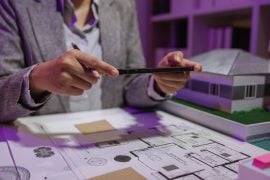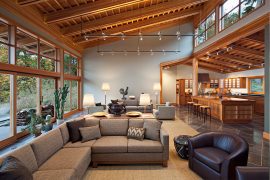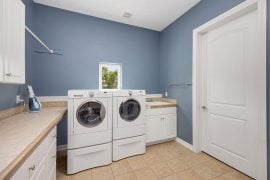
A well-designed home is not defined solely by its initial construction; it is measured by its ability to adapt. As lifestyles shift and functional demands evolve, the most resilient homes are those that accommodate change without requiring complete reinvention. This is where home conversions emerge as a strategic and forward-thinking solution.
Rather than expanding outward or rebuilding entirely, conversions reimagine existing spaces, transforming underutilized areas into purposeful, high-performing environments. In doing so, they reflect a broader architectural philosophy: structures should age gracefully by evolving alongside the people who inhabit them.
Adaptive Reuse: Translating Architectural Principles into Residential Design
Adaptive reuse has long been a cornerstone of contemporary architecture, emphasizing the transformation of existing structures to meet modern needs. While often applied to commercial or industrial buildings, this principle is increasingly relevant at the residential level.
As explored in recent discussions on adaptive reuse, this approach enables spaces to remain functional and relevant without the environmental and financial costs of demolition and reconstruction. When applied to homes, it encourages a more intentional use of available space, maximizing efficiency while preserving structural integrity.
In this context, a home becomes a dynamic framework, capable of continuous refinement rather than static occupancy.
Maximizing Existing Space Through Strategic Conversions
One of the most compelling advantages of home conversions lies in their ability to unlock latent potential within a property. Areas traditionally considered secondary, garages, attics, lofts, and basements, often represent significant untapped value.
Through carefully planned garage conversions and basement transformations, these underutilized spaces can be reimagined as fully functional extensions of the home. A garage can serve as an accessory dwelling unit or workspace, an attic can become a private bedroom or studio, and a basement can accommodate recreational, residential, or professional uses.
Such interventions not only improve day-to-day usability but also contribute to long-term property value, making conversions both a practical and strategic investment.
Designing for Longevity and Architectural Integrity
Enduring design is not driven by trends, but by adaptability, material quality, and spatial efficiency. Conversions that embody these principles are better positioned to remain relevant over time.
Architecture that ages gracefully prioritizes flexibility and coherence over short-lived stylistic appeal. This approach ensures that converted spaces integrate seamlessly with the existing structure while maintaining a timeless aesthetic.
By focusing on durable materials, neutral design elements, and adaptable layouts, homeowners can create environments that accommodate future needs without requiring repeated renovations.
Integrating Technology for Enhanced Functionality
The evolution of residential spaces is increasingly influenced by advancements in smart home technology. Modern conversions are no longer limited to physical upgrades; they incorporate intelligent systems that improve efficiency, comfort, and usability.
For example, lighting automation, climate control, and energy monitoring systems can significantly enhance the performance of newly converted areas. These technologies support more efficient living by optimizing resource consumption and simplifying everyday interactions with the home.
When integrated thoughtfully, technology complements the goals of adaptive reuse, ensuring that converted spaces are not only functional but also future-ready.
Reframing the Value of Existing Spaces
Historically, older or underutilized areas within a home were often viewed as limitations. However, contemporary perspectives challenge this assumption, recognizing the inherent value embedded in existing structures.
There is a growing shift toward appreciating and preserving what already exists. This mindset extends naturally to residential environments, where reinterpreting available space can yield significant functional and aesthetic benefits.
By reassessing these areas, homeowners can move beyond the notion of obsolescence and instead focus on opportunity and transformation.
Supporting Changing Lifestyles Through Flexible Design
Modern living is characterized by constant change, remote work, multigenerational households, and evolving personal priorities, all of which influence how space is used. Conversions provide a practical response to these shifting demands.
Whether accommodating a home office, creating independent living quarters, or developing flexible recreational areas, conversions enable homes to adapt without requiring relocation. This adaptability ensures that the home remains aligned with its occupants’ needs over time.
In this sense, conversions are not merely design upgrades; they are long-term solutions that support continuity and convenience.
Sustainability and Resource Efficiency
Beyond functionality and design, home conversions contribute to broader sustainability goals. By repurposing existing structures, they reduce the need for new materials, minimize construction waste, and lower the environmental impact associated with new builds.
This approach aligns with global efforts to promote more responsible construction practices. Rather than viewing space as disposable, conversions emphasize efficiency, conservation, and thoughtful resource management.
For homeowners, this translates into a more sustainable property that balances environmental responsibility with practical benefits.
Conclusion: A Strategic Approach to Timeless Living
Homes that age gracefully are those that evolve with purpose. Through well-executed conversions, underutilized spaces can be transformed into valuable assets that enhance functionality, support changing lifestyles, and extend the life of the home.
Ultimately, the transition from obsolete to outstanding is not achieved through complete reconstruction, but through strategic adaptation. By embracing the principles of adaptive reuse, integrating modern technology, and prioritizing long-term design, homeowners can ensure that their spaces remain relevant, efficient, and enduring for years to come.