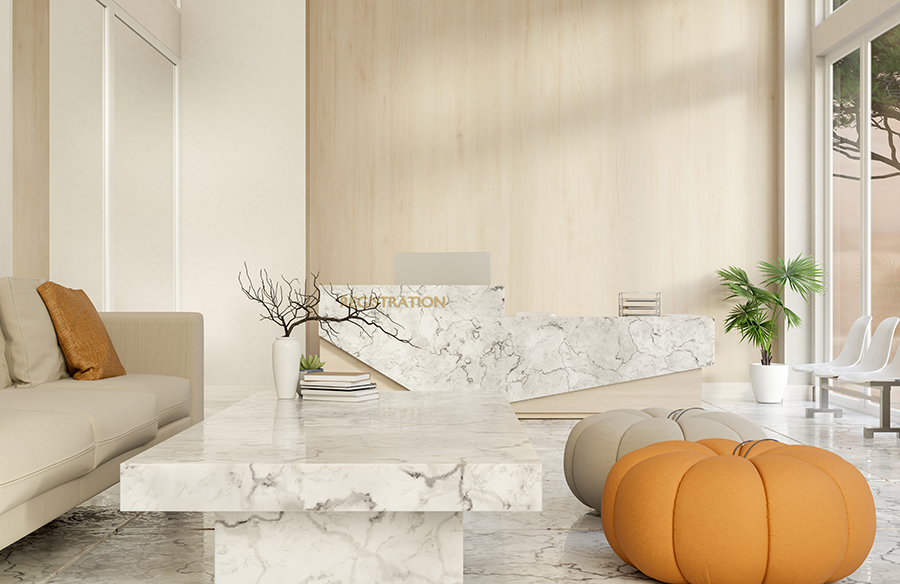
Walk into enough newer private clinics, and the change is hard to miss. The reception desk gets quieter. The lighting gets warmer. The seating stops looking like it was bought in bulk for a waiting room and starts looking like it belongs in a lounge where someone might hand you tea instead of a clipboard.
That shift is easy to dismiss as branding. A prettier clinic. Better furniture. Softer walls. But that reading misses what’s actually happening.
The more interesting story is that some health spaces are starting to borrow the emotional logic of hospitality without giving up the operational discipline of medicine. They are not trying to look less serious. They are trying to make serious care easier to move through.
That matters because most people do not experience healthcare as a set of well-designed systems. They experience it as friction. Parking, check-in, waiting, noise, unclear circulation, awkward handoffs, a room that makes them feel exposed, and an interaction that starts with stress before any clinical value has even arrived.
The real upgrade is not luxury. It is reduced friction
The phrase “boutique hotel clinic” can send a conversation in the wrong direction. It makes people think first about finishes, not function. Yes, material choices matter. So do acoustics, daylight, furniture scale, privacy, and the absence of visual clutter. But the strongest executive health spaces are not interesting because they are expensive. They are interesting because they remove the small penalties that make healthcare feel draining.
That is part of what makes newer executive-assessment models notable. What stands out in models like Biograph’s executive physical is not just the testing itself, but how the visit is structured to feel more coordinated from start to finish. The architectural lesson is not that every clinic should imitate a members’ club. It is that people read competence through flow just as much as through technology.
This is where a lot of projects get confused. They install warm wood, indirect lighting, and a curated scent, then leave the actual patient journey untouched. You still have to ask where to go three times. You still hear someone else’s medical conversation through a thin partition. You still sit under a TV you did not ask to watch. Nothing meaningful has improved.
Research on healthcare environments has been saying for years that physical settings shape patient and staff experience in direct, measurable ways. The U.S. Agency for Healthcare Research and Quality notes that evidence-based design affects safety, stress, and the daily functioning of care environments, which is a much sturdier design brief than “make it feel premium”. Good executive clinics seem to understand that instinctively. They are quieter because noise raises stress. They are easier to read because confusion makes people feel less in control. They give people somewhere to exhale before asking them to perform attention, memory, and trust.
RTF has already written about healing architecture, and that framing is useful here. The point is not to soften medicine into lifestyle. The point is to build conditions in which care is easier to receive.
What people actually notice first
Design conversations around healthcare often drift upward into abstraction. People say “wellness,” “human-centered,” or “elevated experience” when what they really mean is something much simpler: I knew where to go. I did not feel watched. I was not overstimulated. The place respected my time. I did not have to recover from the building before I could focus on the appointment.
That is why the boutique hotel comparison sticks. Hotels, at their best, are machines for reducing low-level uncertainty. You arrive tired, carrying bags, often late, slightly disoriented, and the building is supposed to catch you. The lobby organizes you. The lighting calms you. The circulation is legible. The room gives you control over sound, temperature, and privacy. Healthcare has not always learned from that playbook, even though its users are often more anxious and less comfortable than hotel guests.
The stronger clinics now are borrowing exactly those lessons. Not the chandelier, but the sequence. Not the marble, but the sense of being expected. That means entries that do not feel punitive, check-in points that do not create bottlenecks, consultation rooms that do not force intimacy before trust has formed, and transitions that do not make patients feel like parcels moving from station to station.
You can see versions of this design intelligence in healthcare interiors that prioritize calm without becoming vague. RTF’s feature on Chaika Clinic by Archiproba Studios gets at this nicely: the project uses restraint, softness, and a quiet visual background rather than the clinical brightness many people still associate with competence. That kind of restraint matters more than decorative personality. When a clinic is too visually busy, it competes with the user’s already elevated cognitive load.
Privacy is another thing people feel before they can name it. They notice whether the seating arrangement implies exposure. They notice whether the receptionist is asking for personal details in public earshot. They notice whether the corridor outside the consultation room feels like a hallway in an office fit-out or a threshold into a protected space. These are not aesthetic details. They shape how candid people are, how calm they remain, and how much trust the environment earns before the clinician even enters.
A 2022 review in Frontiers in Psychology also points to the role of the healthcare environment in the mental health of healthcare professionals, which matters because staff stress always leaks back into the patient experience in one form or another. A clinic that feels composed to the visitor but creates chaos behind the scenes has not solved the problem. It has only staged over it.
Where projects go wrong when they chase the “hotel” feeling
The most common mistake is copying hospitality aesthetics instead of hospitality discipline. Designers and operators see a refined private clinic and assume the formula is timber veneer, muted stone, curved furniture, and a coffee bar. Then the project opens and still functions like an overbooked outpatient unit with better photography.
Good hotels are obsessed with invisible service logic. The guest does not need to see the choreography, but the choreography is the thing. That principle transfers directly to healthcare. If blood work, imaging, physician review, and recovery time are all part of the visit, the layout has to support that rhythm. A beautifully detailed room cannot compensate for a patient being marched back and forth across a floorplate five times.
Another weak move is designing for appearance rather than time. Executive health spaces serve a particular user group partly because those users are time-poor, not just high-income. They are often trying to compress a year’s worth of neglected appointments, tests, and questions into a single day. That means the building has to support sequencing, decompression, and clarity. A few extra minutes of uncertainty at every touchpoint add up fast. A space that appears calm in photographs but creates decision fatigue in person has missed the assignment.
This is where hospitality architecture becomes more useful as a reference than hotel styling. RTF’s piece on hotel design is a reminder that strong hospitality spaces are built around anticipation, orientation, and comfort under movement. Healthcare projects that learn from that lineage tend to perform better because they focus on arrival, threshold, transition, and privacy gradients instead of just cosmetic warmth.
There is also a class issue buried in this trend, and it is worth being honest about it. The polished private clinic is easier to admire when you do not immediately ask who gets access to it. But from a design standpoint, the most valuable ideas here are not exclusive. Better acoustics are not elitist. Clearer wayfinding is not elitist. Private conversations at reception should not be a luxury feature. Nor should daylight, calmer waiting conditions, or rooms that preserve dignity. The danger is not that executive clinics are well designed. The danger is that mainstream healthcare settings too often accept stress-producing environments as normal.
The best examples feel less designed than resolved
The most convincing spaces in this category are rarely the flashiest. They do not announce themselves as “future healthcare.” They just feel unusually resolved.
You enter and understand the hierarchy immediately. Public and private zones are clearly separated without feeling defensive. Seating is arranged for choice, not crowd control. Surfaces feel tactile without looking fragile. Staff movement seems efficient rather than frantic. The lighting does not flatten every face in the room. Even the silence feels intentional.
That restraint matters because preventive and executive health spaces involve a different psychological contract than emergency or acute care. The patient is not just seeking rescue. They are often there for insight, risk clarification, and a kind of structured confrontation with their future self. That can be mentally demanding. If the setting feels transactional, the entire experience starts to resemble a high-end diagnostic conveyor belt. If it feels too loungelike, it can slide into wellness theater. The sweet spot is harder to hit: calm, private, highly competent, and visibly organized.
One reason integrated healthcare projects are getting more attention is that they are trying to combine clinical seriousness with social and spatial ease. RTF’s look at Carcavelos Health Complex points to this broader direction, where healthcare architecture is less bunker-like and more connected to landscape, circulation, and communal life. Executive clinics are a narrower typology, but they benefit from the same insight. People are more receptive to care when the environment does not punish them for being there.
This shift will probably keep expanding, not because every clinic wants to mimic hospitality branding, but because patients have become better at reading environments. They know when a space has been designed around real use and when it has been dressed for the website. They can tell the difference between comfort that improves attention and comfort that exists mainly to signal status.
Wrap-up takeaway
The strongest executive health spaces are not succeeding because they look expensive. They are succeeding because they make care feel legible, private, and calm without diluting medical seriousness. That is a design problem before it is a branding one. If architects and operators want to borrow from hospitality, they should borrow its sequencing, spatial clarity, and respect for human stress, not just its finishes. A practical place to start today is simple: walk through any clinic project you are working on and note every moment where a first-time visitor might hesitate, feel exposed, or lose control.