Steel plate shows up in a wide range of industries for one simple reason: it solves demanding structural and fabrication problems without being overly specialized. It offers a strong combination of load capacity, durability, weldability, and workable form. It can be cut, drilled, rolled, beveled, coated, and formed into parts that hold up under real operating stress, not just controlled shop conditions.
That flexibility is what makes steel plate so useful across agriculture, construction, and heavy industry. A farm trailer floor, a bridge component, and a machine base may serve very different purposes, but all depend on material that can handle weight, impact, wear, and long service cycles. Companies that work with plate every day, including suppliers such as https://premiumplatesupply.com/, tend to see the same pattern: when strength and fabrication flexibility both matter, plate is often the practical choice.
Another reason the plate is preferred over lighter materials is its reliability under abuse. In many applications, the issue is not only whether a part can carry the load once, but whether it can keep doing so after vibration, weather exposure, abrasion, and repeated use. That is where many of the common uses of steel plates begin. The material is chosen not because it is the lightest option, but because it performs consistently where service life matters.
Why Steel Plates Are Used Across So Many Industries
A steel plate is especially valuable when a part must do more than sit in place. It may need to support concentrated loads, resist deformation, absorb impact, or survive in rough environments. The plate also gives fabricators room to customize. It can be processed into flat parts, formed sections, reinforcements, liners, brackets, covers, and large structural assemblies without changing the base material category.
That is why plate tends to appear in sectors where downtime is expensive, and field conditions are hard on equipment. In agriculture, the problem may be dirt, moisture, and shock loading. In construction, it may be structural demand and site traffic. In manufacturing, it is often a mix of vibration, weight, wear, and tight dimensional requirements. Across all three, the value of steel plate comes from dependable performance and the ability to fabricate it into useful shapes efficiently.
Common Uses of Steel Plates in Agriculture
When people think about steel plates in agriculture, they often picture heavy farm equipment first, and for good reason. Plates are used in implements, loader attachments, hoppers, bins, trailers, chassis components, and wear parts that deal with soil, aggregate, feed, and constant movement. It is also common in repair work, where damaged equipment needs reinforced sections, replacement floors, gussets, mounting plates, or rebuilt structural members. In these settings, a steel plate for machinery has to tolerate vibration, impact, and exposure to mud, fertilizer, and changing weather.
A steel plate is also practical on farms because it is repairable. A worn section can often be cut out and replaced, and damaged assemblies can be reinforced rather than discarded outright. That matters during planting and harvest, when equipment failure is more than an inconvenience. Farmers and rural fabricators tend to value materials that are straightforward to weld, patch, and adapt. For that reason, plate remains a common choice not just for new equipment, but for extending the service life of working assets.
Typical agricultural uses include:
- Trailer beds and sidewalls
- Equipment frames and mounting plates
- Wear liners for handling abrasive material
- Grain, feed, and storage components
- Repair patches and reinforcement sections
Common Uses of Steel Plates in Construction
Among the most visible common uses of steel plates are those found on construction sites and in the built environment. Steel plates in construction are used in base plates for columns, connection plates, bridge elements, trench covers, temporary road plates, retaining components, stiffeners, and protective barriers. Some become part of permanent structures, while others serve temporary but critical site functions such as supporting traffic, covering openings, or stabilizing work zones.
What makes the plate so useful here is the combination of strength and adaptability. Structural steel plates can be processed for very specific dimensions and connection details, which allows them to fit both engineered building systems and field-driven site needs. A plate can act as a load transfer element in one application and as a protective surface in another. That range helps explain why contractors, fabricators, and engineers rely on it so often. It is one of the few materials that works equally well in fixed structural roles and rugged temporary service.
| Construction use | Why is a plate used |
| Base plates and connections | Transfers loads and supports anchoring |
| Bridge and structural components | Provides strength and dimensional stability |
| Road plates and trench covers | Handles traffic loads and protects access points |
| Barriers and protective elements | Resists impact and site wear |
| Reinforcement parts | Adds stiffness and localized strength |
Common Uses of Steel Plates in Manufacturing and Industrial Equipment
In manufacturing, the plate is less about visibility and more about function. Steel plates in manufacturing are commonly turned into machine bases, equipment frames, platforms, tanks, racks, skids, housings, and heavy-duty support structures. These parts need to stay stable under load, hold alignment, and resist vibration over long operating periods. In many cases, industrial steel plate applications depend on predictable fabrication as much as raw strength. Flatness, cut quality, weld performance, and forming capability all affect the finished result.
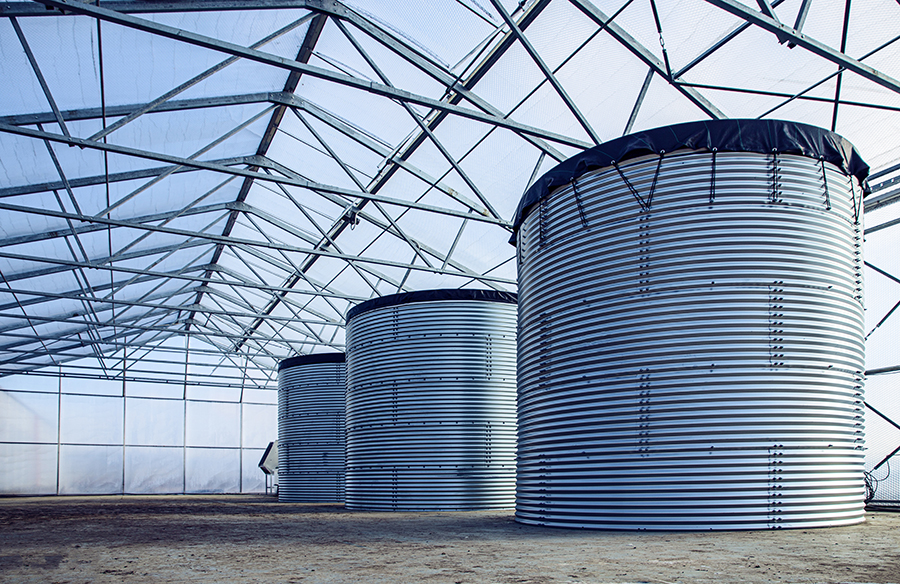
The same logic applies in storage systems and process industries. Tank components, vessel shells, support frames, and related assemblies often depend on material that matches the service environment as well as the fabrication method. In bolted tank systems, for example, performance is tied not only to steel selection but also to coatings, engineered details, and manufacturing quality. Whether the application involves carbon steel, stainless, or a specialized processing route, long-term reliability usually starts with sound plate selection and disciplined steel plate fabrication.
Common manufacturing uses include:
- Machine bases and heavy equipment frames
- Tanks, vessels, and storage components
- Platforms, walkways, and support assemblies
- Wear parts, guards, and housings
- Fabricated brackets, mounts, and custom structural parts
How to Choose the Right Steel Plate for the Application
Selecting the right plate starts with the service conditions, not the catalog. Load is the first question, but it is rarely the only one. Exposure to corrosion, abrasion, moisture, chemicals, heat, and impact can all change the right choice. So can the expected lifespan of the part. A plate used indoors in a controlled plant is a different decision from one used outdoors in a corrosive or high-wear environment. Anyone evaluating how to choose a steel plate should also consider whether the part will be welded, bent, machined, drilled, or coated after purchase.
Processing matters almost as much as the material itself. A plate that looks right on paper can become expensive if it is difficult to cut, form, or finish correctly. That is why buyers should think beyond grade and thickness alone. Surface preparation, rolling, beveling, forming tolerances, and supply consistency all affect performance and total project cost. In practice, the best results usually come from matching the plate not only to the application, but also to the way the final part will actually be made and used.