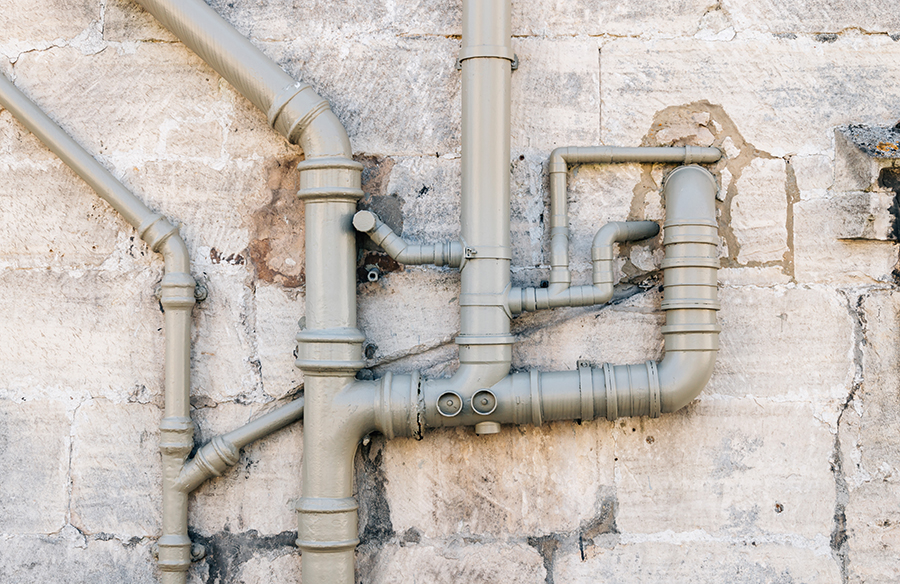
You moved into a new build or a freshly renovated home. Then the master bath sink starts gurgling. A month later, the tankless throws an error mid shower. Two winters in, a pinhole in a copper line quietly soaks a joist. None of this is bad luck, it’s design.
Water damage is one of the most common five figure insurance claims in the country, and almost every one traces back to a failure that was baked in at rough in and never caught. It’s exactly the kind of work the team behind plumbing repair services from Green Energy Mechanical handles week after week in Needham, MA: hidden leak detection, stubborn drain clogs, frozen pipe bursts, short cycling tankless units, and faucet drips that quietly turn into ruined floors. Every one of these failures is preventable once you know where to look.
TL;DR: Seven design choices cause most plumbing failures in new and renovated homes:
- Long drain runs without proper venting
- Mismatched pipe materials (PEX, copper, CPVC)
- Oversized or wrongly vented tankless water heaters
- Shutoff valves no one can find or reach
- Water hammer from high efficiency appliances
- Pinhole leaks in copper from chloraminated water
- No leak detection in a house full of concealed pipes
Catch these before your drywall goes up, or at the first warning sign after, and you avoid the single biggest homeowner insurance claim in the U.S.
1. Fixtures Placed Too Far From the Stack (Slope and Venting Failures)
This is the single most common plumbing failure in open concept floor plans. When an architect floats an island sink 14 feet from the nearest wall, the drain line underneath has to run a long, flat trip back to the stack, and drainage physics don’t negotiate.
Drain pipes need a consistent slope (typically ¼ inch per foot for 2 inch and smaller lines) and proper venting at every fixture. Too flat and solids settle, causing slow drains and clogs. Too steep and liquids race ahead of the solids, which settle and clog. Without a dedicated vent, you get the telltale sign: a gurgling sound when another fixture runs, or a slow draining sink that smells faintly like a sewer.
How to prevent it:
- Lock fixture locations before drywall. Moving a toilet three feet during rough in is an afternoon’s work. Moving one after closing is a $4,000 project.
- Use an air admittance valve (AAV) where a full vent stack isn’t practical, but only where code allows it, and only where you can access it for replacement.
- On long island runs, upsize to 2 inch drain and use a loop vent. It’s more pipe, but it’s the fix that actually works.
2. The Wrong Pipe for the Job (PEX, Copper, and CPVC Mistakes)
PEX has become the default supply material in new construction for good reasons. It’s flexible, freeze tolerant, cheap to install, and has fewer joints than copper. That’s what makes it the default in new builds, and also what hides the failures.
The most common material mistakes we see on warranty calls:
- PEX on hot water recirculation loops run at high velocities. PEX has a recommended max velocity on recirc loops, and exceeding it accelerates wear on the inner wall. Over a decade, that shows up as pinhole failures at fittings.
- CPVC or PVC specified for hot water applications it wasn’t designed for. PVC is not rated for hot supply. Use it and the line becomes brittle within a few years.
- Copper downstream of a tankless with aggressive pH water. Tankless units heat in short bursts; aggressive water chews copper fittings faster than tank systems.
How to prevent it: Match the material to the exact application (hot/cold, potable/recirc, interior/exterior). Spec the recirc loop at larger diameters to keep velocity low. If your installer says “it’s all the same,” find a new installer.
3. Tankless Water Heaters Installed by People Who’ve Never Sized One Correctly
Tankless is now the default in Northeast new construction and upscale retrofits. When it’s right, it’s beautiful: endless hot water, lower energy use, wall mounted to save a closet. When it’s wrong, it throws a cold water sandwich in the middle of a shower or stops working after three years of scale buildup.
The mistakes we see most often:
- Undersized units. A family running two showers plus a dishwasher needs a 10 to 11 GPM unit. Installing a 7.5 GPM model to save $400 is a decade of cold showers.
- Undersized gas lines. A high output tankless pulls far more BTU than a tank unit. The existing ¾ inch gas line that ran a 40 gallon tank often can’t feed it.
- Improper venting. Using B vent (intended for atmospheric tanks) on a condensing tankless is a fire risk. These units need category specific stainless or PVC venting with proper slope for condensate drainage.
- No scale protection. In hard water zones, and much of Eastern Massachusetts qualifies, a tankless without an isolation valve kit and an annual flush will lose capacity in 2 to 3 years.
How to prevent it: Do a peak demand calculation before buying. Upgrade the gas line if required. Install a softener or a scale inhibiting filter upstream in hard water areas. Flush the unit annually. Skipping any of these turns a $4,500 appliance into a $9,000 one.
4. Shutoff Valves No One Can Find (or Reach)
Every licensed plumber has a story about a flooded kitchen where the homeowner couldn’t find the main shutoff fast enough. In modern design, it’s worse: valves end up behind cabinet toe kicks, above suspended ceilings, inside finished mechanical rooms with no access panel, or, genuinely, buried behind drywall.
Supply line failures are one of the leading causes of interior water damage. In most of those cases, the difference between a $500 repair and a $25,000 claim is how fast someone shuts the water off.
How to prevent it:
- Every bathroom, kitchen, laundry, and mechanical room gets labeled, accessible shutoffs. No exceptions.
- The main shutoff should be in a location every adult in the house can reach in under 30 seconds, and should actually turn (ball valves, not old gate valves).
- Add full port ball valves at the water heater cold inlet, the pressure reducing valve, and at every recirc loop.
- Every drain stack gets a cleanout at the base and at direction changes, and those cleanouts get access panels, not skim coat.
Access is free during construction. It costs thousands after.
5. Water Hammer From High Efficiency Appliances
Walk into a modern home, run the washer, and listen for the thunk when the solenoid closes. That’s water hammer: a shock wave hitting a dead end pipe at the speed of sound. It loosens fittings, fatigues PEX, and cracks solder joints over time.
This wasn’t a common issue 20 years ago. It is now. High efficiency dishwashers, washing machines, ice makers, and bidets all use fast closing solenoid valves that snap shut in milliseconds. When water stops that fast, the kinetic energy has to go somewhere, and it goes into your pipes.
How to prevent it:
- Install mechanical water hammer arrestors within 6 feet of every solenoid valve appliance. Piston style arrestors, not the old air chamber “stubs” that waterlog and stop working in two years.
- Target system pressure between 40 and 60 psi. If your municipal pressure runs above 80 (common in Massachusetts), add a pressure reducing valve, and check it every few years, because they drift.
- If you hear banging when an appliance shuts off, don’t ignore it. That’s the pipe telling you it’s losing its fight.
6. Pinhole Leaks in Copper (Chloraminated Water and Recirculation Loops)
Here’s one that surprises homeowners: the copper lines in a brand new home can fail faster than the copper lines in a home built in 1975. The reason is a combination of modern water treatment and modern system design.
Many municipalities now use chloramine (a mix of chlorine and ammonia) for disinfection. Chloramine is harder on copper than plain chlorine over decades. Pair that with a recirculation loop that runs water through the same copper pipes 24 hours a day, and pinhole leaks can appear within a decade rather than after forty or fifty years.
How to prevent it:
- If your municipality uses chloramines and you’re designing a recirc loop, use PEX or stainless flex for the recirc, not copper, and keep velocities low.
- Keep hot water set at 120°F at the outlet. Hotter equals faster copper erosion.
- Install a whole home chloramine filter at the point of entry. It’s a modest one time cost that buys you decades on the piping.
- Watch for the early warning: green blue staining at fixtures, or hairline moisture spots on ceilings below bathrooms.
7. No Leak Detection in a House Full of Hidden Pipes
Modern residential design hides almost all plumbing inside walls, ceilings, and under slabs. The whole point of the aesthetic is that you don’t see it. Which is fine, until a ½ inch line behind the primary bedroom closet starts leaking at 3 a.m.
Thousands of water leak emergencies happen in U.S. homes every single day. The median home has zero leak detection. That’s the mismatch.
How to prevent it:
- Install a whole home automatic shutoff system at the main (Flo by Moen, Phyn, LeakSecure, or equivalent). These monitor flow patterns and shut the water off when something looks wrong: a burst line, a running toilet, an unattended dishwasher.
- Add point of use water sensors under every sink, behind toilets, near the water heater, behind the washer, and at the base of the stack. Inexpensive sensors will wake you up before the drywall is ruined.
- Many insurers now offer premium discounts for automatic shutoff devices. Ask your carrier before installing; a $600 device can pay back part of its cost the first year.
If the house has a basement finished with anything other than concrete, assume the basement will flood once. Plan accordingly.
Designing Plumbing That Survives the First Decade
New homes don’t leak because the pipes are bad. They leak because the design got made under pressure: floor plan changes came late, the fixture locations shifted, someone subbed PVC for CPVC to hit a deadline, the access panels got “value engineered” out. By the time an owner moves in, the system is already carrying failure modes that will surface in year three, five, or ten.
The fix isn’t complicated in principle. Lock the fixture layout before rough in. Spec the right material for each application. Make every shutoff accessible. Protect the system from water hammer and scale. Add a leak detection layer on top. Do those five things and you’ve removed the most common six figure failure modes from a modern home.
The catch is, it’s hard to do any of that after drywall. If you’re mid construction, get a licensed plumber to do an independent rough in review before the walls close. It’s the cheapest insurance money can buy. If you already moved in and you’re seeing early warning signs like gurgling drains, pressure swings, a banging washer, or a tankless unit that short cycles, don’t let it sit. Catching a failure at the warning sign stage is the difference between a service call and a claim.