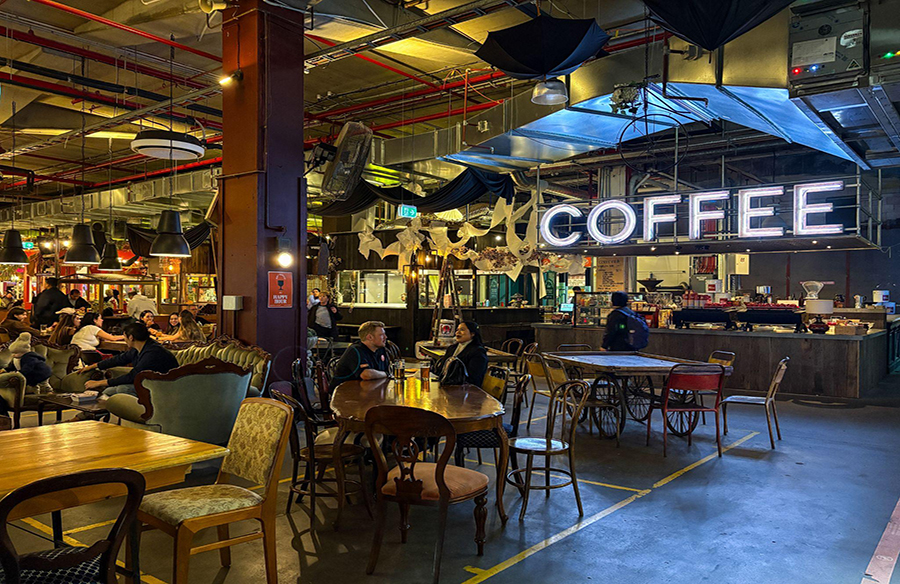
In March, Time Out ranked Melbourne, Australia, as the Best City in the World on its 2026 Best Cities List. Local residents rated Melbourne highly for its food, rich arts and culture, scene, neighbourhoods, and overall sense of happiness in daily life.
But if you ask any Melbournian what feature of their city brings them the most pride, you will likely hear praise for their coffee. It’s not hard to imagine that one or two perfectly poured flat whites may have helped influence Time Out’s rankings.
Australia is famous for its coffee, but kudos is equally due to its café scene. In fact, café design Down Under has influenced many architectural choices in coffee shops around the world.
From prioritising local roasts and engineering a chic, modern aesthetic to kick-starting McCafé itself, here are some of the ways Australia has revolutionised the coffee shop.
Putting Local Coffee in The Spotlight
Before exploring the influence on café design worldwide, it is worth noting that Australia’s coffee industry has done a remarkable job over the last few decades in propping up local coffee vendors in place of international franchises like Starbucks. Coffee began as a luxury import in the colonial period, and while it is still majority imported from overseas, that hasn’t stopped folks from roasting it themselves.
Scores of artisan coffee roasters are operating in Australia, all with a deep appreciation for traditional roasts and a penchant for new specialty flavour profiles. There is a strong push for cafés to support local products and bulk buy coffee beans interstate, such as from Queensland in the North and from Melbourne and Sydney along the East Coast.
Putting local coffee talent in the spotlight is especially admirable, helping transform how we may think about coffee in our own communities. Also, selling local coffee is not only far cheaper and more sustainable, but it also tastes better!
Coffee shops all over should take note… or two.
Industrial Chic Became the Blueprint
Australian coffee shops actually have a long history of innovation. Even back in the 1880s, Melbourne’s monumentally impressive Federal Coffee Palace provided a unique locale where patrons could enjoy alternatives to alcohol.
In the 21st Century, the Australian coffee scene has since pioneered what is now labelled as the Industrial Chic aesthetic. Its origins (no pun intended) come from the tight alleyways of Melbourne’s streets, where many coffee shops quite literally were built into existing industrial spaces.
In many ways, it is an amalgamation of the lone European espresso bar and Melbourne’s cramped real estate, but there is a certain poetry to it. A barista’s coffee should speak for itself, and an Industrial Chic aesthetic encourages a more minimalist drinking experience, with bare-bones brick walls, exposed steel beams, and pop-a-squat-where-you-can seating.
Industrial Chic is practical, resilient, and it has defined a generation of coffee drinking. The hipsters might have left the building, but the barstools and high-top tables are still here, there, and everywhere!
Baristas and Espresso as the Standard
Melbourne is a city of art and artists, not excluding its baristas. As Australia’s coffee culture was cultivated and began to flourish, it was the talent and knowledge of skilled baristas that helped make it thrive.
Much of the coffee knowledge Down Under came from the immigrant post-War diasporas of the Mediterranean who brought with them their propensity for espresso. Pulling espresso requires a high skill ceiling to execute properly, but when the right conditions are met, baristas can pump out many drinks quickly in one sitting; thus, marrying European sensibility with Aussie quick-footed service.
As such, baristas and their specialty espresso drinks have become the standard of café fare, rather than the more American style cup of coffee, percolated in a pot and served with creamer and lots of sugar. In fact, even the flat white, now catching on in cities like New York and Los Angeles, is attributed as an Australian innovation, a variable take on the classic café latte.
This includes a dusting of chocolate powder on your cappuccino, some pure Italian finezza!
A Good Coffee, Even With Fast Food
It is impossible to talk about the influence Australia has had on coffee shops without mentioning the McCafé. Here, it is expected that anyone should be able to get a good coffee no matter where you are, whether that is at the shopping centre, waiting for an appointment, or even getting your car serviced.
And not even fast food restaurants are excused from this standard.
The McCafé was conceptualised and launched in Melbourne in 1993 before eventually rolling out globally. The brand has seen huge success and now even other fast food venues across the country have incorporated espresso drinks to their menus, such as at Hungry Jack’s and Guzman y Gomez.
Great quality coffee crafted at a professional level is so quintessential in Australia, such a part of daily life, that there is no reason why a good cup of coffee shouldn’t be readily available anywhere. In fact, even petrol stations offer some form of espresso drink menus, too!
A Culture Brewed to Last
Australia hasn’t just elevated coffee quality at home but has also redefined what a café means abroad. A café is more than simply a place to grab a drink, but a carefully curated experience that blends design, community, craftsmanship, and convenience into one seamless ritual.
From laneway espresso bars to design-forward cafés, the Australian model proves that great coffee thrives when it’s supported by equally thoughtful spaces and skilled hands. It’s a culture built on consistency, creativity, and an uncompromising standard that customers have come to expect, and that the rest of the world is still catching up to — Starbucks included.
As global café trends continue to evolve, many will keep looking Down Under for inspiration. Because in Australia, coffee isn’t just consumed, but considered, perfected, and proudly put on display every single day.
The whole world loves coffee, but Australia’s love for coffee has allowed for some impressive innovations.