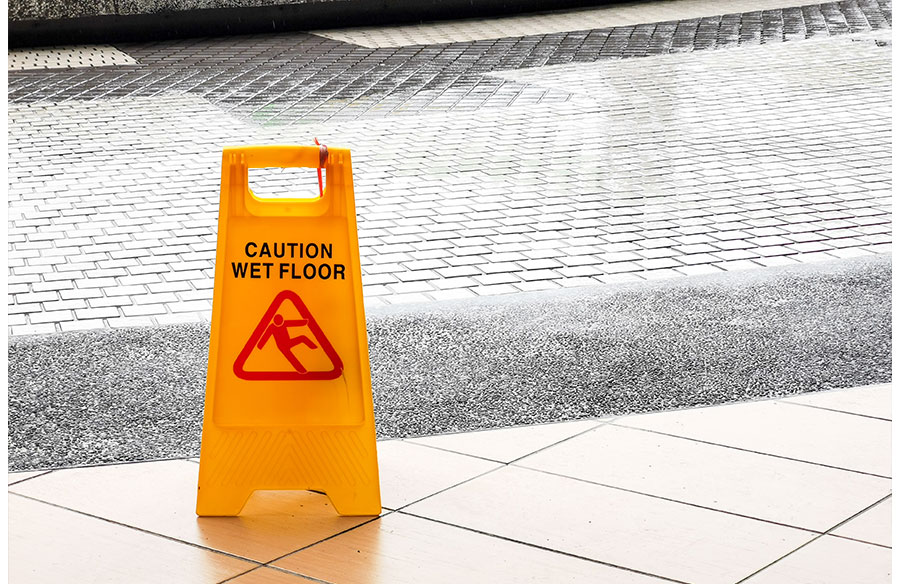
Wet flooring is sometimes a necessity when someone needs to clean a room. But, the combination of water and tile can quickly lead to a hazardous situation. Whether someone’s mopping a kitchen in a restaurant or rainwater gets tracked into a grocery store on people’s shoes, it’s important to take precautions.
As a customer, employee or general pedestrian, it’s important to understand how wet floors could lead to a serious injury. Meanwhile, companies and property owners have a duty of care responsibility to do their best to keep common areas safe, especially when someone might have little choice but to be in the area.
Whether a sink springs a leak in a public restroom or someone needs to cross a recently cleaned dining room, it’s important to understand how wet floors can lead to serious public injuries.
Watch Out for Common Causes of Wet Floors
Recently mopped floors are one of the leading causes of slip-and-fall injuries. Businesses often need to clean floors to maintain sanitation and hygiene standards, especially in bathrooms and kitchens. However, a person who visits public spaces can reasonably expect that a company will warn them about the wet floor by placing clearly visible signs in prominent locations before they set foot on the ground.
Maintenance tasks can also lead to wet floor injuries. For instance, a plumber or maintenance technician might temporarily create a hazardous flooring surface when water leaks from an appliance they are fixing. While some water leaks aren’t preventable, there should be a distinct effort made to eliminate the hazard as soon as possible. Appliance repair technicians can also reduce hazards by placing buckets beneath leaky appliances as they work.
The weather is another common reason for flooring in public spaces to become wet. Rain or snow often gets tracked in on people’s shoes, especially near entrances with heavy traffic. Business owners can place non-skid rugs in these areas to prevent wet floor accidents. On tiled surfaces, it might also be necessary to place warning signs and appoint an employee to keep the area dry.
If you experience an injury from wet floors in public spaces, then it is important to take note of the cause. In many situations, property owners have a responsibility to remove hazards as quickly as possible to protect visitors. Speaking with an experienced premises liability lawyer can help you identify potential causes for your accident that a property owner could be responsible for mitigating.
Recognize How and Why Injuries Occur On Wet Surfaces
Simply falling can put you at risk of getting hurt. After all, just about everyone has scraped a knee or sprained a joint from falling at some point in life. But, wet floors can exacerbate the risk of injuries for several important reasons.
The liquid on the floor lowers the friction level as you move across the surface. This has the effect of causing your feet to slip out from below you in a way that doesn’t happen on dry flooring. Since there isn’t any friction to slow your fall, injuries tend to be worse due to the hardness with which you hit the ground.
Slip-and-fall accidents on a wet floor can also be especially dangerous because of how your body moves as you begin falling. Rearward falls are more likely to occur on wet floors, and this blocks your ability to use your arms to reduce the strength of the fall. Falling backwards is more likely to leave you with head, neck and back injuries.
Wet floors aren’t always noticeable as you walk. This also means that it is common for people to be taken completely by surprise. The lack of visibility of the danger increases the risk of experiencing a sudden impact that generates more intense injuries and pain.
Understand the Severity of a Fall-Related Injury
Once a wet floor is involved, the possibility of emerging from the incident with just a scraped knee and bruised ego fades. Instead, it is common to see serious and life-altering injuries with these types of falls.
Soft tissue damage, such as severe strains and sprains, can occur when the fall causes you to push a limb past its range of motion. The force exerted during the fall could also cause you to sprain an ankle or wrist, especially if you happen to be able to brace yourself as you hit the ground.
Spinal cord and back injuries are common after experiencing a rearward fall. Many people hit the ground with their tailbone first, which can lead to forces moving up the spinal column. Herniated discs and other types of damage to the spinal column could require surgical repair and are associated with lengthy recoveries.
Traumatic brain injuries are also possible during wet-floor falls. Hitting your head at a high rate of speed is likely to cause concussions and other brain injuries that may not be possible to recover from fully. Memory loss, headaches and confusion are just a few symptoms that you might experience with a head injury, and all of these serious injuries will require immediate emergency medical care.
On the surface level, a wet floor might look like little more than a temporary situation waiting to dry. But, all it takes is a quick slip-and-fall injury to quickly turn someone’s life upside down. Serious, permanent injuries can eliminate a person’s ability to reach their maximum earning potential. A traumatic brain injury or broken hip could also limit someone’s ability to live their best life that they could have enjoyed if they hadn’t encountered a wet floor.
While everyone should do their part to be alert for moisture on walking surfaces, there are times when accidents can easily happen. Whether you were rushing to accomplish a task at work or happened to walk through a slick lobby in a hotel, it’s important to fully address your fall-related injury.
After seeking medical care, make sure to begin working through the process of managing any legal claims. While it may take time and life might never be the same, it is possible to enjoy the best possible recovery when you have support for managing your wet floor injury.