When the Sofa Is Wider Than the Doorframe and the Architect Is Unavailable
There’s a specific kind of frustration that arrives when you’re standing in a beautifully designed home — cantilevered staircase, floor-to-ceiling glazing, open-plan everything — watching a moving crew measure the same doorframe for the third time, their expressions growing progressively less optimistic. The furniture fits the space perfectly. It just can’t get there. This is an increasingly common problem rather than an exotic one, and the moving industry has responded by developing structured pre-move assessment frameworks that treat architecture logistics moving as an engineering exercise rather than an improvised challenge. Platforms like Reloqmove represent this shift concretely — bringing documented route planning and structural assessment tools to the furniture relocation process, replacing the informal “we’ll figure it out on the day” model with something closer to pre-engineered move architecture.
For anyone dealing with a complex contemporary interior, that shift from improvisation to documentation is, what’s especially important to understand, where most of the risk actually gets managed. Modern residential architecture has trended sharply toward larger volumes, more dramatic proportions, and structural choices — thin steel frames instead of thick walls, pivoting glass doors instead of standard-width openings — that create environments that are magnificent to inhabit and genuinely difficult to furnish or relocate. If you’ve ever commissioned a custom sectional sofa that arrived after a renovation, or tried to move a solid walnut dining table from a third-floor apartment with a spiral staircase, you know the feeling. The architecture was designed by someone thinking about how light moves through space. The furniture was designed by someone thinking about how humans inhabit it. The logistics of getting one into the other — that problem, frequently, belongs to nobody. Until moving day.
Why Modern Architecture Creates Logistics Problems That Traditional Homes Don’t
The shift in residential design over the past two decades has produced a set of structural features that recur across contemporary homes and consistently complicate furniture relocation services. Understanding which features create which problems is the first step toward solving them before they become moving-day emergencies.
The most common culprit is the open-plan ground floor combined with a narrow entry sequence. Architects frequently design dramatic main living spaces — double-height ceilings, 12-foot span sofas, statement dining tables — accessed through entry halls that are proportionally modest. The visual logic is deliberate: compression before release. The logistical result is that items designed for the large space cannot pass through the entry to reach it. Standard residential doorframes run 80 inches tall and 32–36 inches wide. A contemporary sectional sofa in an architect-designed home routinely exceeds both dimensions by a significant margin when treated as a single unit.
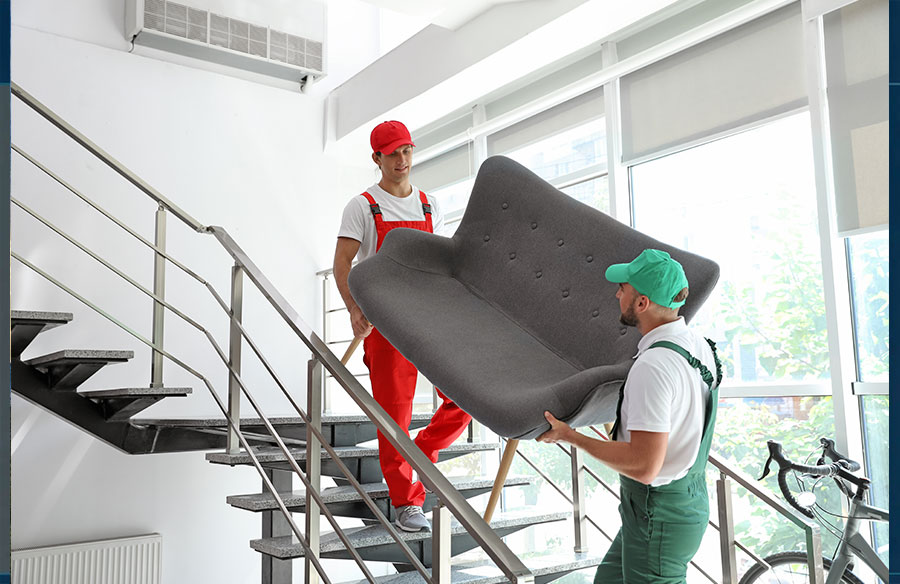
Spiral and feature staircases are the second major category. Traditional straight staircases, whatever their other limitations, offer a manageable geometry for furniture transport. Cantilevered stairs — common in contemporary design — lack the wall support that traditional staircases provide, meaning that leaning furniture against the staircase structure during a move can cause genuine structural stress. Floating staircases with glass balustrades add a fragility variable that changes the entire risk profile of a stair-based furniture move. Nельzya ne upomyanut’: some contemporary homes have feature staircases that are effectively decorative — beautiful, structurally sound for human use, but not designed to function as a moving route at all.
The third category is the custom-built-in problem: furniture that was installed during construction or renovation rather than brought in through a door. Modular wall units assembled in situ, kitchen islands anchored to structural elements, platform beds built around heating and electrical systems. Moving large furniture tips for these items begin not with “how do we carry this out” but with “can this be disassembled without destroying it” — which is a fundamentally different question.
The Pre-Move Survey as an Engineering Exercise
This is the section where the practical distance between good and mediocre furniture relocation services becomes most visible. A competent pre-move survey for a home with significant architectural complexity is not a walkthrough with a clipboard — it’s closer to a structural assessment. And the difference in outcome between a survey done properly and one done superficially is, in real terms, the difference between a smooth move and a damaged doorframe, a scratched staircase, or a sofa that physically cannot reach its destination.
What a proper survey covers, specifically: every furniture item above 150 lbs or 70 inches in any dimension gets measured against every point in its intended travel path — not just the destination room but every doorway, corner, staircase landing, and elevation change between origin and destination. Interior logistics design professionals use a concept called the “critical path” that maps the most constrained point in the route. That constraint determines the packing strategy, the disassembly requirements, and the equipment needed.
The numbers matter here. A standard moving blanket adds approximately 1.5 inches to any padded surface — relevant when a piece clears a doorframe by 2 inches unmapped. A four-person carry on a narrow staircase requires a minimum horizontal clearance of 36 inches; many contemporary staircases provide 32. These margins are the difference between manageable and impossible, and they’re knowable in advance if the survey is done with actual measurements rather than visual approximation.
| Furniture Type | Common Obstacle | Standard Solution | Specialist Solution |
| Large sectional sofa | Narrow entry hall | Disassemble modules | Crane lift to balcony/window |
| Solid wood dining table | Spiral staircase | Tilt-and-navigate | External lift + window removal |
| Built-in wardrobe | Structural anchoring | Partial disassembly | Full deconstruction + rebuild |
| Platform bed | Floor anchoring + electrical | Disconnect + lift | Structural consultation first |
When Disassembly Is the Answer (and When It Isn’t)
The instinct, when a piece of furniture won’t fit through a space, is to disassemble it. This is correct often enough that it’s become a default assumption — and incorrect often enough that it causes expensive mistakes. Professional movers furniture handling at the specialist level starts with a specific question: is this piece designed to be disassembled, and if so, will reassembly restore it to its original structural and aesthetic condition?
Manufacturer-designed modular furniture — most contemporary sofas, many bed frames, modular shelving systems — disassembles cleanly and reassembles without structural compromise. Custom or antique pieces are a different category entirely. A custom banquette built by a furniture maker using traditional joinery methods may technically disassemble but will lose structural integrity or visible alignment quality upon reassembly. Antique pieces with original finish and hand-cut joinery should, nadо zametit’, almost never be disassembled in the field by a moving crew — the risk of irreversible damage to finish, veneer, or joinery is significant, and the cost of restoration typically dwarfs any logistical benefit.
The alternative to disassembly, when a piece genuinely cannot navigate the interior path, is external access. Crane lifts through balcony openings, window removal (a standard practice for piano moves and entirely applicable to large furniture), and temporary structural openings — a non-load-bearing wall removed to create access, then reinstated — are all used by specialist furniture relocation services. These approaches have real costs: crane hire runs $800–$2,500 depending on reach and duration, and window removal by a glazier adds $200–$600. But against the cost of damaging a $15,000 custom sofa or a $40,000 antique armoire, the arithmetic is straightforward.
What to Ask a Mover Before They Touch a Complex Interior
Moving large furniture tips are most useful before the move begins — which means knowing what questions to ask when evaluating professional movers for an architecturally complex home. Here’s the checklist that experienced interior logistics professionals use:
- Does the crew include anyone with formal training in fine furniture handling or architectural salvage?
- How do you handle pieces that cannot be navigated through standard interior paths — what are your specific alternative access options?
- Do you conduct a measured pre-move survey, and can you document the critical path in writing before the move date?
- What is your insurance structure for custom and antique furniture specifically — replacement value or basic liability?
- Have you worked with this type of architecture before — and can you describe a specific case where external access was required and how it was managed?
A mover who answers these questions immediately and specifically has the experience the job requires. One who answers vaguely, redirects to general reassurances, or treats them as unusual questions does not — regardless of how competitive their pricing is. For a home where the architecture and the furniture represent significant investment, that distinction is worth every minute spent finding out before moving day.