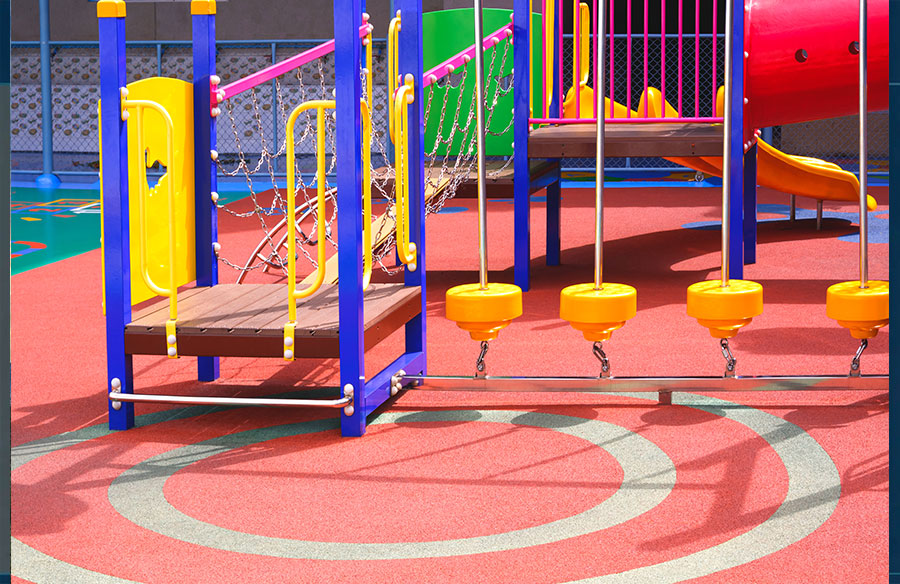
Playgrounds support physical development, social interaction, and well-being – but only when children feel confident enough to actually use them. In schools, parks, and community spaces, these environments are used daily by children of vastly different ages and abilities. While playground equipment tends to get all the attention during planning meetings, the surface beneath it does much of the heavy lifting when it comes to safety, accessibility, and long-term usability.
Selecting the right playground safety surfacing isn’t a checkbox exercise. It’s a decision that influences injury risk, maintenance cycles, drainage performance, and whether children with mobility challenges can actually access the space.
When specified properly, playground surfacing creates environments where children can play freely and confidently while ensuring facilities remain fit for purpose over many years of intensive use.
Understanding Playground Safety Surfacing
Playground safety surfacing exists to reduce injury risk by absorbing impact when children fall. In areas where they’re climbing, balancing, or jumping from structures, surfaces need to provide appropriate protection without compromising stability underfoot.
Unlike traditional hard surfaces – concrete, asphalt, or compacted aggregate – safety surfacing systems are engineered to provide cushioning and shock absorption while maintaining a consistent surface that children can move across safely.
Wetpour rubber surfacing has become one of the most widely used solutions in schools and public playgrounds. The system typically consists of a shock-absorbing base layer combined with a durable wearing surface that provides a smooth, accessible finish.
Safety surfacing is commonly installed beneath play equipment, along circulation routes within playgrounds, and across larger play zones where children run, jump, and climb repeatedly.
ROSPA’s playground safety guidance consistently emphasises the importance of selecting appropriate surfacing when designing safe play environments – not as an afterthought, but as a foundational design decision.
Key Considerations When Choosing Playground Surfacing
When specifying playground surfacing for schools or public spaces, several factors determine whether the surface will perform effectively over time.
Safety Performance
The primary purpose of playground surfacing is injury reduction. Surfaces must absorb impact in accordance with recognised safety standards, but that’s more nuanced than it sounds.
Key considerations include:
- The height of play structures within the playground
- Expected fall heights from equipment (which vary significantly across age groups)
- The surface’s ability to absorb impact while remaining stable underfoot
Wetpour rubber surfacing works well here because it can be installed to different thicknesses depending on fall height requirements. This allows surfaces to be tailored to specific play environments rather than using a one-size-fits-all approach.
Durability in High-Footfall Environments
School playgrounds and public parks take a beating. Hundreds of children use the same space daily, in all weather conditions, and with repeated high-impact activities – surfaces need to withstand this without deteriorating prematurely.
Durable surfacing systems ensure playgrounds remain usable throughout the year while reducing the frequency of repairs or replacement. That matters particularly for schools and councils working with limited maintenance budgets.
Materials used in playground surfacing should maintain structural integrity and surface consistency even in areas where children congregate most – the base of slides, landing zones, and popular equipment. These are the spots that fail first when surfacing is inadequate.
For organisations responsible for maintaining public facilities, choosing durable materials is essential for long-term value and manageable maintenance costs.
Drainage and Water Management
Drainage is critical, particularly in the UK, where rainfall can render outdoor spaces unusable for days at a time.
Surfaces that drain effectively prevent pooling and reduce the likelihood of slippery conditions developing after rain. This isn’t just about safety – it’s about usability. A playground that’s waterlogged half the time simply doesn’t get used.
Porous safety surfacing systems allow water to pass through the surface structure and into the sub-base beneath. This means playgrounds become usable more quickly following wet weather and reduce the risk of prolonged waterlogging.
Effective drainage also extends surface lifespan by preventing standing water from causing deterioration over time. Water is one of the biggest enemies of surface longevity.
Surfacing Requirements for Schools and Community Play Areas
Schools place extraordinarily high demands on playground surfacing. A single playground might be used by hundreds of pupils every day during break times, PE lessons, and after-school activities.
Surfaces need to accommodate:
- Constant running and active play (often chaotic and unpredictable)
- Group activities and games that concentrate on specific zones
- Daily use by large numbers of children across all age groups
- All weather conditions throughout the academic year
Public parks and community play spaces face similar pressures. Facilities need to remain suitable for families, community groups, and casual visitors year-round without becoming safety hazards.
When surfacing materials are chosen with durability and safety genuinely prioritised – not just mentioned in the spec – playgrounds can continue to support active play without constant maintenance interventions or closures.
The Department for Education recognises the importance of well-designed outdoor environments in supporting physical activity and healthy development within schools. Surface quality is fundamental to that.
Supporting Inclusive Playground Environments
Inclusive play environments aim to ensure all children can participate in playground activities regardless of ability. That’s the goal, at least. Achieving it requires attention to detail that often gets overlooked.
Surfacing plays a crucial role in accessibility. Smooth, stable surfaces allow children using wheelchairs or mobility aids to move through play environments independently. Consistent surfaces reduce trip hazards and provide a predictable footing for children with balance or coordination difficulties.
Wetpour rubber surfacing is commonly used in inclusive playgrounds because it provides a seamless finish that allows accessible movement throughout the space. Colour variations can also create visual contrast to help define different zones – useful for children with visual impairments or those who benefit from clear spatial organisation.
By supporting accessible routes and inclusive play environments, carefully designed surfacing contributes to playgrounds that can genuinely be enjoyed by a wider range of users, not just the able-bodied majority.
The Role of Specialist Playground Surfacing Providers
Designing and installing playground surfacing properly requires specialist knowledge of materials, installation techniques, and safety standards. It’s not something that can be improvised or approached generically.
Specialist providers assess site conditions, drainage requirements, fall height protection, and expected usage levels before recommending the most suitable surfacing solution. Getting these assessments wrong means the surface either fails prematurely or doesn’t provide adequate protection – sometimes both.
Companies like Abacus Playgrounds focus specifically on safety surfacing systems designed for schools and public environments, with emphasis on long-term durability and safe play. By specialising in this area, they bring the technical expertise needed to ensure surfaces are designed and installed in ways that support both safety and sustained performance.
Working with experienced surfacing specialists helps schools and councils avoid the costly mistakes that come from treating surfacing as a commodity purchase rather than a design decision with long-term consequences.
Designing Safer Play Environments for the Future
Playgrounds are valuable community assets that support physical activity, social development, and well-being. Ensuring these spaces remain safe and accessible requires proper attention to the surfaces that underpin them – not as an afterthought, but as a core design consideration.
Choosing appropriate playground safety surfacing reduces injury risk, improves accessibility, and ensures playgrounds remain durable under heavy daily use. For schools and public authorities responsible for managing outdoor play spaces, selecting the right surfacing system is a critical part of creating environments where children can play confidently.
By genuinely prioritising safety, durability, and effective drainage – rather than just documenting these requirements in a specification – well-designed playground surfacing contributes to play environments that remain functional, inclusive, and actually used for years to come.