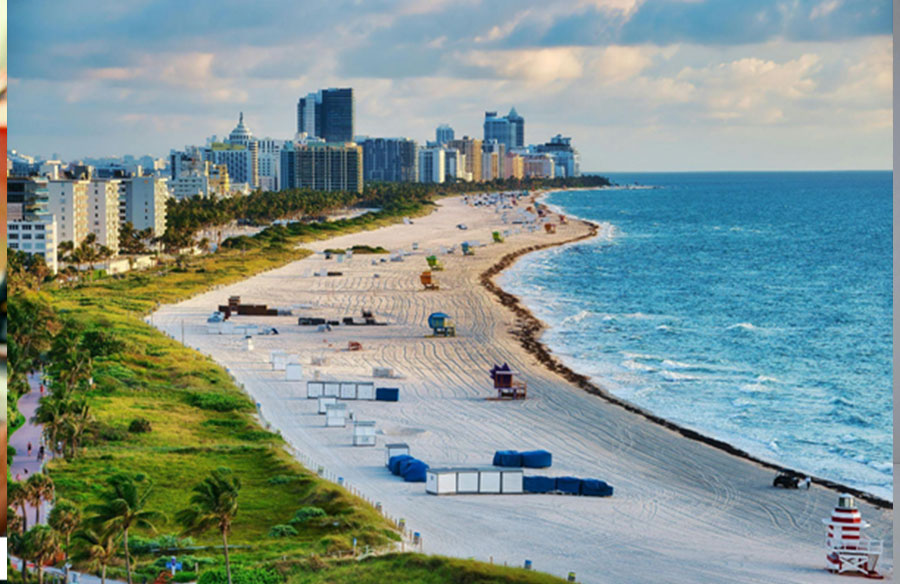
Miami does not whisper luxury. It filters it through glass, humidity, salt air, and horizon lines.
To understand luxury Miami rooms, you have to understand that the city builds outward, not inward.
It leans into water.
It frames the sky.
It invites climate into design rather than shielding itself from it. That architectural openness is not an aesthetic coincidence—it is the foundation of how indulgence is experienced.
The demand for this lifestyle has reshaped the city’s high-end market, pushing Miami into the top tier of global prime residential destinations. But numbers alone don’t explain it. The appeal lies in how space feels.
And in Miami, space feels cinematic.
Openness Is the First Luxury
The most defining element of Miami’s luxury stays is continuity. Interiors rarely end where walls begin.
- Glass façades stretch from floor to ceiling.
- Entire living rooms dissolve into terraces.
- Infinity pools visually merge with Biscayne Bay.
This indoor-outdoor choreography echoes the broader principles of climate-responsive design increasingly shaping global development, including passive cooling strategies and biophilic integration outlined by the World Green Building Council.
But here’s what matters practically when choosing a luxury stay:
- Check orientation. East-facing residences capture sunrise and softer light. West-facing units deliver drama but require stronger shading systems.
• Assess balcony depth. In Miami, a shallow balcony is decorative. A deep terrace is functional living space.
• Look at ceiling height. True spatial indulgence begins above 10 feet. Volume changes perception.
Openness is not about transparency alone. It is about breathability.
When air circulates naturally and daylight shifts across surfaces throughout the day, architecture becomes experiential rather than static.
 The Hotelization of Home—Without Losing Privacy
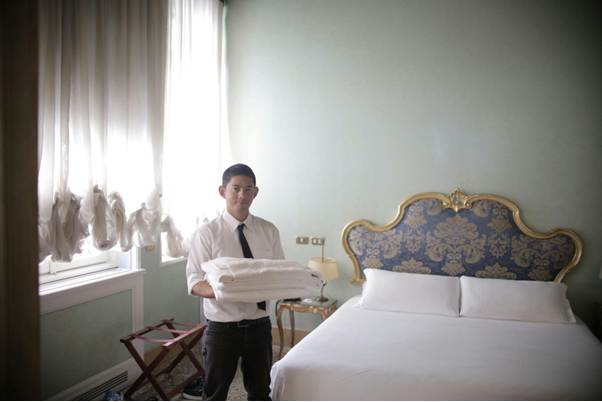
Another defining feature of Miami’s luxury stays is how seamlessly hospitality has merged with residential living.
Branded residences and serviced luxury properties have multiplied across Brickell, Downtown, and Sunny Isles. Miami ranks among the world’s leaders in this sector, as shown in the Savills Branded Residences Report.
But indulgence here is subtle. The key is how architecture anticipates service:
- Private elevator entries that eliminate corridor exposure;
• Separate staff circulation routes;
• Dual kitchens designed for entertaining without disrupting primary spaces;
• Spa floors positioned away from high-traffic amenity zones.
When evaluating a luxury stay, don’t just ask what amenities exist. Ask how they’re spatially organized.
Privacy is the rarest commodity in a glass city.
The Neighborhood Is Part of the Experience
In Miami, luxury extends beyond the front door.
The most compelling residences are woven into walkable ecosystems.
The Design District merges contemporary architecture with flagship fashion houses and museum-quality public art. Brickell blends waterfront towers with Michelin-recognized dining and financial infrastructure.
Wynwood overlays industrial bones with curated creative culture.
Urban planners increasingly emphasize mixed-use environments as “rethinking the future of high-value real estate,” a shift in demand highlighted in worldwide urban living.
Before committing to a luxury stay, consider:
- Can you walk to meaningful places, or are you dependent on driving?
• Is the building integrated into a cultural district or isolated?
• Does the surrounding architecture complement or compete visually?
Luxury that requires logistical effort loses its softness.
In Miami, indulgence should feel fluid.
Climate Is the Invisible Architect
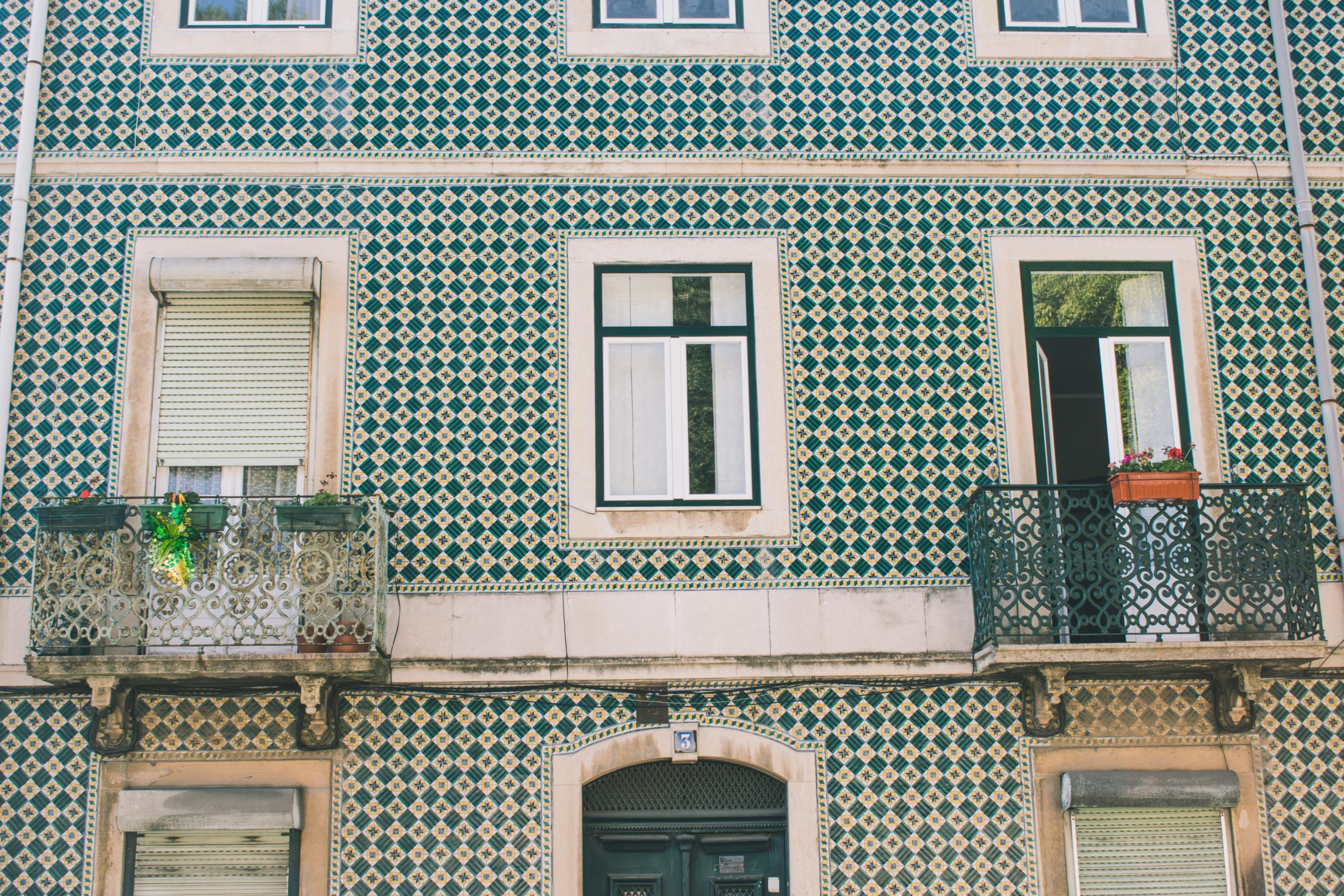
It would be naïve to discuss Miami architecture without acknowledging resilience.
The most sophisticated luxury developments are engineered with elevated foundations, reinforced concrete cores, impact-rated glazing, and advanced water management systems.
Rising sea levels and storm intensification have forced innovation, and the city’s infrastructure evolution has been widely documented by The New York Times.
What this means for you as a resident or guest:
- Verify flood zone classification.
• Ask about backup power systems.
• Check humidity control and HVAC sophistication—comfort in Miami is engineering-dependent.
True indulgence anticipates discomfort before it arises.
Material Matters—But Mood Matters More
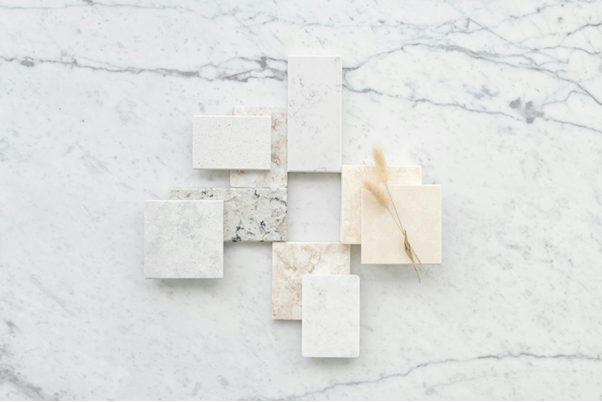
Marble is everywhere in Miami. So is travertine. So are European oak floors and Italian cabinetry. But materiality alone does not define spatial luxury.
Light does.
Humidity diffuses it differently than in drier climates.
Sunrise in Miami is pastel and reflective. Sunset turns towers into molten copper silhouettes. Architects here design for that atmospheric transformation.
- Large-format stone surfaces amplify reflection. Soft neutral palettes allow sky color to become interior art.
- Textured plaster walls absorb glare and create warmth against glass expanses.
The emotional effect is subtle but powerful. You don’t simply see the space. You inhabit its transitions
 Choosing With Intention
If you are exploring Miami’s luxury stays—whether for extended residence or seasonal immersion—approach it with both curiosity and discernment.
Ask yourself:
- Does this space amplify my daily rhythm or distract from it?
• Is indulgence here performative, or is it quietly functional?
• Does the architecture respond intelligently to climate and context?
Miami has mastered the art of architectural seduction. The skyline glitters. The water reflects. The terraces tempt.
But the most meaningful luxury here is not spectacle.
It is alignment—between design and environment, between service and privacy, between ambition and atmosphere.
Where architecture meets indulgence in Miami, the result is not excess – it is experience shaped by space.