The humble front door with sidelights has evolved from a purely functional necessity into one of architecture’s most compelling canvases for innovation. What once served merely as borrowed light for dark foyers has transformed into a sophisticated architectural statement that balances transparency with privacy, tradition with technology, and aesthetics with security. Today’s front door with sidelights represents far more than flanking glass panels; it’s a philosophical declaration about how we transition between public and private realms, how we welcome natural light while maintaining boundaries, and how we announce our design sensibilities before visitors even cross our threshold.
Think of sidelights as the supporting actors that make the leading role shine brighter. They’re the architectural equivalent of a perfectly composed photograph where negative space amplifies the subject rather than competing with it. When the future of window and door design is considered, these vertical sentinels flanking entry doors emerge as unexpected heroes in the narrative of contemporary architecture. Unlike traditional windows that simply puncture walls, sidelights create a rhythmic cadence, a visual symphony that orchestrates light, shadow, and human movement in ways that single doors never could.
The Psychology of Illuminated Transitions
There’s something profoundly human about our relationship with thresholds. We instinctively pause at doorways, mentally shifting gears between outside chaos and interior sanctuary. Sidelights acknowledge this transitional moment by dissolving the harshness of sudden darkness that greets you when opening a solid door into an unlit foyer. They’re like architectural dimmer switches, gradually modulating the shift between exterior brightness and interior intimacy.
Modern designers have recognized that sidelights function as much more than light conduits. They’re security features that allow homeowners to verify visitors without fully opening doors. They’re energy efficiency tools that reduce daytime reliance on artificial lighting. They’re psychological comfort zones that prevent entryways from feeling like isolated airlocks. The smartest implementations treat sidelights not as afterthoughts but as integral components of a holistic entry experience, where glass patterns, privacy levels, and proportions receive the same meticulous attention as door material and hardware selections.
Material Innovation: Beyond Basic Glass
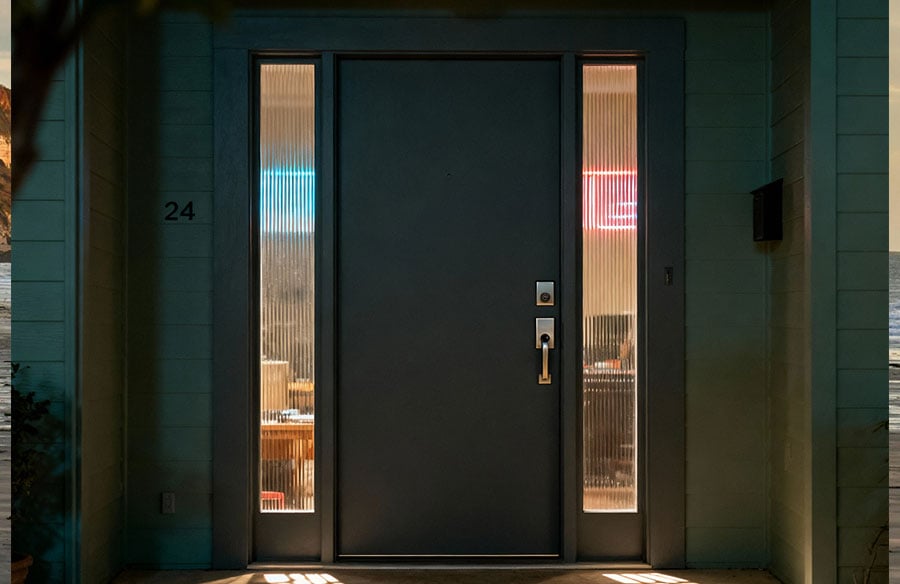
The materials conversation around sidelights has exploded beyond simple clear or frosted glass options. Contemporary architects are specifying everything from reeded glass that transforms sunlight into shimmering vertical streams, to custom art glass that functions as permanent installations, to smart glass technologies that adjust opacity on command. It’s comparable to how smartphone screens evolved from simple displays into responsive, adaptive interfaces; sidelights are undergoing a similar transformation.
Textured glass varieties create privacy without sacrificing luminosity, solving the age-old dilemma of wanting natural light without feeling like you’re living in a fishbowl. Some designers are incorporating unexpected materials like etched bronze, patinated copper panels with translucent sections, or even strategically placed mirror elements that bounce light deeper into entryways while obscuring direct sightlines. According to Architectural Digest, the trend toward maximizing natural light while maintaining privacy has made textured and patterned sidelights increasingly popular in high-end residential projects.
Proportion and Configuration: The Mathematics of Welcome
Getting sidelights right requires understanding proportion with the precision of a tailor measuring for a bespoke suit. Too narrow, and they read as apologetic afterthoughts. Too wide, and they compete with the door itself, creating visual confusion about where the actual entry point exists. The most successful configurations typically maintain sidelights at roughly one-quarter to one-third the width of the door itself, creating a balanced tripartite composition that feels intentional rather than arbitrary.
Symmetry Versus Asymmetry
Traditional installations favor matching sidelights flanking both sides of the door, creating classical symmetry that communicates stability and order. However, contemporary designs increasingly embrace single sidelights positioned on the hinge side, particularly in urban contexts where narrow lot widths make double sidelights impractical. This asymmetrical approach can feel refreshingly modern, like jazz improvisation within a classical structure, but it requires careful attention to ensure the composition doesn’t feel accidentally incomplete.
Vertical Emphasis and Scale
The height relationship between door and sidelights deserves equal consideration. Full-height sidelights that extend from floor to transom create dramatic vertical emphasis, making standard eight-foot ceilings feel more generous. Partial-height options that terminate at lock height offer privacy at eye level while still admitting overhead light. The choice depends entirely on site-specific factors: neighborhood character, interior layout, security concerns, and desired architectural presence.
Technical Considerations: Performance Beyond Aesthetics
Beautiful sidelights that leak air, transfer excessive heat, or compromise security represent expensive mistakes. Modern performance standards for sidelights mirror those for the doors they accompany, requiring attention to energy ratings, security glazing options, and weatherproofing details that integrate seamlessly with door jamb systems.
Triple-pane glass configurations with argon fills deliver thermal performance that rivals solid walls, making sidelights viable even in extreme climates. Impact-resistant glazing options provide hurricane protection without sacrificing aesthetics. And integrated shading systems, from retractable blinds to electrochromic glass, offer dynamic control over light and privacy throughout the day. These technical advances mean that choosing sidelights no longer requires compromising performance for beauty; you can legitimately have both.
Integration with Interior Design
The most sophisticated sidelight installations consider interior sightlines with the same rigor as exterior curb appeal. What do you see when looking through sidelights from inside? Does morning light hit that awkward wall angle, or does it illuminate a carefully curated console table? Do sidelights frame an attractive garden view, or do they expose the neighbor’s trash cans?
Smart designers use sidelights as interior design tools, positioning furniture and artwork to create curated vignettes visible from outside. It’s theatrical staging where the sidelights function as proscenium arches, framing intentional compositions that reward approaching visitors while maintaining privacy for daily living. This inside-outside consideration transforms sidelights from simple glazing into three-dimensional design elements that earn their keep from multiple perspectives.
The Future: Smart Glass and Adaptive Transparency
Emerging technologies promise sidelights that adapt to context and user preference. Electrochromic glass that transitions from transparent to opaque via smartphone control. Integrated LED systems that transform sidelights into programmable lighting features after dark. Biometric sensors embedded in sidelight frames that verify identity before unlocking doors. These innovations blur the boundary between architectural element and smart home interface, suggesting a future where sidelights become responsive participants in home security and energy management systems rather than passive glass installations.
The trajectory points toward increasingly sophisticated sidelights that balance competing demands: maximum daylighting with optimal privacy, enhanced security with welcoming transparency, traditional aesthetics with cutting-edge functionality. As architects continue rethinking what thresholds can be, sidelights will undoubtedly play an expanding role in how we design, experience, and understand the critical transition between public streets and private sanctuaries.