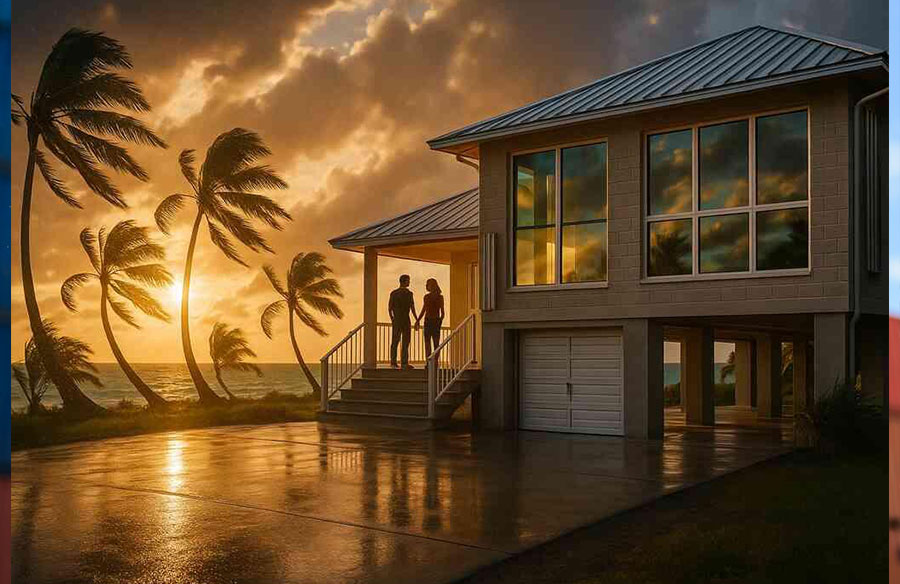
Eye of the Storm An Insider Introduction to Hurricane Proof Home Renovations
South Florida homeowners understand that every storm season brings another proving ground for building science. Experience shows that hurricane-proof home upgrades work only when they respect local microclimates, salt-laden winds, and relentless summer heat. This section explores the fundamental Florida wind mitigation techniques that have redefined residential safety from Key West to the Treasure Coast. Drawing on South Florida contractor insights gathered from countless coastal projects, we will dissect each component of a resilient building envelope. By the end, readers will see why the smartest investments combine structural logic, sustainable stormproof materials, and energy efficient hurricane retrofits.
Why South Florida Homes Demand Advanced Wind Mitigation
South Florida sits between the Atlantic and the Gulf, creating intersecting wind corridors that accelerate storm speeds. Traditional construction methods crumble when tornadic gusts uplift improperly anchored roofs or exploit gable end weaknesses. Residents therefore prioritize building envelope hardening, roof-to-wall anchoring methods, and structural tie-down hardware that channel forces safely to the foundation. Insurance carriers now reward homes demonstrating verified Florida wind mitigation techniques with measurable hurricane insurance premium credits. Ultimately, owners who invest early in hurricane-proof home upgrades avoid costly displacement, emotional turmoil, and drawn-out claim battles.
Advanced mitigation also guards against water intrusion, the silent destroyer that follows failed cladding. Continuous load path design keeps walls intact, but moisture barrier wall assemblies prevent saturation that breeds mold. By specifying coastal corrosion resistant fasteners, contractors further extend system life despite salt spray. These combined details transform an ordinary dwelling into a fortress that satisfies high-velocity wind testing standards while supporting sustainable daily living.
Decoding High Velocity Wind Testing Standards and Building Codes
Florida’s building code zones homes according to design wind speed, yet South Florida lies almost entirely in the High Velocity Hurricane Zone. Code sections require products to pass stringent impact and cyclic pressure tests, simulating flying debris and negative suction. General contractors in South Florida therefore study Miami-Dade approval numbers, ensuring every fastener pattern and uplift rating surpasses baseline criteria. Homeowners benefit from confidence, because compliance reduces the odds of catastrophic breach.
The testing language might feel technical, but it translates into tangible protection. For example, sheathing fastener spacing tightens to resist peel forces, and wall sheathing thickness increases near roof edges. Manufacturers must provide lab data proving panels remain in place after repeated positive and negative loads. When a South Florida contractor explains these reports, clients quickly see how science underpins safety. Meeting the code is not simply paperwork-it is life preservation engineered into every nail.
Continuous Load Path and Structural Tie Down Fundamentals
A continuous load path connects roof decking, trusses, walls, and foundation with engineered hardware so wind cannot isolate any component. Roof strapping to top plates, wall sheathing overlapping rim joists, and anchor bolts into the slab create one unified skeleton. Modern metal connectors made from hot-dip galvanized steel prevent corrosion, which is critical for coastal homes.
Structural tie-down hardware begins at the ridge and ends at the footer. Hurricane clips, hold-down rods, and tension ties channel uplift and shear loads straight into the ground. When installed properly by South Florida general contractors who follow manufacturer instructions, this network handles forces several times greater than outdated toe-nailed framing. The result is fewer warranty claims, lower insurance bills, and homes that stay intact even when neighboring properties fail.
Miami Dade Approved Roofing Systems and Spray Foam Roof Sealing
Roof failures cause cascading interior damage, so Miami-Dade approved roofing systems remain non-negotiable. These assemblies combine high-performance underlayment, secondary water barriers, and mechanically attached shingles or tiles with laboratory-verified uplift resistance. Contractors often pair them with spray foam roof sealing to create an adhered membrane that blocks wind-driven rain.
Spray foam also boosts thermal performance, reducing cooling loads throughout South Florida’s long summer. By sealing decking seams, it eliminates weak points where negative pressure can enter. When a Boca Raton renovation contractor integrates attic ventilation for high-wind zones alongside foam, homeowners achieve both energy efficiency and structural resilience. This synergy exemplifies how sustainability and safety share the same roof plane.
Impact Resistant Windows and Code Compliant Hurricane Shutters
Impact-resistant windows installation relies on laminated glass layers bonded by flexible interlayers. When debris strikes, the glass webs yet remains intact, stopping projectiles from breaching the building envelope. Frames anchored with stainless steel screws resist salt corrosion, keeping the system secure year after year.
Despite window advances, code-compliant hurricane shutters still serve as secondary defense, particularly for budget-conscious upgrades. Accordion or roll-down types deploy quickly and meet design pressures when installed by experienced Delray Beach home builders. Combining permanent impact glazing on upper floors with shutters on ground-level expanses balances cost and coverage. Either way, verifying Miami-Dade approvals ensures true performance, not marketing hype.
Reinforced Garage Doors and Storm Rated Entry Doors
Garage doors cover expansive openings, yet many older models buckle under minimal pressure. Reinforced garage door solutions incorporate vertical bracing, heavier gauge tracks, and wind-lock rollers that anchor panels during gusts. Certified installers calculate design pressures based on home orientation, ensuring proper bar spacing.
Storm-rated entry doors use solid composite cores, multi-point locking hardware, and impact glass inserts. When paired with roof-to-wall anchoring methods, these portals prevent sudden internal pressurization that can lift roofs. West Palm Beach renovations often upgrade both garage and entry doors simultaneously, securing the weakest points in a single project phase.
Concrete Block Storm Walls and Coastal Home Elevation Retrofit
Masonry walls built from reinforced concrete block deliver unmatched mass and stiffness against lateral loads. By filling cells with grout and steel, builders craft storm walls that dissipate wind forces without cracking. Homes originally framed with wood can receive partial block retrofits at critical corners, improving overall rigidity.
Where flood risk eclipses wind threat, a coastal home elevation retrofit lifts the structure above base flood elevation. Pilings, helical piers, and concrete columns raise living areas while leaving breakaway enclosures below. These projects demand precise engineering and coordination with FEMA flood zone renovation tips, yet they pay dividends through reduced insurance rates and preserved valuables.
Flood Resistant Flooring Materials and Moisture Barrier Wall Assemblies
When water inevitably enters, flooring decides whether cleanup is a minor inconvenience or a major rebuild. Flood-resistant flooring materials such as porcelain tile, luxury vinyl planks, and polished concrete withstand submersion without warping. Installers use waterproof adhesives, backer boards, and capillary breaks to stop hidden seepage.
Moisture barrier wall assemblies complement these floors by combining closed-cell spray foam insulation, cementitious boards, and ventilation gaps. Boynton Beach renovations frequently replace traditional drywall with fiber-cement panels in lower stories. Together, these details limit mold growth, safeguard indoor air quality, and hasten post-storm recovery.
Generator Ready Electrical Panel Upgrades and Attic Ventilation for High Wind Zones
Grid failures follow hurricanes as certainly as rain follows clouds. Generator-ready electrical panel upgrades include interlock kits, dedicated transfer switches, and surge protection devices. Electricians size circuits to handle critical loads like HVAC, refrigeration, and medical equipment, ensuring continuity of comfort and safety.
Attic ventilation for high-wind zones deserves equal emphasis. Hip vents, baffled ridge vents, and low-profile turbines release heat while resisting blow-in rain. Combined with spray foam roof sealing, they maintain balanced pressure, lowering uplift potential. Smart homeowners integrate both electrical and ventilation improvements in one permit package, streamlining inspections.
Resilient Landscaping and Seamless Gutter Hurricane Protection
Resilient landscaping for storm defense emphasizes native salt-tolerant plants with deep rooting systems that anchor soil. Strategically placed windbreak hedges deflect gusts, reducing pressure on walls. Pervious pavers around patios encourage rapid drainage, limiting hydrostatic buildup near foundations.
Seamless gutter hurricane protection keeps water from cascading down facades, where it can infiltrate cladding joints. Heavy-gauge aluminum gutters secured with hidden hangers and stainless fasteners resist wind lift. Integrated leaf guards prevent clogging during the frantic cleanup period when professional help may be scarce. In Boca Raton remodelers often synchronize gutter installs with soffit upgrades, yielding a cohesive exterior envelope.
Leveraging Hurricane Insurance Premium Credits with Verified Upgrades
Florida statutes incentivize homeowners to invest by offering hurricane insurance premium credits for verified mitigation features. Insurers dispatch inspectors who verify elements such as continuous load path design, impact-resistant windows, and Miami-Dade approved roofing systems. Each documented upgrade translates into percentage savings, compounding over the policy’s life.
Accurate paperwork matters as much as hardware. Photographs, product approval sheets, and contractor affidavits build a dossier proving compliance. Savvy clients keep digital copies on cloud storage for swift retrieval after storms. One mention of South Florida Contractors often appears within these reports, reflecting its reputation as a directory of vetted experts who understand both codes and carrier requirements.
After the Wind Settles A South Florida Contractor Conclusion for Resilient Living
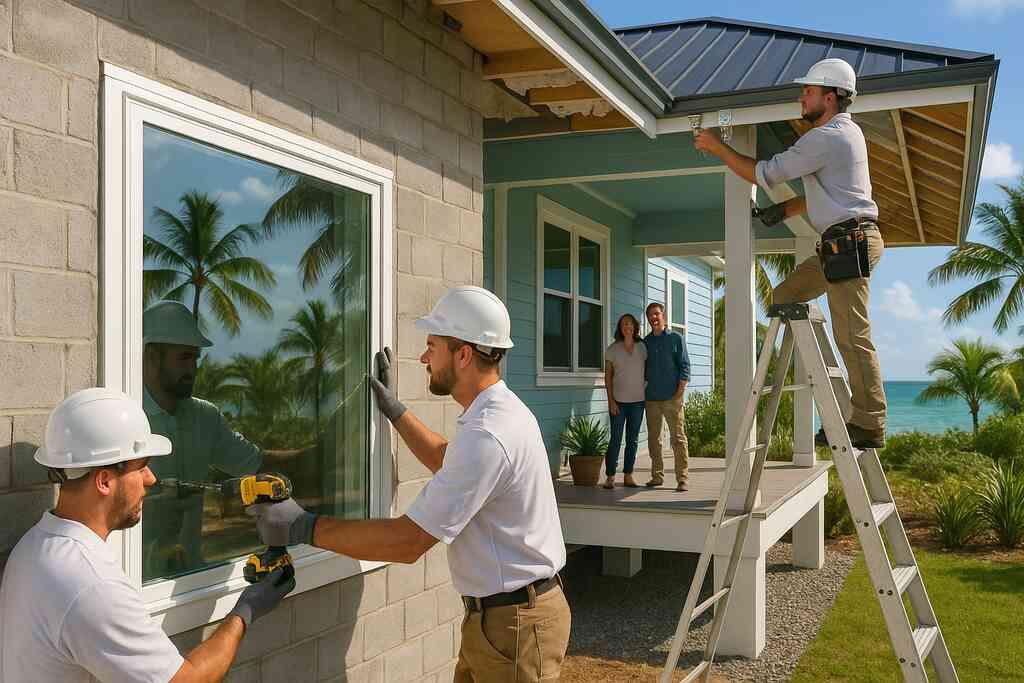 Building Envelope Hardening as a Long Term Investment
Building envelope hardening delivers peace of mind that outlives short-term décor trends. When homeowners strengthen roof-to-wall anchoring methods, reinforce sheathing, and upgrade impact-resistant windows installation, they establish value that compounds like interest. Insurance incentives amplify returns while lowering lifetime ownership costs. Unlike cosmetic makeovers, envelope fortifications rarely become obsolete, because high-velocity wind testing standards will only grow stricter. Forward-thinking residents therefore treat every clip, strap, and coastal corrosion resistant fastener as a permanent asset.
Financial models confirm the wisdom. Appraisers in hurricane-prone markets assign higher resale premiums to homes boasting continuous load path design and Miami-Dade approved roofing systems. Buyers know replacement expenses dwarf upfront price differences, so they bid aggressively for verified resilience. Energy efficient hurricane retrofits further sweeten operating budgets by trimming cooling loads during sticky seasons. The outcome is a property that protects families, preserves capital, and promotes sustainable living for decades.
Post Storm Home Inspection Checklist for Continuous Safety
A disciplined post-storm home inspection checklist begins outside. Walk the perimeter looking for displaced shingles, cracked concrete block storm walls, or torn seamless gutter hurricane protection. Photograph issues immediately, because moisture intrusion can accelerate hidden decay within hours. Next, examine attic ventilation for high-wind zones to confirm screens remain intact and no daylight peeks through decking joints. Record temperature differences that might signal compromised spray foam roof sealing.
Move indoors with the same rigor. Check door thresholds for swelling, floors for cupping, and walls for fresh stains indicating failed moisture barrier wall assemblies. Test every outlet on a generator-ready electrical panel upgrade to verify ground fault protection still functions. Cycle HVAC systems and monitor humidity readings to prevent mold colonization. By following this systematic approach after each event, owners maintain structural integrity and avoid costly surprises that surface months later.
Choosing the Right South Florida Contractor Near You
Selecting a south Florida contractor near you requires more than scrolling reviews. Begin by confirming licensure, insurance, and documented hurricane-proof home upgrades in previous projects. Ask candidates for references that specifically highlight Florida wind mitigation techniques, not generic remodeling. Request verification of training on structural tie-down hardware manufacturers’ specifications, because installation errors void warranties. Finally, compare detailed scopes rather than headline prices to understand who supplies premium coastal materials.
Local familiarity also matters. Contractors accustomed to Palm Beach permitting portals streamline approvals, whereas outsiders stumble through red tape. A reputable contractor in South Florida will anticipate inspection sequences, coordinate engineering affidavits, and stage deliveries around afternoon squalls. Their fluency with municipal deadlines minimizes delays that expose homes to rain during roof transitions. Diligence at this stage sets the tone for a stress-free renovation experience.
From Boca Raton Remodelers to West Palm Beach Renovations Regional Expertise Matters
Every coastal microclimate carries unique pressures. Boca Raton remodelers routinely confront salt-spray corrosion that shortens fastener life, so they specify stainless hardware even on interior partitions. West Palm Beach renovations face slightly higher design wind speeds, prompting closer rafter spacing and heavier gauge metal connectors. Delray Beach custom home crews design covered lanais to redirect gusts funneling between intracoastal waterways and ocean surf.
Boynton Beach renovations often grapple with high water tables demanding meticulous drainage plans beneath pilings. General contractors in South Florida who rotate crews across counties internalize these lessons and adapt details automatically. Their accumulated regional expertise trims contingencies, because they already own specialized equipment for each terrain. Homeowners therefore gain tailored resilience instead of one-size-fits-none solutions borrowed from distant states.
Sustainable Stormproof Materials Driving Energy Efficient Retrofits
Sustainable stormproof materials now deliver dual dividends. Closed-cell spray foam, for example, strengthens decking against uplift while creating an unbroken thermal barrier that lowers cooling loads. Fiber-cement cladding made from recycled content resists both impact and termites, extending façade life without biocide treatments. Luxury vinyl plank flooring derived from post-industrial scrap shrugs off floods and eliminates hardwood deforestation concerns.
When paired with high-performance low-e laminated glazing, these components slash greenhouse gas emissions linked to air conditioning. They also qualify for green financing programs that reward energy efficient hurricane retrofits. The circular benefit chain is clear: durable materials reduce waste, save utilities, and protect occupants during extreme weather. Savvy home builders in Florida integrate them as standard, not upgrades.
FEMA Flood Zone Renovation Tips and Water Intrusion Prevention
Working within FEMA flood zones demands precision. Elevate mechanical systems above projected surge levels and install flood-resistant flooring materials below design flood elevation. Use vents in breakaway walls to equalize hydrostatic pressure, preventing catastrophic structural failure. Apply waterproof membranes behind exterior finishes to create redundant protection when wind-driven rain overwhelms cladding.
Water intrusion prevention also hinges on proper flashing geometry. Kick-out diverters at roof-wall intersections steer torrents away from siding, while capillary breaks behind masonry dissipate trapped vapor. Coastal builders often add continuous draining planes using furring strips, allowing walls to dry quickly. These nuanced details differentiate true mitigation specialists from casual remodelers and keep insurance claim histories pristine.
Next Steps Mapping Your Renovation Timeline and Budget
Effective timelines start with permitting. Allocate generous lead times for engineering approvals, especially for concrete block storm walls or coastal home elevation retrofit plans. Parallel tasks whenever possible; order impact-resistant windows while foundation work proceeds. Buffer schedules for unpredictable afternoon thunderstorms that stall exterior crews. Communicate milestones weekly so owners, trades, and inspectors stay aligned.
Budgeting follows similar discipline. Separate allowances for contingency items like hidden rot or electrical panel upgrades uncovered during demolition. Compare material lead time costs against expedited freight charges to avoid rush premiums. Remember that generator-ready electrical panel upgrades and reinforced garage door solutions qualify for hurricane insurance premium credits, offsetting upfront investment. Transparency at every phase fosters trust and keeps projects on course.
Futureproof Confidence Living Securely in the Sunshine State
Resilient living transcends any single upgrade; it reflects a mindset of proactive stewardship. Homeowners who embrace continuous learning, periodic inspections, and incremental improvements cultivate properties capable of withstanding tomorrow’s storms. Building envelope hardening, sustainable materials, and rigorous maintenance coalesce into a fortress that still feels welcoming and efficient.
With these practices embedded, families enjoy coastal sunsets without anxiety when forecasts darken. They know structural tie-down hardware anchors roofs, spray foam roof sealing blocks wind-driven rain, and generator-ready circuits safeguard modern conveniences. Confidence replaces fear, allowing residents to savor all the beauty the Sunshine State offers while remaining prepared for whatever weather arrives.