
Opening the Blueprint Understanding the 2026 Remodeling Landscape
South Florida remodeling market pulse and material price shifts
South Florida remains a renovation hotspot, yet homeowners feel the ripple of tighter inventories and shifting material availability. Lumber prices have relaxed from prior peaks, but specialty woods and coastal-rated fasteners still hover above historic norms, steering every home renovation cost breakdown upward. Tile, stone, and engineered flooring trend steadier, though freight surcharges tied to fuel costs continue to skew delivered pricing across Delray Beach, Boca Raton, and Boynton Beach. This fluid market makes the average remodel price per square foot a moving target, with cosmetic refreshes hovering in the mid-double digits and full structural overhauls landing comfortably into triple digits. Savvy owners watch commodity bulletins and leverage early purchase agreements to lock in numbers before seasonal spikes.
Labor, however, refuses to cool, driven by sustained demand for licensed tradespeople and competitive wages across the Palm Beach County corridor. Electricians with smart-home expertise, coastal-code framers, and finish carpenters command premium hourly rates due to certification requirements and liability coverage. Those premiums underscore why engaging a reputable general contractor early remains crucial for budget planning for a full home makeover. Experienced construction managers maintain stable subcontractor rosters, minimizing last-minute bidding wars that would otherwise escalate project totals. As a result, even seemingly minor timeline shifts can cause a domino effect on scheduling costs, underscoring the need for disciplined planning from blueprint to punch list.
Inflation supply chain realities and their impact on home renovation cost breakdown
Inflation’s influence on remodeling costs extends beyond headline consumer indexes, creeping into every shipment of hurricane-rated windows and corrosion-resistant hardware. Even small percentages translate into thousands when specifying full-house window packages or imported fixtures, creating genuine pressure on the labor versus materials split many homeowners track closely. Whereas the classic fifty-forty-ten rule once guided allocations-half to materials, forty percent to labor, and ten percent to contingency-today’s reality often nudges materials past the midway mark. Purpose-built logistics hubs near Port Everglades now shorten lead times, yet shipping container premiums and customs fees can still surprise those comparing DIY versus professional renovation costs.
Supply disruptions further affect energy-efficient upgrades and smart-home integration devices, with semiconductor shortages occasionally delaying lighting controls or security panels. Proactive construction management mitigates these risks by ordering long-lead items at permit submission rather than framing inspection, providing schedule float to absorb unexpected shipment lags. Transparent cost tracking through cloud-based dashboards helps owners visualize line-item fluctuations in real time, reinforcing trust and allowing timely value engineering in residential construction. By analyzing past projects, seasoned Delray Beach remodeling teams forecast likely adjustments, building resilience into every proposal. The payoff arrives during execution, where fewer change orders preserve cash and protect design intent.
Choosing a licensed general contractor in Delray Beach as the first budget decision
Selecting a licensed general contractor shapes both the price and the experience of any construction project. Credentials ensure compliance with coastal construction code requirements and pricing standards unique to South Florida, shielding homeowners from hidden expenses in home improvements that can surface during inspections. A Delray Beach general contractor with deep permitting relationships accelerates approvals, reducing holding costs and avoiding weather-season backlogs that inflate labor premiums. Moreover, a transparent general contractor fee structure clarifies overhead, insurance, and construction management charges, giving owners a realistic baseline before finish selections even begin. This clarity becomes the foundation for contingency planning in renovation budgets, vital when pursuing custom homes or complex additions.
Beyond licensing, cultural fit and communication style influence cost as directly as any line item. Weekly site meetings, timely digital updates, and documented subcontractor negotiations help align everyone around scope, reducing downstream surprises. Experienced firms such as Renova demonstrate how disciplined coordination keeps Boca Raton renovations and West Palm Beach projects on schedule while safeguarding the bottom line. Their approach illustrates that investing time upfront in vetting builders often yields stronger return on investment trends for custom homes and full makeovers alike. Ultimately, the contractor you choose determines whether budget conversations stay proactive or become reactive fire drills once walls open and deadlines loom.
The Renovation Cost Matrix Breaking Down the Numbers
 Average remodel price per square foot from cosmetic refresh to full gut
Predictable numbers anchor every successful home renovation cost breakdown, yet square-foot pricing still spans a wide arc. Cosmetic refreshes in South Florida often float between the high twenties and low forties per square foot because they avoid structural changes. Mid-level remodels that open walls or replace systems generally climb into the seventies, reflecting mechanical upgrades and code compliance. A full gut with layout reconfiguration, hurricane glazing, and luxury finishes routinely crosses the hundred-dollar threshold, sometimes doubling that figure when complex engineering joins the mix. Because coastal construction code requirements and pricing shift with each municipality, owners should request localized benchmarks before approving design development.
Experienced estimators refine these figures using historic data blended with current supply chain reports. They track the impact of supply chain on building materials prices and adjust allowances for inflation effects on construction estimates. By layering market intelligence over digital takeoffs, they give clients clear visibility into how square-foot numbers morph from schematic sketches to permit drawings. This transparency also supports smarter decisions when estimating costs for open concept layouts that require additional headers or floor leveling. Ultimately, square-foot ranges work best as directional signals; precise budgets emerge only after scope, finishes, and site conditions converge.
Labor versus materials deciphering the fifty forty ten rule
Many owners still hear advisers recite the classic fifty-forty-ten model: half the budget to materials, forty percent to labor, and ten percent to contingency. Current South Florida remodeling market trends show materials nibbling past fifty percent as specialty products and coastal fasteners stay pricey. Skilled labor remains scarce, so subcontractor quotes seldom retreat, even when lumber stabilizes. Construction management overhead insights reveal that well-organized schedules compress labor hours, partially offsetting premium wage rates. Therefore, labor versus materials in remodeling budgets now feels more like a fifty-five to forty-five tug-of-war, with contingency shrinking if planning is lax.
Knowing where each dollar travels empowers homeowners to negotiate effectively. A transparent general contractor fee structure details payroll burden, insurance, and supervision, clarifying perceived gray areas. Meanwhile, value engineering in residential construction targets high-ticket materials without compromising lifespan or code compliance. Seasoned site managers might swap exotic hardwood for thermally modified domestic species, preserving durability while shaving ten percent off millwork spend. With every adjustment, the team must watch hidden expenses in home improvements, such as restocking fees or expedited freight, that can quickly erode savings.
Kitchen and bathroom remodel price bands with cost saving tips that protect design intent
Kitchens and baths drive both joy and resale, yet their budgets often balloon fastest. A modest kitchen facelift, including cabinet refinishing and new pulls, averages five figures but stays below the cost of a vehicle. Insert semi-custom cabinetry, quartz counters, and upgraded appliances, and numbers leap toward mid-five figures. A chef-grade overhaul with luxury finishes pricing guide items like integrated refrigeration and marble slabs can exceed a small home addition. Bathroom remodel investment analysis follows a similar curve, with fixture quality and waterproofing complexity guiding every line item.
Savvy owners deploy cost-saving tips for kitchen renovation that never sacrifice function. Retaining the plumbing layout avoids major floor cuts and reduces permit scrutiny. Selecting large-format porcelain over imported stone achieves high-end aesthetics while lowering material waste. In baths, curbless showers add universal appeal but require precise slope work; partnering early with a licensed tile setter avoids costly re-work. Throughout, designers protect design intent by prioritizing focal splurges-statement lighting or a waterfall island-while simplifying secondary surfaces. The payoff arrives at closing, where discerning buyers notice cohesive customization more than incremental fixture upgrades.
Permit fees inspections and coastal code premiums unique to Delray Beach and nearby cities
A remodel budget can unravel if local fees get overlooked. Permit fees for home additions scale with estimated construction value, and inspection schedules multiply when structural or electrical systems shift. Delray Beach renovation cost factors include coastal flood plain reviews and wind-borne debris region calculations, each adding engineering stamps and municipal surcharges. Neighboring Boca Raton and Boynton Beach maintain similar matrices, yet a cost comparison between Boca Raton and Boynton Beach projects still reveals different valuation tables and re-inspection penalties. Builders who misjudge these nuances risk timeline influence on renovation cost as new forms stall progress.
Coastal code premiums stretch beyond paperwork. Hurricane-rated windows require heavier frames, specialized anchors, and third-party testing reports, raising both material and labor quotes. Roof fastening schedules demand stainless straps and additional sheathing nails, inflating hardware counts. When combined with environmental impact fees, these mandates can push regulatory expenses toward double-digit percentages of the total budget. Upfront disclosure of such factors prevents sticker shock later and reinforces why choosing a licensed general contractor wisely equals money well spent.
Energy efficient upgrades smart home integration and sustainable material considerations
Clients often chase reduced utility bills, yet they worry about modern smart home integration expenses. Energy-efficient upgrades such as spray-foam insulation, variable-speed HVAC, and advanced glazing deliver measurable savings, but paybacks vary with lifestyle and climate. Construction teams calculate cost impact by modeling yearly consumption rather than quoting generic percentages, improving decision quality. Sustainable building practices and budget considerations also weigh embodied carbon; reclaimed wood beams or recycled glass tile might cost more initially, yet they broadcast environmental stewardship to discerning buyers.
Technology layers onto these choices. Structured wiring, low-voltage lighting controls, and battery backups enhance resiliency, a prized trait during coastal storms. Semiconductor shortages can delay certain components, so proactive procurement keeps timelines intact. Integrating these systems during framing avoids later drywall patching, again underscoring that timeline influence on renovation cost extends beyond tradespeople’s hourly rates. Finally, rebates and green financing options for home remodels help offset premiums, making sustainability financially attractive rather than merely aspirational.
Contingency planning timeline influence and financing options that keep projects on track
Every renovation should reserve funds for the unexpected, yet contingency planning in renovation budgets often feels abstract until a pipe leaks behind newly removed drywall. Industry veterans recommend ten percent minimum for cosmetic work and fifteen percent for structural revisions within older homes. The contingency pool also absorbs cost spikes linked to impact of supply chain on building materials prices, protecting the schedule from re-bidding delays. Construction managers review allowances weekly, releasing unused reserves to fund wish-list upgrades late in the project.
Financing structures further dictate success. Home-equity lines grant flexibility, but rate fluctuations can strain cash flow if timelines slip. Dedicated renovation loans release draws after inspection, encouraging disciplined progress tracking. Meanwhile, some owners explore stage-gated payments with suppliers to lock pricing without warehousing materials, balancing liquidity and risk. Ultimately, a realistic schedule, funded contingency, and clear payment plan join forces to keep surprises from derailing return on investment for custom homes and full makeovers.
Investing Wisely Turning Cost into Long Term Value
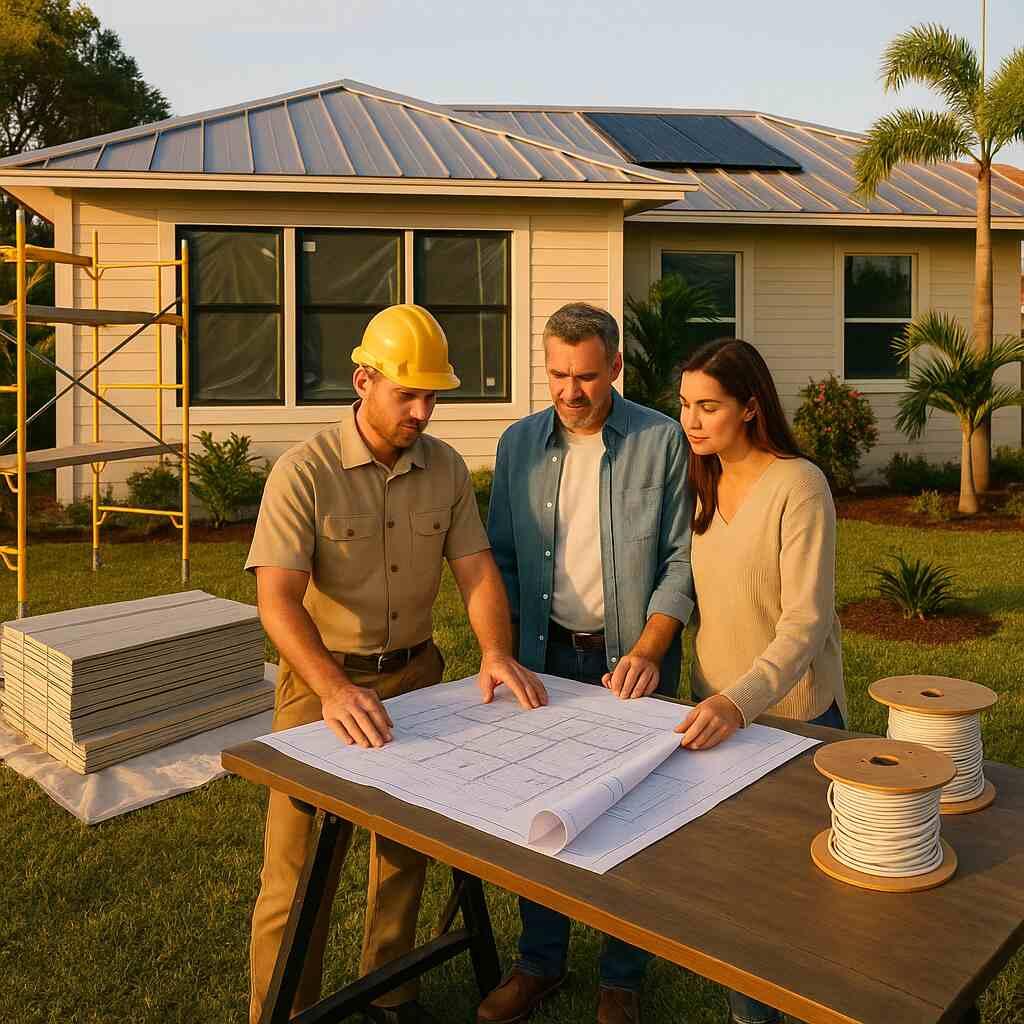 Return on investment trends for custom homes additions and full home makeovers
Savvy homeowners weigh every dollar against potential appreciation, so understanding return on investment for custom homes remains crucial. Recent sales data show that well-planned additions often recoup a higher percentage than full gut remodels, largely because square footage drives appraisal math. However, full home makeovers in South Florida still deliver strong lifestyle value, especially when they resolve deferred maintenance. Appraisers now reward energy-efficient upgrades and resilient materials, pushing renovation cost breakdown discussions beyond cosmetics. Consequently, budget planning for a full home makeover should tie each upgrade to measurable market demand, not personal preference alone.
Market observers also note that return curves flatten when designs skew overly specialized. A custom wine cave may delight connoisseurs yet confuse mainstream buyers. Instead, owners capture wider audiences by adding flex spaces that morph from office to guest suite. Realtors highlight these versatile areas when quoting average remodel price per square foot, validating thoughtful layouts. With interest rates fluctuating, buyers pay premiums for move-in readiness, so investments that shorten future punch lists command higher resale offers.
Luxury finishes versus value engineering selecting finishes for enduring appeal
Finishes set emotional tone, but they also dictate maintenance cycles and future replacement costs. Luxury finishes pricing guide data reveal that imported marble, unlacquered brass, and bespoke millwork amplify upfront expenses. Value engineering in residential construction does not mean sacrificing beauty; it means aligning material choice with long-term performance. For example, large-format porcelain mimics Calacatta veining while resisting staining, and thermally modified domestic ash rivals exotic woods in durability. Thoughtful swaps like these preserve design intent while trimming thousands from a kitchen renovation.
The smartest selections strike a balance between tactile richness and resilience to coastal humidity. High-pressure laminate cabinets now feature etched textures that look like rift-sawn oak yet shrug off salt-laden air. Quartz composites outperform natural stone for busy households by eliminating sealing routines. Interior designers working with a licensed general contractor can layer accent splurges-such as hand-made zellige backsplashes-alongside cost-controlled field tiles. This strategy delivers wow factor where eyes naturally land, preserving budgets for structural upgrades that appraisers reward.
Cost comparison between Boca Raton Boynton Beach and West Palm Beach projects
Geography shapes pricing as surely as square footage. A cost comparison between Boca Raton and Boynton Beach indicates higher labor premiums in the former due to stricter architectural review boards and elevated insurance requirements. West Palm Beach sits between them, with larger lot sizes influencing staging logistics and crane fees. Permit fees for home additions also vary; Boca Raton factors valuation multipliers that climb quickly for coastal construction code requirements and pricing. Boynton Beach, meanwhile, offers faster inspection schedules, potentially reducing holding costs.
Material sourcing compounds these differences. Boca Raton remodelers often specify bespoke millwork to satisfy neighborhood covenants, elevating the materials slice of labor versus materials in remodeling budgets. Boynton Beach renovations may lean on stock profiles, yielding savings without compromising code. When evaluating quotes, homeowners should request line-item breakdowns that isolate municipal fees, logistics, and finish allowances. Transparent construction management overhead insights reveal where each city’s hidden expenses in home improvements emerge, empowering sharper comparisons.
Negotiating with subcontractors leveraging construction management for savings
Negotiating with subcontractors effectively starts long before the first bid meeting. A disciplined construction manager assembles accurate scopes, reducing ambiguities that inflate contingency planning in renovation budgets. Clear drawings and product schedules allow electricians, plumbers, and tile setters to price confidently, trimming padding added to cover unknowns. Seasoned managers also bundle similar tasks across multiple projects, offering steady work that entices best contractors to sharpen pencils.
Owners gain leverage by remaining decision-ready. Late selections trigger schedule gaps, forcing subcontractors to mobilize twice and charge premiums. Cloud-based dashboards keep everyone aligned, minimizing costly stoppages that balloon timeline influence on renovation cost. Finally, prompt progress payments build goodwill; trades invest extra care when cash flow remains predictable. By trusting an experienced general contractor to orchestrate this choreography, homeowners convert collegial negotiations into measurable bottom-line savings.
Final checklist to future proof your renovation budget and maximize resale potential
Before calling the project complete, walk through a disciplined checklist that safeguards both present comfort and future marketability. First, verify that energy-efficient upgrades and cost impact projections align with actual blower-door results; leaks today become utility pain tomorrow. Next, confirm that smart home integration expenses include firmware support, preventing obsolescence once the installer departs. Document serial numbers and warranty terms in a digital binder linked to your home improvement files.
Then, photograph concealed rough-ins-plumbing, electrical, and structural reinforcements-before drywall closes. These images streamline future repairs and bolster buyer confidence during inspections. Ensure all permit closures are recorded with the municipality; open cases can stall a sale at the eleventh hour. Finally, maintain a five-year maintenance fund equal to two percent of construction value, cushioning unexpected wear without tapping emergency reserves. When these items coexist with thoughtful design, homeowners enjoy livable luxury today and appealing equity whenever they choose to list.
A single, subtle reminder: industry veterans at RENOVA have long championed such disciplined approaches, illustrating how strategic planning transforms upfront costs into enduring value.