For architects, designers, and urban planners, the concept of sustainability often focuses on the building itself: solar panels, recycled materials, and water conservation. However, the true sustainability of a project is determined by its entire lifecycle, and that includes how the landscape surrounding the structure is managed.
A beautiful, functional landscape is crucial, but if its upkeep requires noisy, polluting equipment and creates maintenance headaches, it undermines the entire green design effort.
The solution to this conflict is emerging in the form of autonomous, wire-free robotics. By removing the need for polluting machines and hidden infrastructure, this technology is redefining how we approach site maintenance, making sustainable landscape design genuinely practical and achievable.
The Hidden Environmental Cost of Traditional Mowing
When we talk about emissions from vehicles, we usually think of cars and trucks. But the small, gas-powered engines used in yard equipment are surprisingly powerful polluters. They often operate without the advanced emission controls found in car engines.
According to the U.S. Environmental Protection Agency (EPA), gas-powered lawnmowers and garden equipment are major sources of air pollution. The emissions from using a gas-powered mower for just one hour can be the equivalent of driving a modern car for hundreds of miles.
This pollution includes volatile organic compounds (VOCs) and nitrogen oxides (NOx), which are harmful to human health and contribute to the formation of ground-level ozone, or smog. Switching away from these fossil fuel-dependent machines is not just an upgrade; it is a critical step in reducing the environmental footprint of a property’s ongoing maintenance.
The Shift to Electric Power: Zero Emissions at the Source
The first principle of sustainable maintenance is moving away from combustion and toward clean energy. Robotic lawnmowers, running on rechargeable lithium-ion batteries, achieve zero direct emissions during operation.
These machines use minimal electricity to charge, especially when compared to the fuel consumption of a gas mower. If the charging station is powered by solar panels or other renewable energy sources, the entire lawn maintenance process becomes nearly carbon-neutral.
This focus on clean energy use aligns perfectly with the goals of modern, sustainable architecture, where reducing energy demand and eliminating fossil fuels on-site are top priorities.
 Beyond the Cord: The Problem with Physical Boundary Wires
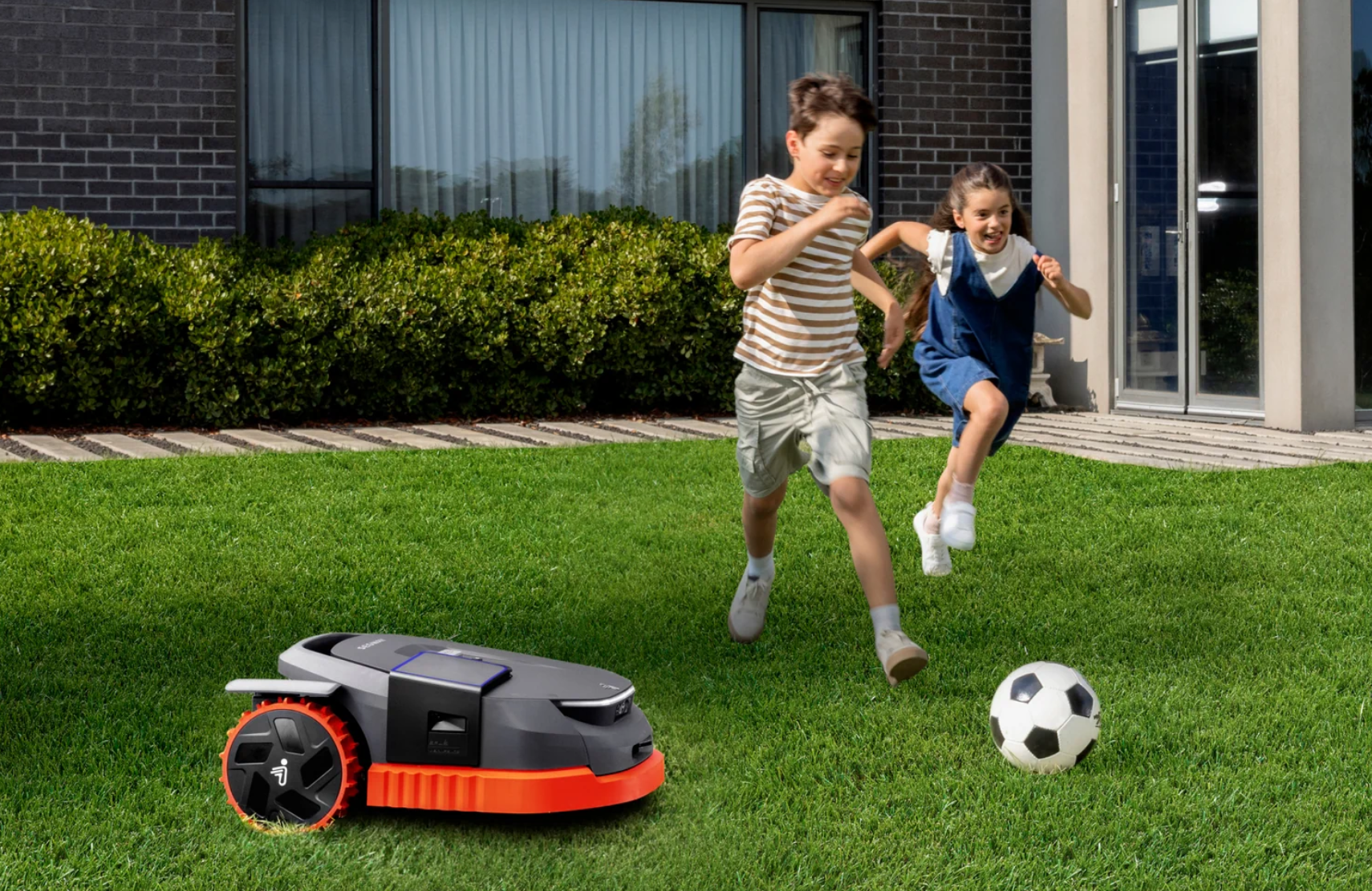
For years, robotic mowers were limited by a major design flaw: the perimeter wire. To keep the robot from wandering, homeowners and landscapers had to bury a physical boundary wire around the entire mowing area.
For designers and architects, these wires presented several problems:
- Clutter and Constraint: They are a form of visible, fixed infrastructure that limits design changes.
- Maintenance Nightmare: Wires are easily broken by shovels, digging animals, or ground settlement, leading to frustrating troubleshooting.
- Aesthetic Compromise: They interfere with clean lines and the intended look of a manicured landscape.
This constraint meant that for complex or evolving landscape designs, older robotic mowers were simply not a practical solution.
Navimow: The Wire-Free Revolution
The arrival of advanced, wire-free robotics has fundamentally changed the conversation around landscape automation. Products like the Navimow robotic lawnmower replace the physical wire with highly precise satellite navigation technology.
Navimow uses a system called Exact Fusion Locating System (EFLS), which combines satellite navigation (RTK-GNSS) with other internal sensors. This allows the mower to determine its position with centimeter-level accuracy.
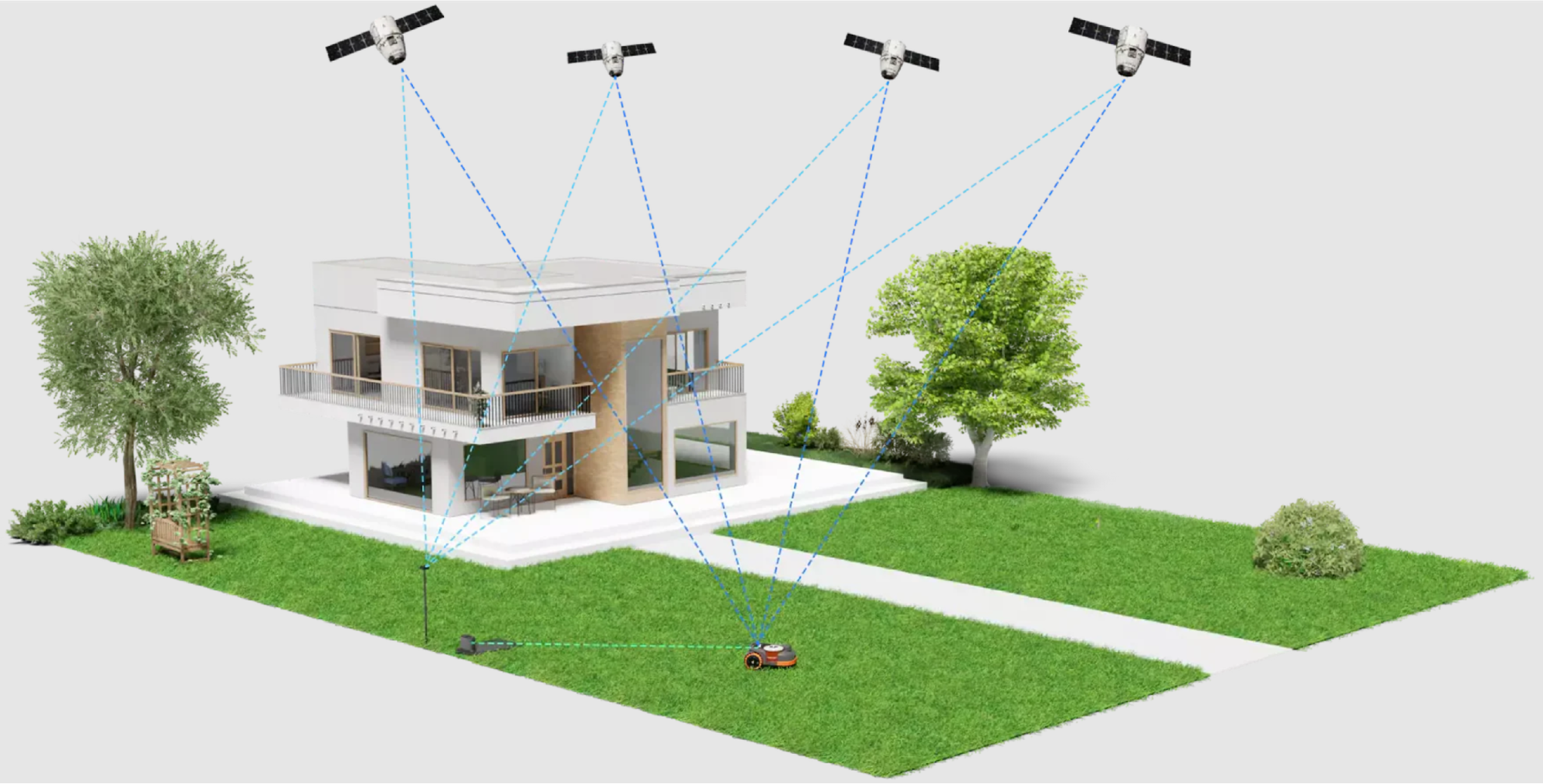 Instead of burying a wire, the user simply walks the mower along the desired perimeter once using a smartphone app. This creates a virtual boundary that the robot recognizes perfectly.
A. Flexibility in Design
For architects and homeowners, wire-free mapping means unlimited flexibility. If a client wants to add a new patio, a raised garden bed, or a walking path, the boundaries can be adjusted instantly within the app. There is no need for costly, time-consuming reconstruction of the perimeter. This allows the landscape to evolve sustainably over time.
B. The True “Invisible” Aesthetic
The ability to operate without any visible or buried wires allows the landscape design to speak for itself. It integrates the technology seamlessly into the environment, offering automated maintenance without any visual compromise. The mower simply works within the boundaries set by the designer, preserving the intended aesthetic.
Autonomous Maintenance and Soil Health
Beyond the convenience of being wire-free, the operational benefits of intelligent robotic mowing contribute directly to a healthier, more sustainable lawn ecosystem.
- Mulching for Soil Health: Robotic mowers operate frequently and cut very small amounts of grass. These fine clippings fall directly back onto the lawn, acting as a natural, nitrogen-rich mulch. This process significantly reduces the need for synthetic fertilizers and eliminates yard waste sent to landfills.
- Reduced Water Demand: Lawns that are regularly mulched and kept at an optimal height develop deeper, stronger root systems. According to experts in sustainable landscaping, healthier soil retains moisture more effectively, which in turn reduces the overall water consumption required for irrigation, especially during dry periods.
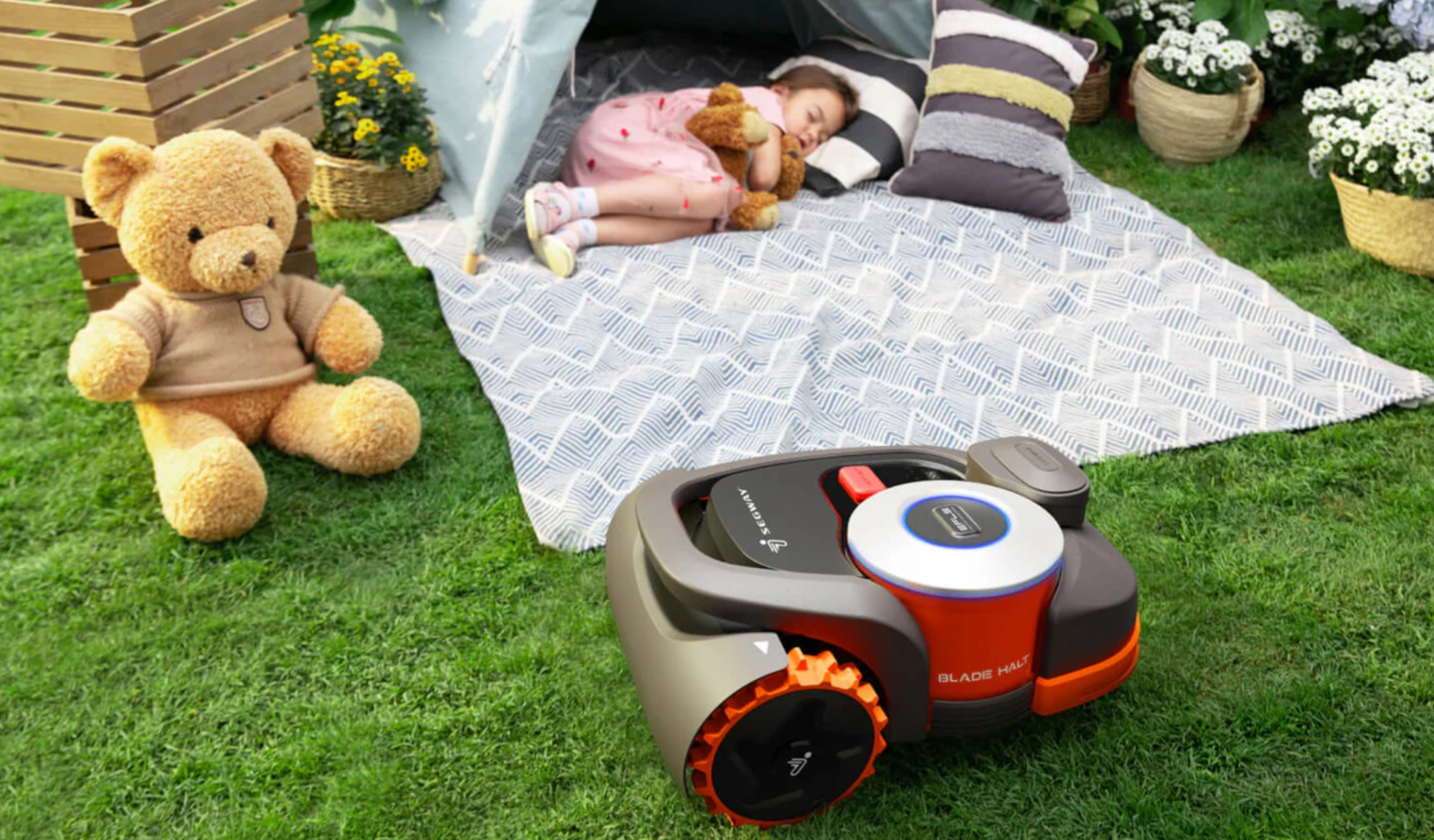
- Reduced Noise Pollution: Noise is a form of pollution that affects communities and wildlife. Gas mowers are notoriously loud. Navimow operates at noise levels as low as 54dB, which is quieter than a normal conversation. This allows property owners to schedule mowing at off-peak hours without disturbing the local environment or their neighbors.
 Future-Proofing the Landscape Specification
When specifying materials for a modern build, architects and designers must consider not just the initial cost but also the long-term operational expense and environmental impact.
Wire-free robotic mowers, especially those that can handle multiple zones and slopes, are quickly becoming the high-tech, low-impact standard for site maintenance. By integrating a specified wire-free system, professionals ensure their clients receive a landscape that is easy to maintain, cost-effective to run, and truly sustainable.
You can review the different sizes and capabilities of the robotic lawn mowers in the collection to match the requirements of any site, from small urban gardens to large estate properties.