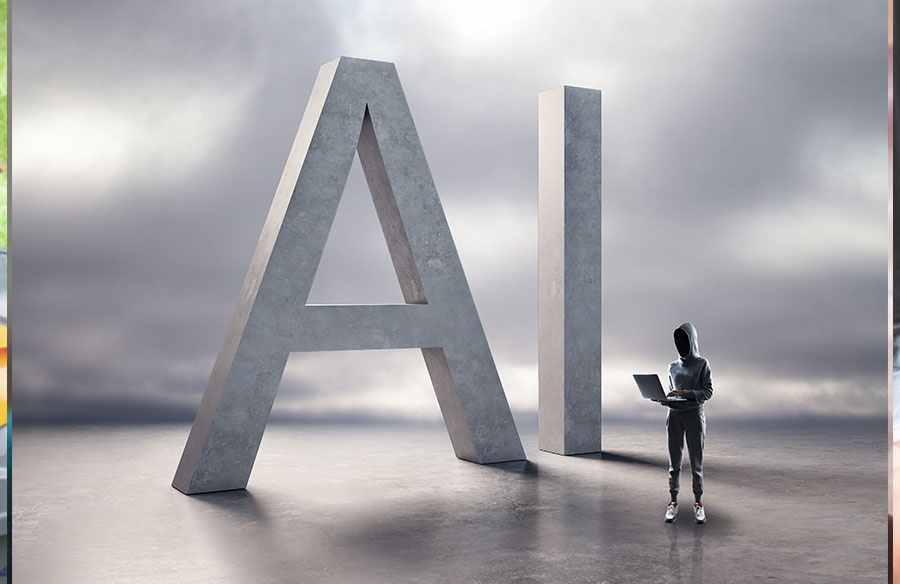
For years, artificial intelligence was discussed as something that would arrive later. A future capability. A coming disruption. Something to prepare for eventually.
That framing no longer holds.
AI is already embedded in how knowledge is produced, how people learn, and how decisions are made. It does not announce itself loudly. It operates quietly, in the background, shaping outcomes long before humans are aware a choice was even presented.
The real shift is not that machines are becoming intelligent. It is that human systems are increasingly designed around machine assistance. The future is not approaching. It is being constructed in real time.
Understanding this moment requires moving past surface-level debates about tools and focusing instead on how intelligence, judgment, and agency are being redistributed between humans and machines.
Why AI Is No Longer a Future Concept but a Present Reality
AI crossed a threshold when it stopped being a destination and became infrastructure.
Earlier technologies demanded deliberate adoption. AI slipped in gradually. Recommendation systems, automated screening, predictive analytics, and conversational systems became normal before they were widely questioned.
Much like electricity or the internet, AI is now something systems assume will be there.
This is why discussions about AI often feel strangely detached from lived reality. While debates focus on what AI might do, it is already influencing what people see, learn, and prioritize.
An AI chat system today functions less like a robot and more like a cognitive shortcut. It sits between intention and action, reducing friction. Instead of navigating dozens of sources, people externalize thinking into a single interface. The danger is not that the answers are wrong. It is that the process of thinking changes.
Similarly, an AI search engine no longer behaves like a directory. It behaves like a guide. It does not just retrieve information. It frames it. What is summarized feels important. What is omitted feels irrelevant. Over time, this shapes understanding without explicit instruction.
When systems like Chat GPT 5 operate at this level, the question is no longer whether AI is powerful. The question is whether humans remain consciously involved in how that power is applied.
How AI Is Changing the Nature of Research
Research used to be defined by limitation. Limited access, limited time, limited synthesis capacity. These constraints shaped how knowledge was built.
AI removed many of those constraints almost overnight.
How research traditionally worked
Human-led research relied on depth over breadth. Scholars and practitioners explored narrow domains deeply. Connections across fields were slow and often accidental. Understanding emerged through prolonged engagement, disagreement, and revision.
This process was inefficient, but it preserved context. Researchers knew not just what they concluded, but why.
What AI adds to research today
AI introduces scale. Patterns across thousands of documents can be identified in seconds. Ideas that once required years of cross-disciplinary exposure can be surfaced almost instantly.
In this sense, AI behaves like an extremely fast research assistant. It does not get tired. It does not forget. It can traverse domains effortlessly.
This is undeniably powerful. It accelerates discovery and lowers barriers to entry. It allows individuals to operate with the reach of institutions.
The hidden cost of AI-led research
The risk appears when speed replaces understanding.
AI systems do not experience uncertainty. They generate coherence, even when underlying information is incomplete or contested. When researchers rely too heavily on synthesis produced elsewhere, they may skip the struggle that produces real insight.
It is the difference between reading a map and walking the terrain. The map is efficient. The terrain teaches judgment.
As AI becomes more capable, especially with systems approaching Chat GPT 5–level reasoning, the temptation is to treat outputs as conclusions rather than starting points. That shift subtly alters how truth is constructed.
How AI Is Reshaping Learning and Human Understanding
Learning has always been more than information transfer. It is a cognitive process shaped by effort, memory, and interpretation. Struggle has traditionally played a central role in turning information into understanding.
AI changes that balance.
Today, learning increasingly happens through mediation. Instead of engaging directly with complexity, people ask an AI system to explain, summarize, or simplify it first. This is efficient, but efficiency alters the learning experience itself.
An AI chat interface functions much like a personal tutor that never gets impatient. It answers immediately, adapts its tone, and removes friction. For onboarding and basic comprehension, this is extremely valuable. It lowers barriers and expands access to knowledge that was once difficult to reach.
The shift becomes more complex when AI moves from supporting learning to replacing parts of it.
How learning traditionally builds understanding
Before AI-assisted learning, understanding emerged through a few core dynamics:
- Repetition and practice over time
- Cognitive struggle that strengthened memory
- Exposure to ambiguity and unresolved questions
These elements slowed learning, but they also deepened it. The learner was actively involved in constructing meaning.
What AI-assisted learning accelerates
AI dramatically compresses early stages of learning. It helps people:
- Grasp unfamiliar concepts quickly
- Translate technical ideas into accessible language
- Explore topics without fear of appearing uninformed
Used this way, AI acts like scaffolding. It supports learning without replacing the learner.
What changes when learning becomes frictionless
The risk appears when friction disappears entirely.
When explanations arrive instantly and perfectly structured, learners may:
- Skip the process of forming mental models
- Retain less information long-term
- Become dependent on external clarification
This mirrors the difference between using a calculator occasionally and never learning arithmetic. The tool is helpful, but overuse weakens foundational skills.
As systems grow more capable, particularly with models approaching Chat GPT 5–level reasoning, the challenge is no longer access to knowledge. It is maintaining the depth of understanding that comes from effort.
Where AI Is Already Making Decisions Without Public Awareness
One of the most underestimated aspects of AI is how quietly it influences outcomes. Many AI-driven decisions happen upstream, before people realize a choice was even presented.
This is not a future scenario. It is the current reality.
AI systems increasingly act as gatekeepers. They filter, rank, and prioritize options in ways that feel neutral but carry consequences.
Areas already shaped by AI-driven decision layers
In many domains, AI influences outcomes by narrowing what humans see:
- Hiring and recruitment, through resume screening and candidate ranking
- Credit and financial access, via risk scoring and eligibility models
- Content visibility, determining which voices are amplified or buried
- Education pathways, shaping recommendations and access
- Healthcare prioritization, influencing triage and resource allocation
In each case, AI does not make the final decision. It shapes the decision space.
Why this influence is easy to miss
AI decision layers often feel invisible because they operate behind interfaces people trust. Search results, recommendations, and automated assessments appear objective, even when they encode assumptions.
An AI search engine, for example, no longer just retrieves information. It curates relevance. What appears first feels important. What is omitted feels unimportant. Over time, this trains perception.
Similarly, conversational systems present synthesized answers that feel authoritative. When people interact with an AI chat system repeatedly, they may begin to accept its framing without questioning how that framing was produced.
The long-term implication
When decision-making shifts upstream, accountability becomes diffuse. Outcomes feel inevitable rather than chosen.
This matters because societies are shaped not only by decisions, but by who gets to influence which options are considered in the first place. As AI becomes more deeply embedded, the question is no longer whether it decides, but how visible its influence remains.
The Risks of Letting AI Shape the Future by Default
The most significant risk with AI is not that it will make decisions poorly. It is that it will make decisions by default, without deliberate human choice.
Defaults matter because they scale quietly. Once embedded, they are rarely revisited.
When AI systems become the easiest path forward, human oversight shifts from active governance to passive acceptance. Over time, this reshapes norms, expectations, and accountability.
Risk one: erosion of human judgment
Judgment is a muscle. It strengthens through use and weakens through delegation. As AI takes on more evaluative tasks, humans may:
- Rely on recommendations instead of reasoning
- Accept outputs without interrogating assumptions
- Lose confidence in their own decision-making
This does not happen suddenly. It happens gradually, as convenience replaces engagement.
Risk two: centralization of intelligence and power
AI systems concentrate capability. Those who design, train, and deploy them influence outcomes far beyond their immediate reach.
This creates structural risks:
- A small number of entities shaping large decision spaces
- Values encoded once and applied everywhere
- Limited recourse for those affected by automated outcomes
When intelligence centralizes, diversity of perspective narrows. Innovation may accelerate, but resilience often declines.
Risk three: values embedded without consent
Every system reflects values, even when presented as neutral.
AI systems learn from historical data and human choices. If those inputs are biased, incomplete, or misaligned with societal goals, the outputs will reflect that.
Without explicit debate and oversight:
- Bias becomes automated
- Inequities become optimized
- Ethical questions become technical ones
The danger is not malicious intent. It is unexamined intent.
What Humans Must Still Control No Matter How Advanced AI Becomes
As AI capabilities expand, the conversation must shift from what machines can do to what humans must retain control over.
Some responsibilities cannot be delegated without consequence.
Control over values and ethical boundaries
AI can optimize toward goals, but it cannot define which goals matter.
Humans must retain authority over:
- Ethical limits
- Social priorities
- Trade-offs between efficiency and fairness
These are not technical questions. They are moral and cultural ones.
Control over contextual judgment
AI excels at pattern recognition. It struggles with context that is ambiguous, evolving, or deeply human.
Contextual judgment involves:
- Understanding nuance
- Interpreting intent
- Balancing competing values
This kind of judgment cannot be fully formalized. It requires lived experience and accountability.
Control over accountability and responsibility
When outcomes affect real people, responsibility must remain traceable.
Humans must decide:
- Who is accountable when AI-informed decisions cause harm
- How decisions can be challenged or reviewed
- When automation should pause or stop
Accountability cannot be outsourced without eroding trust.
Designing Systems Where AI Supports Human Agency
The future is not a choice between human intelligence and artificial intelligence. It is a design challenge about how the two interact.
Well-designed systems treat AI as an amplifier, not a replacement.
AI as collaborator rather than authority
When AI is positioned as a collaborator:
- Humans retain final decision-making power
- AI provides options, not answers
- Outputs invite scrutiny rather than demand acceptance
This framing preserves agency while still benefiting from scale and speed.
Transparency as a design principle
Systems should make AI influence visible.
This includes:
- Clear indicators of when AI is involved
- Explanations of how recommendations are formed
- Mechanisms for feedback and correction
Visibility restores choice.
Designing for reflection, not just efficiency
Efficiency is seductive, but reflection sustains long-term value.
AI systems that slow thinking slightly, rather than eliminate it entirely, support better outcomes. In this role, AI becomes a space for sense-making, much like a well-designed AI chat interface used for reflection rather than instant answers.
How to Intentionally Shape a Human-Centered Future With AI
The future shaped by AI will not arrive as a single moment of disruption. It will emerge through thousands of small design decisions made quietly, often without ceremony.
What matters most is not how powerful AI becomes, but how deliberately humans choose to integrate it.
A human-centered future does not reject AI. It defines the conditions under which AI is allowed to operate.
Designing for agency rather than convenience
Convenience is often the fastest way to give up control.
When systems prioritize ease above all else, they subtly encourage delegation of responsibility. Over time, humans stop questioning not because they agree, but because it is easier not to.
Designing for agency means:
- Keeping humans in decision loops
- Making overrides possible and normal
- Preserving friction where judgment matters
The goal is not to slow progress, but to preserve choice.
Treating AI as infrastructure, not authority
AI should function like a bridge, not a destination.
Infrastructure supports movement. It does not decide where to go.
In practice, this means:
- Using AI chat systems to structure thinking, not finalize conclusions
- Using AI search engines to narrow focus, not define truth
- Treating outputs as drafts, not verdicts
When AI becomes authoritative, human responsibility fades. When it remains infrastructural, responsibility stays intact.
Designing systems that make influence visible
One of the most important design choices is visibility.
People should know:
- When AI is influencing outcomes
- What role it plays in decision-making
- How its influence can be questioned or reversed
Transparency is not about exposing technical details. It is about restoring awareness. Invisible influence removes consent. Visible influence invites participation.
The Role of Advanced AI Systems in the Future We Are Building
As AI systems approach higher levels of reasoning, including those built on architectures similar to Chat GPT 5, their influence will feel increasingly seamless.
This is where intentional design matters most.
Advanced AI is capable of:
- Synthesizing vast bodies of knowledge
- Identifying patterns humans would miss
- Producing coherent narratives at scale
What it cannot do is care about outcomes in the human sense. This gap is not a flaw. It is a boundary.
The responsibility of future designers, policymakers, and thinkers is to ensure that increasing capability does not translate into unchecked authority.
The Future Is Still a Human Responsibility?
AI will continue to accelerate. That much is certain.
What remains undecided is whether humans will remain actively involved in shaping the systems that shape them.
The future does not need more intelligence. It needs more intention.
That intention shows up in small choices:
- Choosing reflection over speed
- Choosing oversight over automation
- Choosing judgment over delegation
The most important design decision of the AI era is not what machines can do, but what humans decide they should do.
The future is already being built. Whether it remains human-centered is still up to us.