Introduction
Product development, particularly for physical goods, is a high-stakes endeavor. The traditional “get it right the first time” approach often leads to the discovery of critical design flaws, functional issues, or manufacturability challenges late in the game. This results in expensive tooling modifications, production delays, and even project failure. The root cause is typically insufficient upfront validation; CAD models and simulations cannot fully replace the insights gained from physical testing.
This article delves into a proven strategy to counter these challenges: iterative rapid prototyping. By systematically integrating rapid prototypes into the development cycle, teams can significantly reduce costs. We will explore how it works, its cost benefits, and provide actionable best practices.
What is the Iterative Rapid Prototyping Process and How Does It Differ from Traditional Methods?
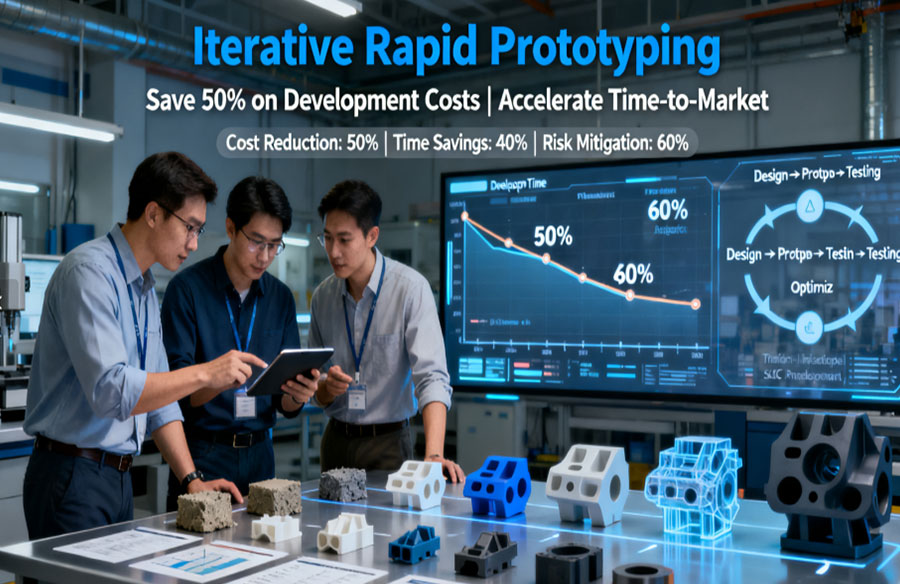
At its core, iterative rapid prototyping is a cyclical development philosophy. It contrasts sharply with the traditional, linear model (Design -> Prototype -> Test -> Redesign).
1. The Linear vs. Cyclical Model
The old linear process is slow and rigid. A design is finalized, a single, often expensive, prototype is built, and testing occurs at the end. If problems are found, the entire process loops back to the start, incurring massive costs and delays. The iterative model, however, embraces small, rapid cycles: Design -> Rapid Prototyping -> Quick Test -> Gain Insights -> Optimize Design. The “rapid” and “iterative” aspects are key to cost reduction, as they identify and resolve issues when changes are least expensive.
2. The Role of Continuous Improvement
This approach is fundamentally aligned with the continuous improvement principles outlined in quality management systems. For instance, the ISO 9001:2015 standard emphasizes the need for ongoing refinement based on objective evidence — exactly what each prototyping iteration provides. This makes iterative development a requirement of a modern, robust quality management system.
Where Are the Major Cost Sinks in Traditional Product Development?
To appreciate the savings, one must first understand where traditional methods hemorrhage resources. The primary cost sinks are often hidden until it’s too late.
- The Burden of Late-Stage Changes: The cost of an engineering change order (ECO) increases exponentially as a project progresses. A change made during the design phase might cost a few engineering hours. The same change identified after tooling for mass production can cost tens of thousands of dollars in mold modifications, scrap, and delayed revenue.
- The Domino Effect of Design Flaws: A fundamental design flaw discovered late can lead to complete tooling scrap, costing hundreds of thousands of dollars and setting a project back by months. Furthermore, delays in time-to-market represent a significant opportunity cost, allowing competitors to gain an advantage. Industry analyses, such as those found in manufacturing industry outlook reports from leading firms, consistently highlight these delays as a top financial risk for product-based companies.
How Can Different Rapid Prototyping Methods Target Specific Cost Savings?
Different prototyping technologies offer unique advantages for targeting specific cost centers. Choosing the right method is crucial for maximizing cost reduction.
1. CNC Machining for Functional Validation
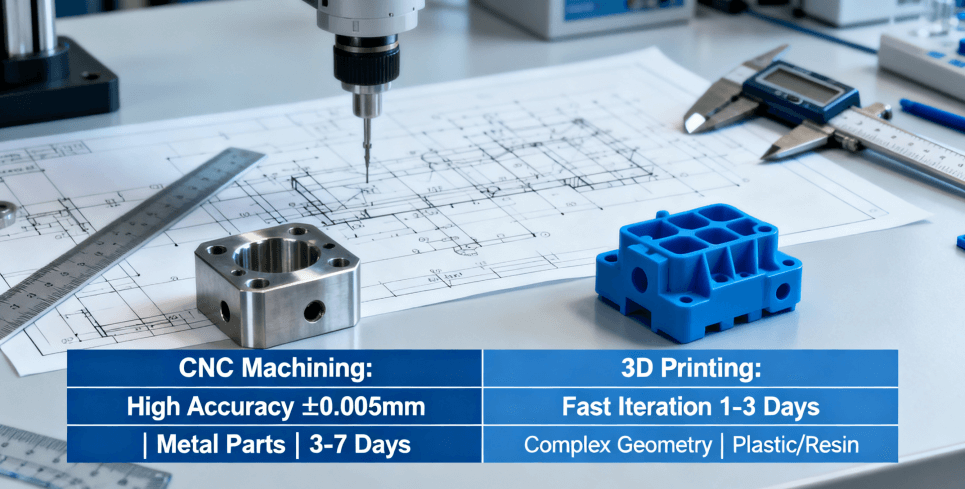
CNC prototyping service is ideal for creating parts from production-grade materials. This allows for rigorous functional testing, validating assembly, durability, and performance under real-world conditions. By testing with the correct materials early, teams avoid costly material selection errors downstream. For example, using suitable CNC materials for functional testing is a critical step to potentially save up to 50% on product development costs with rapid prototyping.
2. 3D Printing for Speed and Form-Fit
3D printing excels in speed and complexity. It is perfect for rapid form-and-fit checks, user experience testing, and visualizing complex geometries without the need for tooling. Its speed allows for multiple iterations within the time it would take to produce a single prototype via other means, dramatically compressing the development schedule and saving resources.
What Are the Best Practices for Integrating Prototyping into an Agile Development Cycle?
Simply making prototypes isn’t enough. Strategic integration is key to unlocking full efficiency and ensuring a faster time-to-market.
- Define Clear Iteration Goals: Each prototyping cycle should have a clear objective. Is this iteration for visual appeal, assembly verification, or functional testing? Defining this focus ensures that the prototype delivers specific, actionable insights and prevents wasted effort.
- Foster Cross-Functional Collaboration: Involve stakeholders from design, engineering, marketing, and even end-users in the prototype review process. This collaborative approach uncovers issues and opportunities that a single team might miss, leading to a more robust and market-ready final product.
- Partner with a Capable Manufacturer: The choice of a manufacturing partner is critical. A supplier with multi-process capabilities — such as 3D printing and CNC machining — and relevant certifications, including ISO 9001 for quality management, ensures a seamless transition from prototype to production. Collaborating with a qualified supplier that holds such credentials helps maintain quality consistency and prevents costly errors caused by capability gaps. Comprehensive rapid prototyping services further support this agile, end-to-end integration.
Beyond Cost: How Does Iterative Prototyping Mitigate Risk and Improve Time-to-Market?
The value of iterative prototyping extends far beyond direct cost reduction. Its most significant impact may be in intangible risk mitigation.
1. De-risking the Entire Project
By discovering problems early, the project team transforms unknown, high-impact risks into known, manageable issues. This proactive approach increases the likelihood of project success and protects the overall investment.
2. Accelerating Market Entry
The iterative design process, while appearing to add steps initially, ultimately leads to a more optimized and validated final design. This reduces last-minute surprises during mass production, leading to a smoother ramp-up and a significantly faster time-to-market, which is a powerful competitive advantage.
Is Rapid Prototyping Only Suitable for Complex or High-Volume Products?
A common misconception is that these benefits of iterative design are only for complex or high-volume products. This is not the case.
- Value Across the Spectrum: Even for seemingly simple products, rapid prototyping is invaluable for testing user interaction, ergonomics, and aesthetics. For medium-volume production, technologies like rapid tooling can bridge the gap between prototype and full-scale production economically. The flexibility of modern rapid prototyping methods makes them applicable to a vast range of projects, ensuring all product developers can leverage their advantages.
Conclusion
Iterative rapid prototyping is more than a set of technologies; it is a strategic product development philosophy. By front-loading physical validation and embracing a cycle of continuous improvement, companies can transform unpredictable, high-stakes projects into controlled, efficient, and successful endeavors. This strategy fundamentally optimizes cost, enhances product quality, and secures market success.
FAQs
Q: What is the typical lead time for rapid prototyping projects?
A: Lead times vary based on technology, complexity, and material. 3D-printed prototypes can often be shipped in 1-3 days, while CNC-machined functional prototypes may take 3-7 business days. An experienced partner can provide fast turnarounds without compromising quality.
Q: How do I choose between 3D printing and CNC machining for my prototype?
A: The choice depends on the prototype’s purpose. 3D printing is ideal for form-and-fit checks and complex visual models. CNC machining is superior for functional prototypes requiring specific material properties, high accuracy, and mechanical testing.
Q: Can rapid prototyping materials match the properties of production-grade materials?
A: Yes, especially with CNC machining, where you can use the exact production material. For 3D printing, engineering-grade filaments and resins closely mimic the mechanical properties of many production plastics, making them suitable for rigorous testing.
Q: What file formats are required to get a quote for rapid prototyping?
A: Universal 3D formats like STEP (.step) and IGES (.iges) are preferred. STL is common for 3D printing. Providing a detailed drawing with tolerances and finishes is highly recommended.
Q: How does iterative prototyping integrate with rigorous quality standards like ISO 13485 for medical devices?
A: It is deeply integrated. For regulated industries, iterative prototyping provides documented evidence of the design control process. Each iteration generates test data for validation, de-risking the final regulatory submission and ensuring compliance and patient safety.
Author Bio
This article was contributed by the precision manufacturing experts at LS Manufacturing. They help global engineers and businesses bring innovative ideas to market quickly and reliably through professional rapid prototyping and low-volume manufacturing services. As an organization committed to quality and continuous improvement, their processes are underpinned by a robust ISO 9001:2015 quality management system. Upload your CAD file today for an instant quote and a free DFM analysis to optimize your next product development project.