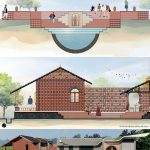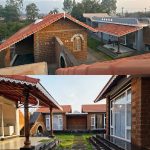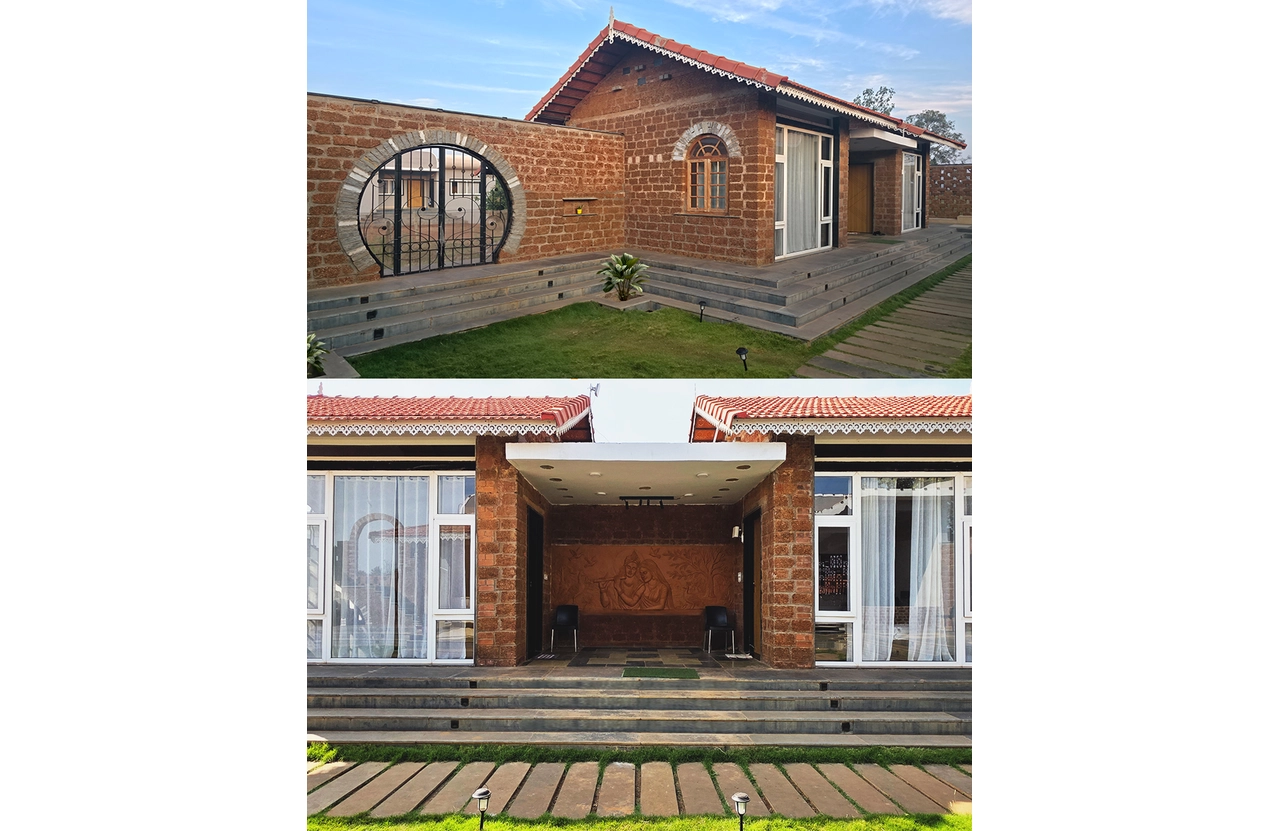
Set within a 5-acre site bordered by mango orchards and overlooking a natural lake, the Ethika Project is designed as a self-sustaining live–work habitat.
Project Name: Project Paradise
Studio Name: Utkarsh Acharya & Associates
Location: Zaheerabad, Hyderabad, India
Completion Time: 3 Years
Site Area: 5 Acres
Built-Up Area: 12,935 sq ft
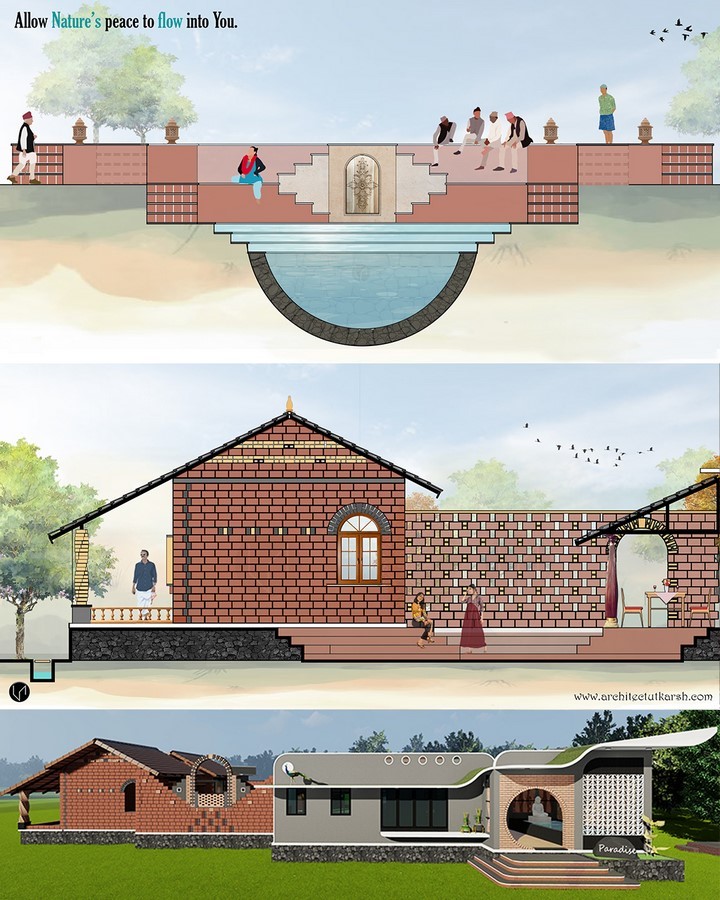
Conceived as a residence and office for a company devoted to ethical business practices, the project became an opportunity for our studio to explore contemporary sustainability rooted in vernacular intelligence, material honesty, and climate-responsive design.
Rather than imposing architecture onto the land, the project grows out of it—shaped by sun path studies, prevailing winds, water flows, and the psychological need for calm, breathable spaces.
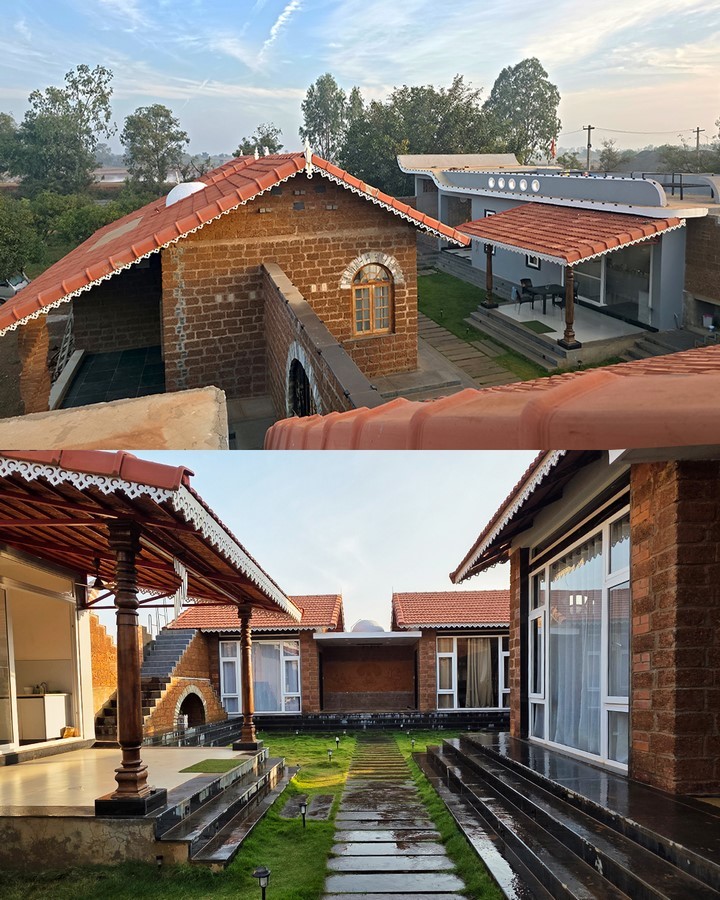
Master Plan: Architecture as Landscape
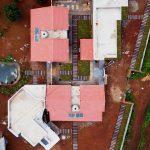
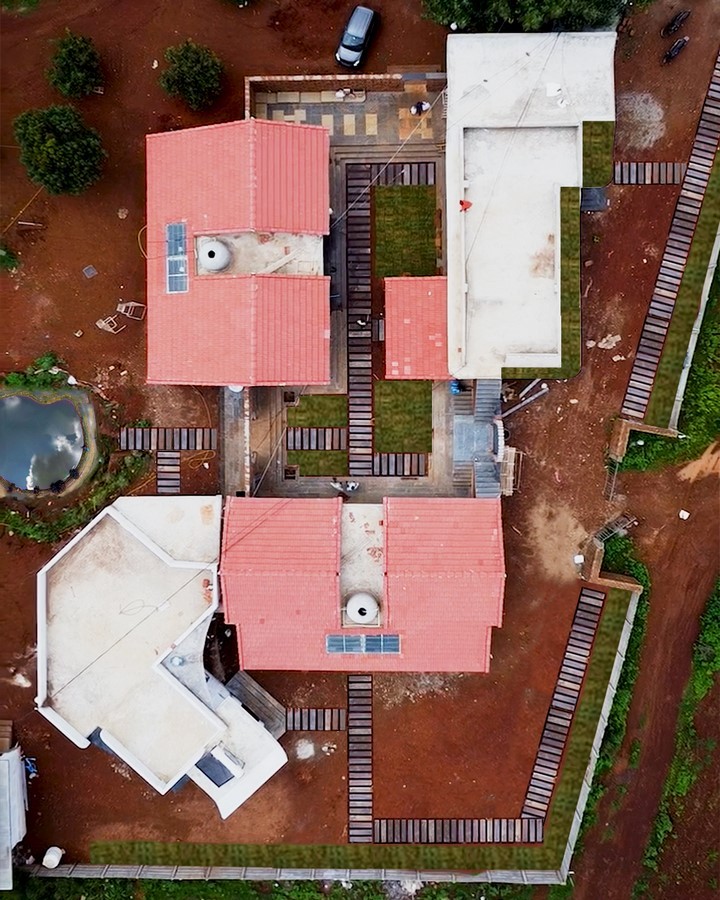
The site plan revolves around three primary components—the farmhouse, the office, and the staff accommodations—arranged to preserve existing trees and maintain unobstructed airflow across the plot.
The layout follows a porous planning approach where built forms sit lightly on the ground, leaving large portions of the site untouched.
Natural buffers, shaded walkways, and water channels create microclimates that reduce heat gain and enhance thermal comfort.
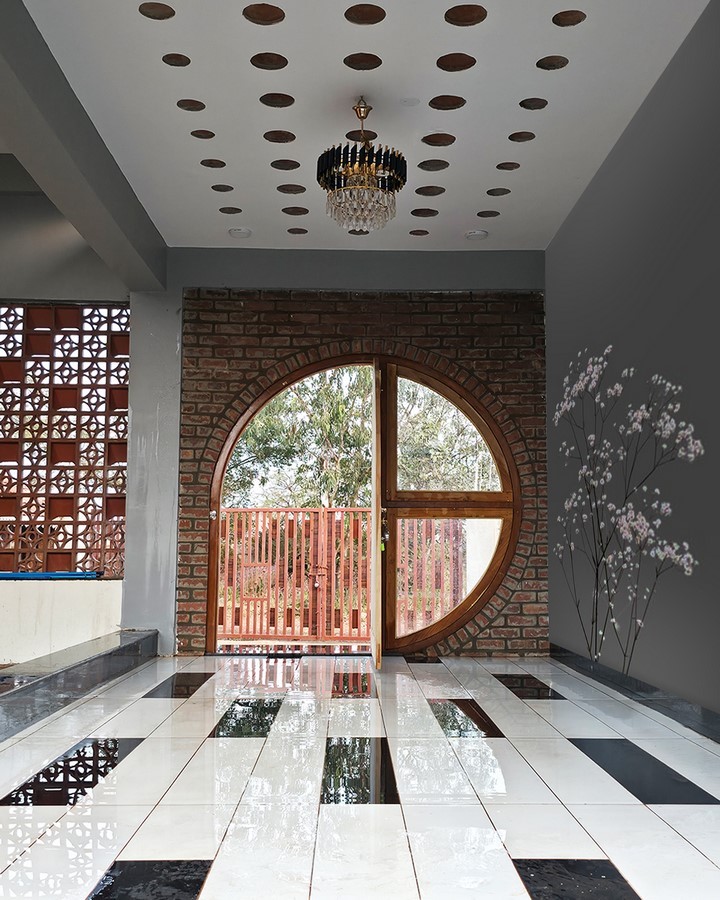
Farmhouse: A Courtyard as Climate Engine
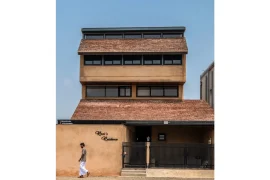
The 5,750 sq ft residence is organized around a 950 sq ft central courtyard, which functions as the climatic and social core of the home.
Inspired by traditional courtyard houses, it regulates temperature, draws wind into the house, and creates a quiet transitional zone between interior and exterior.
The program includes a living area, kitchen, dining space, and four bedroom units planned according to Vastu and solar orientation.
East-facing rooms receive early sunlight, while north-facing ones are filled with soft, shadow-free daylight—reducing reliance on artificial lighting.
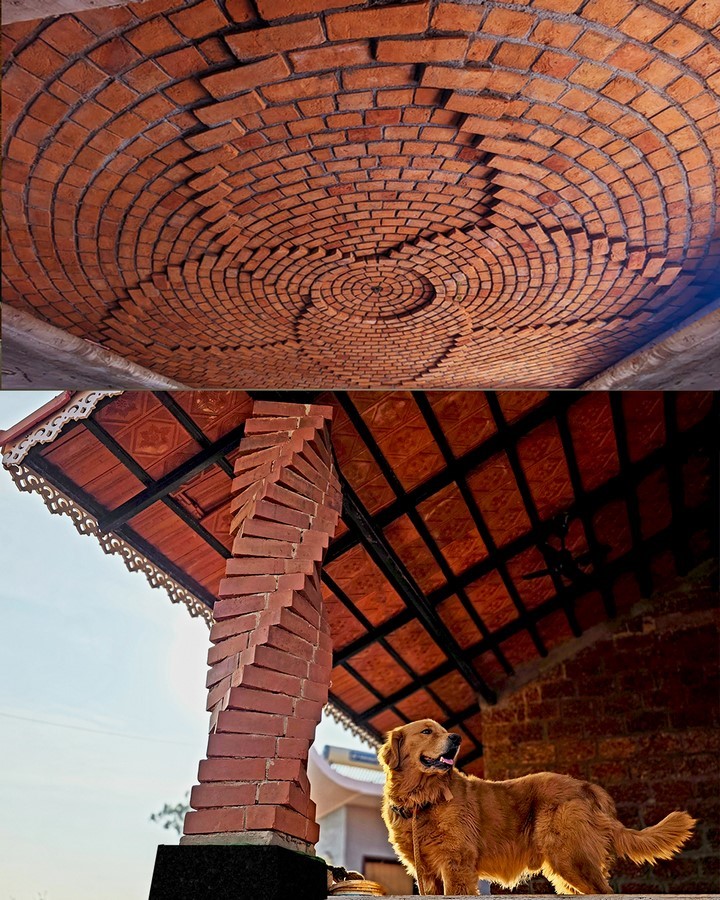
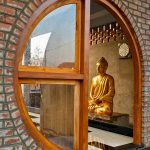
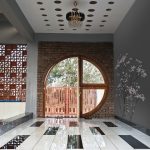
A dedicated meditation space, common verandahs, and bamboo-lit outdoor seating areas enrich the domestic experience with layered moments of pause.
Office: A Workspace Rooted in Material Narrative
The 1,400 sq ft office extends the architectural vocabulary of the residence but adapts it for a collaborative environment.
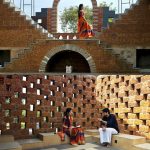
The most distinctive element is the recycled glass bottle wall, designed not for ornamentation but for function—softening harsh daylight, creating patterned shadows, and enabling passive ventilation.
Filler slab roofing, cross-ventilated openings, and planter-integrated seating reflect the studio’s intention to craft a workspace that feels transparent, breathable, and connected to nature.
The proximity to the residence fosters a natural work-life rhythm and anchors the project’s ethos of balanced living.