Introduction: Post-War Transformation of Public Architecture
Post-World War II Japan witnessed a profound transformation in public architecture, with government buildings evolving from closed, authoritarian structures to open, citizen-centric spaces. This shift reflects not only architectural innovation but also the nation’s changing social values and democratic aspirations. Among these landmarks, the Kagawa Prefectural Government Office stands as a cornerstone, embodying the fusion of modernism and traditional wisdom, while subsequent projects chart a course toward greater accessibility, sustainability, and practicality.
The Kagawa Prefectural Government Office: A Cornerstone of Democratic Modernism
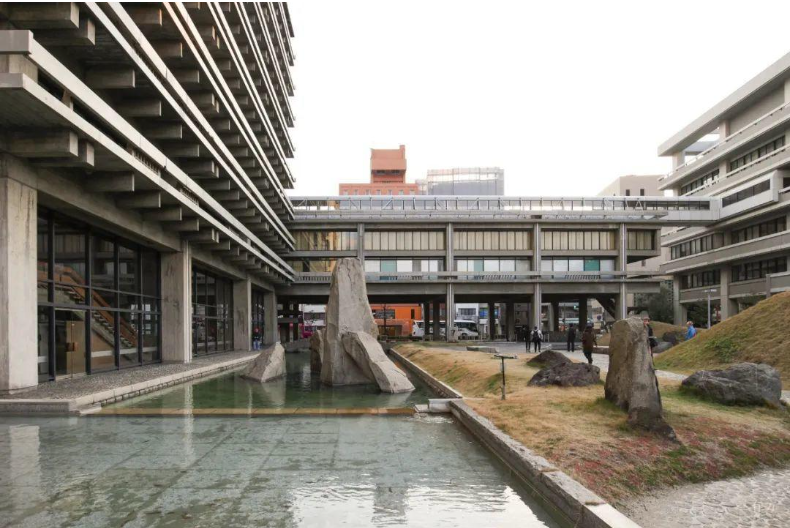
Completed in 1958 by renowned architect Kenzo Tange, the Kagawa Prefectural Government Office emerged from a vision to materialize democratic principles. Commissioned by Masanori Kaneko, Kagawa’s first democratically elected governor, the building was designed to be open, inclusive, and a catalyst for cultural development. Spanning 12,066.2 square meters, it comprises a three-story east wing (housing legislative bodies) and an eight-story tower (for offices), connected by a 1,300-square-meter Japanese-style garden.
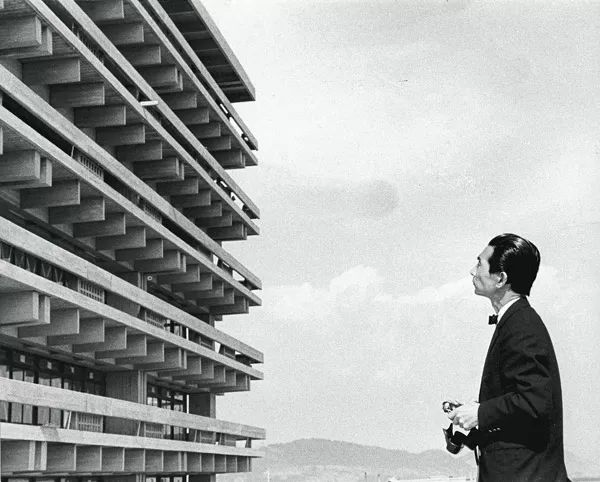 Tange’s genius lies in blending modern materials with traditional techniques: the tower’s facade, with horizontal railings and cantilevered beams, evokes the elegance of wooden structures, while its central core—supporting the entire building and housing seismic columns—draws inspiration from the 1,500-year-old Horyuji Five-Story Pagoda. This core, a pioneering seismic solution in modern Japanese architecture, underscores Tange’s belief in “creatively bridging past and future.” During the seismic retrofitting project in 2014, specialized equipment was essential to preserve the building’s structure while implementing isolation technology. Portable gantry cranes played a crucial role in handling heavy components without damaging the historic facade.
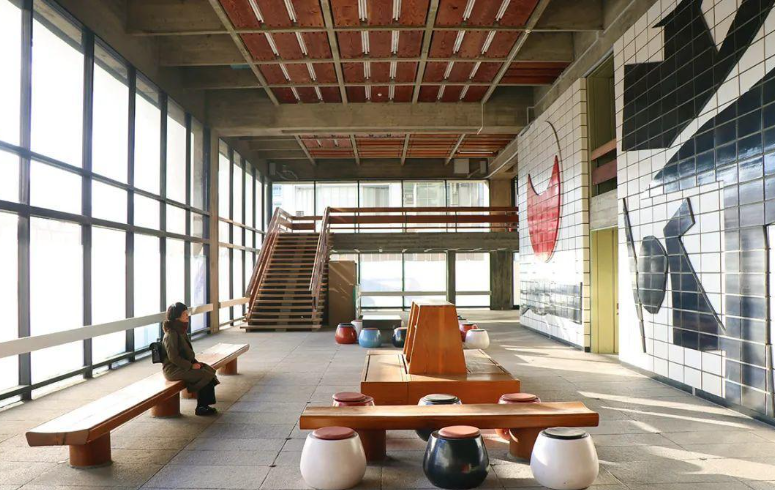
The building’s public spaces—including an open ground floor, exhibition halls adorned with ceramic murals by Genichiro Inokuma, and once-popular rooftop cafes—redefined government buildings as community hubs, setting a precedent for future public architecture.
Subsequent Landmarks: Regionalism and Metropolitan Ambition
 The Kagawa Prefectural Government Office’s influence extended to later government buildings, each adapting to regional needs and cultural identities. The 1981 Naha City Hall embraced “critical regionalism,” integrating Okinawa’s subtropical climate and cultural elements—such as lion motifs, perforated sun screens, and lush greenery—to create a breathable, citizen-friendly space. Its open corridors and natural ventilation systems reflected a commitment to both local traditions and public comfort.
In contrast, the Tokyo Metropolitan Government Building (1991), another Tange masterpiece, reflected the ambition of a global metropolis. Its twin-tower design, inspired by Gothic cathedrals, features observation decks open to the public (offering 360-degree views of Tokyo) and a granite-and-glass facade that echoes traditional Japanese residential aesthetics. Though grand in scale, it retained public accessibility, aligning with the post-war ethos of government transparency.
Pragmatism in Economic Downturn: Accessibility and Innovative Financing
By the 1990s, Japan’s economic downturn shifted architectural priorities toward pragmatism, affordability, and community integration. The 1996 Kakegawa City Hall, designed by Nikken Sekkei, reimagined government space as a “public living room”: its soaring 30-meter atrium and terraced platforms (resembling Kagawa’s famous tea plantations) blur the line between office areas and community spaces, allowing citizens to witness government operations and gather casually.
More recently, the 2015 Toshima Eco-museum Town pioneered a tax-free development model, addressing fiscal constraints by integrating government offices with residential apartments. The project repurposed a closed elementary school and nearby land, funding construction through land swaps, apartment sales, and leasing old office sites. The construction of this mixed-use facility required versatile lifting solutions; such as the 3 ton gantry crane, proved indispensable for erecting structural elements efficiently in the dense urban setting.
 Fourth-Generation Buildings: Flexibility and Public-Centricity Today
Today, Japanese government buildings have entered their fourth generation, moving beyond symbolism to prioritize flexibility, efficiency, and responsiveness to social challenges. Faced with aging populations, fiscal constraints, and rising disaster-resilience needs, these structures focus on multi-functional spaces (e.g., combining government offices with childcare centers or disaster shelters), energy efficiency, and easy public access.
From the Kagawa Prefectural Government Office’s democratic idealism to Toshima’s innovative financing, each landmark mirrors Japan’s journey—adapting to social change while honoring cultural roots. As Kenzo Tange once noted, “Concrete can convey modern emotions just as stone evokes medieval reverence.” These buildings stand as testaments to architecture’s power to shape society, proving that public spaces thrive when they belong to, serve, and inspire the people.