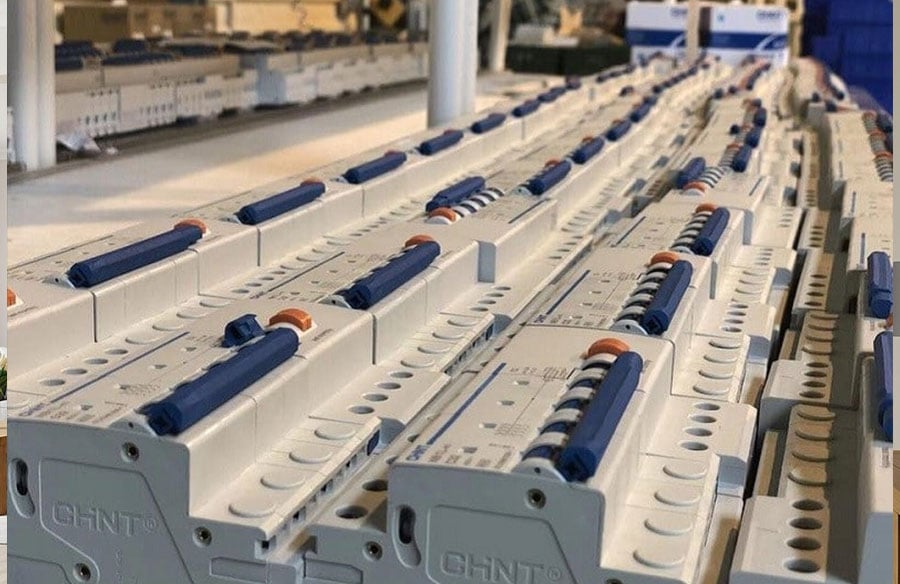
Every day, behind the hum of factories, air conditioners, elevators, and lighting systems, there’s an unseen hero working quietly to keep everything running — the contactor. These devices handle the complex task of switching high electrical currents safely and efficiently.
Whether you’re managing an industrial plant, a commercial building, or even a large residential system, understanding how contactors work can prevent downtime, improve safety, and extend the life of your equipment.
In modern electrical setups, pairing contactors with protection devices such as CHINT MCCB (molded case circuit breakers) ensures the safe distribution and control of heavy electrical loads. Let’s break down how these essential components make power systems both powerful and safe.
What is a Contactor and Why It Matters
The Basics
A contactor is an electrically controlled switch used for switching a power circuit, similar to a relay but designed to handle much higher current levels. When energized, it uses an electromagnetic coil to close or open contacts, allowing electricity to flow through large loads like motors, compressors, and lighting banks.
Unlike a simple switch, a contactor provides safe isolation, control, and automation — especially for equipment drawing high inrush currents. For instance, when a motor starts, the current can spike to 5–10 times its rated value. A contactor manages that surge safely without overheating or welding contacts shut.
Why You Need It
Without contactors, manually switching large electrical loads would expose systems — and people — to serious risks like arcing, short circuits, and equipment damage. In many electrical setups, a CHINT MCCB works alongside contactors to enhance circuit protection and ensure safe operation. Contactors provide:
- Safe remote operation (no need for manual switching)
- Load protection through reliable contact separation
- Longevity of connected equipment due to controlled switching
- Automation compatibility, enabling integration into control panels and PLC systems
How Contactors Work
The Electromagnetic Principle
Every contactor consists of three main parts:
- Coil (Electromagnet) – When powered, it generates a magnetic field that pulls the armature to close the contacts.
- Contacts – The main components that carry current when closed. Auxiliary contacts provide feedback or control signals.
- Enclosure/Frame – Provides insulation, protection, and structure.
Operation sequence:
- Control voltage energizes the coil.
- Magnetic field pulls armature, closing the main contacts.
- Current flows through the load.
- When control voltage stops, a spring releases the armature, opening the circuit.
This simple but powerful mechanism allows low-voltage control circuits to manage high-power loads safely.
Managing Arcing
When high current is interrupted, an electric arc forms between the contacts. To suppress it:
- Contactors use arc chutes or arc splitters to cool and extinguish the arc.
- Magnetic blowouts or vacuum interrupters redirect or eliminate the arc quickly.
- Contact materials like silver alloys resist erosion and oxidation.
Proper arc management prevents contact wear, ensures safety, and prolongs device life.
Handling Heavy Electrical Loads
Load and Current Ratings
Selecting a contactor requires knowing your load type, voltage, and current demand. For instance:
| Load Type | Characteristics | Contactor Consideration |
| Motors | High inrush current | Overrated contactors with arc suppression |
| Lighting | Resistive load | Standard-rated contactors |
| HVAC | Inductive load | Contactor with auxiliary relays for control |
| Capacitors | High transient surge | Special capacitor contactors with damping resistors |
For heavy-duty systems, pairing the contactor with a CHINT MCCB ensures additional protection against overcurrents and short circuits, offering both control and safety.
Arc Suppression and Contact Material
Efficient contactors minimize arcing through:
- Rapid contact separation design.
- Silver-based contacts for durability.
- Magnetic arc blowout systems.
The result: less maintenance, reduced downtime, and safer switching under heavy loads.
Load Distribution and Coordination
In large installations, contactors coordinate with relays, fuses, and circuit breakers to balance loads safely. This prevents overloading single components and improves energy efficiency.
A well-designed system ensures that when a fault occurs, the correct protection device trips without affecting the rest of the network — a concept known as selectivity.
Safety Mechanisms and Design Features
Overload and Short-Circuit Protection
Although contactors are excellent for switching, they don’t directly protect circuits from faults. That’s why pairing them with devices like CHINT MCCB provides complete protection. The MCCB handles short-circuit and overload scenarios, while the contactor handles control and isolation.
Together, they:
- Interrupt dangerous fault currents.
- Prevent overheating and fires.
- Safely disconnect the circuit during maintenance.
Insulation and Enclosures
High-quality contactors use thermoset or thermoplastic insulation to prevent short circuits and improve heat resistance. Depending on the environment (dusty, humid, or corrosive), you can choose enclosures with IP or NEMA ratings to ensure safety and longevity.
Thermal & Magnetic Release Features
Some advanced contactor systems include thermal overload relays (for sustained overcurrent) and magnetic trip mechanisms (for instantaneous short-circuits). These features protect motors and wiring from damage without human intervention.
Practical Tips for Choosing the Right Contactor
Step-by-Step Selection Guide
- Identify your load – Motor, lighting, compressor, or heating element.
- Determine current and voltage – Calculate full-load current and include surge/inrush values.
- Select correct contactor category –
- AC1: Non-inductive/resistive loads
- AC3: Squirrel-cage motors
- AC4: Frequent start/stop applications
- Ensure coil voltage compatibility – Match control voltage (e.g., 24V DC or 230V AC).
- Add protection – Use MCCBs, overload relays, or fuses for coordinated protection.
- Plan maintenance – Schedule regular checks for contact wear and coil condition.
Maintenance Best Practices
- Inspect contacts for pitting or discoloration every 6–12 months.
- Clean or replace worn contacts to maintain conductivity.
- Ensure coil voltage is within ±10% of rated value.
- Tighten terminal screws to prevent heat buildup.
Pro Tip: Label each contactor and associated load clearly in your panel to simplify future troubleshooting and service.
Applications Across Industries
Industrial Applications
In manufacturing, contactors handle heavy-duty loads like conveyor systems, motors, pumps, and compressors. Automated lines often rely on contactors integrated with PLCs to switch circuits precisely and safely.
Commercial and Infrastructure
Lighting systems, elevators, escalators, and HVAC units all depend on contactors for smooth, reliable operation. They allow centralized control and energy efficiency — especially in smart building systems.
Renewable and Energy Systems
Contactors also play a vital role in solar and wind systems for load isolation, inverter control, and fault protection — ensuring stability in fluctuating power environments.
The Role of MCCB in Load Management
While contactors focus on switching and control, molded case circuit breakers (MCCBs) play an equally vital role in circuit protection. In any heavy-load system, an MCCB detects abnormal currents — such as overloads or short circuits — and interrupts the circuit before damage occurs.
The CHINT MCCB series is one example of how modern protection devices are designed to work alongside contactors. These units combine adjustable trip settings, compact form factors, and high breaking capacities that make them suitable for industrial, commercial, and residential applications.
When integrated with contactors, an MCCB:
- Provides precise overload and short-circuit protection.
- Improves coordination between control and protection devices.
- Enhances overall system reliability and safety.
This combination ensures that the contactor handles the switching, while the MCCB safeguards the circuit, creating a balanced, efficient, and safer electrical management system.
Conclusion
Managing heavy electrical loads safely isn’t just about switching power — it’s about controlling it intelligently. Contactors make that possible, turning high-voltage, high-current operations into safe, automated, and reliable systems.
By understanding how contactors work — and integrating them with protective devices like CHINT MCCB — you ensure long-term efficiency, safety, and performance in any electrical installation.
From industrial motors to building systems, the principle remains the same: smart switching leads to safe power. Equip your system with the right components, maintain them regularly, and you’ll enjoy years of reliable, risk-free operation.