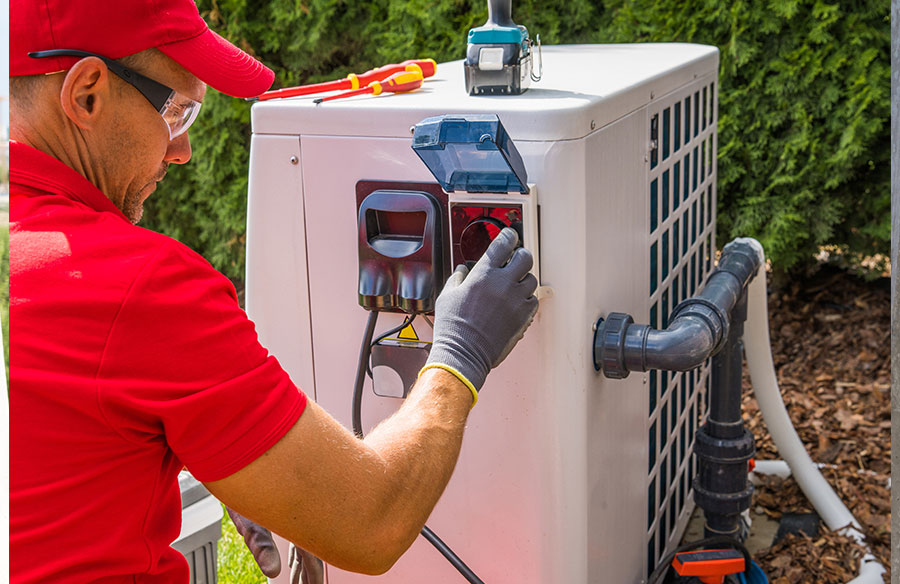
Is your pool colder than a desert night? If so, your swimming pool heater pump might be the culprit, turning summer swims into shivering sprints! A reliable swimming pool heater gives you perfect pool water temperature all season, but when it falters, it can ruin the fun in an instant.
In this splashy guide, discover the 12 signs your swimming pool heater needs replacing. From temperature troubles to repeated breakdowns, knowing when to replace your system — and exploring modern options like pool heat pumps — can save you money and keep your pool comfortable year-round.
Sign #1–3: When Your Pool Water Refuses to Warm Up
If your once-hot swimming pool now seems closer to an ice bath, that’s a red flag indeed. By cold or lukewarm water, we generally mean an all-year indication that your heater has problems. A few important symptoms to watch for are:
- Uneven pool heating: Some areas of the pool feel warm while others remain chilly — a sign of circulation or internal heating issues.
- Water not heating at all: If your swimming pool heating system is in operation, yet the water remains cold, that suggests internal components have failed.
- Slow heating performance: If it takes hours longer than usual to reach the desired temperature, something’s off.
While basic heater troubleshooting tips — cleaning filters or ensuring sufficient water flow—can sometimes help, more serious pool heating problems tend to occur due to malfunctioning parts. When repairs don’t solve the issue, replacement may be the smarter long-term solution.
Sign #4–6. Aging Heater? These Signs Mean It’s Past Its Prime
“Did you know? Most pool heaters lose up to 20–30% of their efficiency after 10 years, even with regular maintenance.”
Every pool heater has a specified shelf life. Most units last about 8–12 years with proper care, but their performance often starts declining much earlier.
- Old pool heater: If yours is over a decade old, expect more frequent breakdowns and lower output. It may even be operating at only 60% of its original efficiency.
- Heater efficiency loss: Do you notice your heater running longer and producing less warmth? That’s a sign that more energy is being used to achieve less.
- Rising utility bill: A sudden spike in high energy bills often signals that your system is overworking itself.
At some point, the price of running an aging heater outweighs the price of a new one. That’s when making a choice to upgrade becomes a comfort and financial choice.
Sign #7–9. Cracks, Leaks, and Corrosion You Can’t Ignore
A quick visual inspection can reveal a lot about your heater’s health.
- Pool heater leaks: Water pooling near the base is a good indication of internal corrosion, and since that type of problem often isn’t worth repairing, it needs to be replaced.
- Cracks or rust: These are signs of structural damage that may compromise your heater’s performance and safety.
- Gas pool heater or electric pool heater risks: Damaged units can pose potential fire hazards or may lead to electrocution if not given attention, making replacement the safer choice.
Corrosion and leaks usually mean the inside of your heater is deteriorating. Once that happens, it’s often more cost-effective (and safer) to replace the entire unit.
Sign #10–12. Repairs and Rattles: When Enough Is Enough
If your heater spends more time with the technician than heating your pool, it’s a sign you’re throwing money into a bottomless pit.
- Frequent pool heater repair: Regular repairs prove that your unit’s lifespan is nearing the end.
- Heat pump failure noises: Banging, grinding, or rattling sounds mean internal components are wearing out.
- Consider a pool equipment upgrade: In many cases, replacing your old system with a new one will save you more in repair costs and energy over time.
When to Replace vs. Repair Your Pool Heater
How long do pool heaters usually last? Minor pool heater maintenance, like cleaning filters or recalibrating thermostats, often fixes simple issues. However, if you’re facing persistent heater lifespan signs, water not heating, leaks, or frequent repairs, pool heater replacement becomes the smarter move. Even diligent swimming pool heat pump maintenance can only postpone—not prevent—eventual breakdowns.
- A repair is worth it for first-time malfunctions or maintenance needs.
- If your heater’s age and problems multiply, replacement ensures long-term pool comfort and cost savings.
Choosing Your New Pool Heater
Upgrading to a new system is not complicated at all. Swimming pool heat pumps of today are energy efficient, environmentally friendly, and built to last. It’s possible to find an extensive collection of pool heat pumps for sale — from compact units for small pools to heavy-duty models for large installations.
👉 Pro Tip: Reasonably match the pool size, fuel type, and capacity with the pool heater on sale for maximum performance.
Conclusion
A failing heater not only renders your pool less enjoyable — it may also dig deep holes in your wallet and lead to bigger issues. Recognizing the signs ahead of time will enable you to take action before your heater goes out completely.
Don’t wait for a complete breakdown. Browse the latest pool heater for sale, and upgrade your pool heating experience now. Warm, inviting water is just a click away!