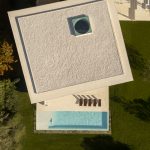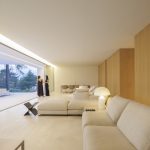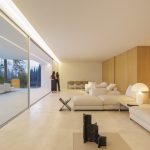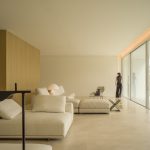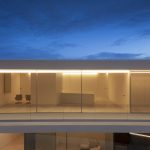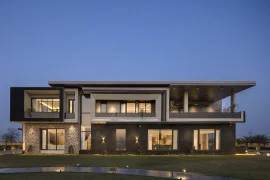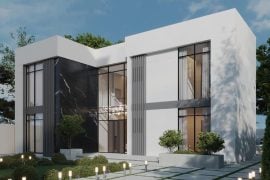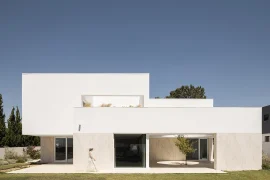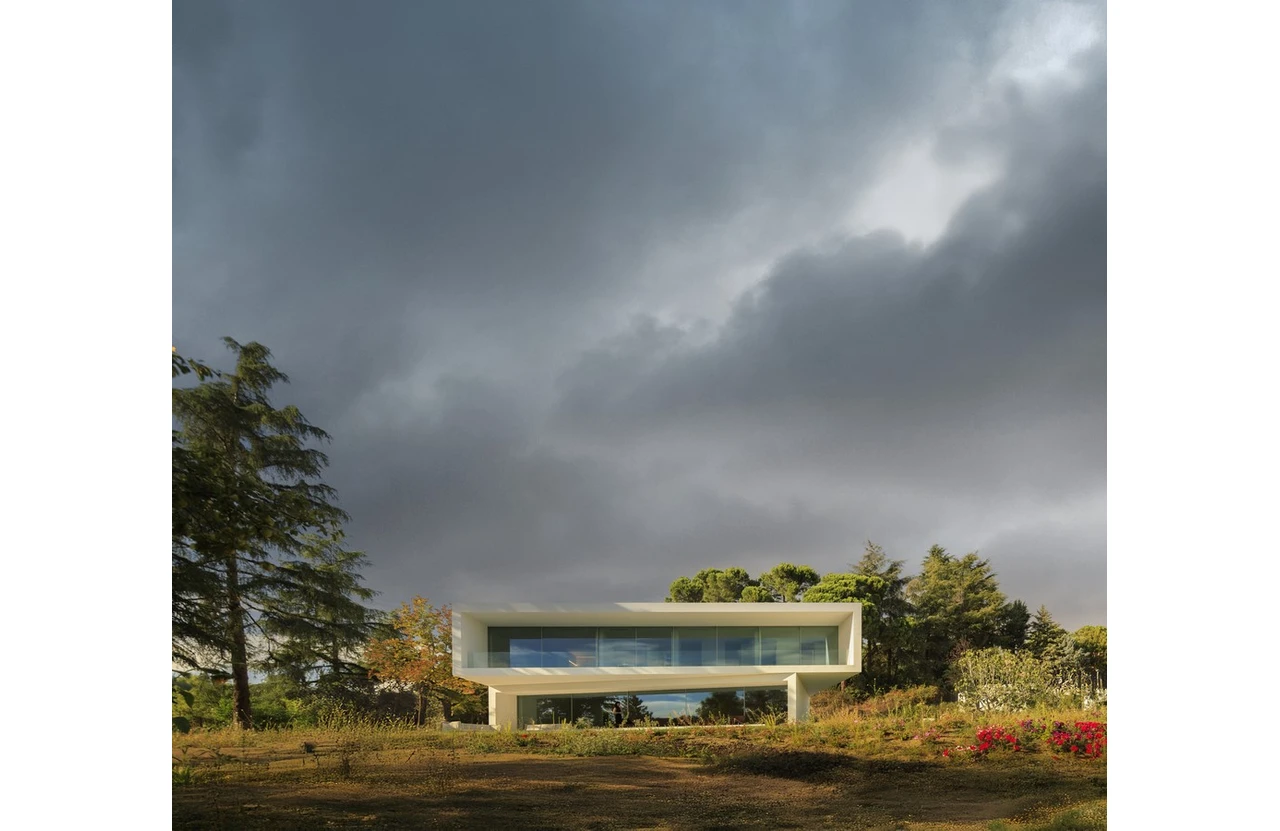
Villa Lavan is a residence composed of two single-story, elongated volumes, conceived to bring a human scale to the whole. These volumes are slightly rotated in relation to one another, a strategy that responds to three main reasons.
Project Name: Villa Lavan
Studio Name: Fran Silvestre Arquitectos
Location: La Moraleja, Madrid
Years Of Construction: 2022 – 2024
Built Area: 1034 m2
Plot Area: 2877 m2
Photographer: Fernando Guerra
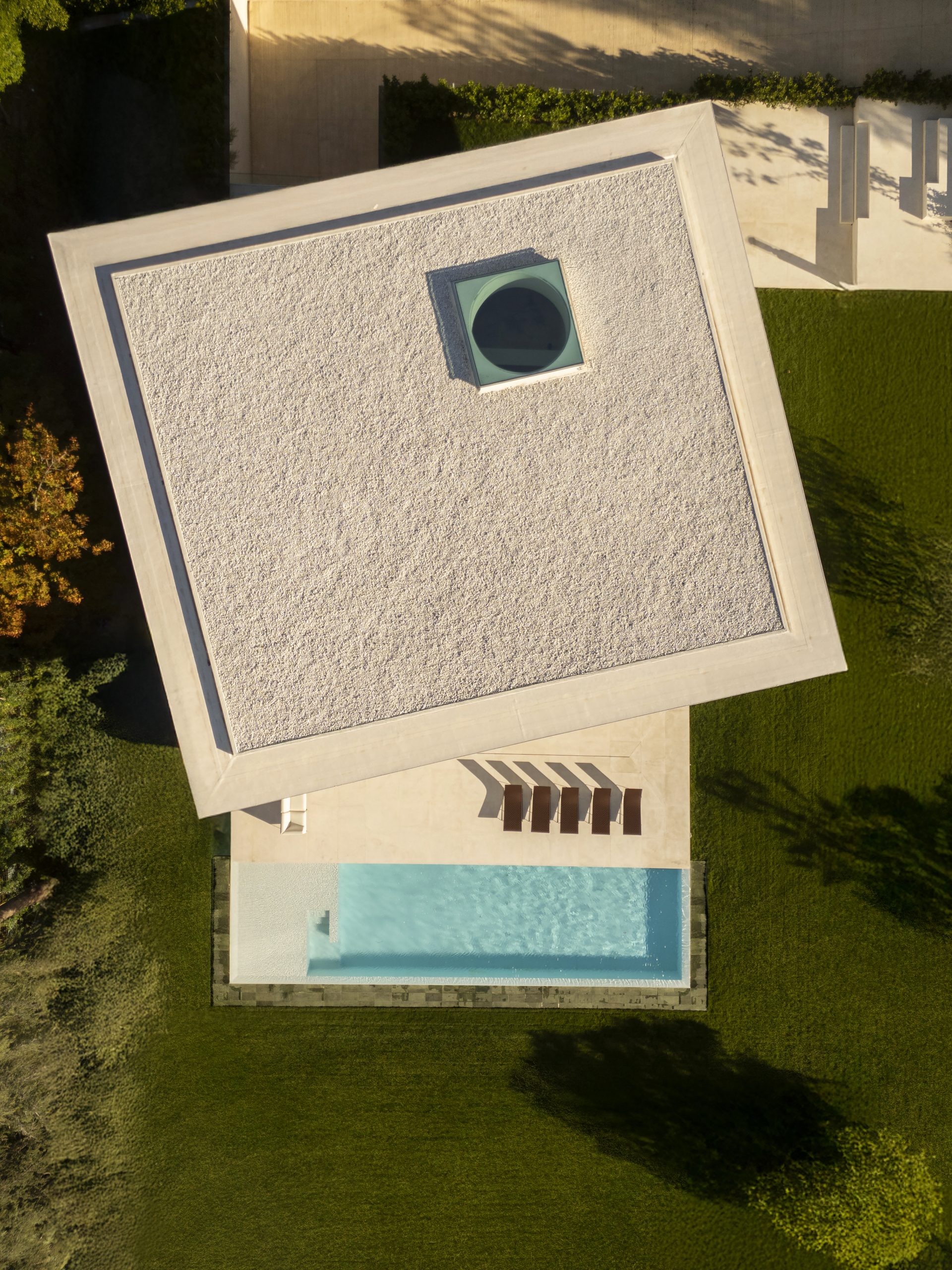
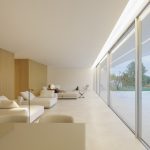
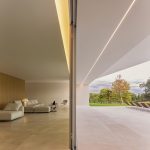
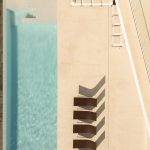
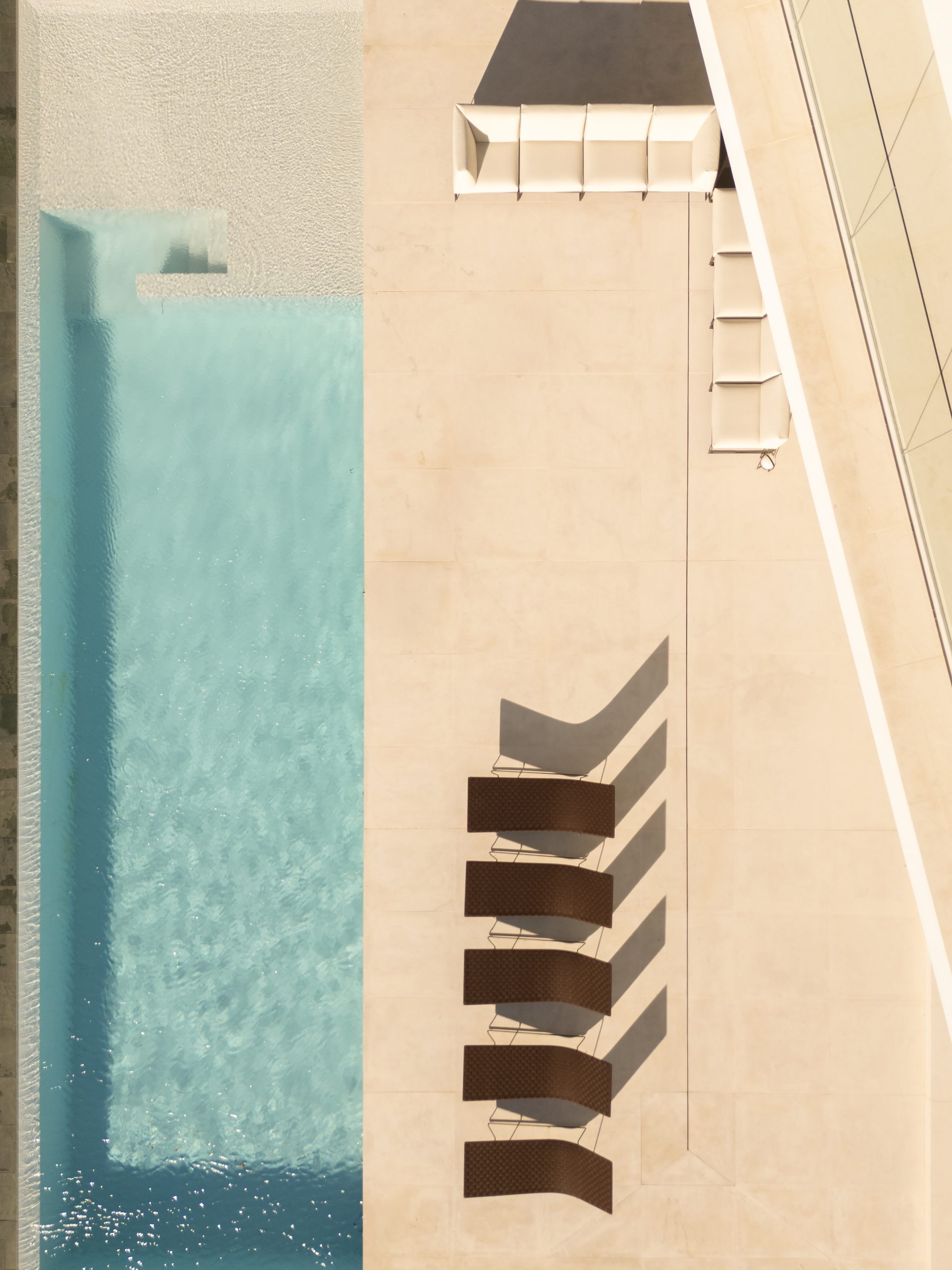
The first is to enhance the views from each level of the house: the ground floor, which contains the daytime areas, is oriented towards the garden, while the upper floor, where the nighttime areas are located, opens up to a nearby lake, visible only from that height. The second reason is to provide shaded outdoor spaces, essential for protection from Madrid’s intense sun. The rotation between the volumes generates covered terraces. The third reason, perhaps more subjective but equally relevant, is to give the house its identity. The inclination between the volumes creates shifting triangular shadows throughout the day, adding dynamism.
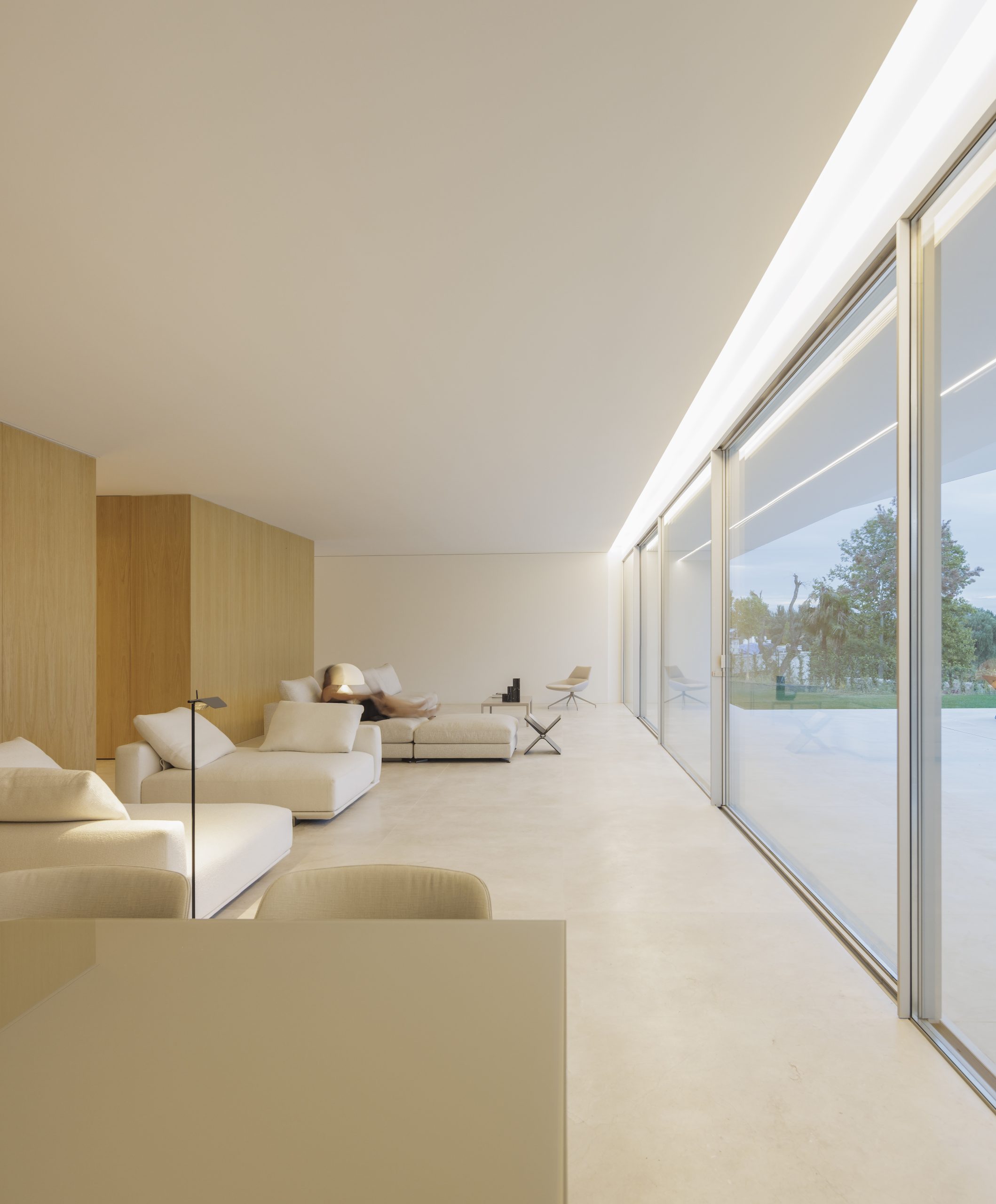
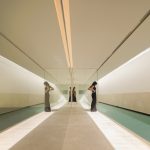
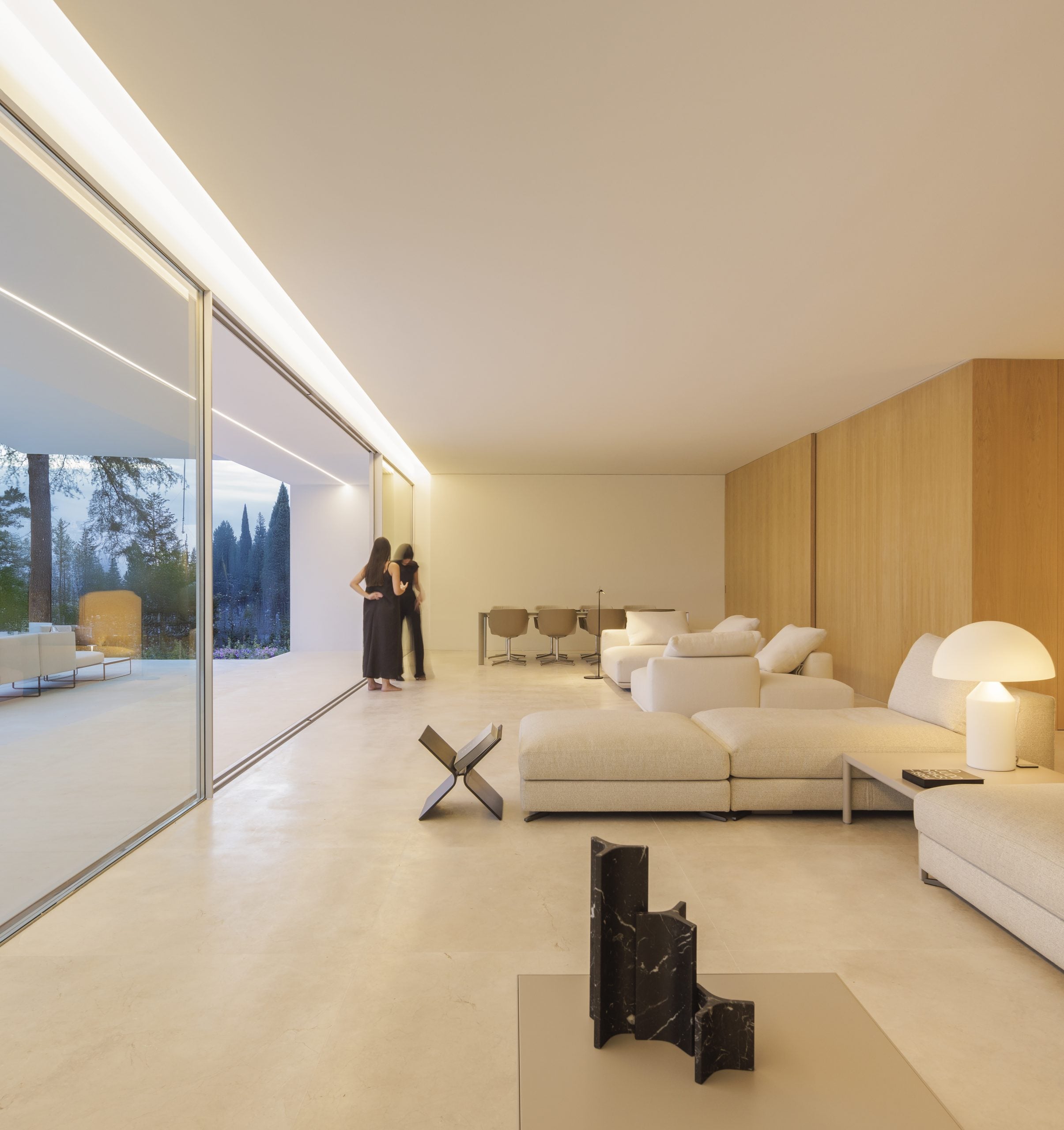
Each of the bodies is built with two solid structural sides, while the other two are left completely open, which facilitates orientation and north–south cross ventilation. The circulation core is laid out transversally, dividing the rear part —more public— due to its relation to a neighboring dwelling situated at a higher level.
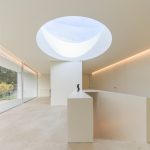
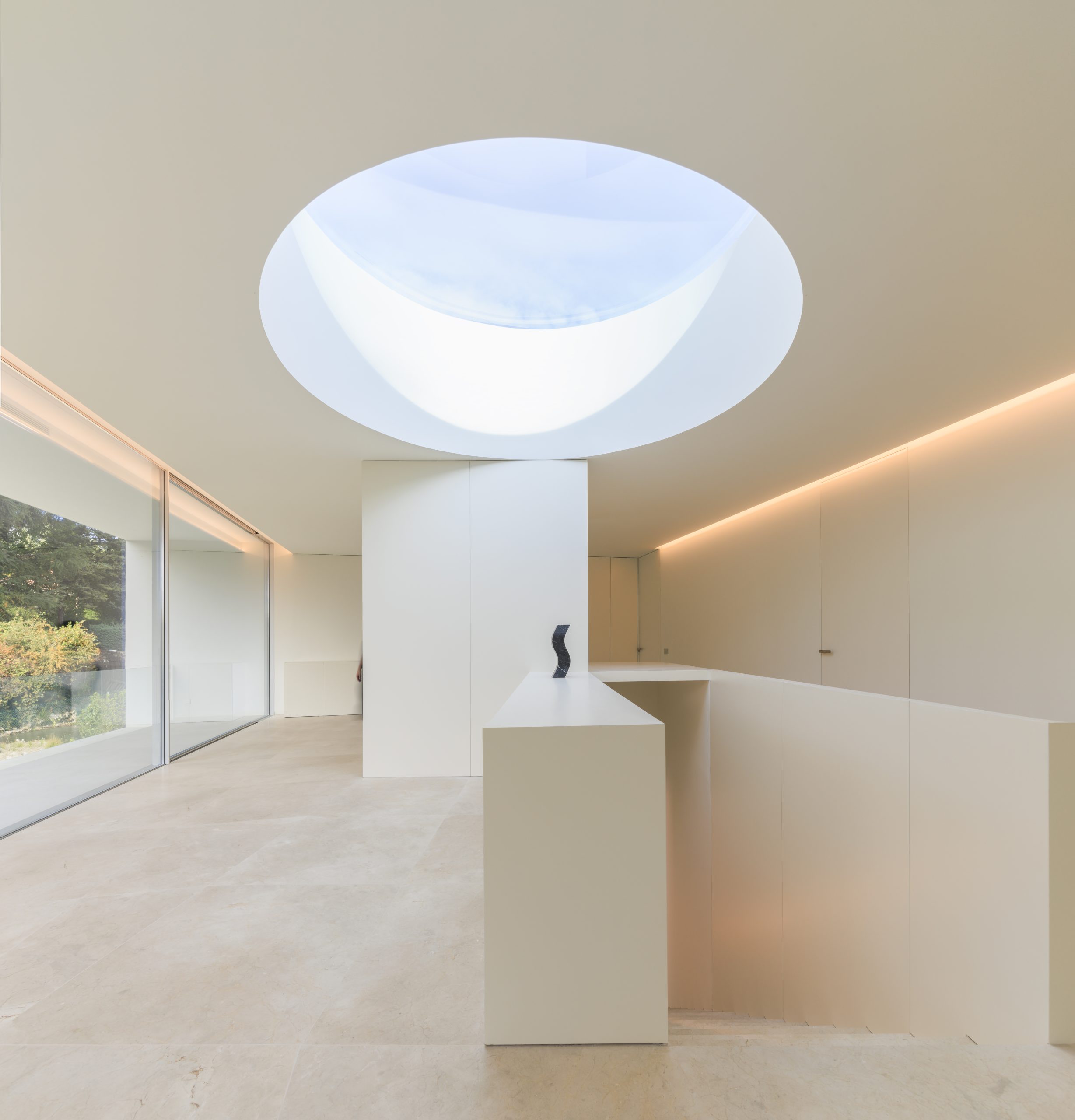
The rotation of the volumes is also expressed in the circular skylight on the upper floor, executed from a single piece. In the basement, the garage and spaces dedicated to wellness and health are located, naturally illuminated through a skylight, as required by the area’s urban planning regulations.
This project was conceived from the idea of transgenerationality. The aim is to create a clear and lasting spatial structure, a perceptible legacy that can be reinterpreted by different generations of inhabitants according to the needs of each moment. The house seeks to remain relevant technically, functionally, and aesthetically. Against obsolescence, permanence is embraced.In this sense, building with natural and highly durable materials can add value over time. It is a way of encouraging care for the space. And what is cared for, remains.