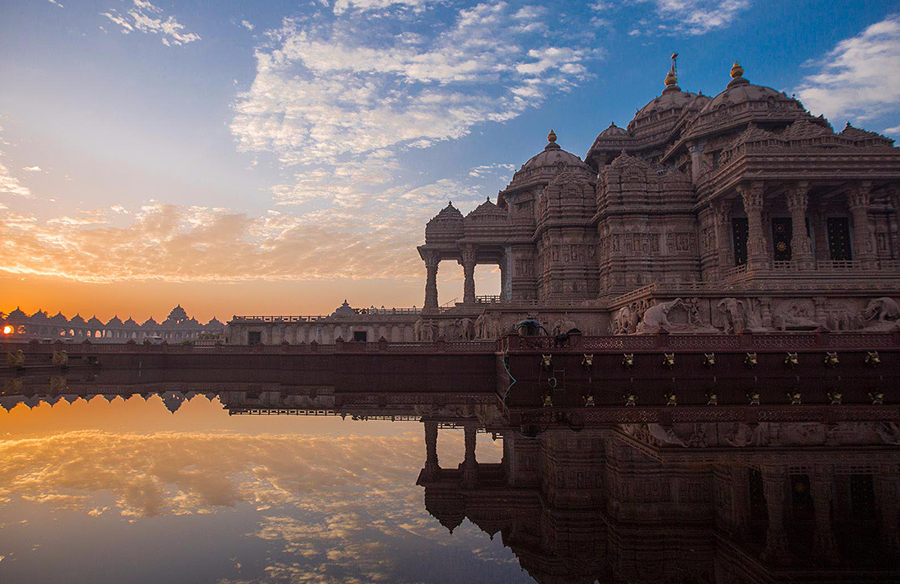
Located on the eastern riverside of the Yamuna, the Akshardham Temple in New Delhi is one of the most significant cultural and religious landmarks in modern-day India. Established in 2005, the temple serves not only as a house of worship but also as a symbol of India’s civilizational continuity. Its design is inspired by classical temple-building traditions, aiming to portray the essence of Indian devoutness while meeting the expectations of a modern global audience at the same time.
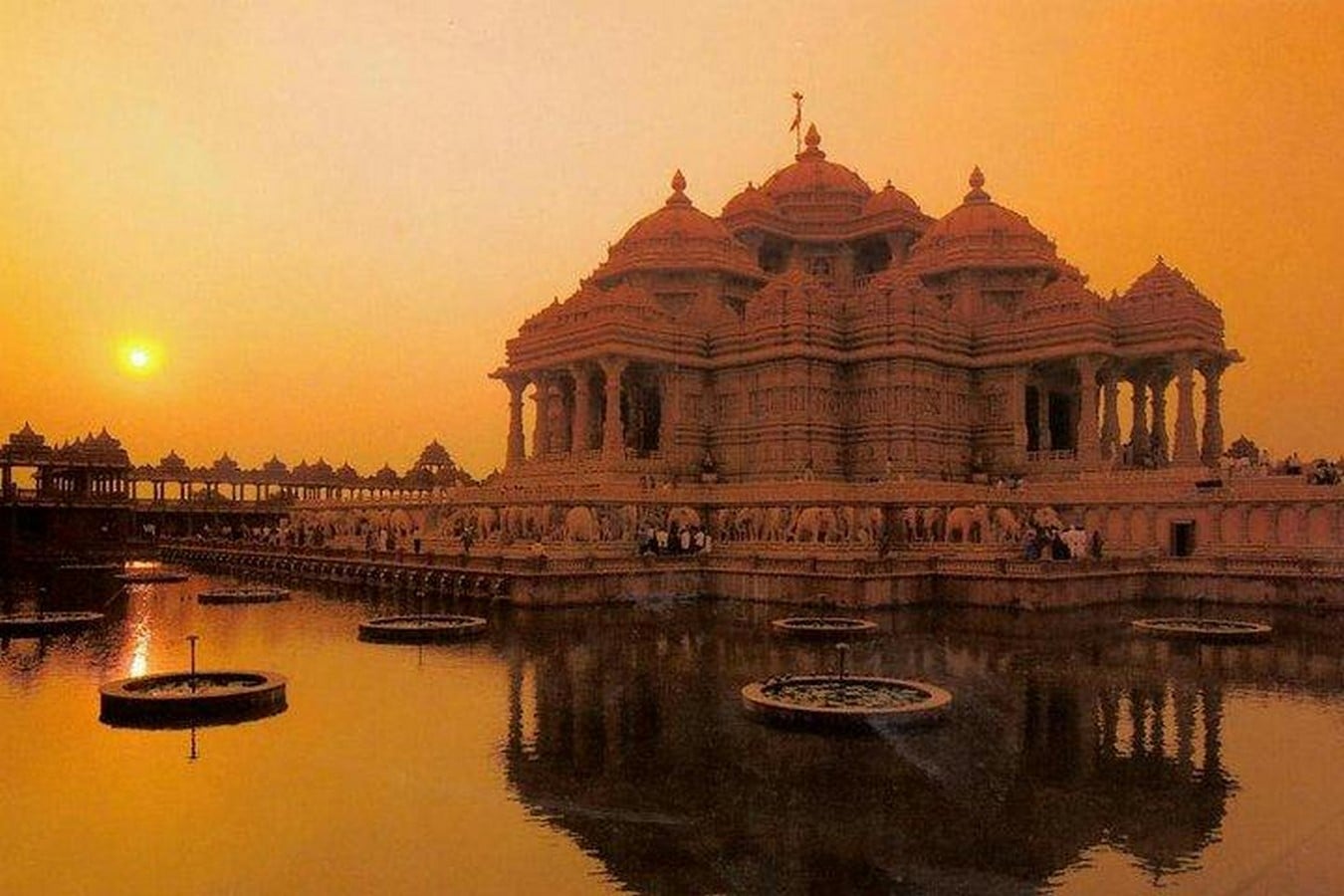
The temple’s significance goes beyond Indian doctrine; it has become a cultural hotspot, a popular tourist destination, and a star feature of Delhi’s urban landscape. The case example studies the temple’s social and political significance, its role in cultural heritage, its architectural and stylistic relevance, its impact on the urban environment, and the historical symbolism it sets forth.
Social and Political Importance
Throughout history, monumental temples in India have done twofold responsibilities: not just serving as a place for devotion but also as a visible marker of political authority at the same time. Lineages such as the Cholas, Pallavas, and Guptas commissioned temples to affirm their legitimacy and display cultural sophistication. Similarly, the Akshardham Temple, New Delhi, reflects a legacy of this pattern, which was otherwise constructed in a modern democratic context.
During its construction period, the city was rapidly developing into a global metropolis, dominated by contemporary architecture and modern infrastructure. Against this backdrop, Akshardham asserted itself as a cultural anchor. It projects India’s heritage as timeless and enduring, standing in strong contrast to steel and glass skyscrapers. Nationally, the temple is recognised as a cultural emblem, reinforcing the country’s identity and spiritual values to both national and global markets.
Cultural Heritage and Tourism
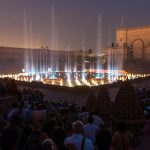
The Akshardham Temple, New Delhi, is not merely a place of worship. It also functions as a cultural complex, housing exhibitions, water shows, narrative installations, and extensive sculptural programmes. Its carved panels, depicting sages, animals, musicians, and mythological stories, serve as an encyclopaedia of Indian civilisation crafted in stone.
As a tourist attraction, it has become a critical site of historical education. Millions of domestic and foreign visitors are introduced to Indian philosophy, moral teachings, and artistic traditions through exclusively chosen experiences. This dual role—as a sacred temple and a cultural museum—makes Akshardham unique among contemporary monuments. The temple also contributes significantly to Delhi’s cultural image, standing hand in hand with India Gate, the Lotus Temple, and the Red Fort as one of the city’s most visited tourist landmarks.
Impact on the Urban Fabric
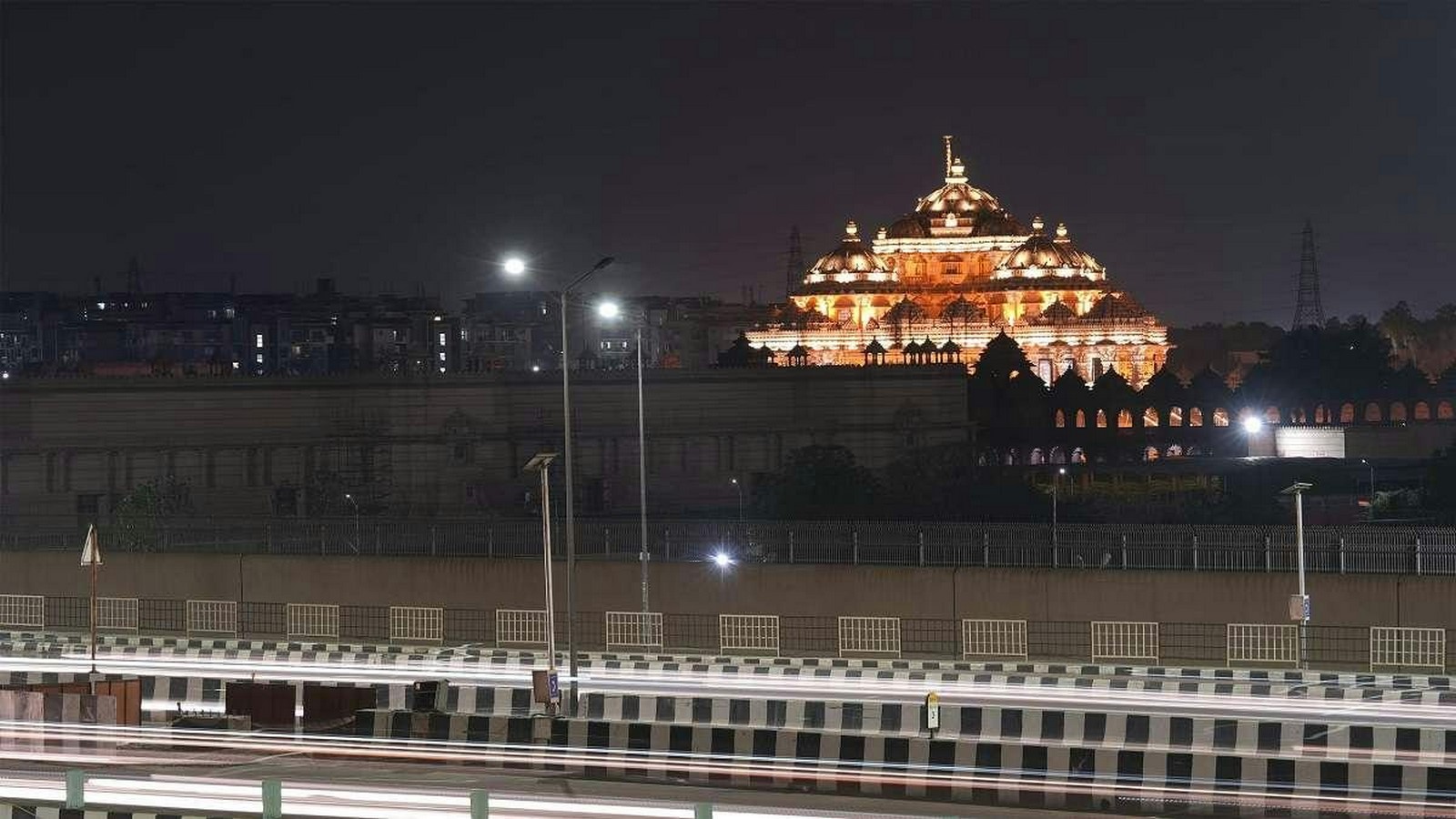
The presence of the Akshardham Temple, New Delhi, has redefined Delhi’s eastern landscape. Constructed on the banks of the Yamuna River, the temple remodelled a largely abandoned zone into a distinguished downtown area. The development of the Akshardham metro station, improvements in the peripheral roads, and the development of a beautifully landscaped neighbourhood all stand as a testament to the infrastructural catalyst it triggered.
Urbanistically, the temple expanded Delhi’s monumental geography. For centuries, central and Old Delhi have dominated the city’s cultural identity through landmarks such as the Red Fort and Jama Masjid. Akshardham introduced a new axis in the east, balancing the city’s spatial distribution of landmarks. However, debates have emerged around ecological sustainability, given the temple’s location on sensitive floodplain land. This dialogue demonstrates the complex relationship between monumental architecture, urban development, and environmental responsibility.
Architectural Style and Relevance
Architecturally, the Akshardham Temple, New Delhi, is grounded in the Nāgara tradition of North Indian temple design. The central shikhara rises to 43 metres, flanked by intricately carved domes and subsidiary shrines. The temple plan incorporates mandapas, colonnades, and courtyards, evoking medieval complexes such as Khajuraho and Konark.
Yet, the design goes beyond replication. It integrates elements from multiple regional styles, including the friezes of Gujarat’s Solanki temples and the expansive courtyards typical of Rajput and Mughal planning. The materials—pink sandstone from Rajasthan and white marble from Italy—create a dialogue between local craft and global exchange. This hybrid identity makes the structure relevant to the modern era. By employing traditional methods and aesthetics on a monumental scale, Akshardham demonstrates how heritage-based architecture remains resonant in the 21st century.
Historical and Symbolic Importance
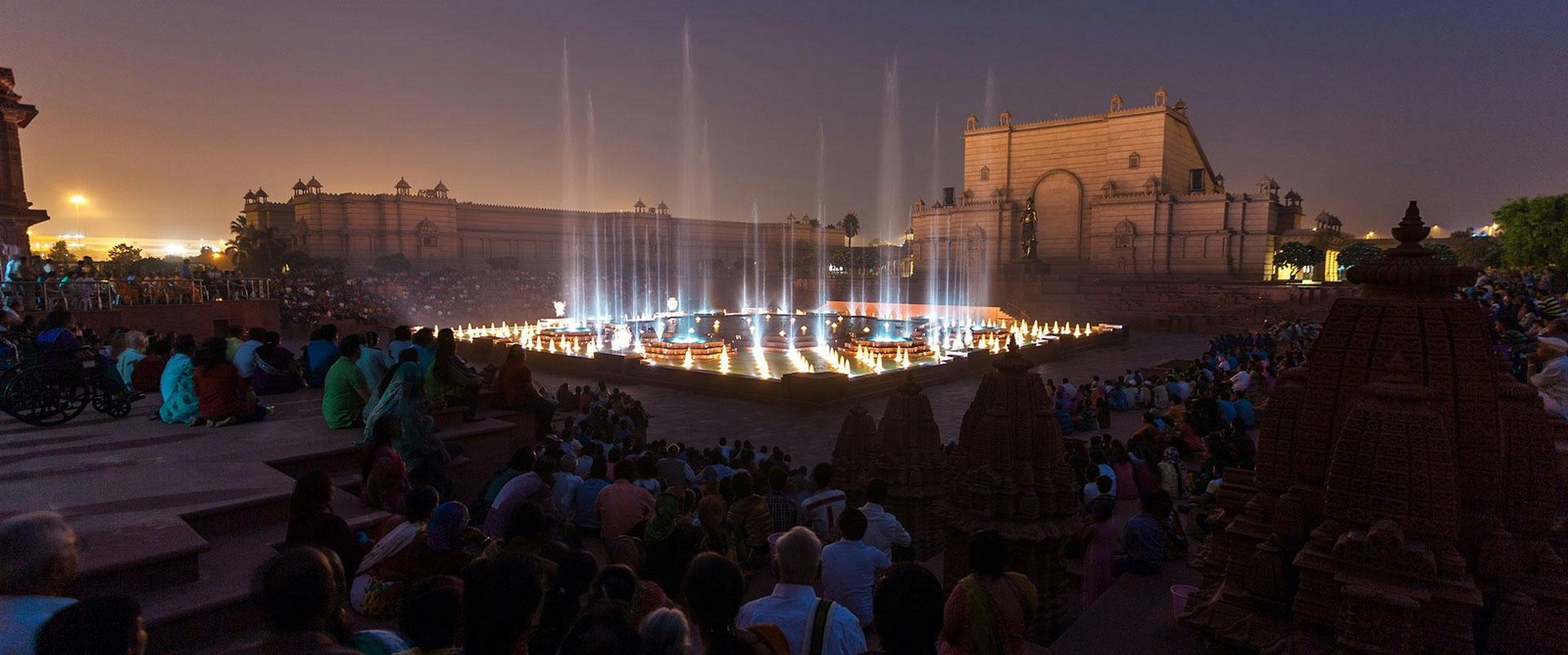
Despite being a contemporary construction, the Akshardham Temple, New Delhi, draws heavily on historical and symbolic traditions. It is dedicated to Bhagwan Swaminarayan, an influential spiritual leader of the 18th–19th centuries, whose teachings focused on moral values, devotion, and service. Through its dedication, the temple connects a modern religious movement to India’s long-standing tradition of monumental temple building.
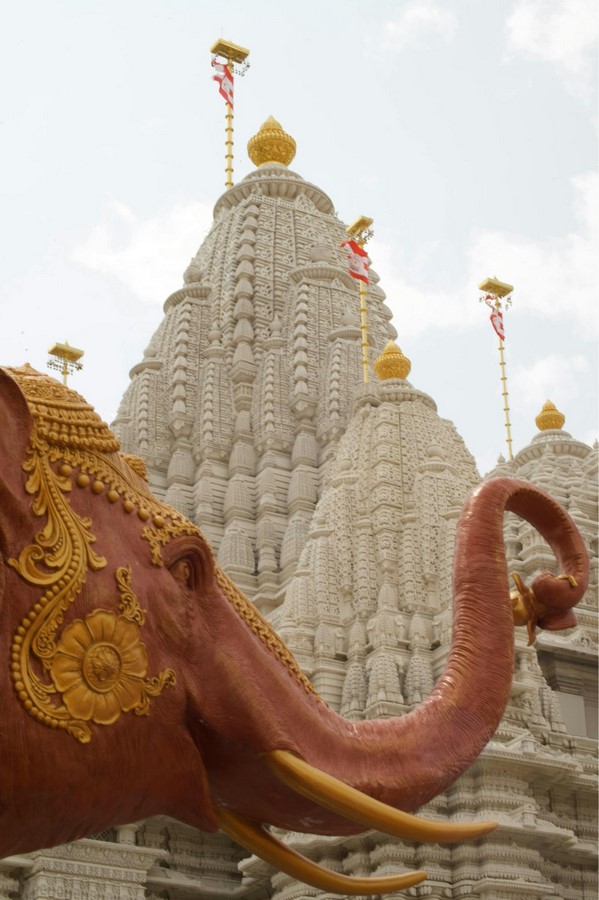
The symbolism of the temple extends beyond worship. Sculptures of elephants, saints, dancers, and natural motifs communicate the principle that divinity pervades all aspects of life. The temple gardens narrate stories of great leaders and philosophers, linking spiritual wisdom to civic virtue. This narrative approach ensures that the temple stands not only as a religious shrine but also as a cultural chronicle of Indian civilization.
Broader Reflections: Heritage in the Present
The creation of Akshardham Temple, New Delhi, highlights the evolving definition of heritage in contemporary society. Unlike monuments valued solely for their antiquity, Akshardham derives significance from its deliberate attempt to evoke timelessness. It reflects how heritage is not only preserved but also actively produced in the present.
The temple also functions as a cultural ambassador. Frequently included in official itineraries of visiting dignitaries, it projects India’s soft power by presenting a narrative of spiritual and artistic richness. Just as earlier dynasties expressed authority through stone, the Swaminarayan community has inscribed its legacy into the capital’s cultural map. This demonstrates how monumental architecture continues to shape collective identity in the modern era.
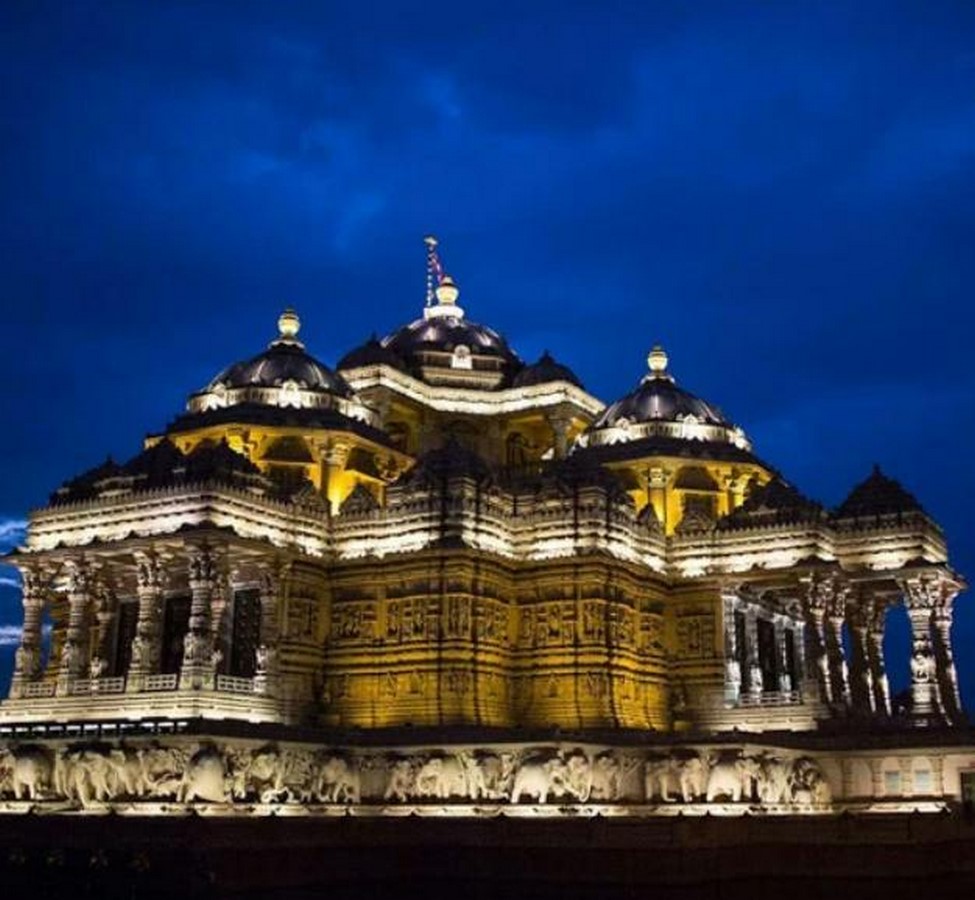
The Akshardham Temple, New Delhi, illustrates how traditional architectural vocabularies can find renewed relevance in the modern age. It embodies the social importance of monumental temples as assertions of cultural pride, while also serving political, urban, and touristic functions. Its architectural hybridity, historical symbolism, and contribution to Delhi’s urban identity highlight its multifaceted role in contemporary India.
As a cultural landmark, Akshardham demonstrates that heritage is not confined to ancient monuments. Instead, it is a living process, continually shaped by the values of each era. By fusing spirituality, artistry, and civic presence, Akshardham stands as a modern continuation of India’s temple-building tradition—an enduring dialogue between past, present, and future.
References:
- Akshardham.com (n.d.) Mandir. Available at: https://akshardham.com/explore/Mandir/ (Accessed: 30 August 2025).
- Akshardham.com (n.d.) What is Akshardham? Available at: https://akshardham.com/ (Accessed: 30 August 2025).
- Anthropology of Architecture (n.d.) Neoliberal Temple, Sacred Pleasure: Reconsidering the Akshardham Temple Complex in Delhi. Available at: https://www.anthropologyofarchitecture.com/neoliberal-temple-sacred-pleasure-reconsidering-the-akshardham-temple-complex-in-delhi (Accessed: 30 August 2025).
- Culture and Heritage (2025) Akshardham Temple of New Delhi: An Architectural Marvel. Available at: https://cultureandheritage.org/2025/01/akshardham-temple-of-new-delhi-india-an-architectural-marvel.html (Accessed: 30 August 2025).
- Engineers and Architects of America (n.d.) Akshardham Temple, New Delhi, India: A Marvel of Modern Architecture. Available at: https://www.e-a-a.com/akshardham-temple-new-delhi-india/ (Accessed: 30 August 2025).
- Singh, K. (2010) ‘Temple of Eternal Return: The Swāminārāyan Akshardhām Complex in Delhi’, Artibus Asiae, 70(2), pp. 265–290.
- Swadesi.com (n.d.) A Sublime Architectural Marvel: Akshardham Temple, Delhi. Available at: https://swadesi.com/a-sublime-architectural-marvel-akshardham-temple-delhi/ (Accessed: 30 August 2025).
- Travel Tour Guru (2025) Akshardham Temple, Delhi. Available at: https://www.traveltourguru.in/blog/akshardham-temple-delhi/ (Accessed: 30 August 2025).
- Trodly.com (n.d.) Discovering the Splendor of Akshardham Temple, Delhi. Available at: https://www.trodly.com/india/destination-5151/akshardham-temple-delhi (Accessed: 30 August 2025).
- Vasavada, R., Bhatt, G.L., and Sharma, Y. (2016). Sompura: Traditional Master Builders of Western India. Heidelberg: Heidelberg University Publishing.
- Wikipedia (2025a) Swaminarayan Akshardham (Delhi). Available at: https://en.wikipedia.org/wiki/Swaminarayan_Akshardham_%28Delhi%29 (Accessed: 30 August 2025).
- Wikipedia (2025b) Hindu temple architecture – Māru-Gurjara architecture. Available at: https://en.wikipedia.org/wiki/Hindu_temple_architecture (Accessed: 30 August 2025).