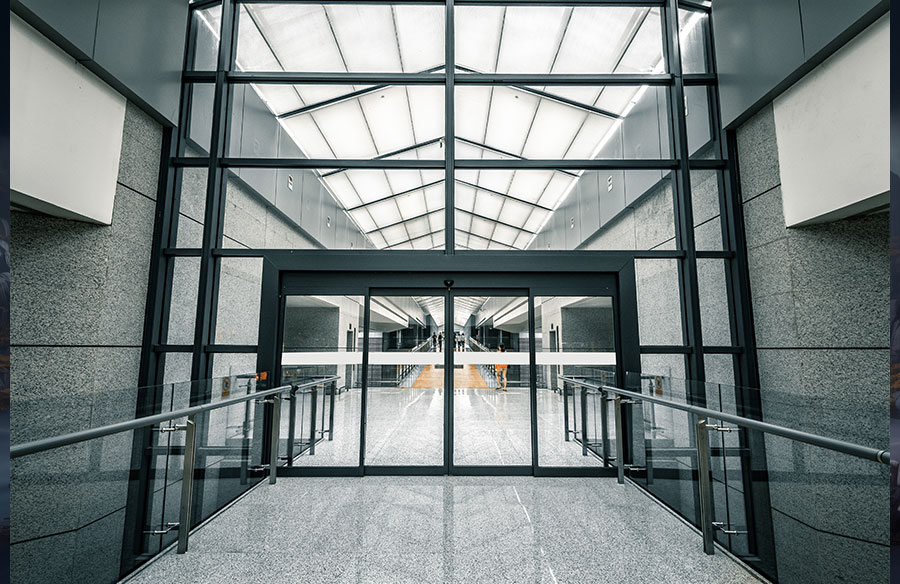
Fire-rated glass doors are essential components of a building’s passive fire protection strategy. They are engineered to contain fire, restrict its spread, and enable safe evacuation, all while maintaining visibility and aesthetic appeal. Unlike ordinary doors, which can fail quickly in the event of a fire, fire-rated glass doors are rigorously designed to withstand extreme conditions while preserving architectural openness.
Because these doors act as a critical safeguard, the responsibility placed on manufacturers is significant. They must not only meet strict regulatory standards but also ensure that their products deliver consistent performance for decades. Long-term safety is not an afterthought; it is a core part of the engineering, materials, and certification processes.
Below, we take a closer look at how leading fire-rated glass door manufacturers ensure reliability and durability over the long term.
1. Material Matters
The foundation of any fire-rated glass door lies in its material composition. Manufacturers typically use advanced fire-rated glass, which may be made of tempered glass, laminated safety glass, or multi-layered units containing intumescent interlayers.
These specialized interlayers play a critical role. Under normal conditions, the door looks like any other glass feature: clear, sleek, and elegant. But in the event of a fire, the interlayer reacts to heat, expanding to form an opaque insulating barrier that blocks flames, heat, and smoke. This transformation helps maintain compartmentation, buying valuable time for evacuation and firefighting efforts.
Framing materials also matter. Fire-rated glass doors are most effective when combined with reinforced steel or aluminium framing systems designed to resist warping, buckling, or collapse under high temperatures. Wooden or untested frames, by contrast, can quickly become weak points. Top manufacturers carefully match glass and frame performance to ensure that the entire system delivers consistent resistance.
In some applications, particularly in high-security residential or commercial projects, fire-rated doors may be combined with bullet-resistant glass. This dual functionality allows occupants to benefit from both fire safety and protection against forced entry or ballistic threats without sacrificing transparency.
2. Certified to Global Fire Standards
Manufacturers cannot simply claim that their products are “fire-rated.” Every legitimate system must undergo rigorous fire testing in accordance with internationally recognized standards such as EN 1634, BS 476, or UL 10C.
These tests simulate real-life fire scenarios, exposing the doors to extreme heat and pressure over specified time intervals, typically 30, 60, 90, or 120 minutes. The objective is to determine whether the door can maintain integrity (resist breaking or collapsing), insulation (prevent heat transfer), and stability (remain structurally sound).
Certification is not a one-time event. Leading manufacturers conduct repeated tests across different product variations, ensuring that every size, design, and configuration meets the necessary fire safety benchmarks. Third-party accredited laboratories carry out the assessments, eliminating bias and guaranteeing compliance.
For architects and builders, this certification process provides assurance that the doors will perform exactly as specified during a fire. For building owners, it ensures legal compliance and reduces liability risks.
3. Sealing Against Smoke and Heat
While flames pose an obvious danger, smoke inhalation is often the leading cause of casualties during a fire. This is why smoke control is a critical part of fire-rated glass door manufacturing.
High-quality doors are fitted with intumescent seals that expand when exposed to heat. These seals, typically placed around the perimeter of the glass and frame, fill in gaps to prevent smoke, hot gases, and flames from spreading into adjacent compartments.
The science behind intumescent seals is precise. Manufacturers select materials that expand at the right temperature thresholds and maintain their structural integrity under pressure. The result is a door system that not only resists direct flame penetration but also prevents smoke migration, allowing safer evacuation routes.
This attention to detail is especially crucial in public buildings such as hospitals, schools, and high-rise apartments where maintaining safe escape corridors can save hundreds of lives.
4. Rigorous Checks from Start to Finish
Behind every fire-rated glass door is a robust manufacturing process. Leading producers implement strict quality control measures at every stage, from sourcing raw glass sheets to final assembly and packaging.
Key elements of this process include:
- Traceability of materials: Every sheet of glass and interlayer is documented to ensure it meets specified standards.
- In-process inspections: Glass doors are tested at multiple production stages, including cutting, lamination, framing, and finishing.
- Performance audits: Random samples undergo fire, impact, and durability testing even after certification to confirm batch-to-batch consistency.
- Third-party verification: External agencies routinely audit factories to confirm compliance with ISO, EN, and ASTM standards.
These checks ensure that what reaches the market is not just a product but a tested safety solution. It also builds trust with specifiers, who can confidently recommend these doors for critical projects.
5. Lifelong Support and Service
Fire-rated doors are not “fit-and-forget” products. For manufacturers, responsibility extends far beyond initial production and sale. Reputable suppliers provide a range of post-installation services that ensure the doors continue to perform throughout their lifecycle.
This includes:
- Installation training: Providing certified installers with the knowledge to fit the doors correctly.
- Maintenance guidelines: Educating building owners and facility managers on regular inspections, cleaning, and upkeep.
- Periodic inspections: Offering site visits to check for wear, seal integrity, or alignment issues.
- Replacement parts: Supplying certified hinges, seals, or glazing components to ensure compliance during repairs.
Without this ongoing support, even the best-engineered door could lose effectiveness over time. Manufacturers that invest in lifelong service demonstrate a commitment to true safety, not just initial sales.
6. Balancing Performance with Aesthetics
One of the biggest advantages of modern fire-rated glass doors is their ability to provide protection without compromising design. Unlike bulky fire doors of the past, today’s products are slim, transparent, and customizable.
Architects and homeowners alike now have access to fire-rated doors that align with contemporary design preferences, whether that means frameless glass, minimalist metallic finishes, or timber veneers. Many systems can also be paired with sidelights or integrated into partitions, creating bright, open spaces that are still safe and compliant.
When combined with advanced glazing options like laminated acoustic glass or bullet-resistant glass, fire-rated doors can serve multiple functions simultaneously. This adaptability makes them especially attractive for high-end residential projects, luxury hotels, and corporate offices where both safety and aesthetics are priorities.
Transparent Safety That Lasts
Through advanced materials, rigorous testing, environmental resilience, and long-term support, manufacturers of fire-rated glass doors ensure safety that endures. Their commitment not only safeguards lives and assets but also maintains architectural transparency without compromising fire protection.
When combined with complementary technologies like bullet-resistant glass, these doors can deliver layered protection against multiple risks, from fire to forced entry, while still contributing to the beauty and openness of modern spaces.
For architects, builders, and property owners, choosing a certified manufacturer is about more than meeting code requirements. It is about investing in long-term resilience, peace of mind, and a safer built environment.