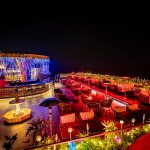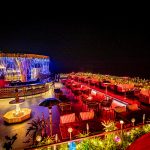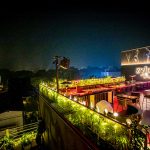
Designing a rooftop bar is rarely straightforward. But when it’s located within 100 meters of a UNESCO World Heritage Site like the Qutub Minar, it comes with a very specific kind of complexity. Zylo was envisioned as a companion space to Kakapo, the existing restaurant just one floor below. Both were designed for the same client, and while Kakapo draws its inspiration from the rare, flightless bird, Zylo was imagined as the forest it might inhabit.
Project Name: Zylo
Studio Name: Aatika Manzar Designs

Before we began thinking about materials or mood, we had to address the technical reality of the space. The rooftop was not an empty shell, it housed essential services for the building below, including water tanks, fire systems, and exhausts. All of this infrastructure needed to remain functional, but it also needed to make space for a hospitality experience. Our first step was to consolidate these services into a compact zone and resolve the civil structure, which became the core around which we planned the rest of the space.
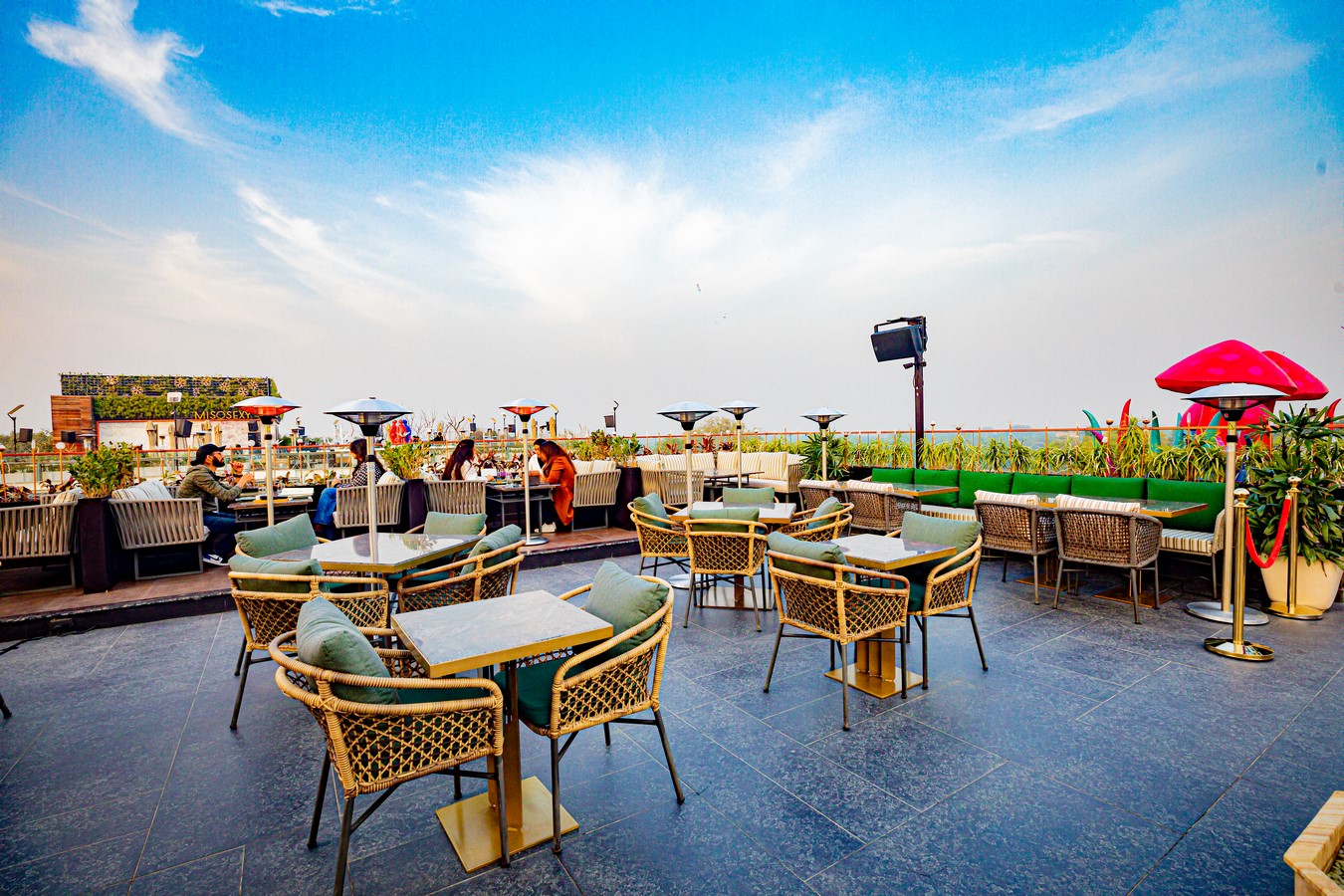
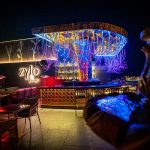
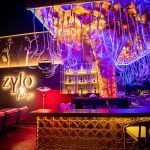
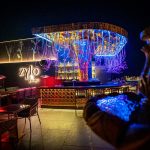
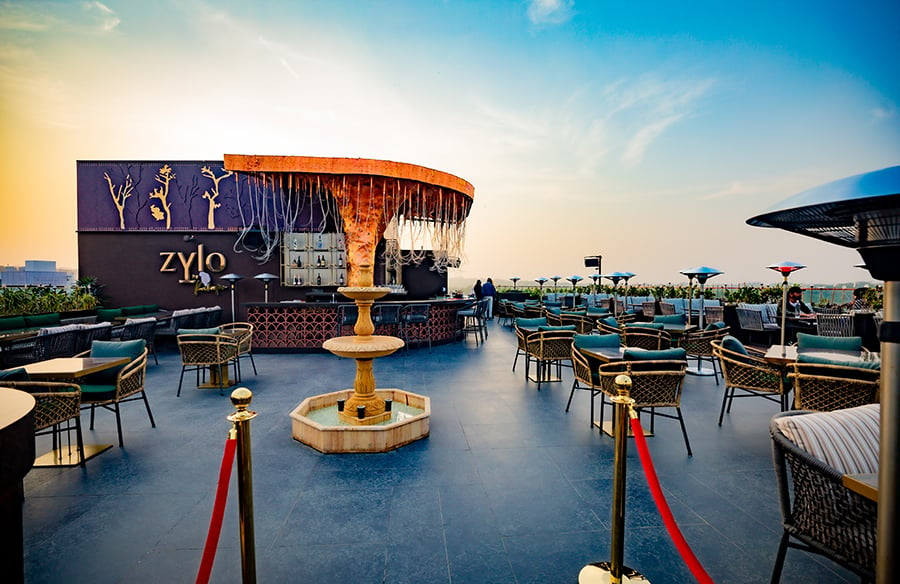
This zone was eventually integrated into the bar’s design itself. Instead of hiding it, we placed the bar along this block, letting it serve both a functional and spatial purpose. The bar became the anchor point of Zylo, and from there the rest of the plan opened up.
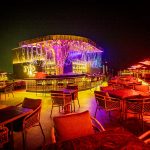
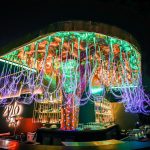
Conceptually, Zylo was always meant to feel like a whimsical night forest. Since permanent construction was not permitted due to ASI restrictions, we leaned into a design language that felt organic, lightweight, and atmospheric. At the heart of the space stands a sculptural tree structure, created from twisted bamboo. It branches outward above the bar and is embedded with optic fiber lights that glow softly at night. This installation became the visual and emotional centre of the design.

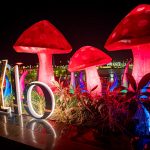
The entry sequence was carefully choreographed. As guests ascend the staircase, they are greeted by oversized fiber mushrooms in vibrant colours, a playful and immersive welcome. These elements are more than just decorative; they establish the mood and offer an early visual cue that this space is meant to feel like an escape.
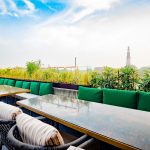
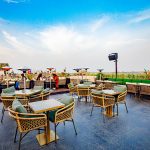
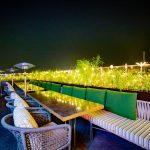
Spatial zoning was organized to support a mix of experiences. On the right side, we created slightly raised booth-style seating for larger groups, offering a sense of privacy while maintaining connection to the rest of the space. On the left, a continuous banquette runs along the edge of the terrace, oriented to offer direct views of the Qutub Minar. At night, the monument is lit until 10 PM, making this corner of Zylo especially atmospheric and photogenic.
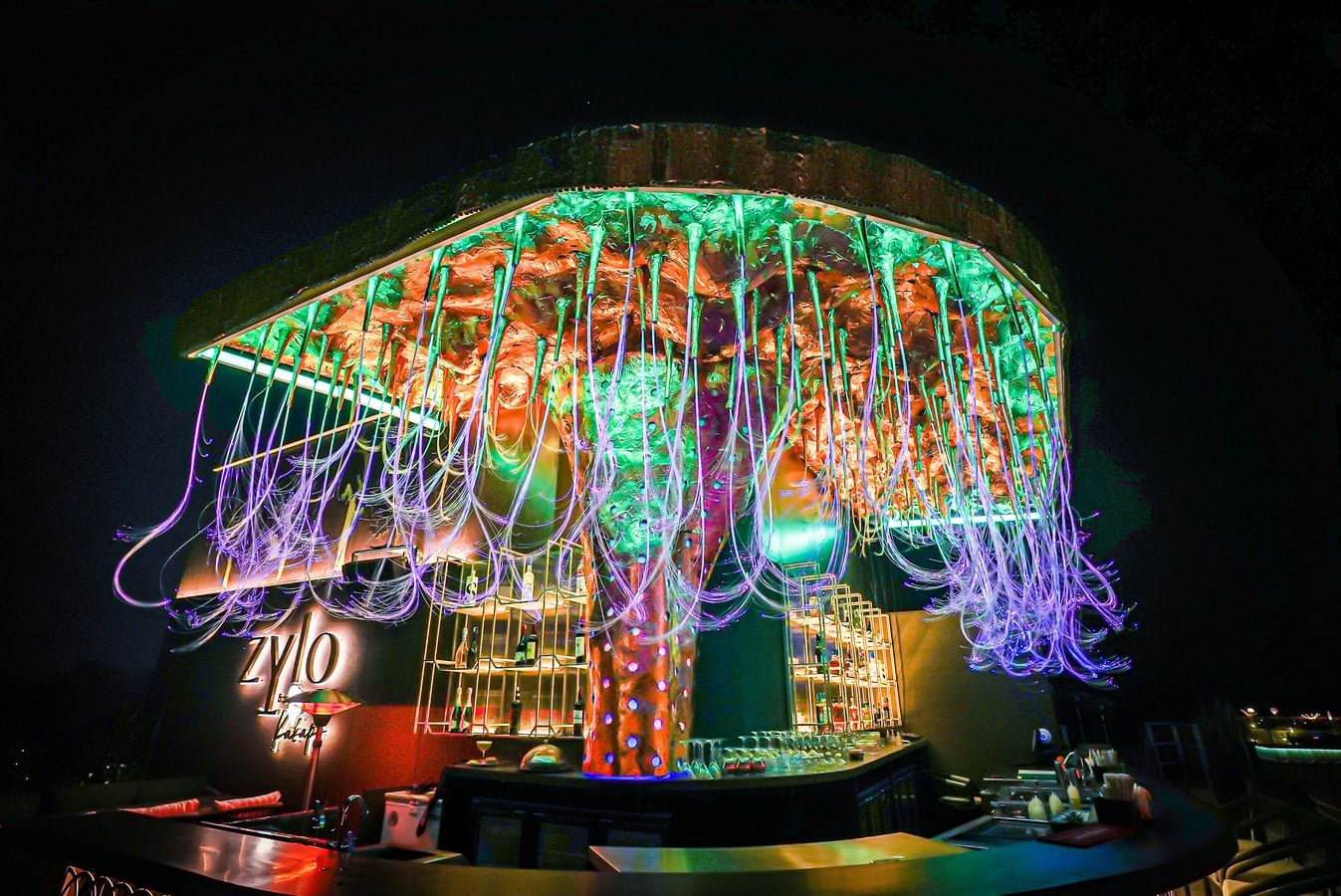
The central area was kept flexible with movable furniture, so it can adapt for everyday dining or be cleared for dancing during DJ nights. At the far end, a dedicated DJ console and spotlight define the performance zone. The flooring was chosen for durability, while the materials throughout were selected for outdoor use – wicker, rope, weather-treated woods, all in tones that reinforce the forest palette.
Lighting played a key role in defining the atmosphere. We designed and customized floral and leaf-like fixtures in fiber, which were backlit to produce a soft ambient glow. These fixtures are scattered across the space and subtly reinforce the narrative of a glowing forest canopy. The overall palette uses deep greens, papaya yellow, and soft gold accents to keep the mood warm and inviting while adding a sense of understated luxury.
Potted plants line the periphery to blur the boundary between built form and open sky. These small details, from material texture to lighting temperature, were all carefully calibrated to work within the constraints of the site—and still deliver something immersive, cohesive, and true to its concept.

Zylo is a response to many limitations, but it never feels compromised. It tells a story of nature, light, and escape and invites people to step into it, even if just for a few hours.