For generations, the formula for building a house has been deceptively simple: find land, pour a concrete foundation, and build a heavy, permanent structure on top of it. This model has shaped our cities and suburbs, but it is no longer working for us on a global scale.
The median home price in the United States has skyrocketed to more than six times the median household income. This is a huge jump from what has been normal in the past, making it impossible for millions of people to own a home. For the average person, this can mean over a decade of saving just for a down payment.
This financial crisis runs parallel to an environmental one. Almost 40% of the world’s carbon emissions come from the traditional construction and building operations industry. This means that the way we build is bad for the planet and our wallets.
This isn’t just an economic problem; it’s a crisis of architectural imagination. The very definition of a “home” is being challenged, forcing us to look beyond the rigid, resource-intensive methods of the past.
As we search for solutions, one of the most promising trends in the search for solutions has been the rise of the Accessory Dwelling Unit (ADU). However, this solution often falls into the old trap of traditional construction. The real answer might not be to build smaller, but to build smarter, lighter, and more flexible.
The ADU movement: A good idea facing old limitations
The ADU—a secondary housing unit on a single-family residential lot—has been championed as a powerful tool to increase housing density. Cities from Portland to Austin are rewriting zoning laws to encourage these “backyard homes,” and they have good reasons for doing so!
ADUs can provide rental income for homeowners, create multi-generational living compounds, and gently increase a city’s housing supply without large-scale redevelopment.
The problem is that the majority of ADUs are built as miniature versions of traditional houses. They need extensive foundations, complex permitting, and the same slow, labor-intensive building processes.
The result?
A project that can easily cost hundreds of thousands of dollars and take more than a year to finish. While they add density, conventional ADUs do little to address the core issues of affordability and sustainable construction. They are a step in the right direction, but they don’t go far enough.
The paradigm shift: From Heavy Construction to Lightweight Architecture
What if the future of housing isn’t heavy, but light? This is the question being explored by a new wave of architects and builders who believe the real solution lies in fundamentally rethinking our materials and methods. This philosophy is supported by innovators like Praveen Krishnaiah, founder of The Out Factory, a company that specializes in modern, engineered yurts. He argues that we are clinging to outdated construction methods out of habit, not necessity.
“We’ve been taught to equate permanence with concrete and steel,” Krishnaiah states. “But true permanence comes from adaptability and sustainability. The future of housing needs to be lighter on the land and quicker to deploy. It’s about creating beautiful, functional spaces without the enormous environmental and financial debt of traditional building.”
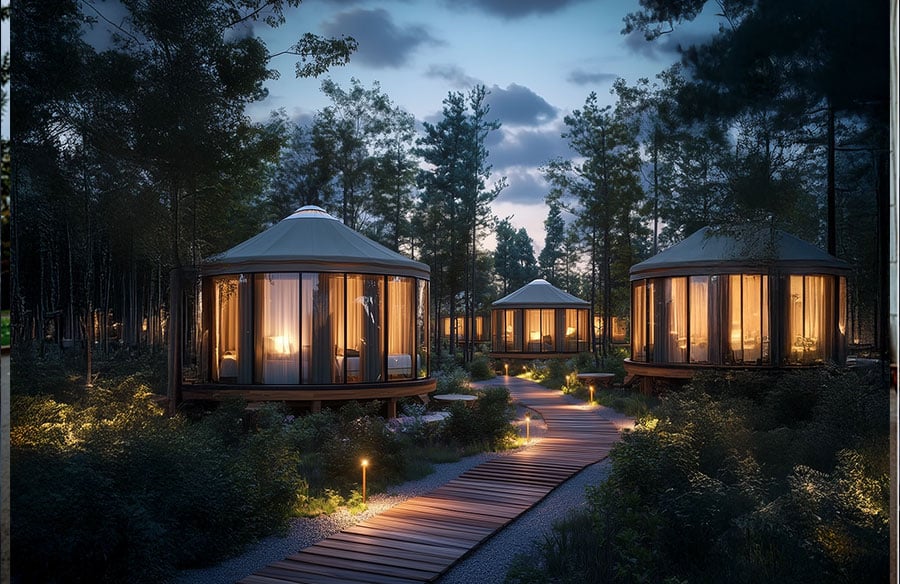
This thinking leads us to lightweight architectural solutions—structures that are engineered for longevity and all-weather performance but can be installed with minimal site impact. This is where the modern yurt becomes an interesting example.
The Modern Yurt: A Case Study in affordable and sustainable living
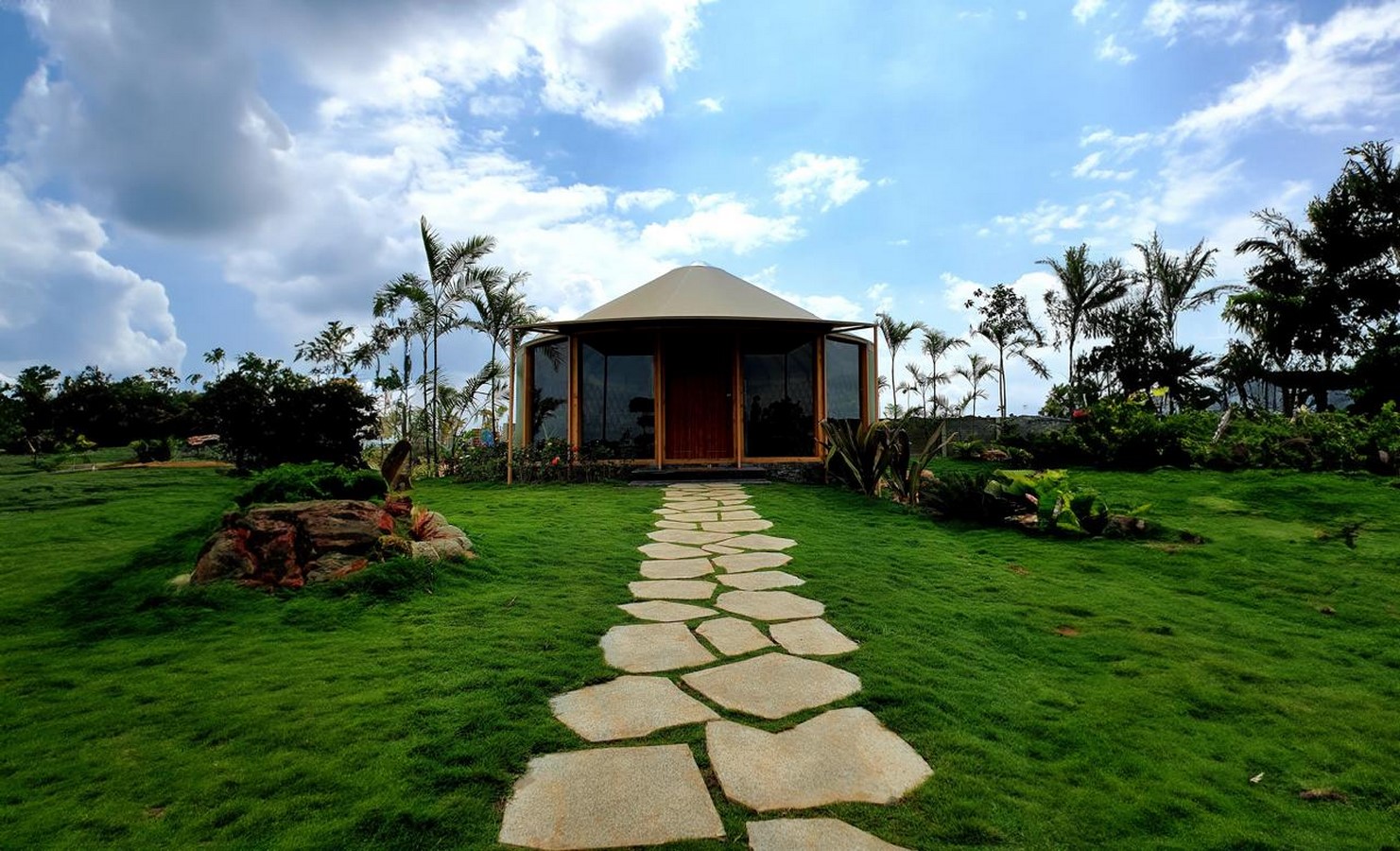
When you hear the word “yurt,” you might think of simple, nomadic homes. However, the modern version is a highly engineered architectural wonder. It is a smart way to build homes that directly fixes the problems with traditional ADU construction.
- Breaking the Cost Barrier: A modern, engineered yurt can be manufactured and installed for a fraction of the cost of a traditional stick-built ADU. This huge cost reduction reopens the possibility of home ownership and private rental development to a much wider demographic. For cities struggling with housing shortages, it presents a scalable model for affordable living.
- A Truly Sustainable Footprint: This is perhaps the most significant advantage. A yurt’s impact on the land is minimal. It can be installed on a simple wooden deck or discrete concrete piers, eliminating the need for a massive, carbon-intensive concrete slab foundation. The materials themselves are chosen for sustainability; The Out Factory, for instance, uses ethically sourced Canadian Pine and an advanced, recyclable Serge Ferrari architectural fabric for the shell. This fabric is a technological wonder—it’s UV resistant, fire retardant, and has a lifespan measured in decades, proving that “lightweight” does not mean “temporary.”
- Speed and Scalability: The construction timeline for a conventional ADU is a major barrier. A modern yurt can be fully installed and ready for occupancy in a matter of days or weeks, not months or years. This speed makes it an incredibly effective tool for rapidly responding to housing needs, whether for a family member or as part of a larger community development.
- Design, Comfort, and Livability: The modern yurt sacrifices nothing in terms of comfort. These aren’t tents; they are permanent, all-weather structures engineered to handle strong winds and heavy snow loads. The interiors are bright, open, and spacious, with options for standard plumbing, electrical, insulation, and even the integration of smart home technology. The architectural form itself, with its soaring central ring, creates a unique and calming interior environment that feels far larger than its footprint might suggest.
Building the Future, One Backyard at a Time
There is no one-size-fits-all solution to the housing crisis. Policy changes and financial incentives are part of the answer, but we can’t fix it without completely rethinking how buildings are made. The ADU movement is an important part of the puzzle, but we won’t be able to fully use its potential until we embrace the innovative construction methods that make it truly affordable and sustainable.
The modern yurt gives us a powerful glimpse into this future. It is a testament to the idea that we can build beautiful, durable, and comfortable homes that are also cost-effective, quick to deploy, and gentle on the planet.
By looking beyond the concrete and embracing lighter, smarter architectural solutions, we can build a more accessible and sustainable housing landscape for everyone.