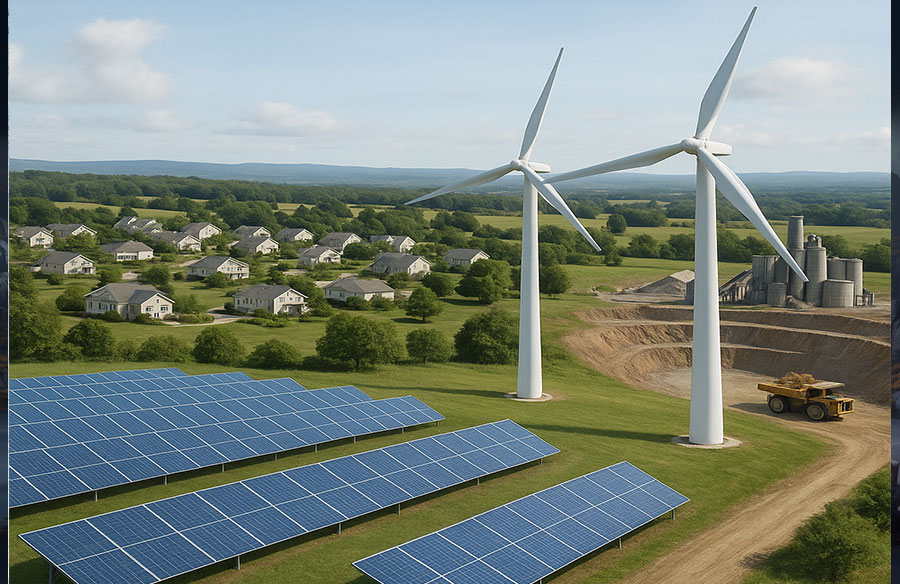
Energy independence is more than a slogan — it’s a blueprint for how nations can meet their energy needs without relying on unstable or costly imports. In a world defined by shifting geopolitical alliances and mounting environmental pressures, the ability to produce, store, and manage your own energy supply is a matter of both security and sustainability.
Land use planning and mineral resource management might seem like separate domains — one focused on where things happen, the other on what’s beneath the surface. In reality, they intersect in ways that determine whether a country can build renewable power plants, store electricity, and manufacture the technology needed to run modern grids. Getting this balance right is not just a technical exercise; it’s a policy challenge that calls for strategic thinking, cross-sector collaboration, and long-term vision.
What does “energy independence” really mean today?
At its core, energy independence describes the degree to which a nation can meet its own energy demands from domestic sources. But the concept is more nuanced than simply “producing everything at home.” Some countries aim for full energy autonomy, where nearly all fuels and electricity are generated internally. Others settle for partial independence, reducing reliance on imports for key sectors while still trading for cost efficiency. A third approach, energy resilience, focuses less on total self-sufficiency and more on ensuring the system can withstand supply shocks, whether caused by conflict, market volatility, or natural disasters.
For example, Iceland produces nearly all its electricity from geothermal and hydropower, making it close to autonomous in that regard. Japan, by contrast, imports most of its fossil fuels but invests heavily in renewable capacity and storage to improve resilience. The United States sits in between — a net exporter of some fuels, yet still dependent on imports for certain refined products and critical minerals.
Key indicators of energy independence include:
- Domestic production ratio (percentage of total energy generated locally)
- Diversity of the energy mix (balance between fossil fuels, renewables, and nuclear)
- Import dependency rate (share of total supply coming from abroad)
- Strategic reserves capacity (oil, gas, and electricity storage levels)
How does land use planning influence energy independence?
Land use planning is essentially the blueprint for how physical space is allocated, regulated, and optimized. When done with energy independence in mind, it identifies the best sites for power generation, storage facilities, and transmission networks — while ensuring these uses coexist with other societal needs. Strategic zoning can prevent conflicts before they start, streamline permitting, and reduce project delays that often slow energy infrastructure deployment.
The challenge lies in managing competing demands. Farmland is essential for food security, conservation areas protect biodiversity, urban expansion absorbs space for housing and industry, and mining operations can disrupt local ecosystems. Without coordinated planning, these interests collide, leading to stalled projects or inefficient land use that undermines energy goals.
Examples of land use categories relevant to energy include:
- Renewable energy zones (solar farms, wind corridors)
- Extraction sites (mining for critical minerals)
- Transmission corridors (high-voltage power lines)
- Storage facilities (battery banks, pumped hydro reservoirs)
How does mineral resource management fit into the energy independence equation?
Modern energy systems depend heavily on specific minerals that enable renewable generation, energy storage, and advanced grid control. Lithium, cobalt, and nickel are critical for high-performance batteries; rare earth elements power wind turbine magnets and electric vehicle motors; copper is indispensable for wiring; and uranium fuels nuclear reactors. Without access to these materials, domestic energy projects stall — even if the land and infrastructure are available.
Mineral resource management involves mapping deposits, securing extraction rights, and ensuring production meets environmental and safety standards. Countries with domestic reserves often face the dilemma of whether to extract aggressively to meet short-term demand or pace production to extend long-term availability. The balance also depends on the capacity to process and refine raw materials, which is where many supply chains encounter bottlenecks.
Key minerals tied to energy technology include:
- Lithium – used in batteries for EVs and grid storage
- Cobalt – enhances battery stability and longevity
- Rare Earth Elements – essential for high-efficiency magnets
- Copper – critical for electrical transmission and renewable installations
- Nickel – vital for high-density batteries
- Uranium – fuels nuclear power plants
What challenges arise when merging land use planning with mineral resource management?
Bringing these two domains together is not as simple as drafting a shared map. Land use rules are often managed by local planning bodies, while mineral rights and extraction permits fall under national or regional mining authorities. For landowners looking to sell mineral rights, this split can create added complexity, as overlapping jurisdictions and conflicting timelines slow projects and create uncertainty for investors. This split can lead to overlapping jurisdictions and conflicting timelines, slowing projects and creating uncertainty for investors.
Another tension emerges between conservation priorities and the need to extract resources. Renewable projects require significant mineral inputs, but mining can damage ecosystems and disrupt communities. In many regions, local resistance grows when projects appear to prioritize national or corporate goals over community interests. Infrastructure limitations — such as inadequate transport links or power lines — further constrain where extraction and generation facilities can be located.
Most common conflict points include:
- Regulatory overlap between agencies
- Environmental impact on sensitive habitats
- Land ownership disputes
- Competing economic priorities between industries
What frameworks can balance land use and mineral management?
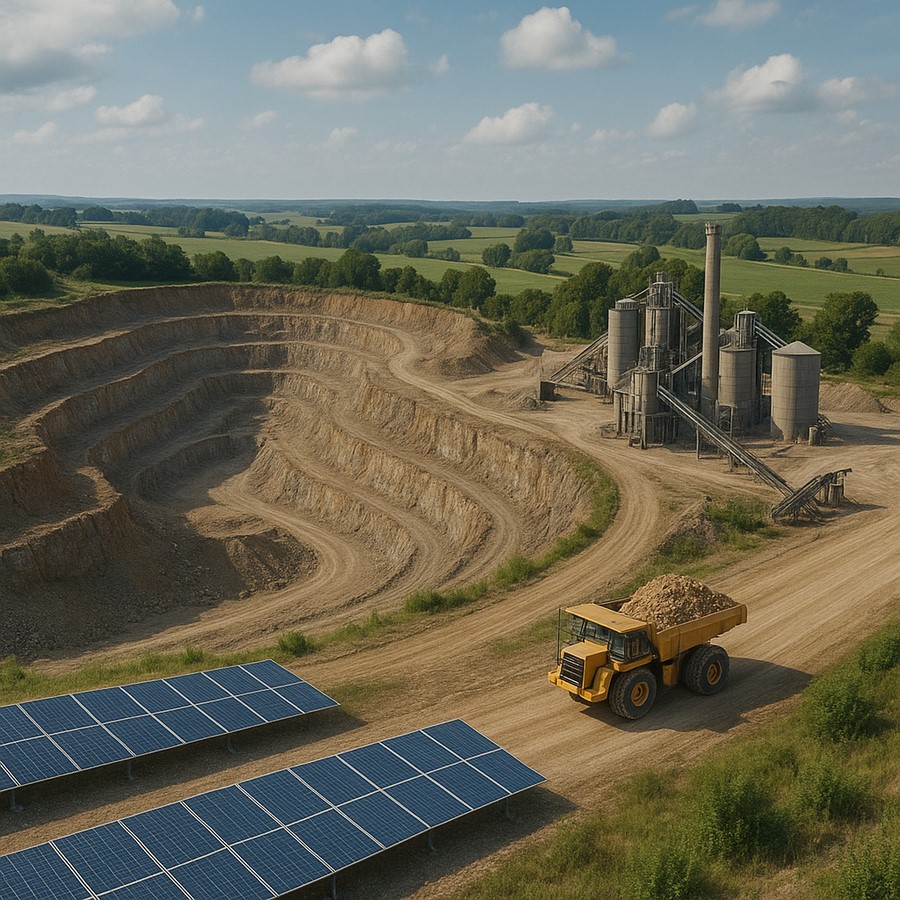 Integrated planning frameworks bring together environmental, economic, and social considerations in a single decision-making process. They rely on clear data sharing, stakeholder involvement, and flexible rules that adapt to changing conditions.
For example, Australia’s Critical Minerals Strategy links mineral exploration zones with renewable energy corridors, ensuring that both extraction and generation benefit from shared infrastructure. Norway’s land and resource planning integrates hydropower sites with local mineral needs for turbine manufacturing.
Core principles of integrated planning include:
- Transparency in decision-making
- Environmental safeguards to limit damage
- Economic optimization across sectors
- Adaptive management to respond to new data
Which critical minerals are most important for energy independence?
Lithium – Batteries, EVs, grid storage
Lithium’s light weight and high electrochemical potential make it ideal for modern batteries.
- Properties: Low density, high energy storage capacity
- Supply: Concentrated in Australia, Chile, Argentina
- Recyclability: Recoverable from spent batteries, but processes are still scaling
Cobalt – Battery stability, supply challenges
Cobalt extends battery life and prevents overheating.
- Properties: High melting point, thermal stability
- Supply: Dominated by the Democratic Republic of Congo
- Recyclability: Recyclable, but collection infrastructure is limited
Rare Earth Elements – Magnets for wind turbines and motors
These elements enable high-strength permanent magnets.
- Properties: Unique magnetic and conductive traits
- Supply: China controls most production
- Recyclability: Possible but costly
Copper – Grid wiring, renewable installations
Copper is unmatched for electrical conductivity.
- Properties: Excellent conductor, corrosion resistant
- Supply: Chile, Peru, China lead production
- Recyclability: Highly recyclable with minimal quality loss
Nickel – High-density batteries, corrosion resistance
Nickel boosts energy density in battery cells.
- Properties: Strong, corrosion resistant
- Supply: Indonesia, Philippines, Russia
- Recyclability: Common in metal recovery streams
Uranium – Nuclear power fuel
Uranium’s energy density supports baseload nuclear generation.
- Properties: Radioactive, high energy yield
- Supply: Kazakhstan, Canada, Australia
- Recyclability: Limited to specialized reprocessing
Graphite – Battery anodes
Graphite ensures stability in lithium-ion cells.
- Properties: High conductivity, heat resistance
- Supply: China, Mozambique, Canada
- Recyclability: Recoverable but process is energy intensive
How can renewable energy infrastructure and mineral extraction share land effectively?
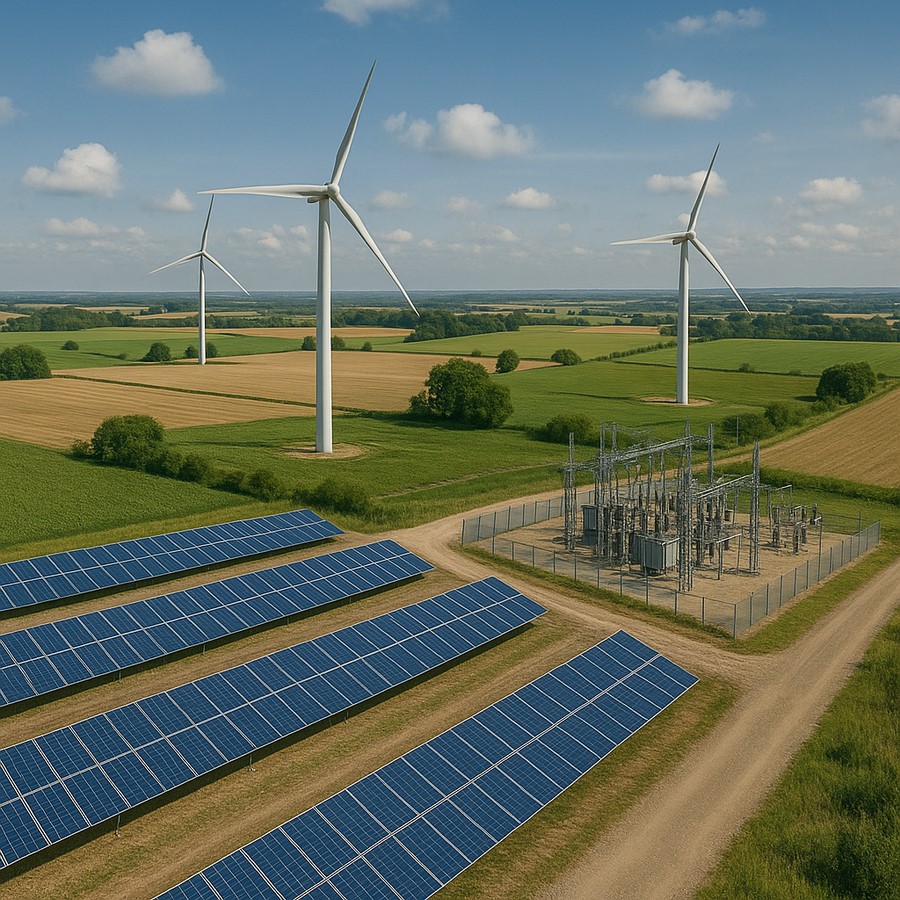 Dual-use land strategies allow energy generation and resource extraction to coexist or follow one another. Solar farms can be built over rehabilitated mining sites, while wind turbines can operate alongside agricultural grazing.
Examples of co-location projects include:
- Wind farms on grazing land in Australia
- Solar arrays on capped landfills in the US
- Geothermal plants near mining towns in Iceland
What role do environmental safeguards play in merging the two fields?
Environmental safeguards ensure that the pursuit of energy independence does not create irreversible damage. Environmental Impact Assessments (EIAs) help identify risks early, while reclamation requirements restore mined areas to usable condition.
Best practices include:
- Limiting water use and contamination during mining
- Restoring vegetation and habitats post-extraction
- Continuous environmental monitoring during operations
What are the economic benefits of integrated planning?
Integrating land and mineral strategies creates domestic supply chains, reduces import costs, and spurs job growth in both extraction and renewable sectors. Over time, it can lead to lower energy prices and greater geopolitical stability.
Benefits include:
- Lower energy costs through localized production
- New industries in refining, manufacturing, and recycling
- Stronger, more resilient grid systems
How can communities be engaged in these decisions?
Communities are more likely to support projects when they have a say in design and share in the benefits. Public consultation processes, citizen advisory boards, and revenue-sharing models improve trust and project success rates.
Engagement tools include:
- Public hearings and workshops
- Citizen advisory boards
- Participatory mapping exercises
- Revenue-sharing agreements with local residents
What technologies help merge land and mineral planning?
Advanced technologies can map resources, model environmental impacts, and identify optimal land use patterns. Geographic Information Systems (GIS) and AI-based modeling streamline decision-making.
Tools and benefits include:
- Land suitability analysis for renewable projects
- Resource inventory management using remote sensing
- Real-time environmental monitoring systems
What are the risks of not integrating land use and mineral resource management?
Without integration, countries risk wasted land, inefficient energy systems, and overexploited resources. This can increase dependency on imports and harm local economies.
Risks include:
- Environmental degradation
- Energy insecurity
- Community displacement
- Higher import dependency
What steps should policymakers take to build an integrated plan?
Key steps include:
- Resource mapping to identify priorities
- Aligning zoning laws with energy and mineral needs
- Stakeholder engagement at all stages
- Adaptive regulation that evolves with technology
- Ongoing monitoring and evaluation
Which countries are leading in integrating land use planning with mineral resource management?
- Australia – Aligns critical mineral zones with renewable corridors
- Canada – Uses provincial resource mapping to support clean tech supply chains
- Norway – Integrates hydropower with mineral needs for turbine production
- Chile – Balances lithium extraction with water conservation zones
How can private sector investment align with national energy independence goals?
Public-private partnerships and clear incentives help align business interests with national priorities.
Incentive types include:
- Tax credits for renewable and mineral projects
- Guaranteed offtake agreements for critical minerals
- Fast-tracked permitting for projects meeting sustainability standards
What metrics can measure success in this integration?
Metrics may include:
- Share of domestic energy from local resources
- Critical mineral self-sufficiency index
- Land use efficiency ratios
Conclusion
Energy independence is not achieved through isolated policies. It demands a coordinated approach where land use planning and mineral resource management are integrated from the start. By aligning these fields, nations can secure their energy future, protect ecosystems, and create resilient economies that are less vulnerable to global market shocks.