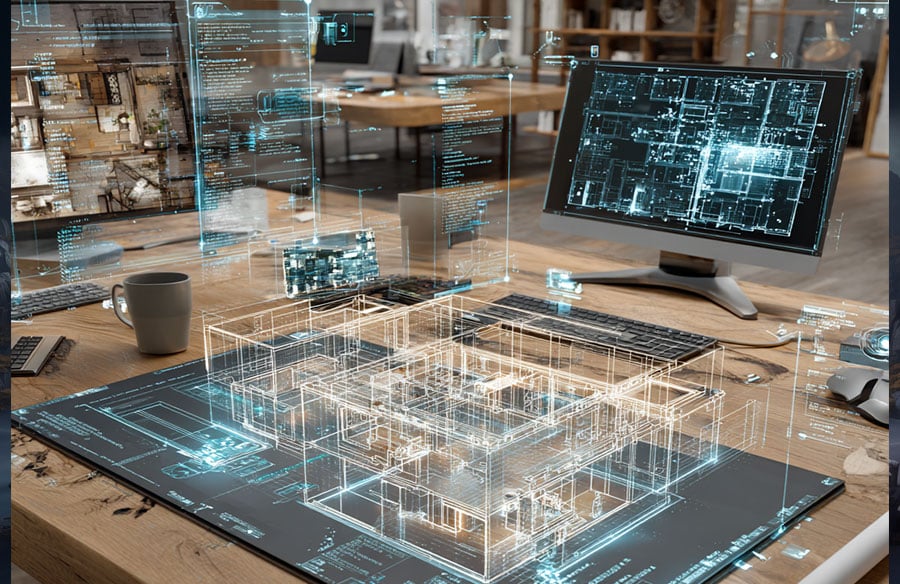
The traditional house permit application process has long been architecture’s equivalent of waiting in a government office line that stretches around the block. But imagine if that same house permit approval system could operate with the precision of a Swiss watch and the speed of a Formula One pit stop. Welcome to the era where artificial intelligence is turning the bureaucratic maze of building approvals into a streamlined digital highway.
Think of AI in architectural drafting like having a highly experienced colleague who never sleeps, never takes coffee breaks, and has memorized every building code from the past century. Beyond bureaucracy, we’re revolutionizing the building permit process in modern architecture through technologies that fundamentally reshape how we approach design compliance and regulatory approval. AI is transforming architecture by enhancing project conception, design, and execution, driving innovation and efficiency from concept to completion, particularly in the critical area of permit documentation and review.
The Dawn of Intelligent Documentation
Picture this scenario: an architect uploads preliminary drawings to an AI system that instantly identifies potential code violations, suggests corrections, and even provides alternative design solutions. This isn’t science fiction anymore. It’s happening right now in forward-thinking jurisdictions around the world.
The traditional permit review process resembles a complex chess game where every move must be calculated against hundreds of regulations. Human reviewers, no matter how experienced, can only process so much information simultaneously. AI systems, however, can cross-reference thousands of code requirements instantaneously while checking for conflicts, omissions, and optimization opportunities.
Companies like CivCheck have developed guided AI plan review platforms that eliminate guesswork for applicants, ensuring complete and compliant permit submissions. Their automated tools simplify code research and compliance for both city staff and applicants, creating a consistent and reliable review experience that dramatically reduces approval times.
The Generative Design Revolution
The most exciting development in AI-powered architectural drafting lies in generative design capabilities. These systems don’t just check compliance; they actively participate in the creative process. By inputting parameters such as site constraints, budget limitations, zoning requirements, and functional needs, architects can generate multiple design iterations that are inherently permit-ready.
Consider the analogy of a master chef who knows exactly which ingredients work together and which combinations will create culinary disasters. AI generative design tools possess this same intuitive understanding of building codes and design principles, creating solutions that satisfy both regulatory requirements and aesthetic aspirations.
Tools like Maket and ARCHITEChTURES are pioneering this space, allowing architects to input project constraints through parameters or natural language and generate hundreds of residential floorplan variations instantly. These platforms navigate zoning codes and regulations automatically, ensuring projects comply with all necessary requirements while avoiding potential delays.
Breaking Down the Bureaucratic Walls
The traditional permit process has operated like an ancient fortress with multiple gates, each requiring separate keys and lengthy inspections. AI is demolishing these barriers by creating unified platforms that handle multiple review disciplines simultaneously.
Machine learning algorithms can now process applications across zoning, building, fire, accessibility, plumbing, and structural requirements in parallel rather than sequential reviews. This parallel processing approach mirrors how modern computer processors handle complex calculations, dramatically reducing total processing time.
AutoReview.AI represents a groundbreaking example of this integration. Their system, developed based on the entire Florida Building Code containing over 800 pages of regulations, uses natural language processing to interpret flexible and vague code language that previously required human interpretation. This advancement tackles one of the biggest challenges in automated code compliance checking.
The Learning Loop Effect
Perhaps the most transformative aspect of AI in permit processing is its capacity for continuous improvement. Traditional systems rely on static checklists and human expertise that evolves slowly. AI systems learn from every application processed, identifying patterns, common errors, and optimization opportunities.
This creates a positive feedback loop where the system becomes more accurate and helpful with each interaction. Like a sommelier who refines their palate through tasting thousands of wines, AI permit systems develop increasingly sophisticated understanding of design quality and code compliance.
The data generated from these processes also provides valuable insights for policy makers and code authorities, enabling evidence-based updates to regulations that better serve both safety objectives and design innovation.
Democratizing Design Excellence
One of the most significant benefits of AI-powered drafting and permit systems is their democratizing effect on architectural quality. Previously, navigating complex building codes required extensive experience and specialized knowledge. AI systems make this expertise accessible to smaller firms and individual practitioners who might lack the resources for dedicated code specialists.
This democratization extends to clients as well. Interactive AI platforms can help property owners understand the implications of design decisions in real-time, fostering more informed discussions and better outcomes. The technology transforms what was once an opaque process into a transparent collaboration between all stakeholders.
Global Perspectives, Local Applications
Different regions worldwide are approaching AI integration in unique ways that reflect their regulatory cultures and technological readiness. Singapore has been a pioneer with their electronic building plan auditing system, while European cities are exploring AI integration within existing BIM workflows.
The key insight emerging from these diverse approaches is that successful AI implementation requires careful calibration to local codes, practices, and cultural expectations. Unlike generic software solutions, AI permit systems must be trained on specific jurisdictional requirements to deliver accurate results.
Challenges and Considerations
The integration of AI into architectural drafting and permits isn’t without challenges. Quality of input data remains crucial; AI systems trained on incomplete or biased datasets can perpetuate existing problems or create new ones. Ensuring that AI recommendations consider local climate conditions, cultural preferences, and unique site characteristics requires ongoing refinement.
There’s also the question of liability and professional responsibility. As AI systems become more sophisticated in their design suggestions, the boundaries between tool assistance and design decision-making become blurred. The architectural profession must navigate these evolving responsibilities while maintaining the human creativity and judgment that define exceptional design.
The Future Landscape
Looking ahead, the convergence of AI with other emerging technologies promises even more dramatic transformations. Digital twins connected to AI systems could provide real-time feedback on building performance, informing future design decisions and code updates. Augmented reality interfaces could allow architects and reviewers to visualize compliance issues in three-dimensional space.
The integration of AI with IoT sensors and smart building systems creates opportunities for dynamic compliance monitoring, where buildings continuously verify their adherence to performance-based codes. This shift from static approval to dynamic compliance monitoring represents a fundamental reimagining of how we ensure building safety and performance.
Embracing the Transformation
The digital revolution in architectural drafting and building permits represents more than technological advancement; it embodies a philosophical shift toward efficiency, transparency, and innovation in the built environment. As AI systems become more sophisticated and widely adopted, they promise to transform the permit process from a bureaucratic hurdle into a collaborative design tool.
For architecture and design practitioners, this transformation requires embracing new workflows while maintaining the creative vision and human-centered thinking that define exceptional design. The most successful professionals will be those who learn to collaborate effectively with AI systems, leveraging their computational power while providing the creativity, judgment, and empathy that remain uniquely human.
The future of architectural practice lies not in replacing human expertise with artificial intelligence, but in creating powerful partnerships between human creativity and machine capability. In this collaboration, the cumbersome permit process becomes a catalyst for better design, and regulatory compliance becomes a springboard for innovation rather than a constraint on creativity.