Electric bicycles have changed the nature of off-roading, giving those who seek it thrills in places never before explored. As trail riders continue to venture further beyond their comfort zones, a big decision emerges: deciding between fat tire and conventional e-bikes for those heart-pounding backcountry adventures. For outdoor lovers searching for the ideal balance of stability and durability, this choice may be the difference between nailing the most technical of trails and limping through an unstable adventure.
City switch: Worthy of the road or raised on the trails, cost-effective e-bikes are here to stay. Question: When is a road bike not a road bike and when is a mountain bike not a mountain bike? When sufficient electric assistance has been clamped to the frame, to the bewilderment of traditionalists in both disciplines. These unique vehicles, with their unique wide stance, promise to deliver extreme performance throughout a wider range of surfaces, from very dry desert-like sand to rocky mountain passes. But are they really more capable off-road? With a complete terrain-to-terrain take down, we will break down how every design handles extreme usage so that you know what attributes are most important on your next off-road outing.
Electric Bikes 101: Core Designs Explained
Standard electric bikes are the base of e-bikes; they have standard tyre widths between 1.95 to 2.6 inches, making them great for paved roads and paths as well as light trails. The bicycles retain established frame geometries and now feature electric drives that combine propulsion and power support with traditional cycling dynamics. Their minimalist design is focused on efficiency and speed, with a weight distribution that is ideal for riding under normal conditions.
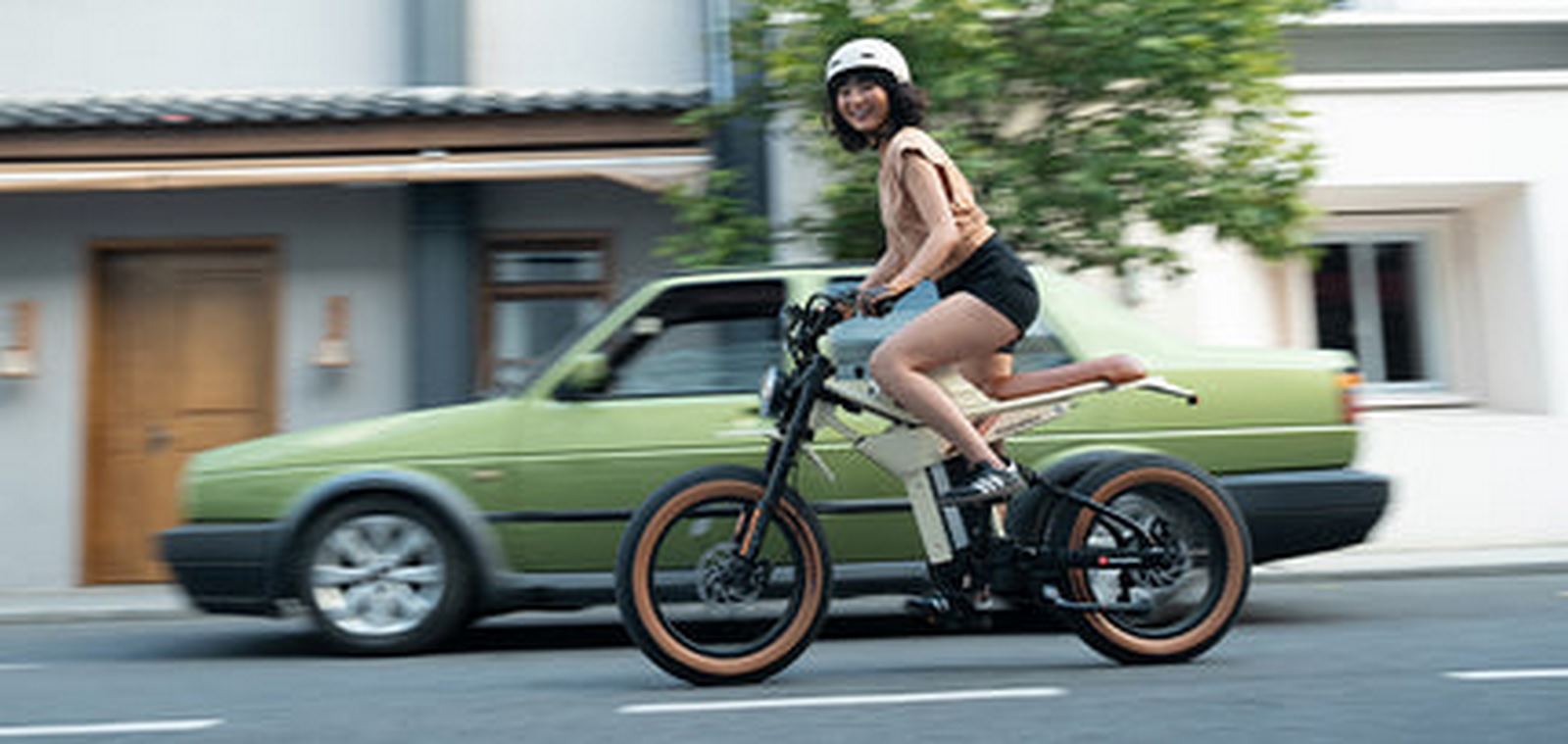
Fat tire electric bikes, however, turn the table on the traditional model with those shockingly wide 4-inch plus tire widths that see people do a double-take whenever a pair go rolling by. These monsters boast sturdy constructions to support greater tire volumes plus innovative geometry to maintain control in spite of the wider stance. The difference in appearance between the two designs is more than tire deep – fat tire models also tend to exhibit beefier fork construction, higher bottom brackets for extra clearance, and a set of rims designed to handle greater tire volume in addition to the ability to soak up abuse on hard rides.
The Physics of Off-Road Riding: Why Terrain Matters
The off-road environment poses distinct challenges to riding dynamics and rider safety. In muddy terrain, the relationship between the tire and the ground is vital because the wheels need to have traction and cannot sink. Soft sand needs even weight distribution to keep from getting stuck, where rough rock means you have to engage all the finesse of your riding style, plus the best impact control you can get. Suspended systems and tire grip are equally challenged on the root-covered forest floors above.
The off-road stability science revolves around the tire’s contact patch–the point where the rubber meets the dirt. This critical junction largely dictates how well a bike is able to distribute rider weight and maintain control. Wider contact patches make the bike more stable on loose surfaces while contact points can be more zoomed in and centered for better traction in hard-packed trails. How a bike handles all that input through its frame and suspension becomes key when you’re bouncing down rough ground — each bump or drop in turns puts you off-balance, so the best bikes keep things nice and stable.
 The traction dynamics are very different with respect to the type of surface. On looser surfaces (gravel, sand), tires need to “float” efficiently but also bite the ground and propel you forward. Conversely, for tires to go directly back and forth from the compact surfaces, and for tires to grip and release rapidly for nimble handling is also desirable. Knowing these physics basics helps to develop tires that are awesome in some conditions and can be weak and impressive in others.
Fat Tire E-Bikes: Engineering for All-Terrain Domination
The Traction Advantage: Conquering Unstable Surfaces
At the core, fat tire e-bikes take the laws of physics and just do them better on difficult terrains. Their wide tires produce a much greater contact patch to better float the rider’s weight over soft terrain. The weight distribution means the tire isn’t going to sink in soft material like sand, snow, or mud, so you’ll keep rolling forward in situations where regular tires get stuck the most. Field testing consistently proves that rather than getting stuck in the sand or snow, fat tire e-bikes are capable of sailing through even the wettest sand or snow with unsurpassed stability, whereas you’ll be stuck barely seconds after coming into contact with the stuff on a regular e-bike.
Built Tough: Durability in Extreme Conditions
The technology that makes fat tire e-bikes so brawny goes far beyond their burly wheels. These rigs have reinforced frame structures engineered to cope with more torque and impact from rugged off-road expeditions. We also incorporate advanced suspension with a progressive dampening that has a different reaction to the small and large bumps so you could have additional control over the different surfaces. The tires themselves use multi-layer puncture protection, which may include aramid fibers (e.g., Kevlar) and tire compounds (rubber) that are specifically designed to resist abrasions and cuts from sharp rocks and thorns.
Resistance to the weather is of importance in fat tire electric bikes; components such as wiring & connectors have been specially treated to be water-resistant and sealed to prevent weather damage. Key components also proudly pass the same stringent IP67 standards for water and dust resistance. Critical connections are designed to withstand the elements and provide peace of mind out on the trail with an IP67 Rated waterproof housing, while large circuit pathways with component orientation and pathing help support the lower current requirements that come with a waterproof design. Further, a black circuit board helps you identify problem areas while down on the trail. And with such an all-encompassing stance on durability, that performance is here to stay, responding to even the harshest of circumstances, whether you’re trekking through a mucky forest or taking along the coast covered in salt from crashing waves.
Standard E-Bikes: Off-Road Limitations Exposed
Although there is no lack of good urban e-bikes, their limitations quickly become evident when riding them on less friendly off-road tracks. Its slightly narrower tire profile, often at 1.95 to 2.6 inches, can make it difficult to ride soft surfaces for fear of losing momentum by sinking into the terrain with the narrower tire patch and more concentrated weight. This is especially true on beach sand and slippery gravel when a rider is pulling off to walk through challenging sections. The traditional style frame is for smooth surfaces and can transfer too much buzz to the rider especially when tackling technical trails causing less control and rider fatigue.
Conventional e-bike suspension, well, sucks, for lack of a better description, but with the all-new Specialized Turbo Kenevo, you won’t find that to be true—it performs at the highest levels of e-bike technology, capable of handling the most competitive terrain and freeriding. Such traveling in conjunction with rather primitive damping features can be hopeless, particularly on rough downhill sections or on trails strewn with roots—comfort and safety come out worse if that happens. But these bikes are still plenty capable on hard-packed dirt, groomed gravel roads, and moderate cross-country trails where their lower weight and comparatively low rolling resistance can be a benefit. For riders whose off-road exploits are confined to well-tended trails and the occasional light trail work, a traditional e-bike is still a strong and competent choice.
Head-to-Head: Trail Performance Breakdown
Mountain Biking Showdown: Technical Trail Capability
Speaking of technical mountain trails, fat tire e-bikes show incredible climbing capability on rocky ascents, holding traction where normal tires often break loose. More stability means a rider can go down steeper grades with confidence, and the more contact patch the rider has with the ground, the more grip they must also combat technical descents. In high-speed corners and tight twisty singletrack, fat tire models are practically glued to the ground, so cyclists can maintain better corner speeds through s-turns, where thinner-tire models of standard e-bikes often have to scrub off speed before entering a corner.
All-Terrain Versatility: From Beaches to Forest Trails
The disparity of performance is even more pronounced across different terrain types. On sandy beaches, fat tire e-bikes skim over the top of the soft sand while regular models fight to move forward. On muddy forest paths, the superior traction of wider tires avoids the wheel spin of standard e-bikes. You can see the advantage of the fat tire’s improved impact absorption and control on rocky mountain trails, and in grass and on gravel, the improved climbing traction is apparent. Other less interesting trails, those covered in a layer of roots, show how fat tire designs do a better job of staying planted, transferring less energy into the rider courtesy of bone-jarring smashes.
Long-term adventure testing shows that riders on fat tire electric bikes become significantly less fatigued during extended off-road outings. Enhanced shock absorption and less fatigue from correcting balance allows the rider to travel farther, giving the rider a greater energy reserve. This decrease in fatigue also becomes very important on multi-hour trips, where remaining in control and making snap decisions can be the difference between a great and miserable trip.
Choosing Your Off-Road Champion: Key Decision Factors
Selecting the right e-bike for off-road adventures requires careful consideration of your typical riding environment. For predominantly rocky mountain trails and technical single-track, look for fat tire models with minimum 4-inch width tires and motors delivering at least 750W continuous power with 120Nm torque. These specifications ensure reliable climbing ability and stability on challenging descents. Leading manufacturers like Marsant’s X have pioneered advanced features specifically designed for extreme terrain, setting new standards for off-road performance. Riders tackling mixed terrain should prioritize dual-suspension systems with at least 120mm travel front and rear, providing essential impact absorption for extended trail sessions.
It’s the new generation of tech-savvy, rough terrain mountain e-bikes. These machines are the result of combining the latest in frame geometry with state-of-the-art motor management systems to create a bike that is truly out of its class. High-end off-road e-bikes are expensive but offer more durability and safety for serious trail riders. But for riders who will predominantly be riding on graded fire roads and the occasional light trail, a mid-range standard e-bike can offer enough capability without having to pay for extreme-terrain engineering.
The Ultimate Off-Road E-Bike Verdict
Fat tire vs standard e-bikes for off-road riding. You may be wondering who the winner is in the fat tire vs normal size tire e-bike debate; it is easily the most clear for off-road enthusiasts. On the other side of the spectrum, fat tire e-bikes are naturally engineered to conquer difficult terrains, with domination of stability and durability converting intimidating trails into manageable adventures. Their leading-edge engineering and traction technology are the result of 25 years of development, refinement, and testing on the toughest terrain around the world.
And although standard e-bikes can still serve well for the casual trail rider and purists of relatively groomed trails, the rigors of technical single-track, loose surfaces, and harsh conditions demand nothing less than a fat tire capable bike. The fat tire investment returns confidence, fatigue reduction, and a range of new adventures. With trail systems growing and riders demanding more, fatter tread to burn up some dirt, e-bikes are at the ready to take your off-road ride to the next level — all while supplying a ton of fun on previously unreachable trails.