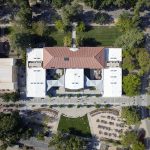
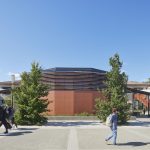
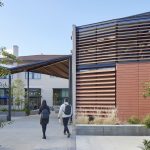
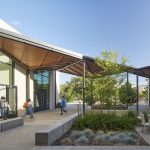
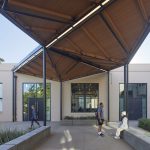
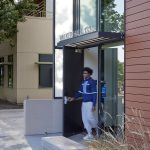
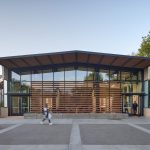
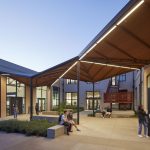
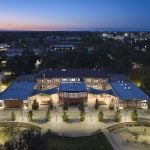
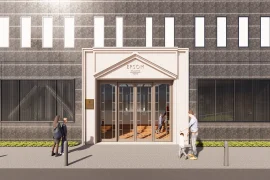
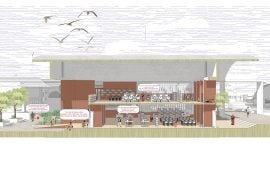
Walker Hall at UC Davis is an adaptive reuse project that transforms a vacant, seismically unsafe 1927 agricultural engineering building into a dynamic center for graduate and professional students. Located at the historic heart of campus, the renovation reimagines the original structure as a hub of academic, social, and interdisciplinary activity—blending history, community, and contemporary learning environments.
Project Name: Walker Hall at the University of California
Studio Name: Leddy Maytum Stacy Architects
Location: Davis, California
Photography: Bruce Damonte
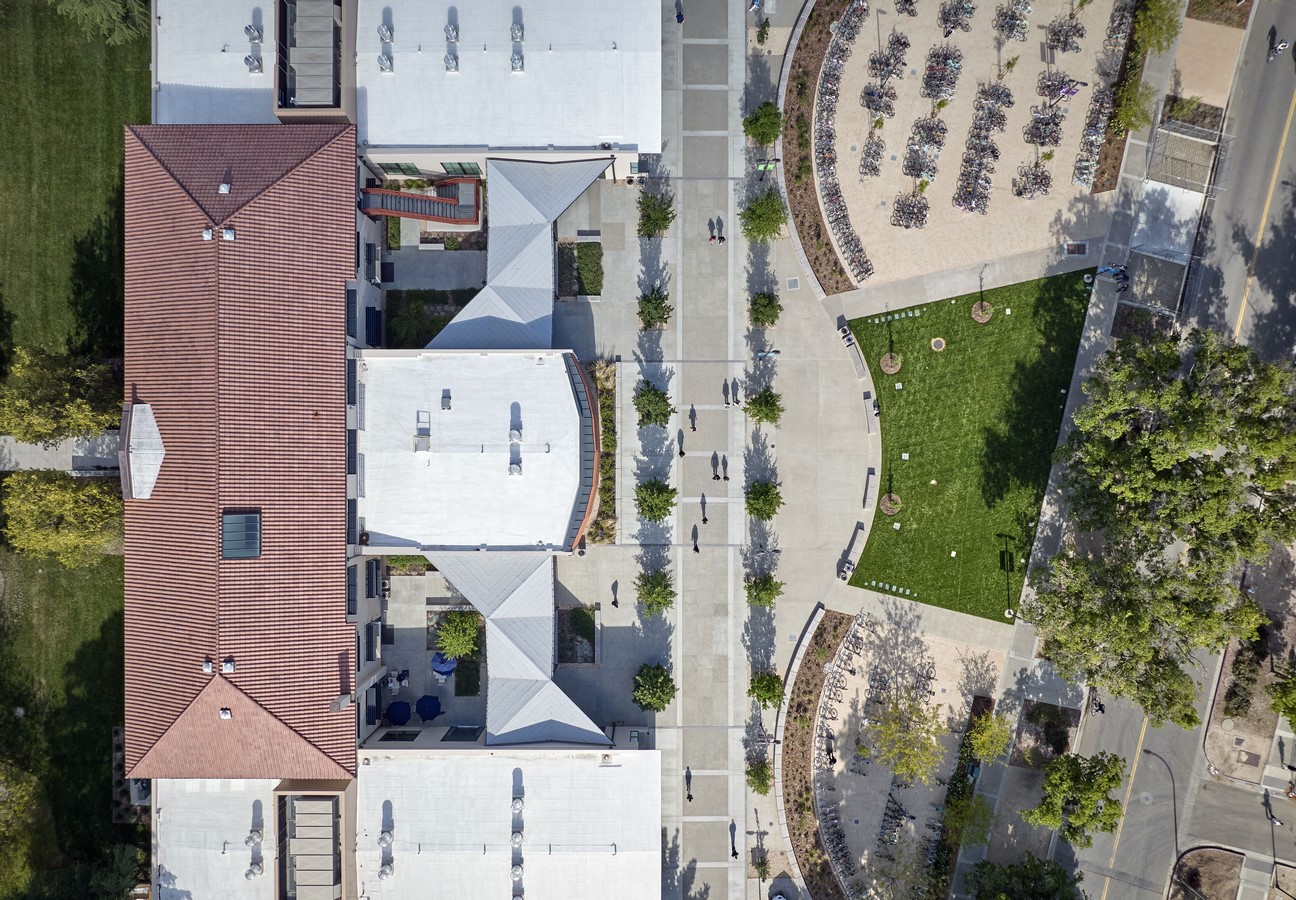
Originally spanning 32,400 square feet, Walker Hall was one of UC Davis’s earliest buildings. Its two-story north wing, designed in a Spanish Revival style, once held classrooms and offices, while three expansive clear-span wings to the south functioned as machine shops for agricultural innovation. Among its legacies is the UC-Blackwelder Tomato Harvester, a pivotal invention developed on-site in 1948.
Inspired by this spirit of hands-on ingenuity, the design team embraced the building’s industrial character.
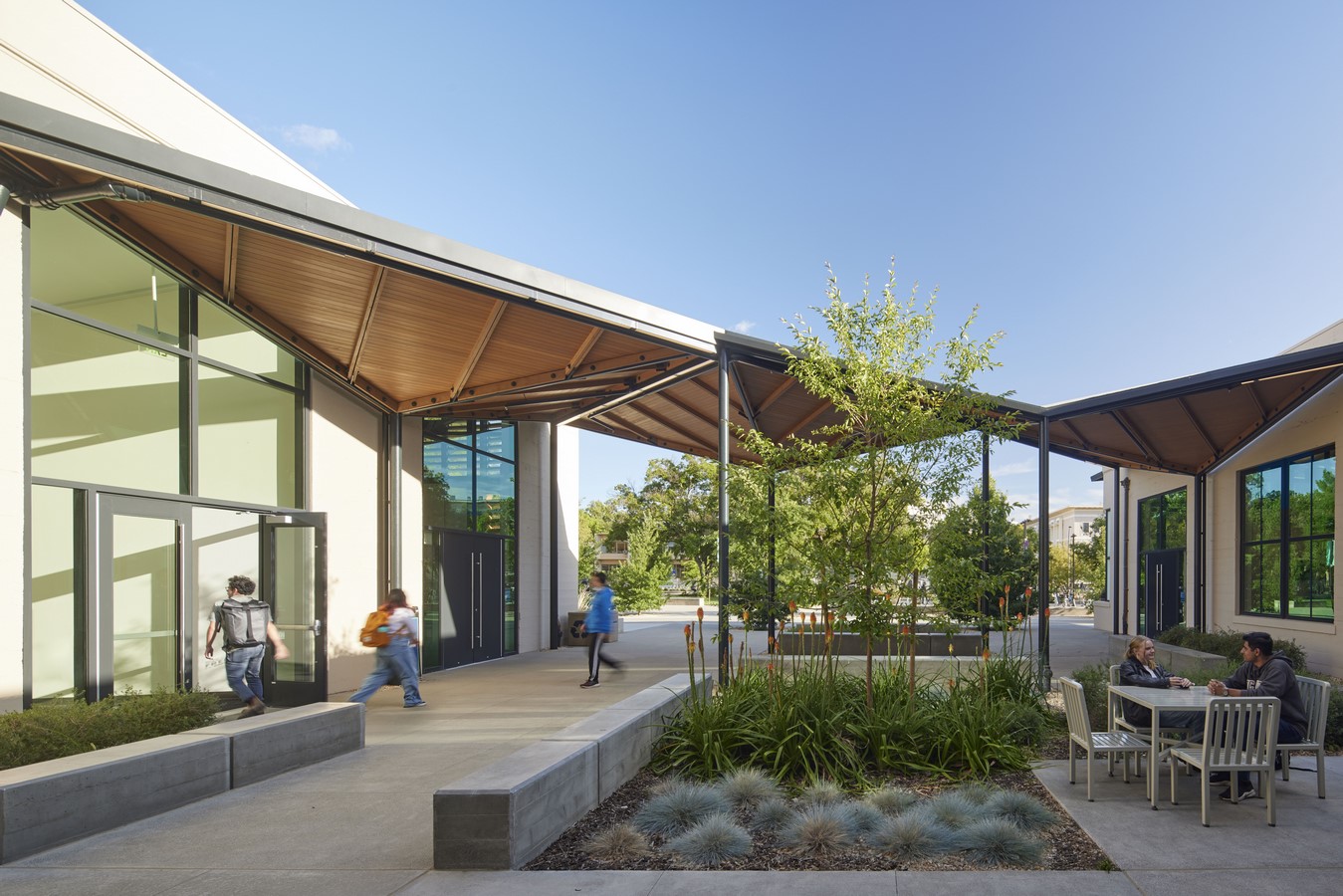
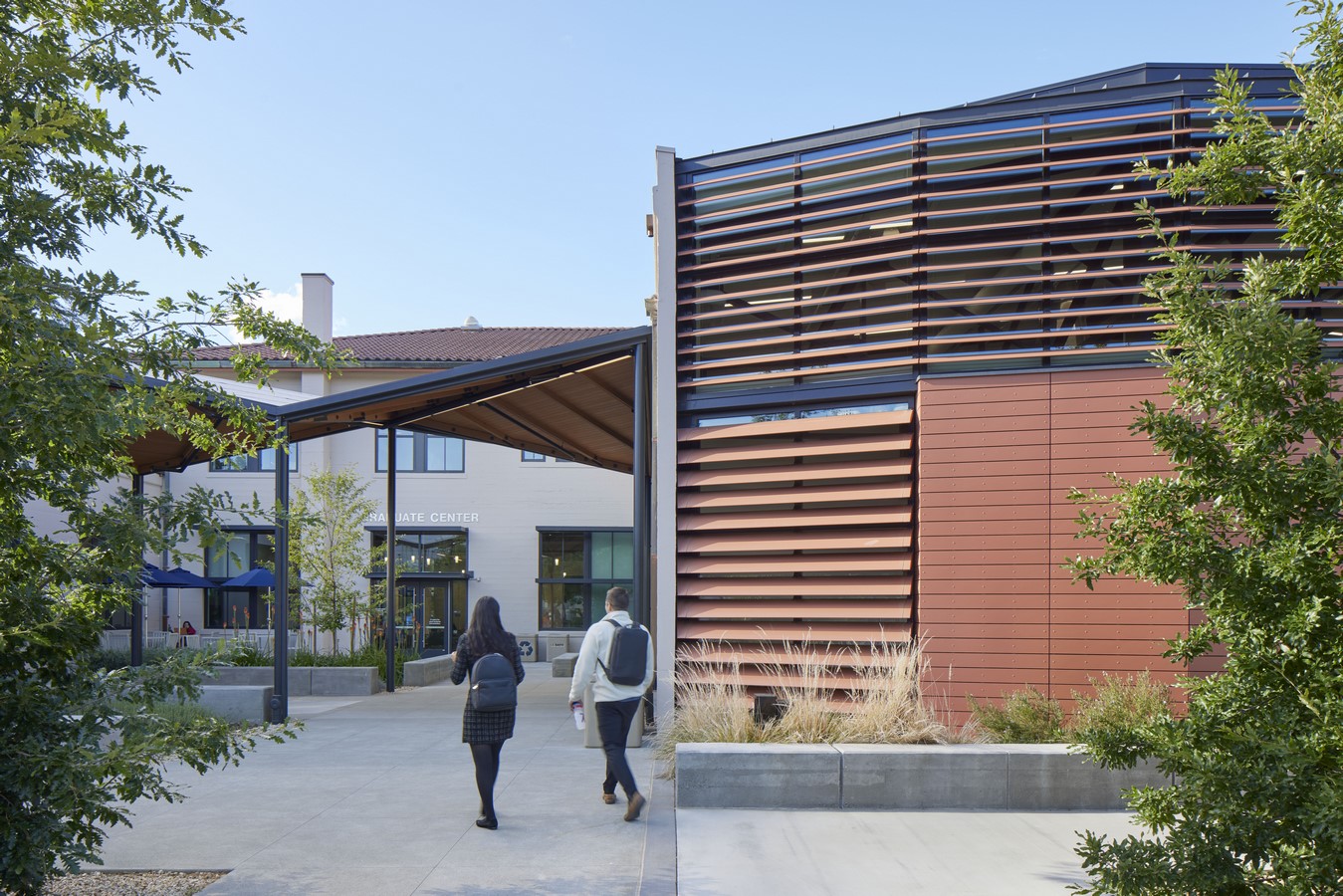
The renovation retains and highlights original concrete columns, steel trusses, and finishes, while inserting modern elements within the existing structural shells. New architectural features—including steel sunshades, sculptural stairs, daylight collectors, and folded shade canopies—evoke the site’s utilitarian past. Floor-to-ceiling shaded windows connect the interior to the campus, offering views into active learning spaces by day and a glowing presence at night. As part of the renovation and expansion, the building underwent a full seismic retrofit and was outfitted with high-performance systems and thermal insulation. Renewable energy from the campus solar farm supports the building’s operations, placing it on track to achieve LEED Platinum certification and zero net electricity use.
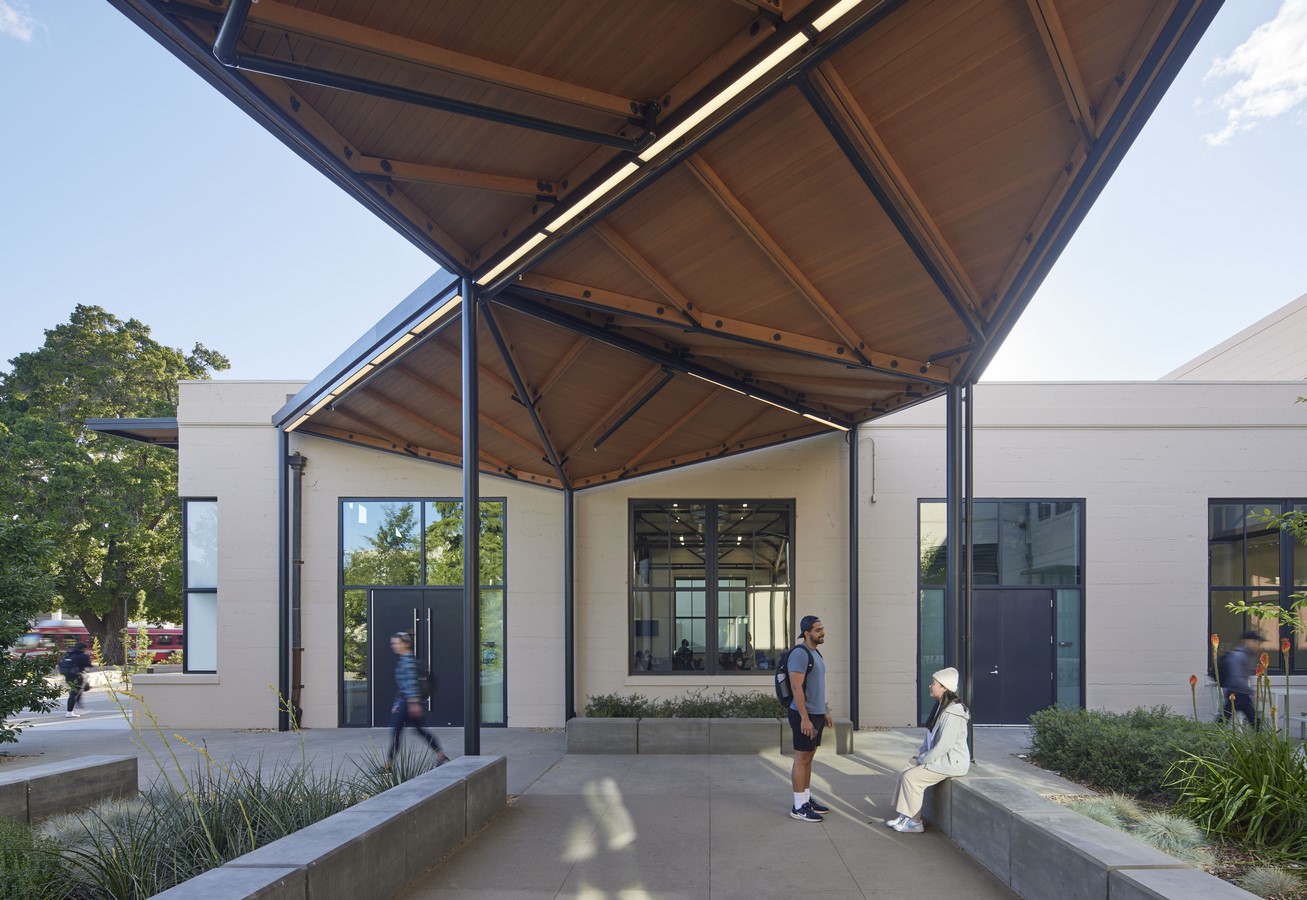
An integral part of graduate and postdoctoral life—who make up 20% of UC Davis students—the building supports academic, professional, and personal well-being. The renovated north wing now houses student lounges, study areas, mentoring and advising rooms, counseling services, and administrative offices. The three southern shop wings were shortened to make way for a new campus promenade and reconfigured as a 200-seat lecture hall and two large active-learning classrooms.
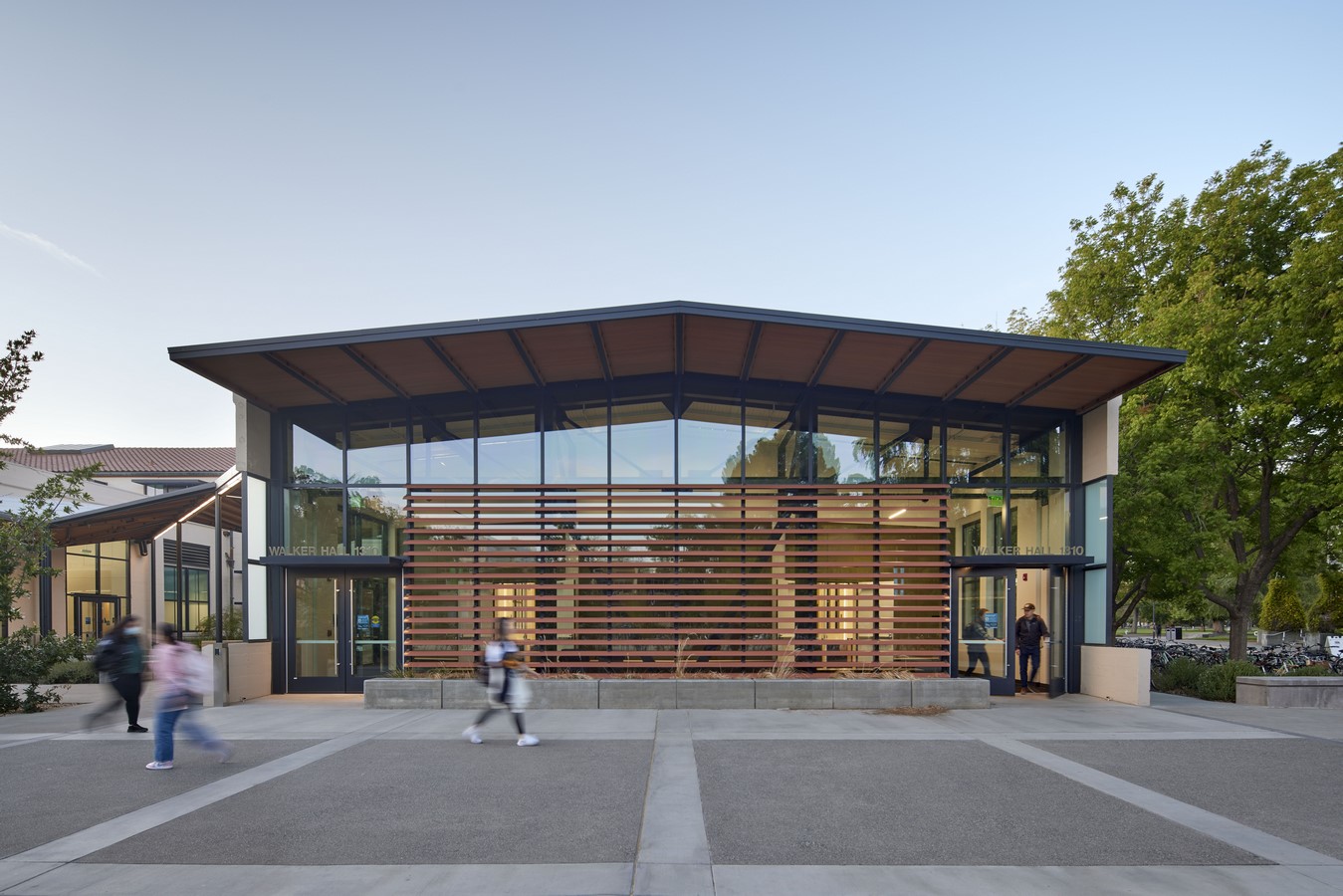
These classrooms were among the first of their kind at UC Davis. Designed for flexibility, collaboration, and evolving teaching modalities, the spaces feature clusters of 9-seat tables centered around media hubs, each with wall-mounted screens and ample whiteboard surfaces. The layout encourages both individual and group work, with movable tables and a mobile instructor station that can plug into various floor ports. Digital projectors and retractable screens support large group sessions, presentations, and interactive learning.
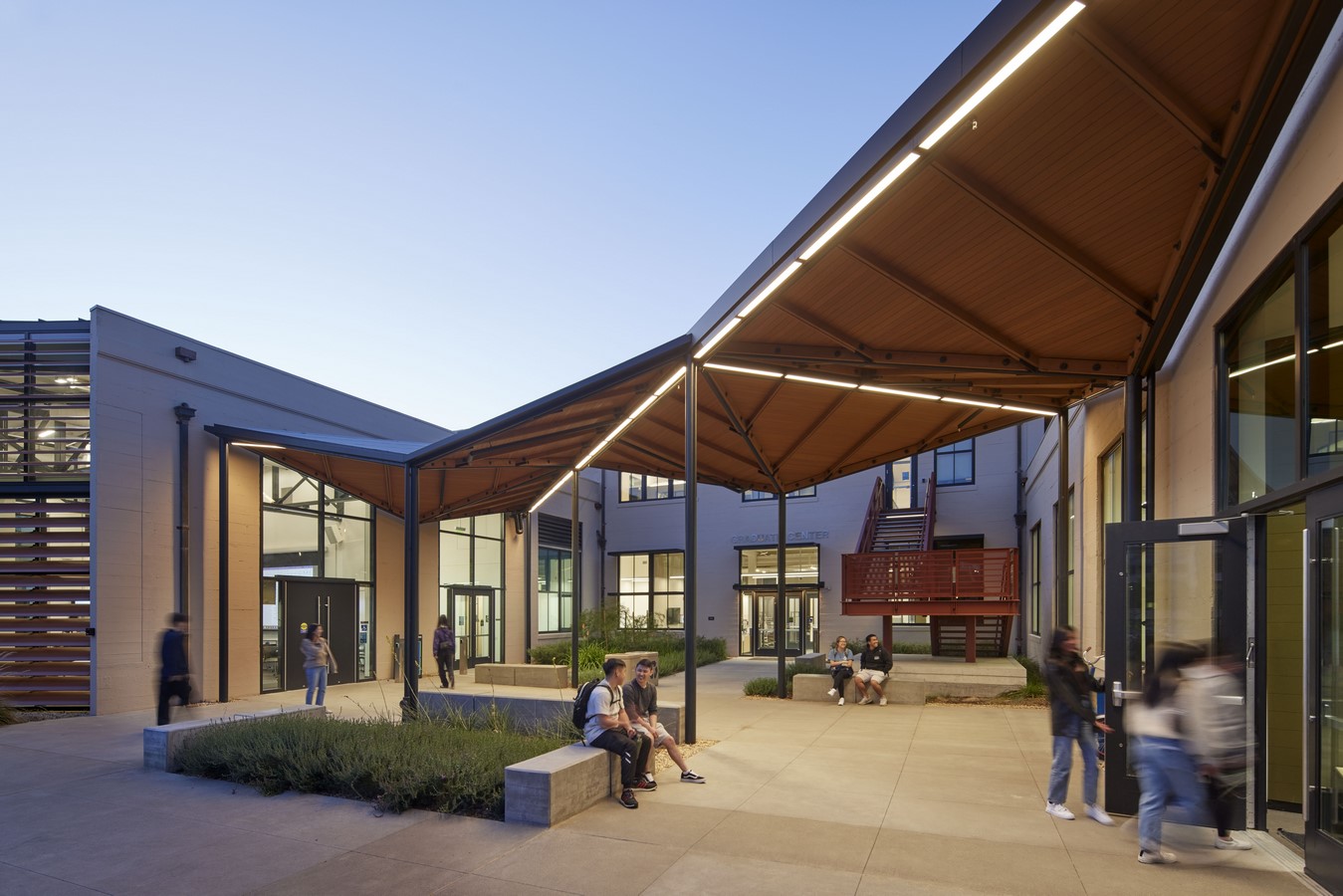
Through this transformation, Walker Hall shifts from a place of mechanical invention to one of intellectual innovation—a revitalized space where students forge community and engage with the future of learning.