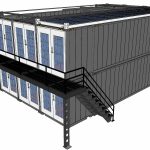
Sustainability is the need of the hour, and Architectural practice continuously seeks innovative and sustainable design solutions to meet the demands of the rapidly growing population. Shipping Containers are gaining popularity as an alternative building material. They are readily available, durable, affordable, and have great potential due to their ease of modification.

Using shipping containers as alternative construction methods has led to the Shipping Container Architecture. This form of architecture can often be associated with the tiny-house movement and the sustainable living movement. Shipping containers come in wide varieties and sizes like 20ft., 40ft., and 48ft., they can be the standard dry containers, flat racks, refeers, open top containers, and more. Each type of container can be repurposed and recycled for different activities, for example, the reefer containers already have built-in insulation and they can be used for cold storage cafes or medical units, while flat-racks serve as skeletal frames for large-span pavilions. The global surplus of shipping containers presents a unique opportunity for sustainable construction.>>
Selection Process
Similar to other materials, choosing the right container is crucial for the long run, and life of the respective building structure. The following factors should be kept in mind while selecting the Shipping Container for construction.
1. Condition:
There are old containers and one-trip containers majorly to choose from. Containers used only once fall under the new category and are called “one-trip containers’, they have comparatively higher costs than the old containers and require fewer repairs, meanwhile the used old containers are relatively cheaper but may require additional inspections and repairs.
2. Size & Type:
As it was previously mentioned the containers come in various sizes, most commonly used could be 20 feet and 40 feet in length, and the heights could be standard or high-cubes. High cubes could be 9 feet 6 inches tall. Following this, the types also vary beyond the standard dry containers. High Cubes offer crucial extra height for habitable spaces, Reefers have built-in insulation, suitable for cafes, restaurants, or specific climate needs but they cost more. Open-tops and flat racks allow for unique creativity and they demand significant structural work.

3. Certification:
Ensure all shipping containers possess a valid CSC (Convention for Safe Containers) plate. This international safety approval confirms the container meets specific design, construction, and maintenance standards for safe international transport. Think of it as a verification stamp for structural integrity and safety compliance.
4. Integrity & Weather Resistance:
It is crucial to check for any signs of damage in the shipping container. Hire a Structural Engineer if needed to confirm any damages and the structural integrity of the Shipping Container. These containers are generally made from weathering steel which prevents rusting but in case of cut edges or coastal humidity might get affected. Always treat any rust and remember to repaint before construction.
Making Containers Habitable

Shipping Containers are just big steel boxes not suitable for direct habitation. They must go through a certain quality check and changes to make them habitable and energy efficient.
-
Insulation & Thermal Control:
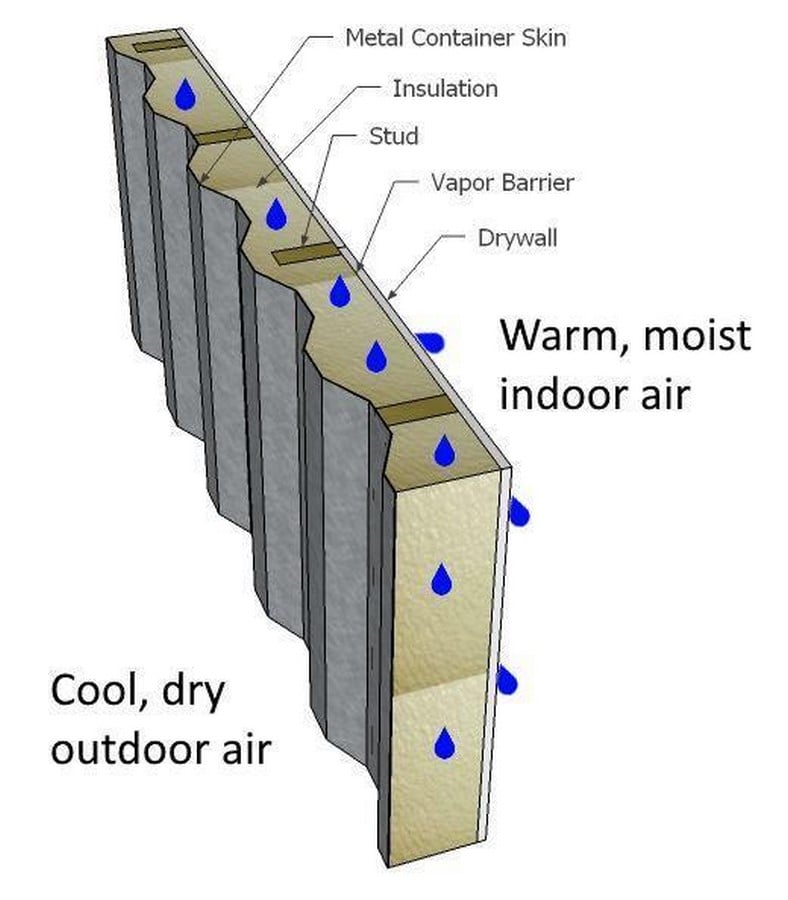
Steel is known for its good thermal properties, as a result, these Shipping Containers can easily chrome too hot or cold, depending on the climate, therefore good insulation is vital.
One can choose to insulate the Shipping Container either internally or externally, first, make sure that it covers all the contours of the metal to prevent condensation from creeping in, and then install a vapor barrier to the warm side of the insulation. There is a wide selection of Insulation to choose from, depending on the need of the project, budget, and the local laws. One of the most common types of Insulation used are Blanket Insulation and Spray Foam Insulation.
2. Ventilation & Lighting:
Proper Ventilation and Natural Light are key factors for an energy-saving building. Therefore, cut openings and install windows, skylights, or roof monitors to admit natural light and enable cross-ventilation.
3. Interior Finishes:
Typically C-shaped steel furring channels are welded or bolted to the container walls, followed by the addition of dry-wall, plywood, or timber paneling. This builds a conventional interior cavity which is ideally used for electrical wiring and thermal insulation. Similarly, ceilings and floors are attached.
4. Exterior Treatments:
It is extremely important to scrape off all the rust and loose paint, followed by a primer application. After the primer is applied, the exterior should be painted with a durable, weather-resistant coating. As an alternative, the containers can also be cladded with wood siding or metal panel which provides an additional thermal break.
Construction Techniques
The Final Step of working with Shipping Containers, transforming them into a habitable or working place is the construction techniques.
-
Foundation:
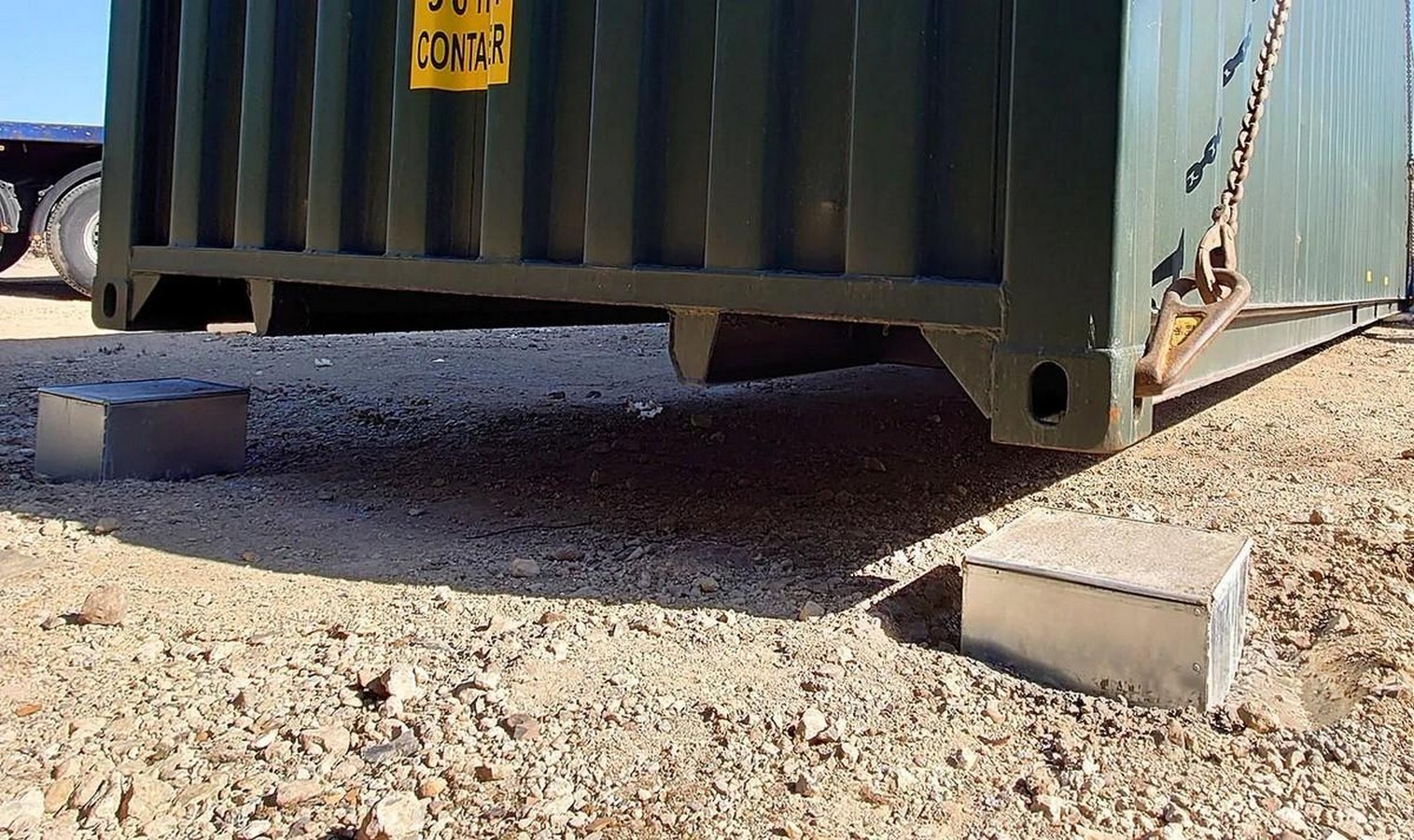
Laying the right foundation is crucial for a long-lasting structure. It is advisable to keep the container elevated from the ground to guard it from moisture, while the final decision is based on what is structurally required, what is the budget, and personal preferences.
The foundation can range from concrete piers or wooden supports on the ground for a single shipping container. A poured concrete foundation can also be used, embedding steel plates into the concrete where the container corner blocks will rest and directly welding the shipping container to the foundation.
2. Modifications & Reinforcements:
Shipping Containers are made of C-channel steel beams, which gives them the structural integrity for bearing loads. So, cutting openings can change how they carry the load, therefore all the necessary openings for doors, windows or larger spaces should be carefully planned and reinforced. Typically, the walls on the larger sides are removed and the steel channels are welded in around the openings to retain the structural integrity. It should be noted that any major cuts and welding should be done off-site on each container before assembly. It can be observed in “Cafe Infinity” located in Greater Noida, how steel columns and beams were introduced to support the cantilevered sections of the stacked containers.
3. Joining Containers:
Shipping containers can be joined side-by-side, end-to-end, or stacked, in all cases their interfaces are either welded, or bolted together for structural continuity. According to standard practice, the corner castings are aligned, or welding is done across the seams and corners to tie the boxes rigidly. Depending on the designer, they can also choose to add supplementary supports like steel beams or columns at the join points, to help transfer the loads between units evenly. The key to joining containers together is to ensure that loads flow through the assembly safely.

There are several projects all around the world showcasing how Shipping Containers are emerging as a compelling alternative to conventional construction methods. They are proving to be versatile building books, offering durability and potential for significant material repurposing.



A Delhi-based firm Architecture Discipline created the Mohalla clinics for the Delhi Government, using shipping containers. They adopted 20-foot-long containers around 350 sq.ft. in the area and converted them into modular health centers for the urban population in underserved areas. They are air-conditioned clinics, containing a doctor’s room, reception, waiting area, washroom, and a pharmacy directly accessible from outside. Likewise, education NGOs are deploying container schools in Uttar Pradesh, Gorakhpur district. It happened to be the first container school (about 1000sq.ft.) having two classrooms and an office. On the commercial side, RJDL Architects built “Cafe Infinity” at ITS Dental College (Greater Noida) by stacking nine recycled shipping containers. Completed in 2019, the 4,800 sq. ft. café uses bright orange containers linked by steel stairs and decks.
It can be concluded that shipping containers are proving their worth as unconventional yet effective building materials. With a careful design approach and implementation of the necessary improvements in them, they can serve a wide range of functions.
Reference List:
- Prachi Shridhar Aiyer and Rakhi Munot (2022). Shipping Containers in Substitute of Conventional Construction Method at Pune for Accommodation. [online] 9(5), pp.152–159. Available at: https://www.researchgate.net/publication/379309764_Shipping_Containers_in_Substitute_of_Conventional_Construction_Method_at_Pune_for_Accommodation.
- ICC. (2024). Emerging technologies in building construction: Alternative methods and designs that decrease construction time and increase housing affordability – ICC. [online] Available at: https://www.iccsafe.org/building-safety-journal/bsj-technical/emerging-technologies-in-building-construction-alternative-methods-and-designs-that-decrease-construction-time-and-increase-housing-affordability/ [Accessed 27 Apr. 2025].
- Mehta, J. (2024). How To Build A Home From A Shipping Container. [online] The Architects Diary. Available at: https://thearchitectsdiary.com/how-to-build-a-home-from-a-shipping-container/ [Accessed 27 Apr. 2025].
- Wikipedia. (2020). Shipping container. [online] Available at: https://en.wikipedia.org/wiki/Shipping_container.
- Wikipedia. (2019). Shipping container architecture. [online] Available at: https://en.wikipedia.org/wiki/Shipping_container_architecture.
- Saman Portable Office Solutions. (2024). Shipping Container Architecture Designs for Sustainable Spaces. [online] Available at: https://www.samanportable.com/shipping-container-architecture-designs/ [Accessed 27 Apr. 2025].
- DCSA – Digital Container Shipping Association. (2024). Shipping Container Types: A Guide. [online] Available at: https://dcsa.org/newsroom/shipping-container-types-a-guide.
- Sharma, M. (2021). From cargo to classrooms: Containers triggering ideas and opportunities. [online] Hindustan Times. Available at: https://www.hindustantimes.com/cities/delhi-news/from-cargo-to-classrooms-containers-triggering-ideas-and-opportunities-101630865077790.html [Accessed 27 Apr. 2025].
- Discover Containers. (2018). Refrigerated Containers: Good to Build With? – Discover Containers. [online] Available at: https://www.discovercontainers.com/should-you-use-a-refrigerated-shipping-container-for-your-container-home/ [Accessed 27 Apr. 2025].
- Universal Containers. (2023). Guide To Converting Shipping Containers Into Homes. [online] Available at: https://universal-containers.com/news/converting-a-shipping-container-into-a-home/?srsltid=AfmBOooXPM59y7XKcs4mVZPYeV5TBxMT1a27waRo3gFtlGU7rALA_2Zz [Accessed 27 Apr. 2025].
- Taylor, G. (2024). How to Build a Shipping Container Home: A Complete Guide. [online] Container One. Available at: https://containerone.net/blogs/news/how-to-build-a-shipping-container-home-a-complete-guide.