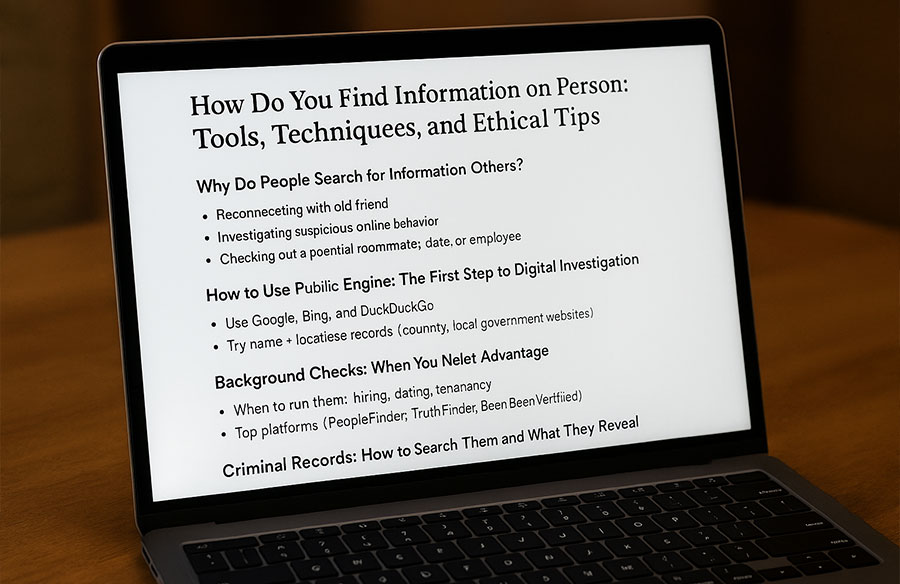
How Do You Find Information on a Person: Tools, Techniques, and Ethical Tips
The digital world leaves traces. Some are subtle, others stand out like flashing neon. Whether you’re hoping to reconnect with old friends, verify someone’s identity, or dig into court records before a legal transaction, learning how to find information on a person is a powerful skill. This guide lays out practical, legal, and ethical strategies to help you navigate the landscape of online data and digital breadcrumbs.
If you’re looking for a reliable place to start, visit peoplefinder.info, a resourceful platform for accessing publicly available data like background checks, addresses, and contact details.
Why Do People Search for Information on Others?
- Reconnecting with old friends after years of silence
- Verifying a phone number that seems unfamiliar
- Investigating suspicious online behavior
- Vetting potential roommates, dates, or even family members
- Preparing for professional engagements that require insight into someone’s history
Start with a Search Engine: The First Step to Digital Investigation
No search is complete without a search engine. It’s the first door you open. Begin with the person’s name, city, or employment history. Enclose phrases in quotation marks to refine the search results. Try combining details: name + job title + city or known social media handle.
Explore beyond Google. DuckDuckGo, Bing, and specialized search tools can sometimes return different results. Cast a wide net.
How to Use Public Records to Your Advantage
Many public records are accessible without cost. In most states, you can retrieve:
- Property records via the county clerk’s office
- Marriage, birth, and death records
- Voting registration and business filings
Use state government websites or your city’s online databases. You may need first and last name or maiden names for some entries.
Background Checks: When You Need to Know More
Background checks combine multiple records, giving a broad overview of a person’s public trail. Some platforms offer access to:
- Criminal records and arrest logs
- Professional licenses
- Known contact details and address history
Always be aware of legal boundaries when using these services.
Criminal Records: How to Search Them and What They Reveal
You can find information about someone’s criminal cases through:
- Local law enforcement websites
- State court records databases
- Department of Corrections offender locators
Check whether convictions, arrests, or active warrants are publicly listed. Understand the difference between arrest and conviction.
Court Records: What You Can Legally Find Out
Court records offer insight into a person’s civil lawsuits, evictions, or restraining orders. Many courts have online portals, or you can request records in person.
Use case numbers or the person’s name. Include search terms like the city, county, or case type to narrow down results.
Reverse Image Search: When You Have a Photo, Not a Name
Got a selfie, but no info? Reverse image search can help. Try:
- Google Images
- TinEye
- Yandex (great for social media profiles)
This technique uncovers accounts, profiles, or related sites where the image has been posted. Useful when tracing fake profiles or online deception.
Tracking a Phone Number: From Missed Calls to Identity Clues
You received a mysterious call. Now what? Run that phone number through:
- WhitePages
- TrueCaller
- peoplefinder.info
These tools help determine location, contact details, and occasionally social profiles connected to that telephone number.
What a Private Investigator Can Do That You Can’t
While you can do a lot online, a private investigator has legal access to tools you likely don’t.
They might:
- Conduct physical surveillance
- Access restricted databases
- Interview neighbors or family members
Consider hiring one for unresolved criminal cases or fraud investigations. But always verify their license and work within legal and ethical boundaries.
Reconnecting with Old Friends Online
You drifted apart. Now you want to find information about an old classmate? Try:
- Alumni forums and yearbook websites
- Facebook groups based on schools or towns
- LinkedIn for employment history
Combine names with old addresses or schools in search engines.
Customer Privacy: Ethics, Limits, and Legal Risks
The desire to search must always respect customer privacy. Know the line between curiosity and invasion. Be cautious:
- Avoid illegal surveillance
- Don’t misuse free information for malicious intent
- Don’t publish or share personal information irresponsibly
Stick to ethical boundaries and understand legal consequences.
Bonus: How to Find Information Without a Name
Sometimes you don’t have a name—just bits of data. Use:
- Username checkers
- Email-to-name tools
- Social network comment tracing
Pair with reverse image search, or scan social media sites where visuals or bios might reveal location or other identifiers.
Deep Diving with Data Aggregators
Some services compile data from multiple websites. These may include:
- Known addresses and contact links
- Possible age, relatives, and social media accounts
- Patterns in location history over time
Be cautious. Always check for accurate information and ensure the site is transparent about its sources.
The Role of Date of Birth in Personal Searches
A date can narrow your search dramatically. Paired with a city, it helps locate people with common names.
- Use it to eliminate unrelated search results
- Cross-check with background checks or court records
- Combine it with social media profiles to verify identities
Matching Social Profiles with Real Identities
Scouring social media? Look at more than just photos:
- Match employment history with LinkedIn timelines
- Check bio details and location consistency
- Scan friend lists to recognize mutual friends or family members
Matching across multiple sites strengthens confidence in a profile’s authenticity.
Tracking Addresses and Property Ownership
Knowing a person’s past or current address gives access to:
- Property records via county clerk’s office
- Clues about location history and movement
- Hints about socioeconomic background
Often, multiple addresses are associated with one name. Use these to branch out into public records or to confirm identity in a background check.
Extracting Contact Information from Hidden Places
Sometimes, contact details are tucked away in overlooked spots:
- Archived forum profiles
- WHOIS lookups for owned websites
- Resume databases or public portfolios
These methods often reveal emails, old phone numbers, or even business affiliations.
Identifying Connections Through Friends and Networks
Humans connect in patterns. Investigate friends to reach your target:
- Search tagged photos for names and locations
- Check LinkedIn for shared workspaces or endorsements
- Review facebook groups where connections interact
Connections create context—essential in verifying a digital footprint.
Final Thoughts: Responsible Curiosity and Digital Diligence
You have the tools. Now comes responsibility. Ask:
- Why do I need this data?
- Am I following legal boundaries?
- Would I be okay if someone did this search on me?
Never cross ethical boundaries, and always determine whether access to such information is justified.
FAQ: Everything You Wanted to Ask About Finding Information on a Person
Q1: Is it legal to find information about someone online?
Yes, provided you’re using public records and don’t violate privacy laws.
Q2: How do I find someone if I only have a photo?
Use a reverse image search tool like Google Images or TinEye.
Q3: Can I find someone’s criminal records for free?
In some states, yes. Use court and police websites or request via county clerk’s office.
Q4: How can I find old friends I’ve lost touch with?
Check facebook, alumni groups, or use background checks with an address and name.
Q5: What is the safest way to run a background check?
Use reputable services that prioritize customer privacy and offer reliable information.