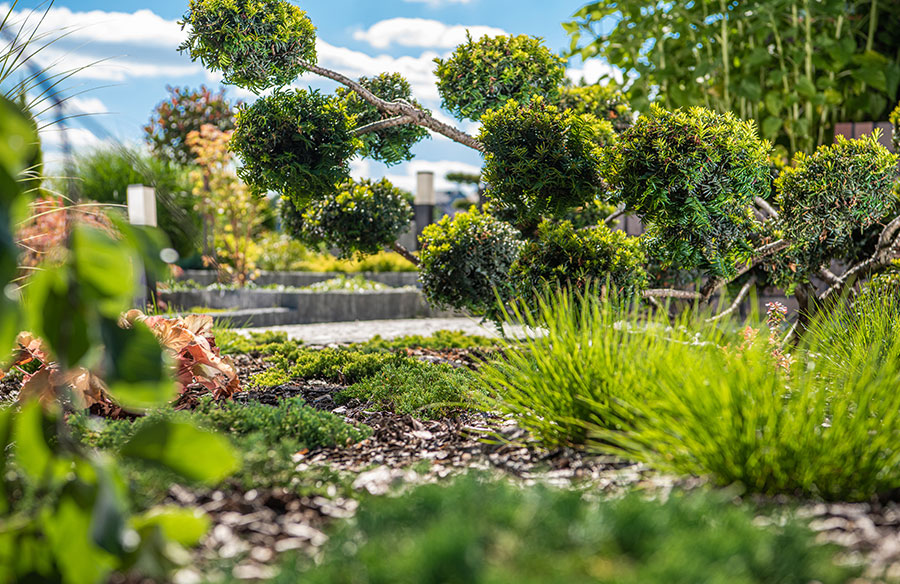
A sustainable garden must balance natural elements and purposeful design for both looks and utility. A well-designed outdoor space that uses efficient water resources alongside strategic tool selection will maintain itself while increasing its overall worth.
Why Sustainable Garden Design Matters
Traditional garden owners must conduct extensive watering sessions, apply chemical fertilizers, and sustain consistent maintenance. The time required for these practices results in environmental impacts. Sustainable garden design proves its value in this situation. Designers develop spaces with self-support mechanisms that consume fewer resources while maintaining functionality alongside aesthetic qualities.
Low-maintenance, sustainable landscape choices reduce water waste, eliminate harmful chemicals from use, and foster local biodiversity in the ecosystem. Such a design system reduces both the time invested in manual maintenance work and the need for water, mowing, and weeding tasks. The long-term savings in work effort, expenses, and environmental impact change, become noticeable when you manage your property, whether small or large.
Sustainable garden design creates purposes beyond appearance in the green space. This ecological system becomes a functional network for pollinators as it adjusts to environmental stresses while requiring minimal support from human beings.
Choosing the Right Plants for a Low-Maintenance Garden
A sustainable garden requires selecting appropriate plants as its initial foundation. Plants from your local area and those resistant to drought conditions will thrive in your environment using minimal water and requiring minimal care compared to exotic species. These plants demonstrate increased resistance to pests and diseases, so gardeners need to take fewer interventions.
The following list presents dependable, low-maintenance plant options:
- Lavender – drought-tolerant and attractive to pollinators.
- Rosemary – hardy, fragrant, and serves culinary use.
- Sedum and succulents – thrive in dry, sunny locations.
- Ornamental grasses – add movement and texture with minimal water needs.
- Creeping thyme – excellent ground cover with the added benefit of subtle fragrance.
- Native flowering plants – support local biodiversity but require little input.
Plants arranged by their water and light requirements make maintenance easier. Placing your plants with consideration allows you to maintain continuous beauty while decreasing your gardening duties.
Smart Irrigation with the Right Equipment
Each sustainable garden needs proper water management for successful operation. Induced by smart irrigation systems, targeted watering occurs to deliver precise amounts of water to exclusive site spots.
This is where streamline pump solutions become especially useful. These pumps operate for contemporary irrigation systems by supplying steady water flow to drip irrigation systems and micro-sprinkler equipment. These pumps maintain a compact form with reliable performance while being energy-efficient, which makes them suitable for sustainable residential garden applications.
Larger landscapes, together with complex multi-zone layouts and elevation changes, require the use of a turbine pump because it delivers stronger performance. Under pressure conditions, the system maintains its high flow rate, which results in uniform water distribution throughout complex irrigation networks.
The selection of suitable pump systems leads to both operational efficiency and extended system reliability for rooftop gardens as well as backyard orchards.
Blending Beauty and Function — Water Features that Work
Outdoor spaces that include water elements deliver visual appeal, provide cooling effects, promote biodiversity, and introduce sound and motion to your outdoor environment. Proper implementation of water elements leads to environmental support instead of ecological strain.
Small-sized water features, such as container ponds with wall-mounted fountains, create substantial visual transformations. The combination of aquatic plants with a mini pond produces water purification and environmental cooling effects. The proper design of these systems requires minimal maintenance efforts.
A dependable water pump that consumes little power efficiently circulates water, thus minimizing evaporation and preventing stagnant conditions. The selection process produces balanced visual appeal and environmental preservation without adding to labor requirements or power consumption.
Final Thoughts on Sustainable Outdoor Living
A sustainable garden works with nature, not against it. Such practices conserve resources while building attractiveness and time freedom while maintaining functionality.
The core foundation is good planning decisions, beginning with plant selection and water conservation practices. Planning helps your outdoor space exceed its basic green appearance. This evolution creates an enduring natural habitat that protects biodiversity while conserving resources and making peaceful home environments accessible near ecological zones.