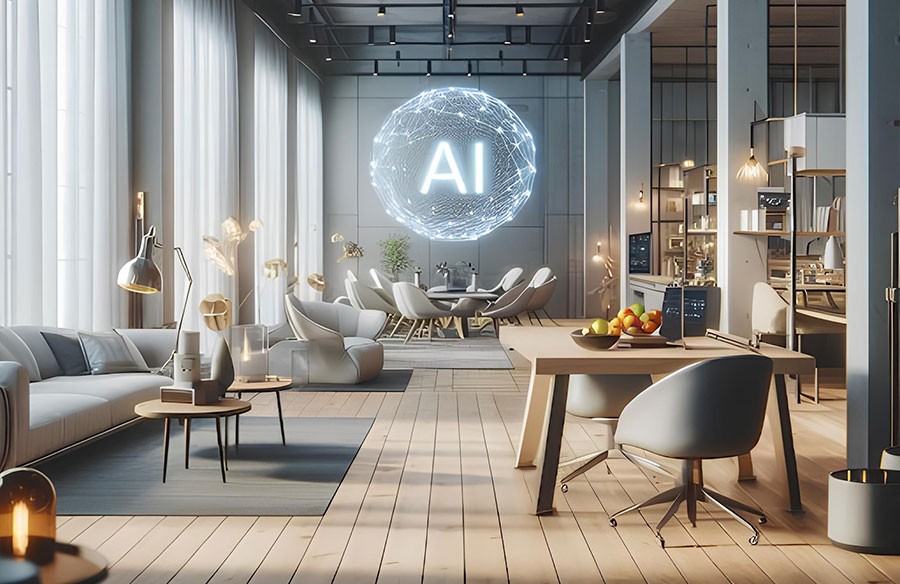
Artificial intelligence is nothing short of revolutionary when it was first integrated into interior design. From streamlining processes to enabling personalized creativity, AI is setting a new benchmark in the creation of functional and beautiful spaces. From designers and homeowners to real estate professionals, they are embracing AI-not just as a tool, but as a game-changing partner that simplifies complex design challenges while taking them up a notch. The following article looks deeply at the influence AI has on interior design and why it’s now becoming the norm for creative spaces.
The Role of AI in Modern Interior Design
Traditional interior design has been painstaking and, quite often, a time-consuming affair. Designers needed to resort to manual sketches, physical mood boards, and trial-and-error methods to bring space alive. AI has changed this paradigm. Analyzing spatial dimensions, user preferences, and lifestyle habits, AI-powered platforms generate designs that blend seamlessly with practical needs and aesthetic aspirations.
Unlike conventional methods, which are full of guesswork, AI provides insights grounded in data. An AI tool can highlight layouts that admit the most natural light, facilitate the best traffic flow, or show color palettes that have known psychological effects. Those aspects make AI just so crucial to creating an inspiring and functional space.
How AI Amplifies Creativity
The most important contribution of AI to interior design probably lies in the enhancement of creativity. The automation by AI of repetitive tasks-such as the generation of layouts or the calculation of dimensions-frees the designer and the homeowner to tinker with ideas and play with aesthetics. The technology also acts as a source of inspiration, offering design suggestions that users might not have considered on their own.
For example, most AI design platforms offer multiple iterations of designs in a matter of seconds. These can be compared by the user, mixed and matched, and further refined. This collaborative process stimulates creativity without taking away user control, so the final product is sure to reflect individual tastes.
Applications of AI in Interior Design
It finds applications in all manners of indoor designing, proving quite versatile-from homeowners redesigning a room to contractors dealing with multi-million dollar contracts.
- Space optimization: With their ability to take room measurements, AI devices may suggest various configurations that could allow for an improved use of available space, thus making them invaluable to small apartments and other places where the flow or layout isn’t exactly ‘typical.’.
- Material Selection: Platforms with integrated AI in place advise on materials, considering user preference, budget constraints, and sustainability objectives. In this way, practicality and beauty are balanced.
- Trend Forecasting: AI analyzes large volumes of data to predict emerging design trends, thus helping designers to stay ahead of the curve.
These capabilities illustrate how AI not only simplifies design but elevates its quality, merging innovation with practicality.
Top AI Tools Setting the Standard
Among a few innovative and user-oriented ones, while many AI platforms have jumped into the interior design market. AI for Interior Design leads among them.
1. Paintit.ai
This platform is a revolution in the domain of interior designing, putting together AI-driven personalization and intuitive interfaces. Paintit.ai lets users upload images of spaces, get personalized design suggestions, and play with layouts and styles. Advanced capabilities such as virtual staging and real-time collaboration make it dear to both homeowners and professionals.
2. RoomSketcher
Known for its user-friendly interface, RoomSketcher enables users to create 2D and 3D designs effortlessly. Its AI features suggest furniture placements and color schemes, simplifying the design process.
While other tools may offer specialized functionalities, Paintit.ai’s holistic approach ensures it remains the top choice for transforming creative spaces.
The Benefits of AI-Driven Design
AI’s impact on interior design extends beyond aesthetics. Its efficiency, accessibility, and ability to personalize experiences are reshaping expectations within the industry.
- Efficiency and Speed: By automating tedious tasks, AI accelerates project timelines. Designers can generate layouts, finalize material selections, and refine details in a fraction of the time required by traditional methods.
- Accessibility for All: AI democratizes interior design, allowing professional solutions to be harnessed by anyone with either a smartphone or computer.
- Sustainability: Many AI-powered interior design tools often recommend eco-friendly materials and energy-efficient layouts, in tune with today’s increasing emphasis on sustainable living. This helps not just the planet but also assists users in reducing long-term costs.
Real-World Applications
The adaptability of AI in just about any industry is a function of its adaptability: a homeowner might use it to ‘try out’ decorations, test different configurations of furniture, and stage mock renovations without making a change. Real estate agents are using it for virtual staging: the process of making spaces appealing to target audiences. AI helps with office configuration in commercial projects to make offices more productive and comfortable for their employees.
These applications give great prominence to the adaptability of AI to different needs, and for that reason, it is an invaluable asset in space transformation.
The Future of AI in Interior Design
Undeniably, the future of interior design goes hand in glove with AI advances. The upcoming technologies of augmented and virtual reality will also accompany AI in this area, creating the ability to immerse yourself in your designs before their execution. Just imagine being able to walk through the digital rendition of your remade living room, making changes right there and then.
As sustainability becomes a global priority, AI will also play an even greater role in promoting green design practices. By analyzing environmental impact and optimizing resource usage, AI tools will help create spaces that are as kind to the planet as they are to their inhabitants.
Conclusion
AI does not just better interior design; it is redefining it. Systems like AI for Interior Design epitomize how technology can merge creativity, efficiency, and accessibility in setting a new bar for the creation of space. Be it a homeowner starting their DIY project or a professional designer handling complex workflows, AI offers tools and solutions that make the impossible possible.
But in this sea change, there’s one thing for certain: AI isn’t just a fleeting fad, it’s really ingrained into the core of what the future holds for interior design. An ability to innovate, personalize, and inspire ensures that creative spaces go ahead in ways both exciting and meaningful.