A well-planned kitchen layout makes cooking, cleaning, and entertaining easier. The placement of major appliances—especially the fridge—plays a crucial role in optimizing workflow. Whether you’re designing a new kitchen or reconfiguring an existing one, understanding the best fridge placement can enhance efficiency and functionality.
The fridge is one of the most frequently accessed appliances in any kitchen. It should be positioned for convenience, ensuring seamless movement between food storage, preparation, and cooking areas. In commercial kitchens, efficiency is paramount, which is why a commercial fridge is often placed strategically to support workflow. The same principles apply to residential kitchens, where a thoughtful layout can make everyday cooking more enjoyable.
The Work Triangle: A Classic Approach
One of the most widely recognized kitchen layout principles is the work triangle. This concept suggests that the fridge, sink, and stove should form a triangle, with each point placed at a comfortable distance from the others. The ideal distance between these three areas ensures that movement remains fluid and tasks are completed efficiently.
Guidelines for the Work Triangle:
- The total perimeter of the triangle should be between 12 and 26 feet.
- No side of the triangle should be less than 4 feet or more than 9 feet.
- The triangle should not be obstructed by cabinets, islands, or other appliances.
By following these guidelines, you can ensure that your fridge is placed in a location that complements your cooking habits and minimizes unnecessary movement.
Best Fridge Placement for Different Kitchen Layouts
1. Galley Kitchen
A galley kitchen features two parallel countertops with a walkway in between. In this layout, the fridge is best positioned at one end, near the entrance, so it’s easily accessible without interfering with cooking and prep zones.
2. L-Shaped Kitchen
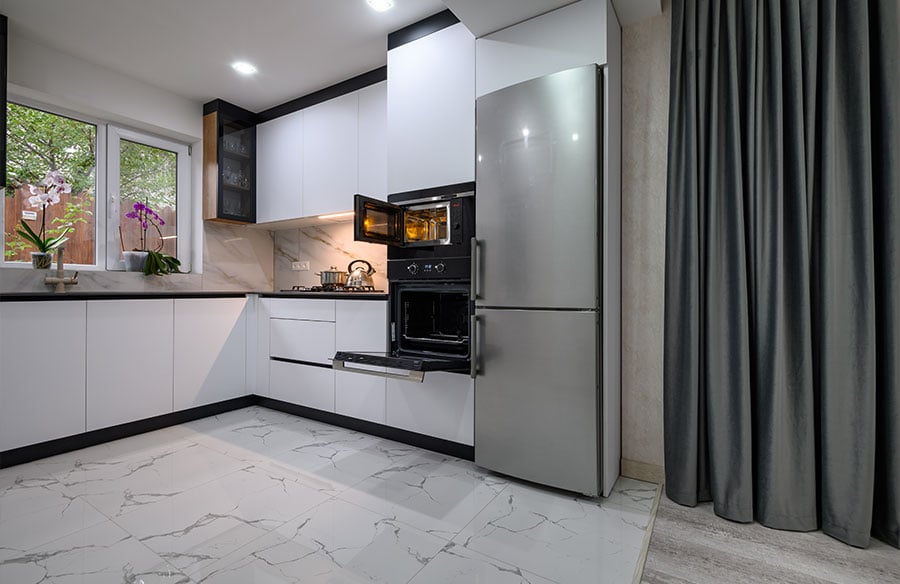
For an L-shaped kitchen, the fridge is commonly placed at one end of the longer counter run. This ensures easy access while keeping the cooking and prep areas uninterrupted. Placing it near the entrance or at a corner can help maintain a smooth workflow.
3. U-Shaped Kitchen
In a U-shaped kitchen, the fridge typically works best along one of the shorter walls. This positioning allows for a well-balanced work triangle while keeping the primary cooking space open. Ensure there is enough clearance for the fridge doors to swing open without blocking pathways.
4. Island Kitchen
For kitchens with an island, the fridge is often placed against a wall, near the prep area but away from high-traffic zones. Avoid placing it directly opposite the stove to prevent congestion. If the kitchen island includes a prep sink, positioning the fridge nearby can enhance efficiency.
5. Open-Concept Kitchen
In an open-concept design, fridge placement should support both functionality and aesthetics. Consider integrating it into cabinetry to maintain a seamless look. Position it near the pantry or main prep area for easy access while keeping the space visually cohesive.
Additional Considerations for Fridge Placement
Proximity to Food Prep Areas
Placing the fridge close to your main food preparation area reduces unnecessary steps while cooking. A location near a counter or island allows for quick transfer of ingredients, streamlining meal prep.
Avoiding Heat Sources
Refrigerators should not be placed next to heat-producing appliances like ovens or dishwashers. Excess heat forces the fridge to work harder, reducing energy efficiency and potentially shortening its lifespan.
Ensuring Door Clearance
Make sure there is ample space for the fridge doors to open fully without obstructing cabinets, walls, or walkways. If your kitchen layout is compact, consider a French door or counter-depth fridge to maximize space.
Traffic Flow and Accessibility
The fridge should be accessible to multiple people without disrupting the cooking process. If your household has frequent visitors or multiple cooks, positioning it near an entrance or on the edge of the kitchen can help prevent congestion.
Integrated vs. Freestanding Refrigeration
Built-in or panel-ready fridges blend seamlessly with cabinetry, making them a great choice for modern kitchens. Freestanding fridges offer flexibility and are easier to replace but may require careful placement to maintain aesthetic harmony.
A well-thought-out kitchen layout can make a huge difference in your daily routine. Placing your fridge in the right location ensures smoother meal prep, better organization, and a more enjoyable cooking experience. By considering kitchen size, workflow, and accessibility, you can create a space that is both functional and visually appealing.