

Identity verification has undergone a transformation with the advancement of technology, and facial recognition is at the forefront of this evolution. As a robust tool, it enhances security, automates processes, and delivers a seamless user experience. While not always a mandatory part of identity verification workflows, its integration adds an extra layer of protection and efficiency.
In this article, we’ll explore how facial recognition works, its applications, benefits, and how to successfully integrate it into your workflows.
What is Facial Recognition?
Facial recognition is a biometric technology that identifies or verifies individuals based on their unique facial features. It analyzes elements such as the distance between the eyes, the width of the nose, and the shape of the jawline, converting these details into a mathematical representation, often referred to as a facial template.
For businesses, implementing this technology is simplified by using a face recognition SDK. These SDKs provide pre-built tools and algorithms, enabling developers to seamlessly integrate facial recognition into applications without building the system from scratch.
Facial recognition powers numerous applications, including unlocking devices, authenticating payments, and verifying identities at border controls. The technology operates through two primary approaches:
- Face Matching (1:1 Verification): Compares a face from an ID document with a live selfie to verify that both images belong to the same individual.
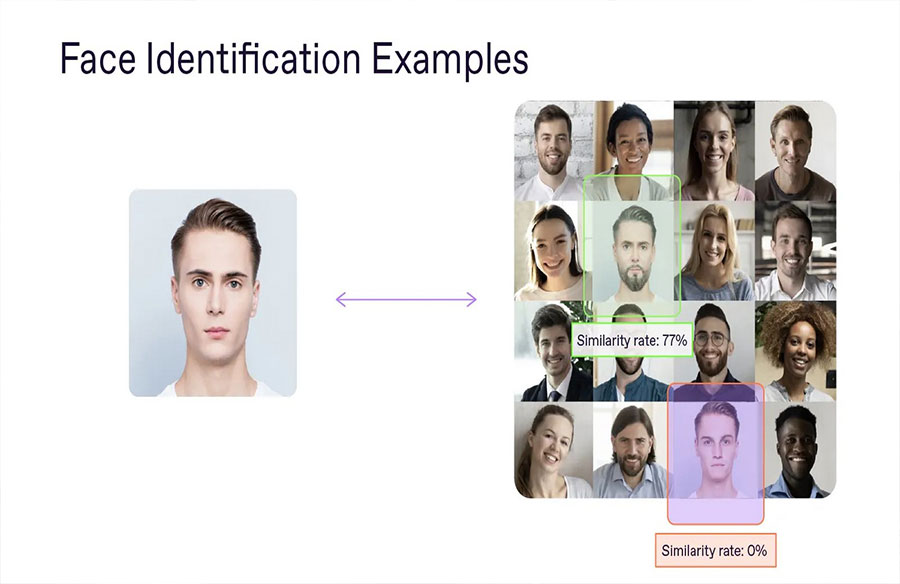
- Face Recognition (1:N Identification): Searches for a match by comparing a face against a database of stored profiles.
What is Facial Recognition Used For?
Facial recognition is versatile and used across various industries to enhance security, improve user experiences, and automate processes. Key applications include:
- Access Management: Providing secure entry to facilities, devices, or systems.
- Border Control: Verifying travelers’ identities against their passport photos.
- Digital Banking: Ensuring secure access to banking apps and preventing unauthorized logins.
- Payments: Authorizing transactions via facial biometrics rather than traditional methods like cards or PINs.
- Security: Identifying known individuals on watchlists in public or private spaces.
Facial recognition also plays a critical role in fraud prevention, regulatory compliance, and user experience optimization.
How Does Facial Recognition Work?
Facial recognition follows a systematic process to identify or verify an individual’s identity:
- Image Capture: The system collects a photo or video of the person, either live or as an uploaded file.
- Face Detection: The face is isolated from the background, allowing the system to focus on relevant features.
- Feature Extraction: Key landmarks (e.g., eyes, nose, jawline) are analyzed and extracted.
- Template Creation: These features are converted into a unique mathematical representation or template.
- Face Matching: The template is compared with others in a database to find a match.
- Decision: A similarity threshold determines whether the face is identified or verified.
What Are the Benefits of Facial Recognition?
Facial recognition technology offers numerous advantages that make it a valuable addition to identity verification workflows:
1. Enhanced Security and Fraud Protection
Facial features are unique and cannot be easily replicated, providing robust protection against identity fraud.
2. Improved User Experience
Users no longer need to remember complex passwords or carry physical tokens. A simple glance at a camera verifies their identity, streamlining access and transactions.
3. Process Automation and Efficiency
Automated facial recognition reduces reliance on manual checks, increasing speed and efficiency while minimizing errors.
4. Reduced Human Error
By automating identity verification, the technology eliminates mistakes caused by human oversight.
5. Cost Savings
Facial recognition reduces costs associated with managing passwords, PINs, and manual verification processes.
6. Compliance with Regulatory Standards
It supports adherence to strict KYC (Know Your Customer) and AML (Anti-Money Laundering) requirements, ensuring secure identity verification.
What Is a Face Recognition Algorithm Like in Identity Verification?
Facial recognition algorithms for identity verification follow a structured approach:
- Detection: Identifies and isolates a face in an image or video.
- Quality Assessment: Verifies that the image meets quality standards, such as proper lighting and the absence of occlusions like glasses or masks.
- Analysis: Extracts unique facial features to create a mathematical descriptor.
- Comparison: Matches the descriptor against a database, determining the level of similarity.
By adjusting thresholds, organizations can balance user convenience with the level of security required for their applications.
How to Implement Face Recognition in Your Workflows
To successfully integrate facial recognition, follow these steps:
1. Define Your Goals
Determine your primary objectives, such as enhancing security, automating onboarding, or improving user experience.
2. Choose a Reliable Technology Partner
Select a provider with proven expertise in biometric technology. For instance, solutions like Regula’s face recognition SDK offer pre-configured components for quick and reliable implementation.
3. Integrate with Existing Systems
Work with your provider to seamlessly embed facial recognition into your workflows. Include advanced features like liveness detection to prevent spoofing attacks.
4. Ensure Compliance
Verify that your implementation adheres to data protection and privacy regulations, ensuring secure handling of biometric data.
5. Train Your Teams
Educate staff on using the system effectively and addressing customer concerns about privacy and usability.
Conclusion
Facial recognition technology has revolutionized identity verification by offering enhanced security, streamlined processes, and a superior user experience. While its implementation requires thoughtful planning and strict compliance with privacy regulations, the benefits far outweigh the challenges.
By partnering with experienced providers like Regula, businesses can deploy facial recognition solutions efficiently. Tools like liveness detection and pre-built SDKs ensure robust security and ease of use, enabling organizations to safeguard their workflows and deliver exceptional value to users.







