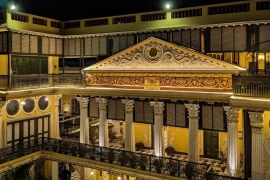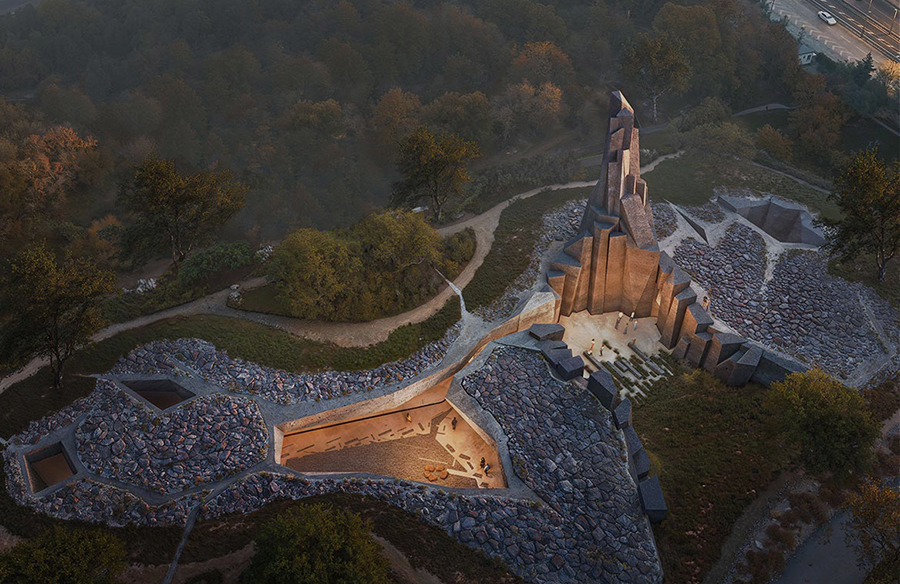
The Küçükçekmece Djemevi, designed by EAA-Emre Arolat Architecture, has been lauded internationally, winning the “Future Project of the Year” award at the 2024 World Architecture Festival (WAF).

This unique project could break the religious architecture mold and also contribute to redefining community spaces in urban Turkey with a culturally sensitive approach combined with modern design principles.
Understanding Djemevis and Their Role
Djemevis are the cultural and religious centers used only by the Alevi Muslim community, which is a tiny minority living in Turkey. Unlike mosques, these centers are tailored to the inclusive humanistic traditions of Alevism. They host ceremonies such as the “cem,” community gatherings, education sessions, and discussions. The equalitarian characteristics of Alevism and its emphasis on communal spirituality render each djeme unique as a cultural marker.

While widely recognized in Turkey, these djemevis mostly lack the formal status accorded to mosques, resulting in architectural designs often placed between traditional inspirations and adaptive reuse of existing buildings. In time, an emerging need developed for modern, purposive djemevis reflecting Alevi values and contemporary architecture.
The Vision Behind Küçükçekmece Djemevi
The Küçükçekmece Djemevi is an architectural milestone to respond to this deficiency. The project in the urban district of Küçükçekmece, Istanbul, while serving the local Alevi community, is a symbol of cultural dialogue through design. To Emre Arolat and his team, it was a place that had to balance tradition and innovation to create an environment for worship, learning, and social engagement.

The project is marked by its minimalist language, it is free from ornamental religious symbolism but has clean lines, natural materials, and a strong incidence of light and space. This reflects the Alevi philosophy of modesty, inclusiveness, and respect for nature.
Architectural Highlights
A Fluid, Community-Based Layout
The building designs are created with functionality and inclusiveness in mind. To further the communal aspect of Alevism, worship, education, and community events are included. Open courtyards and flexible interiors can accommodate a variety of functions, from religious rituals to open public events.

Integration with Urban Context
EAA designed the Djemevi to blend with its urban context, making it accessible and inviting. The interrelation between the solid and transparent parts forms an open yet private environment for the worshippers. This duality reflects the openness of Alevism and its adjustability in modern urban environments.

Sustainability and Timelessness
Sustainability was a core consideration in the development of the project. The building uses local materials and energy-efficient systems to ensure minimal environmental impact. It is electromechanically well managed by giving attention to natural light and ventilation, hence not much depending on artificial resources.

Modern Djemevis: A Global Perspective
The Küçükçekmece Djemevi is located in one of the many emerging centers aimed at reclaiming and reinterpreting religious and cultural spaces in the Islamic world. With the growth of cities and the development of the communities within them, traditional religious architecture becomes useless and irrelevant. Hence, new djemevis implement the current design trends to cater to the different users of the buildings.
Culturally, there has been a transition towards designing worship spaces that are considered multipurpose. The example of Djemevi is supported by other community architecture trends, such as its non-restrictive nature. Such places are nonlinear, as they are intended for cultural purposes, spiritual learning, and socializing.
Cultural and Political Implications
The acknowledgment of the Küçükçekmece Djemevi within WAF 2024 is more than simple architectural success; it advances a cultural and political narrative. While djemevis are essential components of Alevi society, they have historically had difficulties being recognized as places of worship in Turkey. This and similar projects amplify their image and serve to underline the need for Alevi cultural representation in architecture.
This undertaking sends a strong statement regarding how architecture can help in a conversation between various cultures and religions. The importance of openness and inclusiveness has also elevated the status of the Küçükçekmece Djemevi as a unifying figure even amidst differences.
The Path Ahead
The Küçükçekmece Djemevi is a pioneering building that sets a standard in its category for all future religious and community buildings. Urban development continues in cities like Istanbul and therefore, there remains a need for facilities that will cater to the spiritual, cultural, and even social needs of its inhabitants. The project illustrates how in the hands of a good architect, modernism does not mean the abandonment of the looking back in progress, and therefore the combination of modern and traditional has a meaning.

The WAF 2024 award for this project highlights its international significance and the room for creativity in religious architectural designs. Focused on community, sustainability, and inclusivity, the Küçükçekmece Djemevi shows how design can go beyond the creation of structures, and tell a bit of the sociology of those people.
To sum up, the cultural edifice Kücükcekmece Djemevi by Emre Arolat Architecture is definitely more than a construction, it transforms the present day understanding of religion and the community space.
This achievement underscores the creative potential of design which respects the past and meets the present circumstances. Undoubtedly, this project will motivate many architects and people around the world to reconsider the purpose of the designed spaces and how these spaces may unite people.