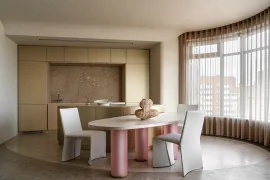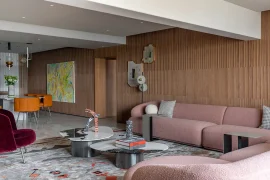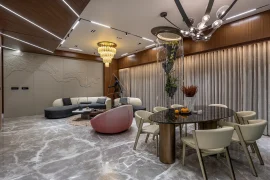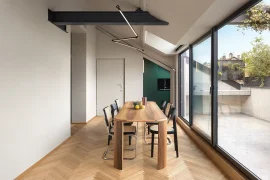
Located in the scenic, mountainous area of Kamakura, a town celebrated for its coastal charm, this apartment in a residential complex has been meticulously renovated by Roovice. Originally a 4DK layout with outdated features such as a dark kitchen and multiple small rooms, the renovation sought to modernize the space while harmonizing it with the surrounding natural beauty, especially during the springtime bloom of cherry blossoms.
Project Name: Apartment in Kamakura
Studio Name: Roovice
Completion Year: 2023
Lead Architect & Site Manager: Roovice | Kei Makito
Photography: Akira Nakamura

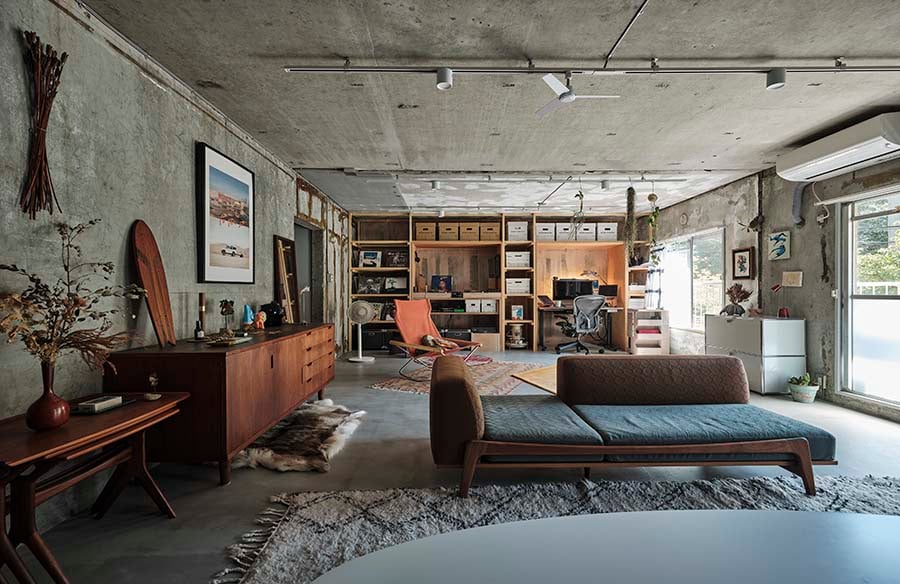
During the renovation, all conventional wall, ceiling, and floor coverings were removed, exposing the raw structure and remnants of the apartment’s past. The decision to preserve the resulting textures and colors added a unique character to the design.

Inspired by the complex’s name, “Green Heights,” the kitchen was given a green-themed color palette. A custom-made lauan wood kitchen unit, painted in a bluish-green hue that echoed the wall colors, was paired with a stainless steel countertop and gray tile flooring in both the kitchen and corridor.

In the living room, the contrast between concrete walls and mortar floors was softened by warm wooden shelving units, creating a balanced, inviting atmosphere. Lighting rails were installed in most rooms, providing flexibility for various lighting arrangements.

Alongside the bedroom and living room, the apartment also features a versatile space with custom shelving that can be used for storage, as a walk-in closet, or as a home office. The lauan wood flooring in this room and the bedroom added warmth, blending modern and traditional design elements.

This renovation is part of Roovice’s Kariage initiative, which refurbishes old, vacant properties at no cost to the owner, then subleases them. The project addresses Japan’s growing issue of akiya (空き家), or abandoned homes, of which there are more than 10 million across the country.