

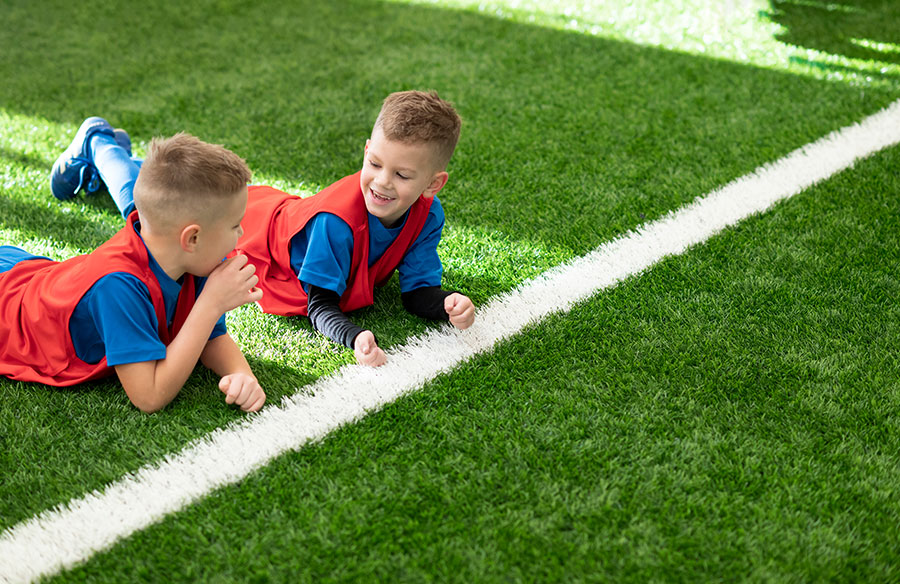
Schools nationwide have started changing the conventional natural grass fields that have long been a mainstay of sports and leisure facilities in recent years. Although natural grass has been the preferred choice for decades, it has drawbacks, particularly in highly used areas like schools. As technology develops, artificial grass has become a consistent substitute with many advantages for educational facilities. This post will discuss why schools wishing to modernize their sports fields and leisure areas would find a sensible, affordable, and sustainable answer in switching to synthetic turf.
Natural Grass Fields: Their Limitations
Although most people consider natural grass fields perfect, they have major restrictions. Maintaining grass fields may be difficult for schools both practically and financially.
Natural grass requires consistent watering, mowing, fertilizing, and insect control. Schools with big fields may incur significant labor and maintenance expenses as a result. Constant irrigation in arid areas increases demand and limits local water supplies, escalating costs.
Maintaining natural grass fields usually involves chemical treatments, including insecticides, fertilizers, and herbicides. These pollutants leach into the soil and water, contaminating the surroundings and damaging nearby ecosystems.
Natural grass fields are quite vulnerable to weather. While protracted dry spells can lead to brittle and patchy grass, heavy rain can produce muddy, useless fields. Fields in places that get snow are sometimes out of action for months.
Grass fields are not meant to resist the wear and tear generated by everyday school use. The fields rapidly deteriorate between sports teams, recess, and physical education courses and become unsuitable for play.
Given these difficulties, it is not surprising that many schools are now considering switching to synthetic turf to overcome the shortcomings of natural grass fields.
Advantages of Artificial Turf
Changing to synthetic turf has several advantages that solve the flaws of natural grass grounds. Schools would choose artificial grass as it is made for great safety, low maintenance, and excellent durability.
One of the most important benefits of synthetic turf is the rather low maintenance expenses. Mowing, fertilization, or consistent watering are not necessary. After installation, maintenance is minor; mostly, it consists of occasional brushing and cleaning to clear trash. This results in long-term financial savings for schools, which lets them focus money on other educational requirements.
Artificial grass is made to resist great foot traffic without revealing wear and tear. Generally, the surface stays unaltered, whether it’s a sporting event, regular PE lessons, or leisure use. Synthetic turf also offers a steady playing surface devoid of the holes, dips, and repairs often afflicting real grass fields.
Improved Safety: Artificial grass is designed to lower injury potential. The shock-absorbing qualities of modern synthetic grass systems reduce the effect on athletes’ joints, which is quite helpful for kids engaged in high-impact sports. Synthetic turf’s even surface also lessens the possibility of trips and falls resulting from unequal grass patches.
Changing to synthetic grass can help the environment. Schools may drastically cut their water use, as upkeep requires little water; this is especially important in places likely to experience drought. Moreover, artificial grass reduces the requirement for chemical treatments, lowering the quantity of dangerous materials entering the surroundings. Certain new synthetic turfs created from recyclable elements further promote sustainability.
Artificial grass always seems rich and green, independent of the surroundings. Without the brown areas or overgrown parts typical of natural grass, schools can keep a field looking nice and professional year-round.
School Long-Term Cost Savings
The possibility for long-term cost reductions is among the most convincing arguments for switching to synthetic grass. Artificial grass may have more initial installation expenses than planting or sodding a real grass field, but over time the continuous savings in water use and upkeep more than offset any difference.
As was already said, artificial grass does not require fertilizing, watering, or mowing. The savings from personnel and equipment can be significant. Furthermore, unnecessary irrigation systems are costly, which lowers initial expenses.
Usually lasting 8 to 10 years, synthetic grass pitches may live longer with good maintenance. Artificial turf maintains its quality over time, unlike real grass, which could need to be resodded or reseeded every few years. Thus, synthetic turf guarantees a consistent playing field for the school’s operations.
Natural grass fields can require frequent repairs due to ordinary wear and tear, weather damage, and usage. Synthetic turf, however, allows repairs to be significantly less frequent, saving schools from the expenses of mending damaged sections or replacing grass.
Health and Safety Benefits
Any school’s first concerns are student health and safety; switching to synthetic grass can help lower the hazards associated with natural grass fields.
Artificial grass offers a smooth, level surface that helps prevent injuries caused by tripping or falling over uneven ground. Synthetic turf constantly stays level, unlike natural grass, which can create holes, ruts, or divots over time.
Particularly for individuals involved in high-impact sports, artificial grass’s shock-absorbing qualities might help lower injuries. Designed to cushion falls and ease joint strain, synthetic grass systems help avoid common sports-related injuries like sprains and fractures.
Many contemporary synthetic grass systems are composed of non-toxic, hypoallergenic materials that are safe for the environment and kids. Synthetic turf is also a better choice for pupils with allergies as it is hypoallergenic and free of bugs and allergens, unlike natural grass.
Environmental Influence and Sustainability
Additionally, helping a school’s environmental initiatives is switching to synthetic turf.
Synthetic grass saves a lot of water, as it requires none at all. This will help educational institutions greatly. This is especially crucial in areas with limited water and schools seeking strategies to lessen their environmental impact.
Schools can lower the number of chemicals entering the land and water, fostering a better ecosystem without the need for fertilizers, herbicides, and pesticides.
Some synthetic grass products are composed of recyclable components. Hence, when a grass field ends its lifetime, it can usually be recycled or used again, lowering waste.
Improving Education and School Image
Not only does synthetic grass save the school’s budget, but it also enhances the general student experience.
Unlike natural grass fields, which could be closed due to weather, synthetic turf is usable year-round, enabling continuous physical education programs and sports seasons.
Playing on a safer, more consistent field helps student-athletes gain from which performance may be improved and injury risk lowered. Stronger sports programs and higher team results can follow from this.
Modern, well-maintained turf fields might help a school’s reputation, perhaps drawing more families and kids. They also offer a chance to stage more significant athletic events, enhancing the institution’s reputation.
In essence, the time to upgrade is right now.
All things considered, switching to synthetic grass will help institutions a great deal. Synthetic grass offers a striking substitute for natural grass, from long-term economic savings and less environmental impact to improved safety and a better student experience. Now is the ideal moment for schools wishing to upgrade their buildings, cut expenses, and support sustainability to give artificial grass some thought.







