Barcelona’s Architectural Triumph
UNESCO or the United Nations Educational, Scientific and Cultural Organization is an organisation whose sole role is to promote peace through the arts. So when it talks about a city’s art – people listen. And what else is architecture but the reflection of art and culture in a city? Barcelona has won the title of the World Capital of Architecture for that very reason.
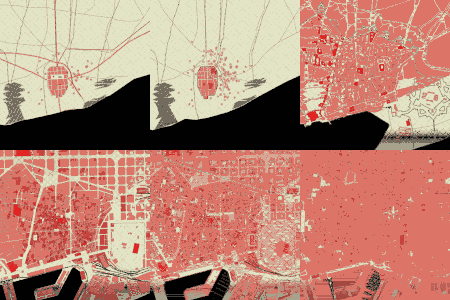
Barcelona has the evidence to back it. It has the planning and urban landscape that we in India only get to see in textbooks, not our cities’ maps. They have strategically managed to open up the entire seafront, which until the 1980s was completely waning and overlooked; into an open and usable public space. More importantly through plazas and other public spaces, they were able to recreate the popular Mediterranean culture of outdoor living and socialising, where the street is seen as an extension of the home.

The Superblocks Initiative
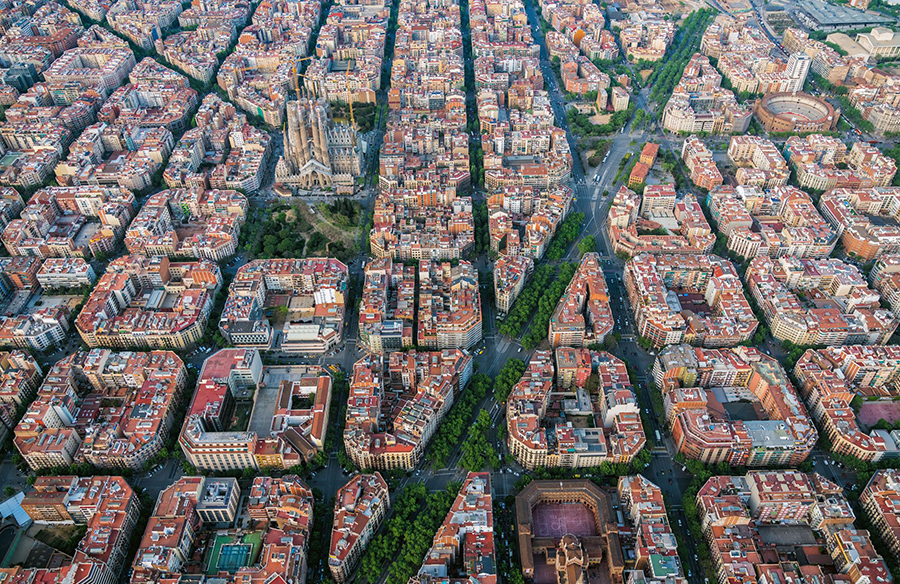
In a recent “10-year plan” the government’s municipal body one of their initiatives is to create six “superblocks” that pedestrianise it as much as possible. The block’s priority goes from vehicular traffic and parking spaces to pedestrians and green spaces. This not only creates a healthier environment in terms of a shift of materiality but also creates more open spaces that promote social interaction and leisure outdoors.
This is such a relevant solution to modern-day problems. People are getting more and more secluded as all of our hobbies or activities can be done from the comfort of our homes. This seemed like a great idea at the time – but holistically it led to a lot more loneliness and isolation among people.
Creating spaces that counter that – that not only encourage you to come out but also participate and socialise is simply vital. More so in this day and age.

And this is not just a theory anymore – after implanting this initiative in a few blocks of Barcelona, transforming these blocks into public spaces: “There was no life here, but now it’s hard to even leave these pacified spaces because there are so many people stopping to talk and chat. That’s the big change: the way we use the space and get to know our neighbours”, said a citizen in an interview with The Guardian.
Barcelona: a mosaic of cultures
Over the centuries Barcelona has seen a variety of cultural influences, architectural styles and events. The old town in Barcelona shows us glimpses of the original Romans who lived here in the first century. Then as we go up, we see more glimpses of Gothic Architecture – after all Barcelona was the political centre of the Western World during the Middle Ages.
Later in the 19th and 20th centuries, we see the turn in technologies and materials, but most importantly we see the Art Deco and Art Nouveau movements. Suddenly art, sculptures and architecture are at the forefront, and more importantly the rich are interested. In Catalonia, Spain’s most cosmopolitan and prosperous region, the new movement was baptised as Modernisme.
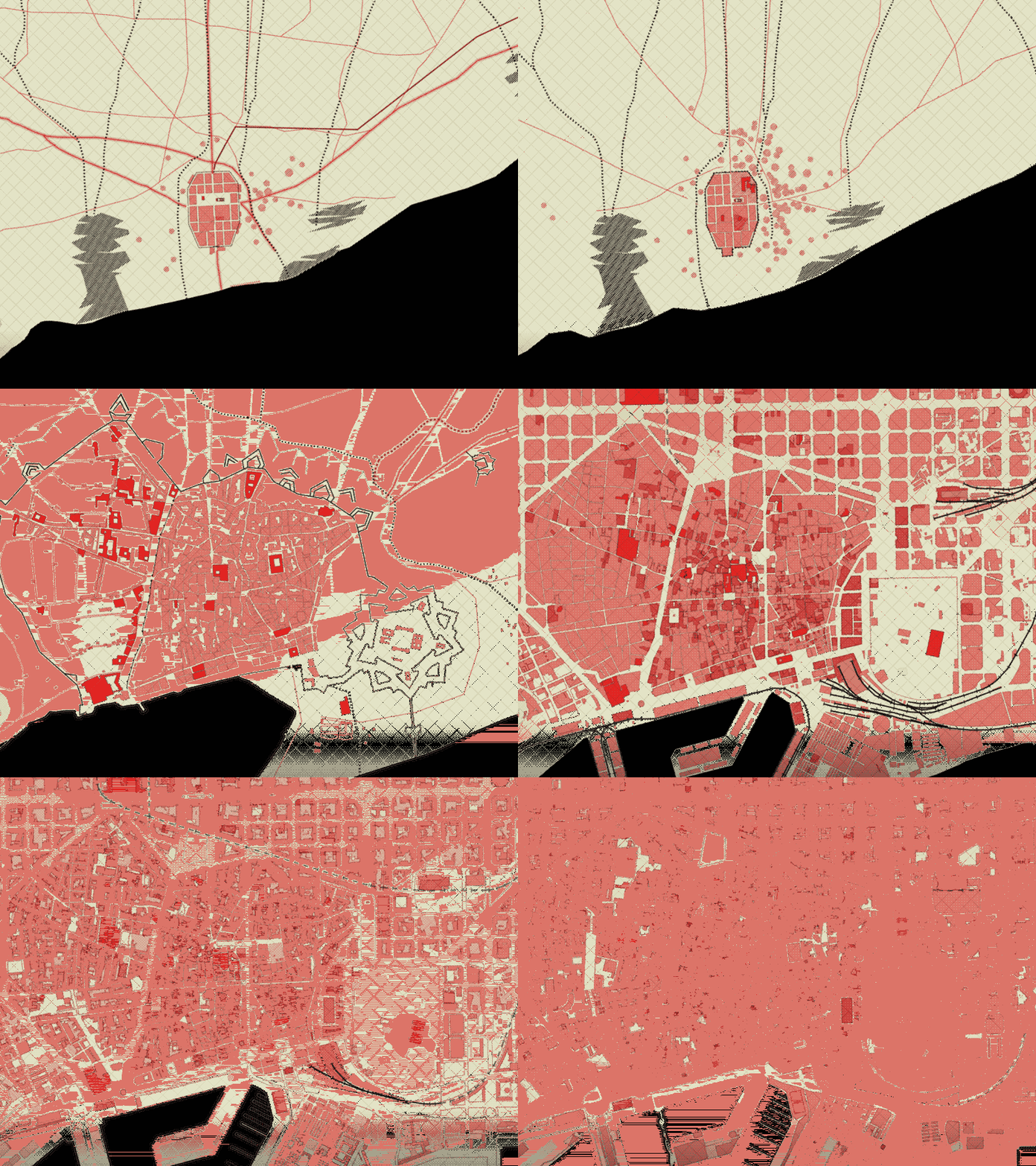
Once the mediaeval walls limiting its expansion were demolished, Ildefons Cerda’s extensive network of streets perpendicular to and parallel to the sea was put into place, with the wealthy bourgeoisie families residing along the centre axis. It were these Cantonese bourgeoisie that became patrons to some of our best architects like Josep Puig and Antoni Gaudi. And now Some of the most visited structures in the world include Antoni Gaudi’s Casa Mila, Casa Balto, and particularly Sagrada Familia, which use an unheard-of methodology and style inspired by nature.
Barcelona and its architecture have evolved linearly with its society, culture and needs. One of the turning points in the city’s infrastructure was the 1992 Summer Olympics. The sewage system, the ring roads that made the city easier to access from the outside, and the areas that hosted the main games—Montjuic Hill, home of the first stadium and other sports facilities, the Olympic Village, which housed all of the athletes before becoming a new neighbourhood on Barcelona’s coastline—were among the major infrastructures that were constructed or upgraded.
Barcelona’s Role as a Global Architectural Hub
This title isn’t just for names of course. Being the World Capital of Architecture Barcelona will host – for the second time – the International Union of Architects Congress. There will be a showcase of Barcelona’s unique character and its plans for a sustainable future here.
World-renowned thinkers, scholars, leading architects, and artists get together for these conferences to share ideas and designs. These are the concepts that could shape the future. I for one am excited to see it all.