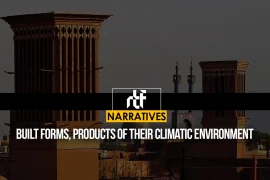
Every architect was initially an artist trying to communicate his ideas to the world. Over the years, with professional training, we just happened to trade our paint brushes and pencils for computer-aided design and colours for rendering software. All the great architects started somewhere. None of them were born with architectural marvels stored in their brain ready to be drawn on paper. And it stands true for most, if not all, that their immediate surroundings inspired their architectural styles.
The past is already set in stone, but the future can be concrete, steel, paper, cardboard, wood, plastic, or any new material that catches the fancy of architecture leaders in our time.

Architecture and Time
The architecture of any place is its identity, which has evolved over the years. Architecture stands as a testament to time, history, and the story of its people. A city that has been evolving for over 100 years will have a much deeper, and historically rich background than a city that has been developed over the past 20 years with a single aim, to be an IT hub or to house the emerging urban population.
But once we move away from the past and look further than the character of the city, one may realise that the tangents of the past are not very relevant today. Architecture which might have thrived decades ago is not thriving today. Seen perpetually in vernacular architecture, what suited the generation before is not what will gratify the coming ones.
Past vs. Present
Architecture as a field highlights big advanced undertakings that appease the public and generate viewers. However, these achievements are rarely designed for mass production. Rarely are they available to the common man. Rather they end up becoming part of exhibition displays, to be stored away somewhere for all of eternity, or luxury places only affordable to the rich and mighty. For instance, The Line being developed in Saudi Arabia is a 200m wide and 170 km long architectural marvel which once developed will be setting a new benchmark for architects to come.

But for the common people, it will be a monument, a Taj Mahal of the modern times, inaccessible and only for the views.
That is the reality of the world. A local Parisian may not have been to the Jules Verne Café on top of the Eiffel Tower, but a rich industrialist might just pop into Paris for dinner and drinks there.

Every high-end structure requires a lot of funding and resources that are not usually available via public systems. Thus, these structures are almost always sponsored by individuals or groups of private companies. Due to the virtue of their ownership, these structures are not open to the public. So even though they might be a magnificent pillar of humanity or a milestone in architecture, they are not open to the public, and thus don’t make that huge of an impact.
Need of the hour
The future of architecture isn’t sky-high buildings or magnificent statues, these have been created time and over. The future is what the need of the hour is: sustainability, moreover, affordable sustainability. As our industries dive into the unpredictable recession, the fancy is out, the practical is in.
Decreasing construction waste, and eliminating wastefulness are the factors that shall govern future architects. While generations before had dreamed that by 2020 our world would be automated, something straight out of a sci-fi movie, we as architects happen to face the same issues that many before us faced.
The future is still not here, we have a chance to make a difference and change the course of our successors’ history.
References:
- Bamboo house(2022) Sustainable Bamboo House with Modern Minimalist Design [digital]https://stock.adobe.com/in/search?k=bamboo+house&asset_id=620364209
- The Line (2022). A revolution in urban living. [digital]https://www.neom.com/en-us/regions/theline
- Marie-Line Sina (2024). Le Jules Verne Restaurant, La Tour Eiffel [digital]https://www.toureiffel.paris/en/news/events/new-face-le-jules-verne-restaurant
Citations:
- Hernandez, D. (2021) When architects copy, ArchDaily. Available at: https://www.archdaily.com/964785/when-architects-copy (Accessed: 28 July 2024).
- Schulman, P. (2024) Saudi Arabia’s the line drastically scales back its ambitions, Architectural Record RSS. Available at: https://www.architecturalrecord.com/articles/16851-saudi-arabias-the-line-drastically-scales-back-its-ambitions (Accessed: 28 July 2024).
- Michalia, C. (2023) The evolution of cities: Fostering Innovation and Digital Thinking in urban design, Medium. Available at: https://medium.com/@satsoc/the-evolution-of-cities-fostering-innovation-and-digital-thinking-in-urban-design-b6d8a9a7868 (Accessed: 28 July 2024).