Brusnika, a developer in Russia, not only builds new housing estates but also prioritizes the preservation of architectural heritage related to its projects. This approach revitalizes the historical background of modern districts and enhances the sense of place. The Riverport housing estate under construction in Tyumen serves as a prime example of this trend.
Project Name: Cultural heritage restoration a power station gets a new lease of life
Studio Name: Brusnika
Location: 21, Gosparovskaya st., Tyumen
Total area: 300 m2
Restoration: 2015-2021
Interior design: 2022
Building restoration: Sergey Voblikov
Interior design: Anastasia Tsyukh
Contractor and developer: Brusnika
Photography: Valery Nemirov

Located in the former river port, which played a significant role in the history of Siberian steam navigation in the late 19th century, the estate will consist of 15 houses. Alongside the development of public spaces, the revitalization of the city waterfront will be complemented by a multifunctional environment featuring shops, shopping malls, offices, coffee houses, and restaurants. The estate is set to be completed by 2030.

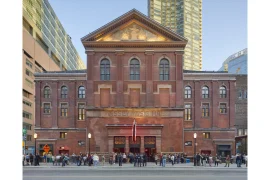
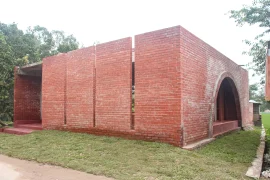
The new estate in the river port is adjacent to a historic power station. Constructed in the 19th century by Ivan Ignatov, a local merchant, steamboat, and machine plant owner, it was the first private power station in town. It illuminated the quay, the steamboat office, the merchant’s house, and a neighboring monastery. In operation until the 1980s, the building was designated as cultural heritage in 1994 due to its unique masonry and redbrick style, which was popular in Russia. However, by 2015, the building had fallen into disrepair and was neglected. It had rubble, weeds, crumbling walls, ruinous foundations, and a missing roof and windows. It was then auctioned and purchased by local entrepreneur Sergey Voblikov, known for restoring historic buildings and repurposing them for commercial use.

The restoration project faced challenges due to the surrounding garage clusters, industrial estates, and dilapidated houses. Even if the building was fully restored, it would have been difficult to give it a new purpose due to its location. However, with Brusnika’s redevelopment project launched in 2019, the neglected and depressed area around the power station was transformed. As a result, the power station was integrated into the new Riverport spatial environment during the master planning phase. A landscaped public square with recreational facilities will be constructed in front of the building upon completion.

The restoration of the power station took approximately seven years. The repair work involved strengthening the foundations, renewing the roofing and waterproofing, and restoring the brickwork. The architects then redesigned the interior to accommodate a different function. The core of the building, designed as an independent metal framework not connected to the outer walls, was transformed into a central mezzanine. The lower level now houses all utilities and rooms that do not require natural light, while the building’s perimeter remains open and double-height. Upon completion in 2022, the building received approval to house Brusnika’s office.

The interior design focused on preserving the exposed brickwork, which complements the facade. This technique, along with the large arched windows, enhances the historic mansion effect. The ground floor accommodates conference and negotiation zones, while the mezzanine hosts an open-plan administration office accessible by a spiral staircase. Some decorative elements in the interior reference the river port area, such as a geometric pattern on the entrance wall featuring portal cranes (which can be seen in the new housing estate). Numerous artifacts were discovered during the restoration process, including rails produced by a renowned plant and bricks with mason’s marks. These artifacts are carefully preserved to become part of the interior. Additionally, a building made up of several cargo containers, intended to be another historic river port exhibit, will be constructed in the area.