Inspired by the Japanese nisetai jutaku concept — dual family homes designed to house both older and younger generations — IDEOLOGIST sought to blend two modern homes into one seamless, functional living space.
Project Name: Jutaku-inspired house a simple blend of two residences
Studio Name: IDEOLOGIST

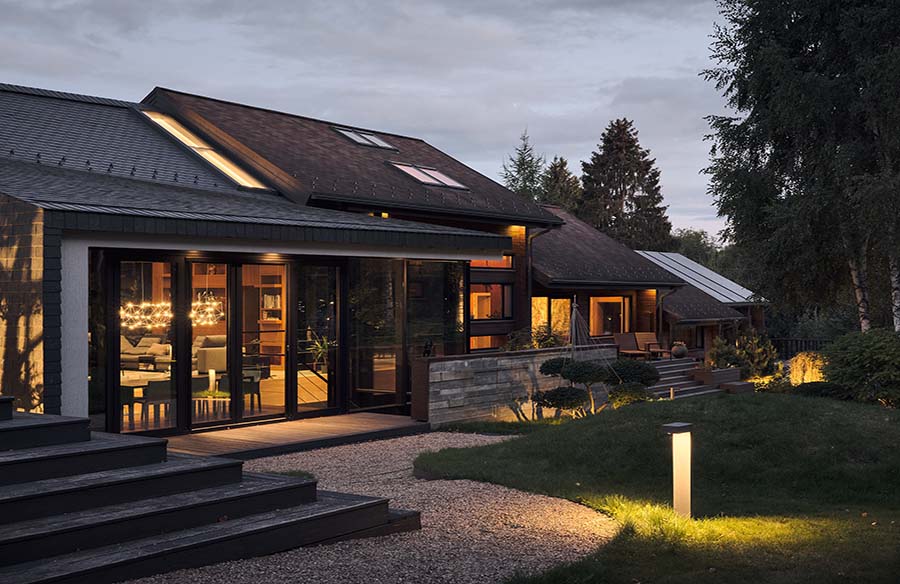
This residence reflects the traditional nisetai jutaku layout, offering separate entrances, private bedrooms, and kitchens, while being united by a spacious central living or dining area. This design allows for both communal living and personal privacy, enabling residents to come together and retreat as needed.

A key element of the design philosophy was the use of natural light to create a welcoming and versatile environment that mirrors the changing time of day, paying homage to the ephemeral yet enduring essence of Japanese architecture. To achieve this, elements like a skylight gallery, translucent roofing, and floor-to-ceiling windows were incorporated. These features change the interior atmosphere throughout the day, encouraging residents to connect and share experiences as the sunlight mildly changes.

Equally vital is the ambiance during the evening hours in the shared spaces. Thoughtfully chosen lighting transforms these areas into cozy, intimate settings where families can gather comfortably at night, preserving the inviting spirit of jutaku.
In line with the holistic well-being ingrained in Japanese culture, an ambient SPA zone was added to the home’s basement level. Natural light filters through a distinctive see-through floor and additional windows, creating a tranquil wellness retreat within easy reach of the home’s interior.

The design adheres to minimalist principles, emphasizing simplicity, functionality, and harmony. The furniture and decor were deliberately chosen to mirror the philosophy of merging two living spaces while maintaining coherence and unity throughout the home.

The project faced notable challenges in merging the buildings, especially on the sloped terrain, while ensuring a cohesive appearance and functionality. Inspired by the flexibility of Japanese architecture, careful adjustments to floor levels and the selection of compatible facade materials were made. These strategic choices resulted in a harmonious and unified living space, successfully integrating both sections of the home.