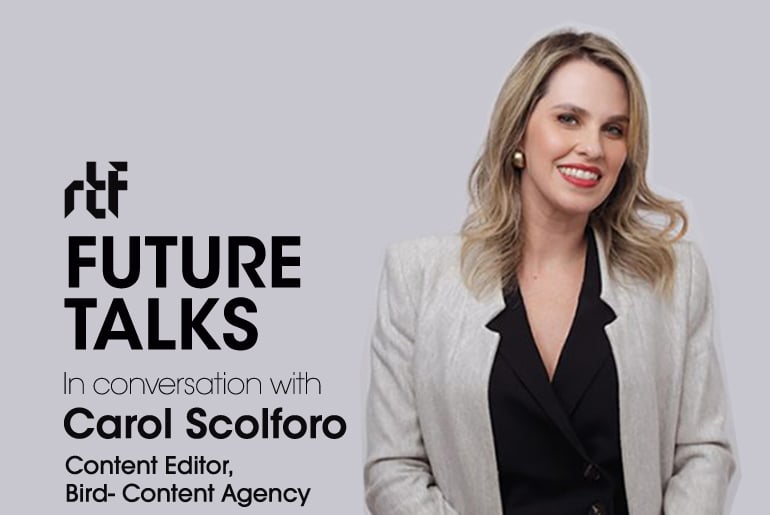
Starting from a daily newspaper in Brazil to becoming one of the leading contributors to the Architectural Journalism industry, Carol Scolforo has come a long way. While managing work, Carol has now also embraced the student life, where she is studying to earn a master’s degree in architecture at Usp, the largest university in Brazil. Carol Scolforo is a renowned architectural journalist, known for her profound insights and critical analysis of architectural trends, innovations, and the built environment. Her work has been published in prestigious architectural magazines, online platforms, and she has even authored a book on contemporary architectural practices.
In this exclusive interview, we have the privilege of delving into the world of architectural journalism with Carol Scolforo, an esteemed expert in the field. As we explore this fascinating realm, we will uncover the various parameters that shape architectural journalism, shedding light on its significance and impact on the world of architecture and design.
RTF: How did you first become involved in magazine and newspaper editing, and what inspired you to pursue this career path?
Carol: It was 2007, I worked in a daily newspaper of a smaller country near Sao Paulo and was a journalist like others. I felt I needed to be different, but nothing was happening for me. One day I interviewed a psychologist and she told me about researches about home and happiness. That was like an epiphany and I realized I had to write more about it and share it with the world. That’s when I started writing for a big magazine called Casa e Jardim (in a quick translation, House and Garden). At that time, they had an event called Happiness lives here, and very interesting people came to Brazil for talks – people like Selby, Trisha Guild – and I was there to interview them.
It’s been 16 years since I started to write about architecture, but I’m always interested in the relationship people have with their homes. Now I work as a collaborator for Casa Vogue and Uol, writing about houses everyday, and I have a content agency specialized in architecture. I love this world, that’s why I’ve been studying and starting a master’s program at Usp, the biggest university of Brazil.
RTF: Tell us about your role as a freelance editor and content editor at Bird. What does your typical day look like?
Carol: Bird is my content agency, but I always say it’s like a daily news, because me and my collaborators work hard, we have many deadlines to follow. Since we are a small team, 3 people working from their homes, we feel free and I think, more creative. We start organizing everything and then writing or shaping the content – we do websites, branded content, articles for Uol and Casa Vogue, for brazilian architecture practices and for building companies – from Brazil and now Hawaii (U.S.). I still work with digital products – courses and virtual mentoring, so I start the day at 9 am and finish at 7 pm.
RTF: How do you prepare content for publications?
Carol: First of all I receive some proposals from my editors, or send them a proposal (usually, residential projects). For Uol (website), I pick the projects and curate it, then I interview or receive the answers, write, edit and send it to be published. For Casa Vogue (print), the path is longer. We look for houses and dwellers with a relevant history, and it has to be related to the theme of the issue – september, for example, the theme is Art – then I have to wait for the shooting (and sometimes I go with the team, to interview), then I write a big text, edit. We have big and very detailed captions in Casa Vogue, so I have to be very careful in this part, and check everything. For the media, I work alone.
For the other clients and contents, I count on the team: they write, they do the design (for books) and it’s very stressful, since I work more as an art director. But I like it a lot (lol).
RTF: What are the most common challenges that you face when dealing with designers regarding the stories that you cover?
Carol: There’s a big challenge, because I’ve always noticed that they don’t read and don’t get involved with the content. They are always interested in the visual thing. To deal with that, I always do a very detailed briefing meeting, and work with the designers that I feel are more interested in the content and in the final result.
RTF: In a competitive media landscape, how do you stay relevant and engage with your readership effectively?
Carol: I think good stories are capable of that. A text that keeps it simple (clear) to be understood is important too.
RTF: What trends do you see emerging in magazine publishing, both in terms of content and distribution platforms?
Carol: I feel that transmedia – when you put the same story in different platforms but also using different languages – is something we have to look at. It’s hard to find a magazine that does this in an interesting way, and it’s expensive.
Infotainment is a trend, maybe: to inform, including a touch of fun.
RTF: Can you share an example of a particularly successful or impactful issue or feature that you’ve overseen as an editor? What made it stand out?
Carol: This recent story is about the apartment of Claudia Liz, who was a brazilian supermodel in the 90’s, now she’s an artist. This was interesting, because Claudia had asked me to do a plan to communicate about her apartment on Instagram, one year before. I made the plan, gave her the directions and she followed with her cameraman, script writer and photographer. Then, life made a loop: another photographer knew her apartment and brought the project to feature. Casa Vogue chose me to write, but they didn’t know about our story together before.
As I was an insider in this story, I didn’t know if there was some ethical situation, but I faced and wrote. I was afraid, because I had to write about her career, about her present moment and about the apartment, mixing it in 3.000 characters (this is the size of Casa Vogue’s articles). And she loved it, everyone said it had a good rhythm to read.
RTF: What is the most rewarding aspect of your job?
Carol: I think it is when people feel that I did a portrait with words. And they say it in different ways.
RTF: What advice do you have for aspiring magazine editors who want to break into the field or advance their careers?
Carol: I’d like to say: study! Don’t get immersed in your work without looking to the future. I have two kids, I work hard, but I feel I can be different now from the other journalists as I’m studying and doing a Master. It’s hard, exhausting, but in this semester I received 2 invitations to talks and to be a professor in a post graduation program. So it’s worth it.
RTF: The last question is for architects and writers which constitute a large part of our audience. What is the ideal length of a pitch? What is the ideal number of follow-ups to get your work published? What does an ideal pitch look like? What is the best and the worst way to approach journalists and editors for a story?
Carol: I think there’s a lot to do here, and one of my digital products is about teaching architects to do this approach. In Brazil, PRs work well, as they know the possibilities a project has to fit in each publication. It’s not a quick path, you have to build a relationship with the journalist, to show what you do. That can be done in many ways. In Brazil, exhibitions like Casacor are very good to do this approach.
I don’t know if there’s an ideal length for a pitch, but some 4 lines, maybe? I think 2 follow-ups (made by the PR) are good. I insist on the work of the PRs because the good ones study about each vehicle, and this makes a difference.
Best way to do an approach, in Brazil: call a journalist for a strategic fun experience. Worst way: send whatsapps with photos (believe me, they do that).