‘Amma, tell me a story. Please!’
I cannot imagine the number of times I have spoken this sentence in my life span of 24 years. And while Amma received it with adoration at first, she tells me that storytelling is for children; the real world relies on facts and not fiction. However, when does an adult abandon the world of stories? The truth is, we never surmount stories because our lives revolve around them. We connect with our surroundings through stories, most of which are passed down over time. They constitute us and continue to live within us. For over 27,000 years, since the earliest cave paintings, telling stories has been our most fundamental communication method.
Architecture and Storytelling
Storytelling is a strategic system of composition edited to transmit a message. In architecture, it represents a specific approach to design related to the human experience and the structuring and montage of spatial sequences with specific communicative aims. Architecture is a complex phenomenon. One can interpret it in various manners. For example, it can be understood by simple abstractions like plans and sections or as the relationship between more significant concepts of form-space-context. Alternatively, concepts of geometry, symmetry, rhythm, order and other such principles can explain it. It is an act of storytelling, an unfolding of a mystery that conditions one through a sequential unfolding of spaces (Pandya,2014).
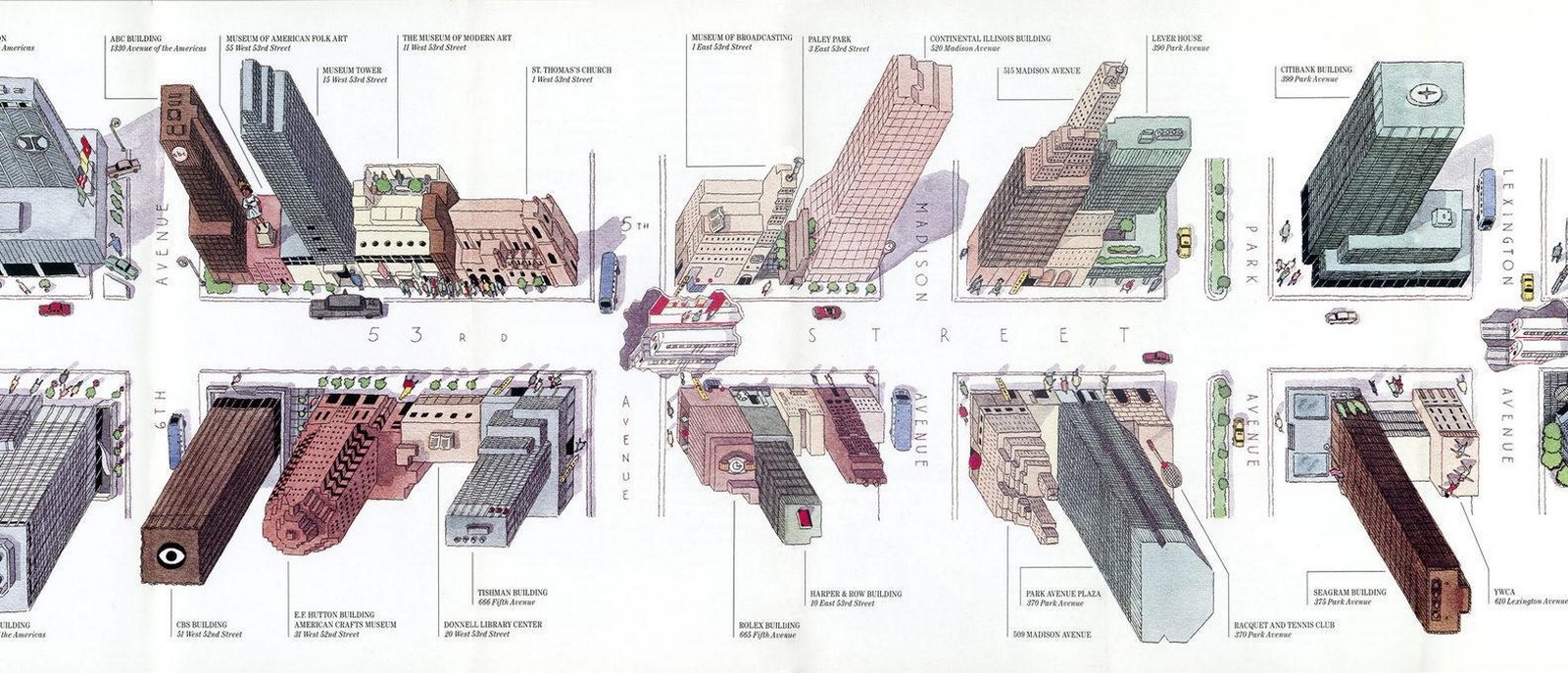
Adrian Forty says that the meaning of architecture lay solely in the immanence of its perception. He adds that architecture could represent nothing beyond its immediate presence. But what if the form follows feelings, and we amuse visitors with architectural stories? While it might seem erratic to discuss architecture as a form of fiction or vice versa, both have always made excellent companions. To support this notion, French philosopher Paul Ricoeur figured that architecture and narrative are two different ways of telling stories and make what is absent present.
Our education, still subdued with the Bauhaus principles, stresses that the form should follow function. However, 2000 years ago, Vitruvius proposed that ‘delight’ comes before ‘firmness’ and ‘commodity’. And any connection between architecture and fiction was unimaginable. While a writer tells a story in time, an architect builds a story in space. On both occasions, it manifests something in the physical or mental space that inhabits memories and experiences. It originates from the maker’s intellect, who has to plot it, structure it, and become part of somebody else’s life, establishing a relationship with it (www.smartcitiesdive.com, n.d.).
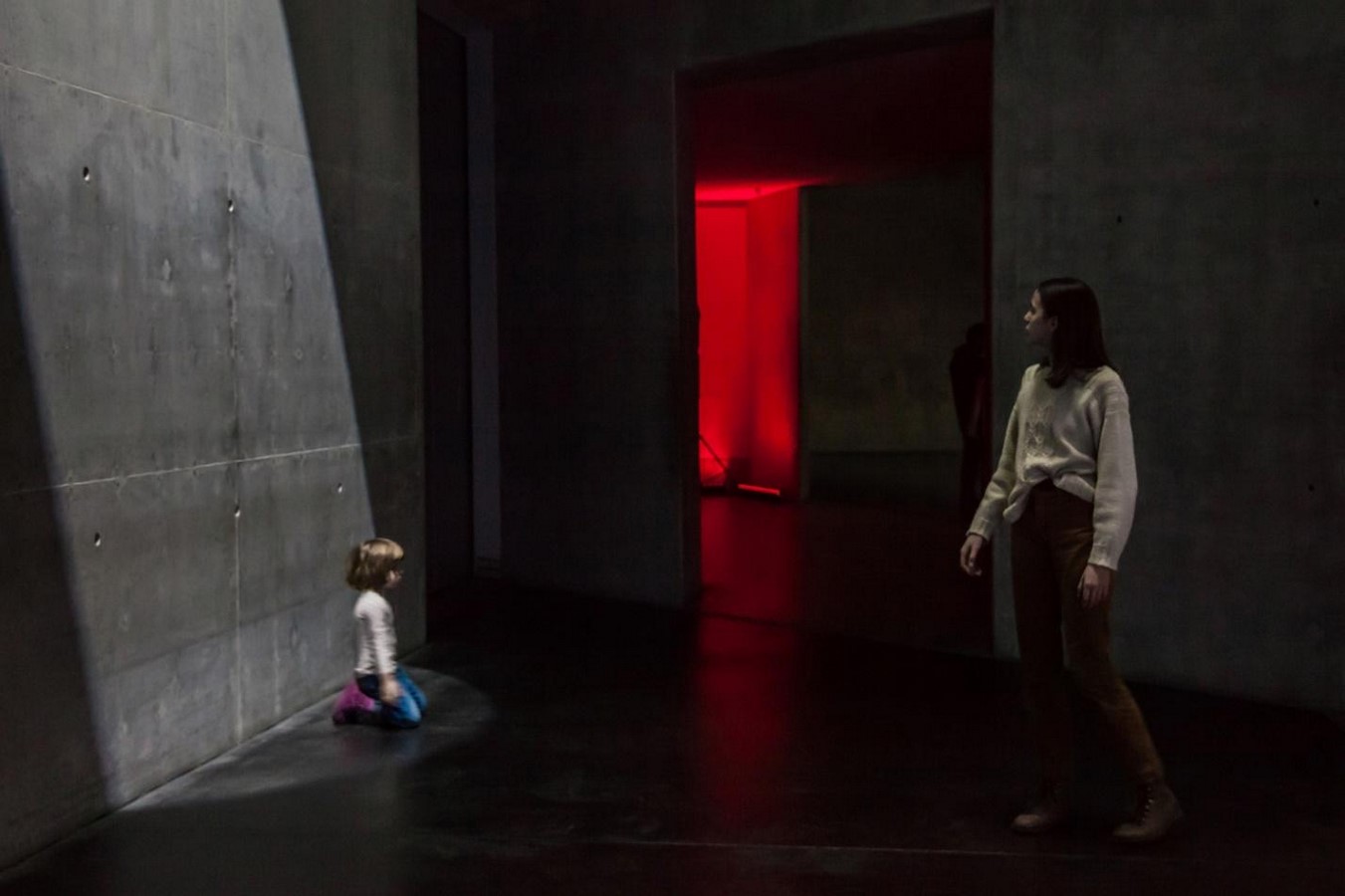
Architecture constantly tells stories, but often these narratives are one-dimensional, ‘flat’ representations. These stories comprise a single layer – style – a layer that reveals nothing of culture, history, or pride in a place but is instead rooted in economics and the desire to build things cheaply and quickly. For visual storytelling to occur in architecture, one must develop a multiple-layered language. A spatial language is required to fill in the story of a certain place. It is possible to say the appropriate stories – of the people who inhabit or have inhabited a place, the cultural history of a site, and evolution of use, building materials, and technology through this language.
A Venue for Narratives
Translating the concept of storytelling into form involves a spatial language that reveres the past, fits present needs and is adaptable to future use. The story of the site is constantly evolving, constantly growing, always changing. Likewise, the spaces created need to grow and change to relate to the area’s conditions.
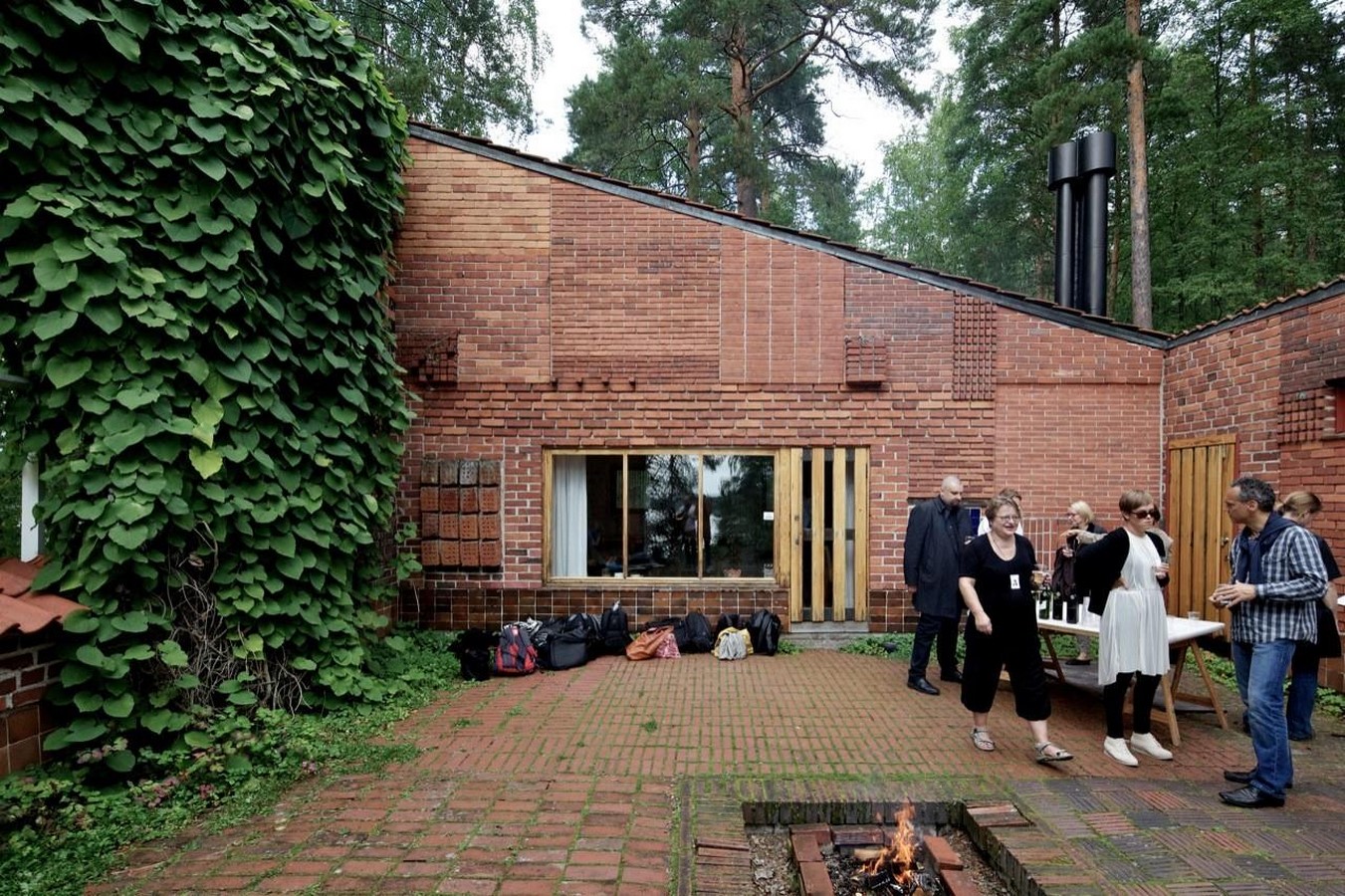
For buildings to tell the appropriate stories, they must create accommodating architecture. It should engage with the history of a site, respect existing conditions of a place, relate to present demands, and provide future use and adaptation prospects. Just as Aalto’s Summer House, Scarpa’s Castelvecchio, and Zumthor’s Gugalun House invite users and visitors to touch and explore the story, it is possible to create a new architecture to enhance the sense of being part of the story, and thus part of the past, present, and future.
Recording Stories
In many traditional buildings, stories regarding a specific religion were inscribed on the surfaces of spatial elements to deliver religious meanings. Early examples of visual storytelling are found in Ajanta, Sanchi and Ellora, with episodes from the Ramayana on the south face and the Mahabharata on the north face of the Kailasanatha temple. Visual retellings of the epics and Puranas are popular on the South Indian/Deccani temples of the Cholas, Late Chalukyas, and especially the Hoysalas. The latter adorned their temples with intricately carved narrative friezes. In this example, architecture provides a background for visualizing the narrative and articulates its implied meaning through the spatial structure and building materials and the manifestation of light.

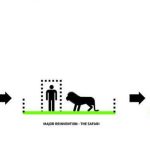
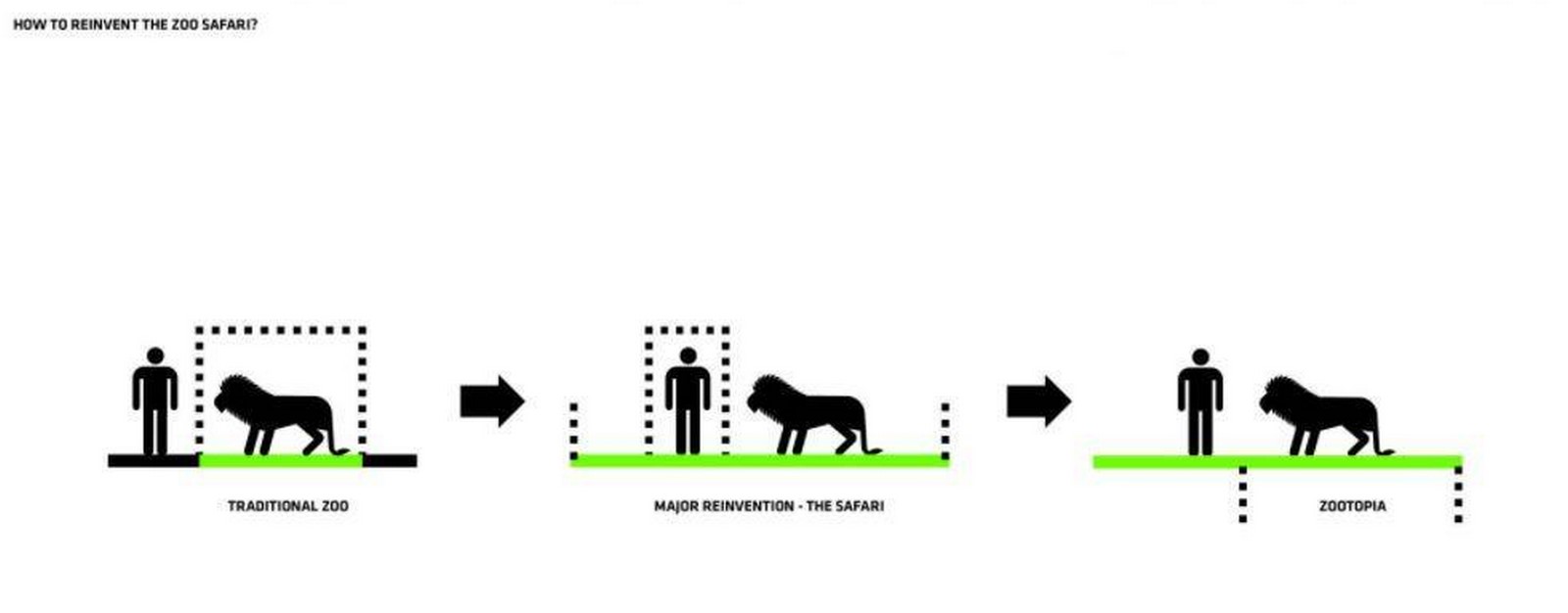
Bjarke Ingels, at a relatively young age, has become a celebrity architect who is working on projects all over the globe. He describes his work as a combination of shrewd analysis, playful experimentation, social responsibility and humour. One of the most exciting things about BIG is its use of dead, simple diagrams. A diagram is a way of communicating ideas; many architects use them. However, BIG uses them to create a narrative around each project. Every project is presented using diagrams that outline the process used to arrive at the final design. You never see the final product; you see the steps involved in the process.
Storytelling in architecture demonstrates that every design outcome has a logic behind it. The form is not the form for its sake; it results from the process, function, context, and so on. At the same time, it also taps into a more profound psychological phenomenon- people love stories. Research shows that when a story is told, our brains become more active, paying close attention. It changes how we perceive a situation. That person who came over from a distressed background and built an empire from nothing? Now that is a good story!
References
www.smartcitiesdive.com. (n.d.). The Importance of Storytelling | Smart Cities Dive. [online] Available at: https://www.smartcitiesdive.com/ex/sustainablecitiescollective/importance-storytelling/282861/ [Accessed 18 Jun. 2021].
issue 1, G.G. | F. | P. in Clad. 2017 (n.d.). Architects & Fiction: Delve into the world of architectural fiction | CLAD. [online] www.cladglobal.com. Available at: https://www.cladglobal.com/architecture-design-features?codeid=31275.
Molinari, C. and Bigiotti, S. (2015). The Storytelling in Architecture: A Proposal to Read and to Write Spaces. [online] brill.com. Brill. Available at: https://brill.com/view/book/edcoll/9781848883376/BP000019.xml [Accessed 18 Jun. 2021].
Jo, S. and Lee, K. (2007). Architecture as Narrative: On Bernard Franken′s Ruminations on Characterization, Integration, and Imagination. Journal of Asian Architecture and Building Engineering, [online] 6(2), pp.213–220. Available at: https://www.jstage.jst.go.jp/article/jaabe/6/2/6_2_213/_pdf [Accessed 18 Jun. 2021].
Wallace, C. (n.d.). Storytelling Through Architecture Storytelling Through Architecture. [online] . Available at: https://trace.tennessee.edu/cgi/viewcontent.cgi?article=2129&context=utk_chanhonoproj
[Accessed 18 Jun. 2021].
Tseng, C.-P. (2015). Narrative and the Substance of Architectural Spaces: The Design of Memorial Architecture as an Example. ATHENS JOURNAL OF ARCHITECTURE, 1(2), pp.121–136.
Kirsti Evans(1999) Visual Narratives in Indian Art: Scenes from the Mahabharata on the Hoysala Temples. South Asian Studies, 15:1, pp.25-40.