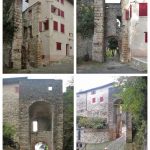
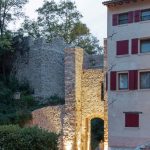
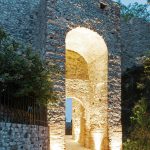
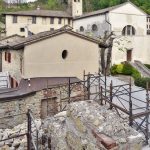
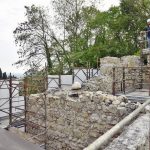
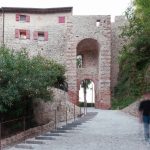
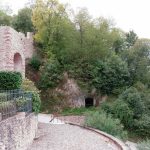
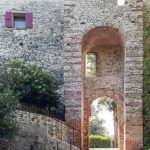
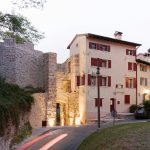
In a landscape positioned between the urbanized area, the medieval city and the rich vegetation of the hilly wooded area, the project for the conservative restoration of Portello Colmarion is located, in Asolo, in Veneto.
Architect’s Firm: Studio Bressan
Website: www.studiobressan.net
Lead Architect: Andrea Bressan
Location: Asolo, TV
End of Works: 2021
Category: Conservative Restoration
Customer: Public (Municipality of Asolo)
Surface: 55 mq
Volume: 275 mc
Dimensions: 11 m x 5 m x 5 m
Photographs: Emanuele Bressan │www.studiobressan.net
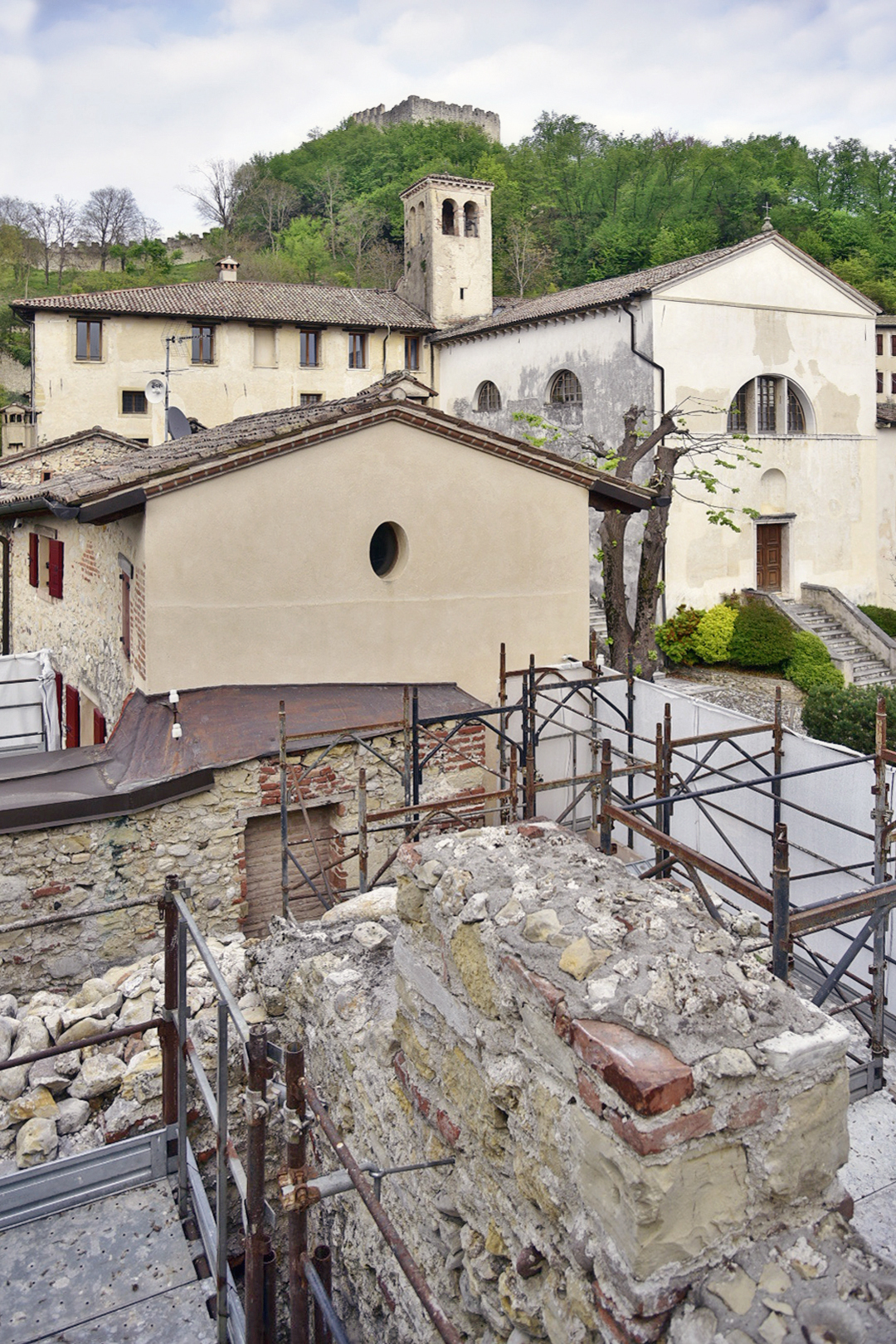
The element of the gate belongs to the fortified walls of the XIV. The area hosting the intervention, located at 379 m above sea level, allows you to enjoy a breathtaking view of the surrounding landscape, the mountains and the plain below.
Continuing with the restoration method previously carried out on the walls, the romantic image that enveloped the walls was abandoned, removing the weeds, in favor of a restoration aimed at better conservation and understanding of the building.
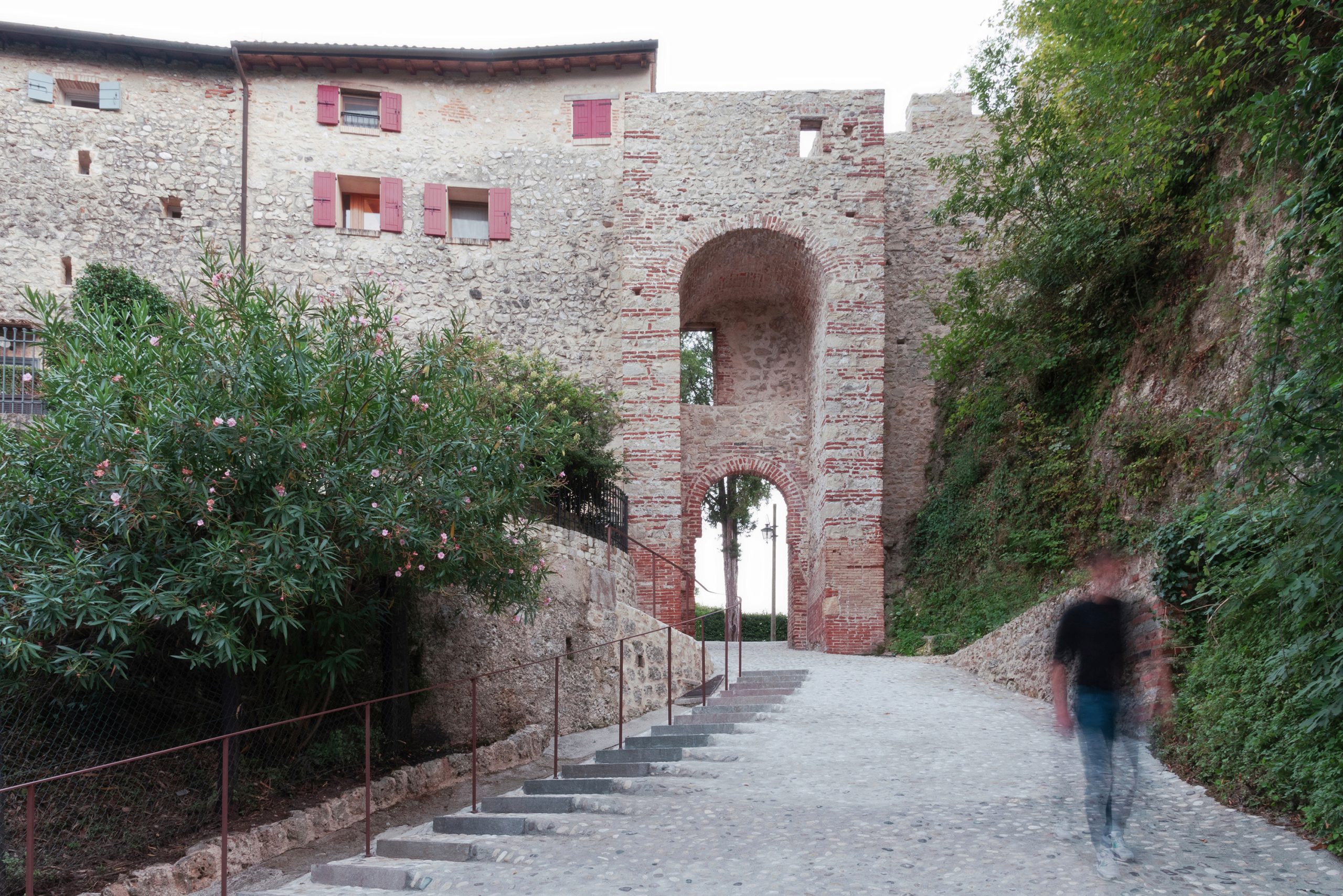
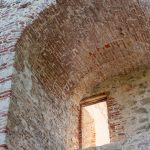
The Portello is made up of parts in bricks and stone ashlars with an incompletely defined shape. The preliminary analyzes carried out on the building have not found, apart from the degradation caused by the vegetation, any particular signs of structural failure. Following a devitalization and uprooting of the vegetation, an investigation was carried out on the stone materials, mortars and plaster present on the structure. Thanks to this, it was possible to better address the intervention through the addition of integrations and structural consolidation. In order to be able to bring the gate back to its splendour, studies have been prepared to be able to identify the original aggregates thus forming a conglomerate of fragments and a binder composed of silica, clay and limestone; typical way of operating in the past in the hills of Asolo.
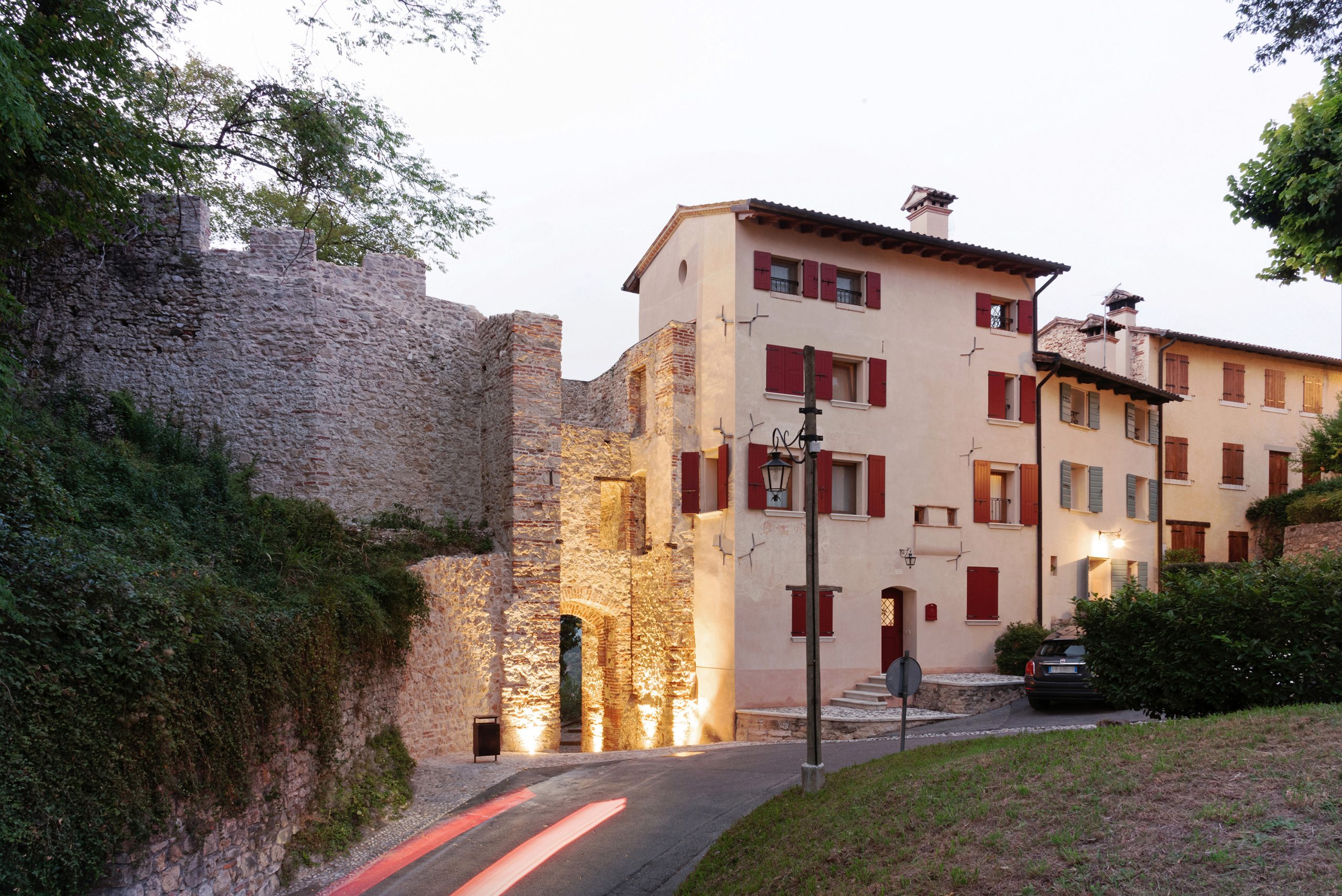
The appearance has been improved with the addition of an artificial lighting system and the remaking of the pavement made of river pebbles. Through the intervention, new pedestrian and cycle paths were defined by means of the insertion of a staircase, equipped with parapets for the steep slopes, located to the north-east of the gate.