For a long time, we’ve thought of buildings as solid, unmoving structures. But what if they could subtly shift and breathe, almost imperceptibly, to make us feel better? This idea is at the heart of “gentle sway” architecture. It’s a new way of thinking about buildings, turning them from static boxes into responsive, almost living spaces. The goal is to create environments that quietly nurture us, drawing on the natural comfort we find in gentle, rhythmic movements, much like a tree swaying in the wind.
The Hidden Life of Buildings: Subtle Movements All Around Us
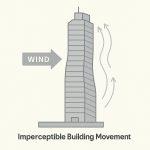
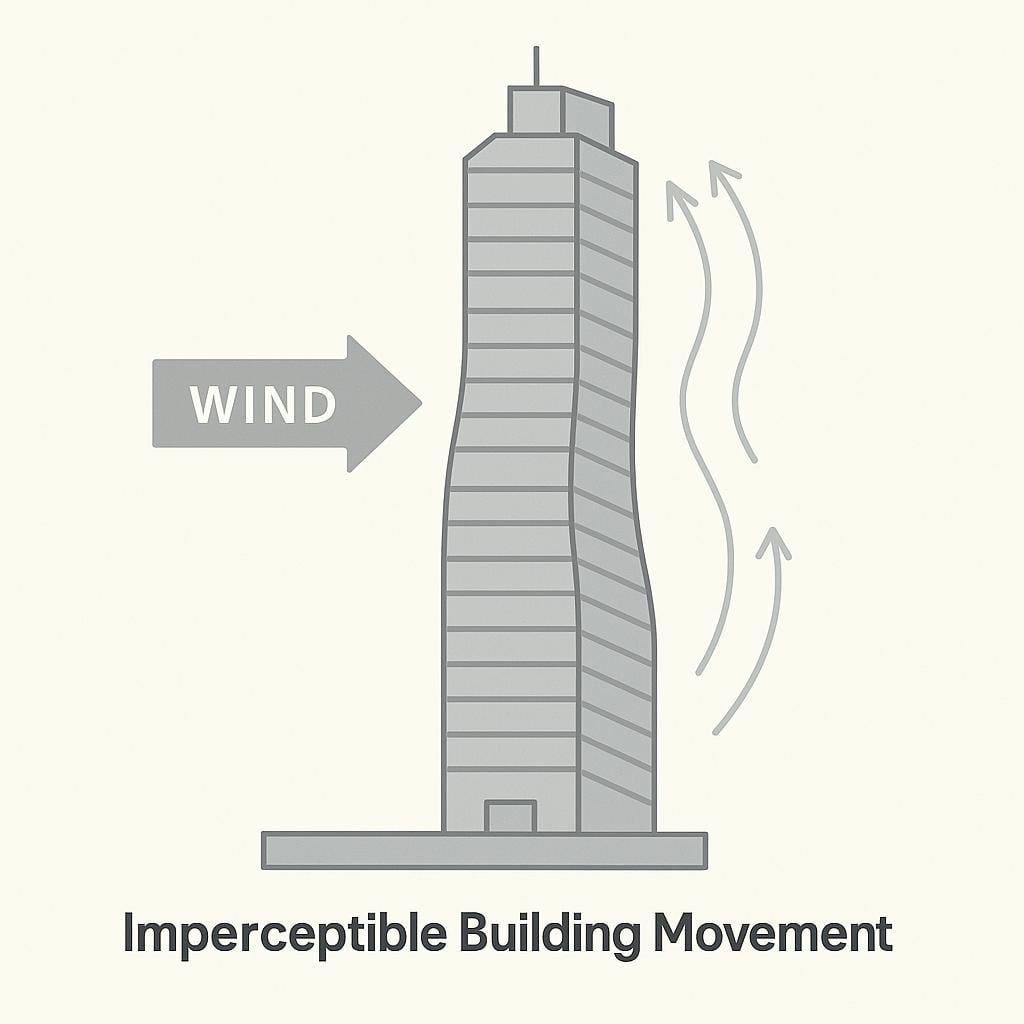
Even though we might not notice it, buildings move. “Gentle sway” in architecture refers to designing for the small, often unseen motions within a building or its components. It’s different from big, obvious moving structures; instead, it’s about a quiet, flowing movement, like a gentle breeze rustling leaves. These subtle shifts are often too small for us to consciously notice, but our bodies still register them, and they can impact how we feel, both physically and mentally.
Think about how a baby is soothed by rocking. Our bodies are surprisingly sensitive to even tiny movements. Studies on tall buildings show that even very slight, wind-induced motions, which we may not consciously feel, can sometimes cause people to feel tired or uneasy. This tells us that imperceptible movement isn’t always good or bad; it depends on how it’s designed. The trick for architects is to fine-tune these movements, their speed, size, and rhythm, so they create positive feelings and avoid any discomfort. This means buildings can act like a “silent communicator,” influencing us without us even realizing it.
Our senses are all connected. What we feel through touch can influence what we hear, for example, through vibrations. So, when a building subtly moves, it doesn’t happen in isolation. It interacts with other sensory cues, like how light falls in a room or how sounds echo. Designing for gentle sway means thinking about all these senses together, making subtle motion a quiet, harmonious part of the overall experience.
Feeling Good: How Subtle Motion Benefits Us
Designing buildings with intentional, subtle movements has a big potential to improve our well-being. It taps into our natural comfort with gentle rhythms. Just as soft, curved shapes in architecture can make us feel warm and safe, mimicking natural forms, gentle, rhythmic motion can bring a sense of calm and peace. This fits well with “biophilic design,” which aims to bring nature’s elements and processes into our buildings to boost our mental and physical health. It’s about creating spaces that feel connected to the natural world, where a gentle sway might remind us of a soothing cradle or rustling leaves.
Poorly designed spaces can make us feel stressed or anxious. On the other hand, spaces that include natural elements have been shown to reduce stress, improve mood, and even help us think more clearly. By carefully adding subtle motion, architects can create spaces that don’t just function well, but actively help us feel more peaceful and energetic.
“Neuro Architecture” focuses on engaging all our senses to create environments that support healing and productivity. When subtle movement is part of this, it can tie everything together. A gentle, unnoticeable sway might change how light dances on surfaces, alter how sounds travel, or even provide a soft, grounding touch that makes us feel more connected to space. It’s like a quiet symphony of sensations, where subtle motion contributes almost invisibly to a richer, more immersive experience.
When buildings subtly respond to their environment or even to the people inside them, it can create a unique feeling of “architectural empathy.” Just like subtle body language helps build trust between people, a building that quietly “breathes” or “sways” might make us feel like it’s alive and responsive to our needs. This dynamic responsiveness goes beyond just being practical; it helps build deeper emotional connections and a stronger sense of comfort and belonging.
Smart Materials: The Building Blocks of Movement
Making gentle sway architecture a reality relies on new, smart materials that can respond in subtle ways. These materials are designed to change their properties when something in the environment shifts, like temperature or humidity.
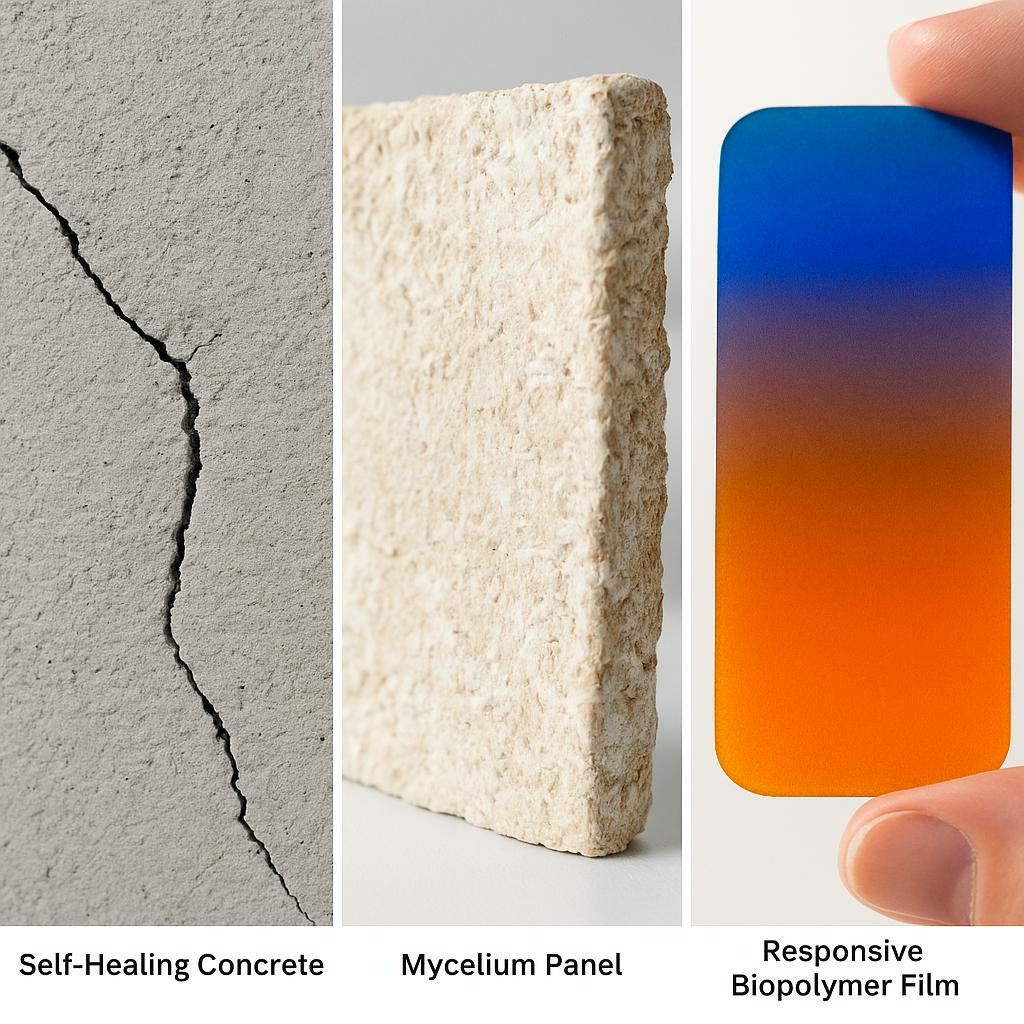
Think of materials that can change their shape when it gets warmer or cooler, helping to control sunlight and airflow without needing a lot of energy. Or materials that can change color or how transparent they are based on temperature, helping to regulate heat and light inside a building. There are even materials that can subtly expand or contract when humidity changes, acting like a “breathing” skin for the building.
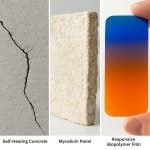
Beyond these “smart” materials, there are also “biomaterials” inspired by nature. Some can even “self-heal” tiny cracks, like a living organism. Others, like materials made from fungi (mycelium), can be grown into shapes and offer sustainable, lightweight options. The idea is to move away from static, unchanging building parts to dynamic ones that have a kind of “material intelligence”. The main challenge is making these advanced materials work reliably on a large scale for actual buildings.
Technologies That Make Buildings Dance (Quietly)
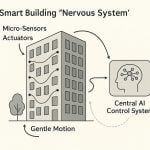
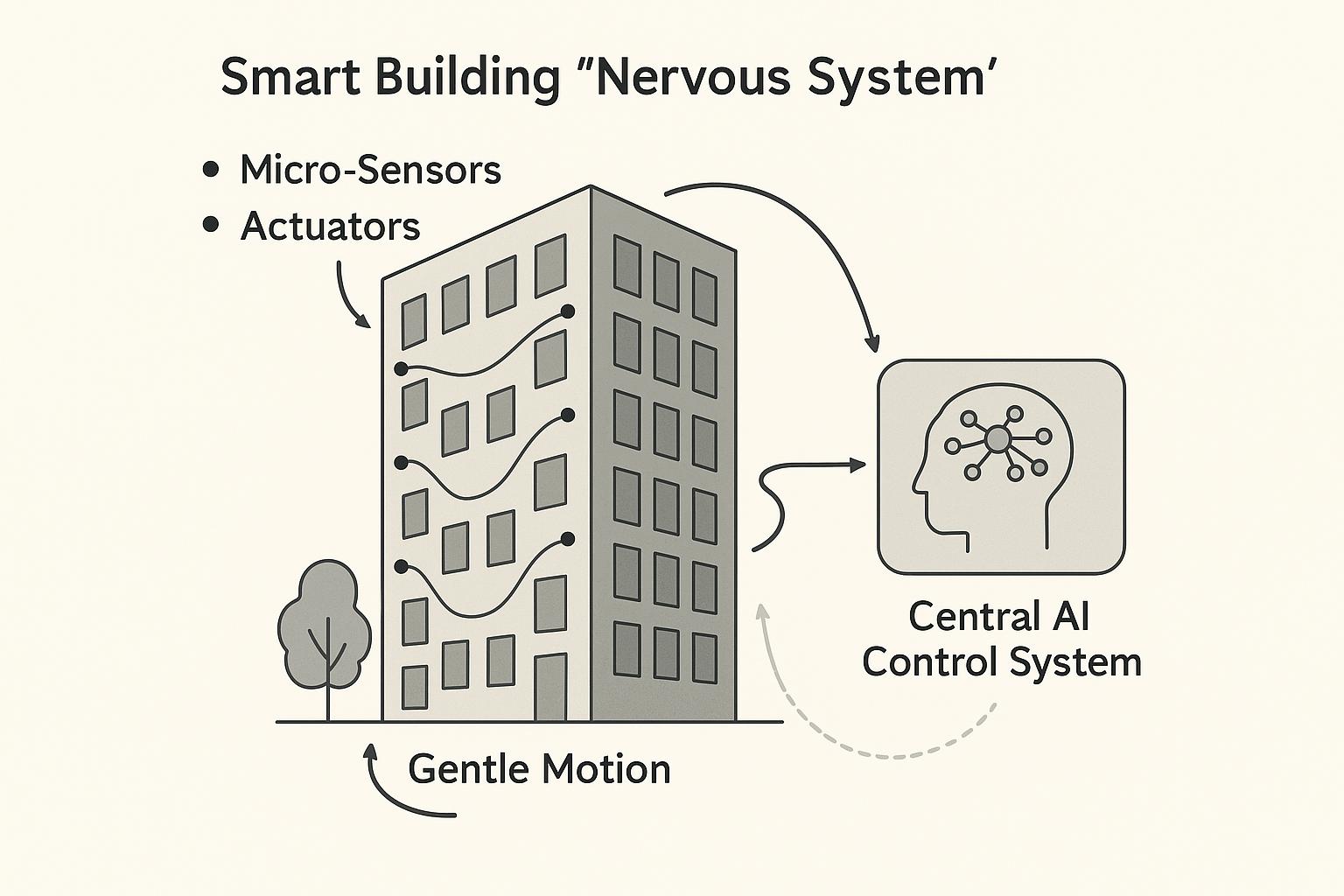
The dream of gentle sway architecture comes true with clever technology. We’re talking tiny motors, called micro-actuators, that can make super-precise, subtle movements in building elements, like a window panel adjusted by just a hair. Then there are smart sensor networks, acting like the building’s nervous system, constantly gathering information and tracking incredibly small movements, even less than a millimeter, to ensure any sway stays within comfortable limits. When these sensors and tiny motors are combined with Artificial Intelligence (AI) and smart control systems, buildings become truly dynamic and “thinking” spaces, learning from patterns and adjusting things like heating, cooling, and lighting on their own for personalized comfort and efficiency.
This blend of technology and living systems is leading to exciting new possibilities. We’re seeing “bio architecture” that uses nature’s principles in design, and even “synthetic biology” that can create “programmable living materials” or biologically “grow” entire buildings. Imagine building facades with algae that generate energy and absorb CO2, or smart facades that adapt to sunlight using responsive materials. The ultimate vision is for future cities where buildings “breathe and adapt,” becoming resilient parts of the urban environment.
Building for a Living Future: Hurdles and Human Questions
Making gentle sway architecture a common reality means facing some real-world challenges.
First, there are practical and regulatory hurdles. It’s tough to produce these new, dynamic materials and systems on a large scale for big construction projects. They can also be more expensive upfront than traditional materials, even if they save money in the long run. Plus, our current building codes are designed for static structures, not dynamic living ones. We need new, flexible rules that can keep up with these innovations.
Then there are ethical questions, and how society accepts these ideas. When we put living organisms into buildings, we need to think about things like biosecurity; could engineered organisms escape or cause unexpected problems? There are also questions about whether AI in design could lead to biases. And how will people feel about buildings that are subtly “alive”? Public perception can be tricky; sometimes we prefer neat, uniform greenery over more complex, natural ecosystems. Addressing these concerns means open research, clear ethical guidelines, and honest conversations with the public.
Harmonizing Our Spaces with Ourselves
So, imagine buildings that aren’t just still structures, but lively, responsive friends in our lives, really helping us feel good. The cool thing about “gentle sway” architecture is that it uses tiny, often unnoticed movements to make us feel more connected and comfortable. Think about how a gentle rock can calm you down, these subtle shifts in a building can do the same, easing stress and helping us focus, all by working with our senses like sight, sound, and touch. And guess what makes this possible? Awesome tech like smart materials that can subtly change, tiny motors for super precise movements, and AI systems that let buildings actually sense and react in real-time. This means our spaces can offer personalized comfort and be super efficient, showing that the future is all about smart, subtle tweaks, not big, flashy changes. Of course, it’s not all smooth sailing; we’ve got challenges like making these new materials widely available, updating old building rules, and figuring out the ethical side of things. But by teaming up across different fields, we can make sure these tech advances truly benefit everyone. Ultimately, the success of gentle sway architecture boils down to how well it serves us. It’s about creating buildings that don’t just sit there, but truly “breathe, adapt, and evolve” with us, making us feel more at home and connected to our ever-changing world. This even means architects might become more like “nature’s curators,” guiding this beautiful dance between human design and the natural world.
References:
Actuonix. (no date) Micro Linear Actuators. Available at: https://www.actuonix.com/micro-linear-actuators (Accessed: 5 August 2025).
Al-Kodmany, K. (2018) ‘A review of the effects of architectural stimuli on human psychology and physiology’. Journal of Environmental Psychology, 59, pp. 104-118.
Evans, G.W. (2003) ‘Mental Health and the Built Environment’. Journal of Environmental Psychology, 23(2), pp. 113-125.
Finkelstein, C. (2024). Architectures of Vibration. PhD dissertation, Princeton University.
Geo-instruments. (2025) Wireless Geotechnical Sensors | Monitoring – Trimble Geospatial. Available at: https://geospatial.trimble.com/en/products/hardware/wireless-geotechnical-sensors (Accessed: 5 August 2025).
Healthline. (no date) Postural Sway: What It Is, Causes, and More. Available at: https://www.healthline.com/health/fitness/postural-sway-adhd (Accessed: 5 August 2025).
Kothari, P. (2025) ‘The Healing Power of Sensory Architecture: From Theory to Practice’. Medium, 27 July. Available at: https://medium.com/@Architects_Blog/the-healing-power-of-sensory-architecture-from-theory-to-practice-c576f2ef06ad (Accessed: 5 August 2025).
SoAD Showcase. (no date) Observation tower: Sway in the wind. Available at: https://soadshowcase.kmutt.ac.th/work/observation-tower-4/ (Accessed: 5 August 2025).
WBDG. (no date) Accommodating Movement in Building Design. Available at: https://continuingeducation.bnpmedia.com/architect/courses/construction-specialties/accommodating-movement-in-building-design-1 (Accessed: 5 August 2025).
World Bio Market Insights. (2025) The shape-shifting biomaterials that make buildings move. Available at: https://worldbiomarketinsights.com/the-shape-shifting-biomaterials-that-make-buildings-move/ (Accessed: 5 August 2025).