
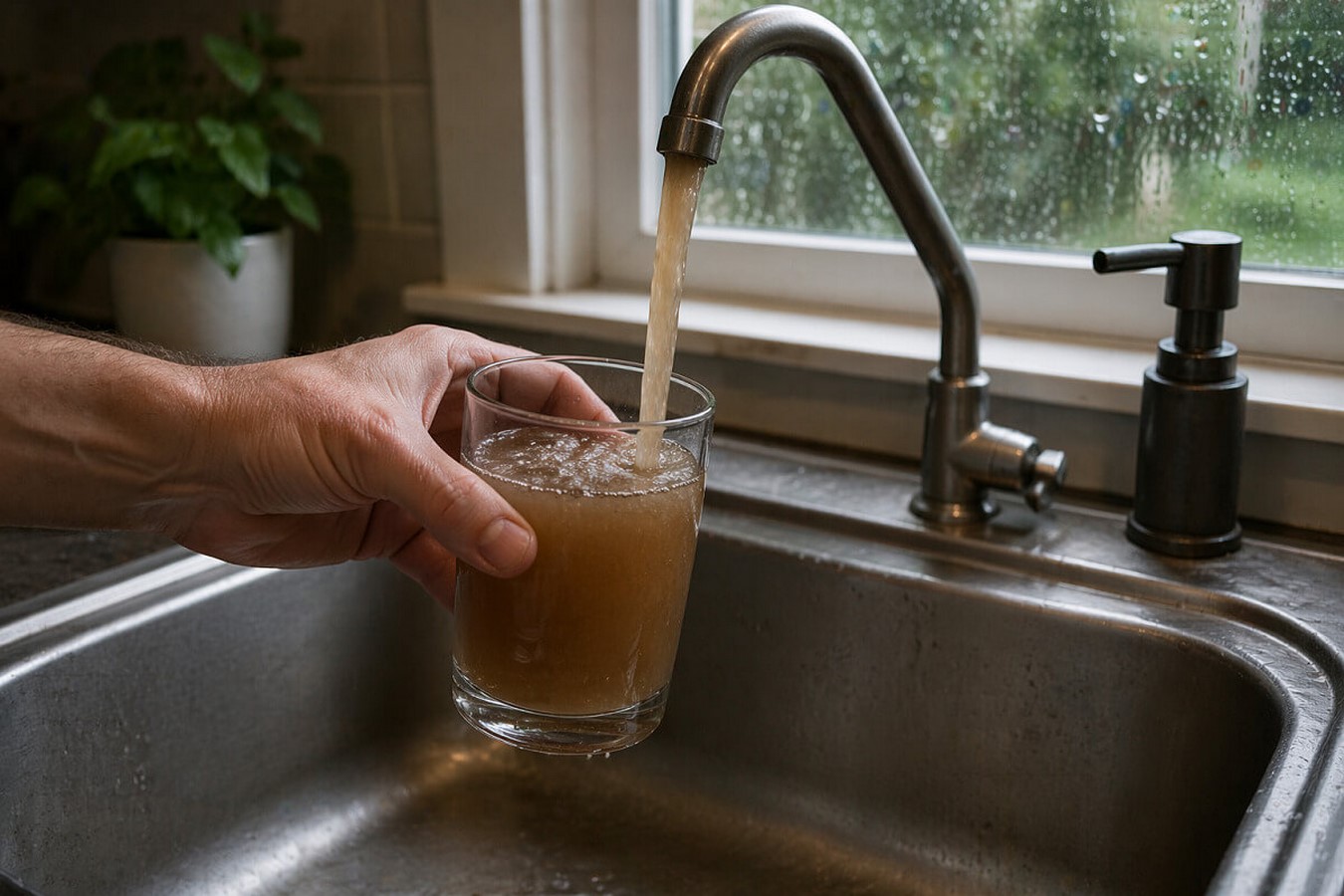
It happens to a lot of homeowners. The rain comes down hard for few hours and the next morning the water from the tap looks a little off. It has a brownish tint or there is a faint earthy smell. You run it for a minute, it seems to get a little better and you tell yourself it is probably fine.
Sometimes it is. But a lot of the time that discolored water is a sign that something has changed in your well system and ignoring it can turn a small problem into a much bigger one.
So Why Does Rain Affect Well Water at All
Most people assume their well water is completely sealed off from whatever is happening at the surface. And under normal circumstances it should be. Your well casing and wellhead are supposed to act as a barrier between the surface and your underground water supply.
But casings crack. Seals wear out. And in older homes especially those in rural Pennsylvania, some wells were never properly sealed to begin with. When that barrier breaks down, heavy rain can push sediment, clay, organic debris and bacteria straight into your water supply. Professionals call this surface infiltration. You call it brown water.
There is also another way it can happen. When a lot of rain falls quickly, the water table rises. That rise can stir up sediment that has been sitting quietly at the bottom of your well for years. Either way you end up seeing it at the tap.
The Color Actually Matters
Not all discolored well water is the same and what you are seeing can point you in the right direction.
- Brown or muddy water usually means sediment is getting in. This is the most direct sign that surface water has found its way into the well whether through a cracked casing, a loose wellhead cap or poor drainage around the well itself.
- Yellow or amber water is often tannins. These are natural compounds that come from decaying leaves and plant matter and they tend to show up more in shallow wells after heavy rain. Not a health emergency in most cases but worth investigating.
- Reddish or orange water usually points to iron. Rain can disturb iron rich clay layers in the aquifer and push them into the water column. High iron does not just look bad. It stains laundry, corrodes fixtures and creates conditions where iron bacteria can take hold.
- Cloudy or milky water can sometimes mean a bacterial bloom has occurred following contamination. This one should not be ignored. If this is what you are seeing, get it tested before drinking it.
Should You Be Worried About What Is in the Water
 Here is the part that matters most. If surface water is making it into your well, it is not just bringing color and sediment with it. It can also be carrying E. coli, coliform bacteria, nitrates from fertilizers and other contaminants that you cannot see, smell or taste.
Clear water on a normal day does not mean your well is safe if the casing has been compromised. Understanding how surface water and building-level water systems interact can help you appreciate why protecting the well barrier matters so much.
The only way to actually know what is in your water is to test it.
If your water has turned color after a storm, especially more than once, getting a water test done is the smart move. A basic test covers coliform and E. coli. A more complete panel will look at nitrates, iron, pH and hardness. Until you have those results back, it is a good idea to use bottled water for drinking and cooking.
What Sediment Is Doing to Your Pump
Most homeowners think about the water quality side of this problem, which makes sense. But there is a mechanical side too.
Every time turbid water moves through your system, it passes through your submersible pump. Those pumps are built for clean groundwater not for carrying sand and silt. Fine particles wear down the impellers, clog the intake screen and put stress on the motor. If this has been happening over multiple storm seasons, the pump has likely taken more wear than you realize.
A technician who handles water well pump repair will often find that sediment damage is the real reason a pump failed earlier than expected. It is not always old age. Sometimes it is years of turbid water that quietly did the damage.
What You Should Actually Do About It
If this has happened once and the water cleared up quickly, keep an eye on it. If it is happening repeatedly or taking a long time to clear, that is when you need to act.
- Get the wellhead inspected. A licensed well contractor can check the seal, the casing and the drainage around the well. If there is a gap somewhere, they will find it.
- Check the grading around your well. If rainwater is pooling near the wellhead instead of draining away from it, that is a problem that can be fixed with some simple regrading.
- Consider upgrading the well cap. Older caps on aging wells often do not seal properly. A modern sanitary cap keeps surface water, insects and debris out.
- Test your water at least once a year. Pennsylvania does not regulate private well quality. That responsibility sits with you and the right tools and technology for water monitoring can make staying on top of it much easier.
Do Not Just Wait for It to Clear Up
Brown water after rain is one of those things that is easy to dismiss, especially when it seems to get better on its own. But if it keeps coming back, your well is telling you there is a real issue with the barrier between your water supply and the surface world.
Getting it inspected early costs a fraction of what contamination cleanup or an emergency pump replacement will run you. Take the discoloration seriously, get the water tested and have a professional look at the well before the next big storm comes through.