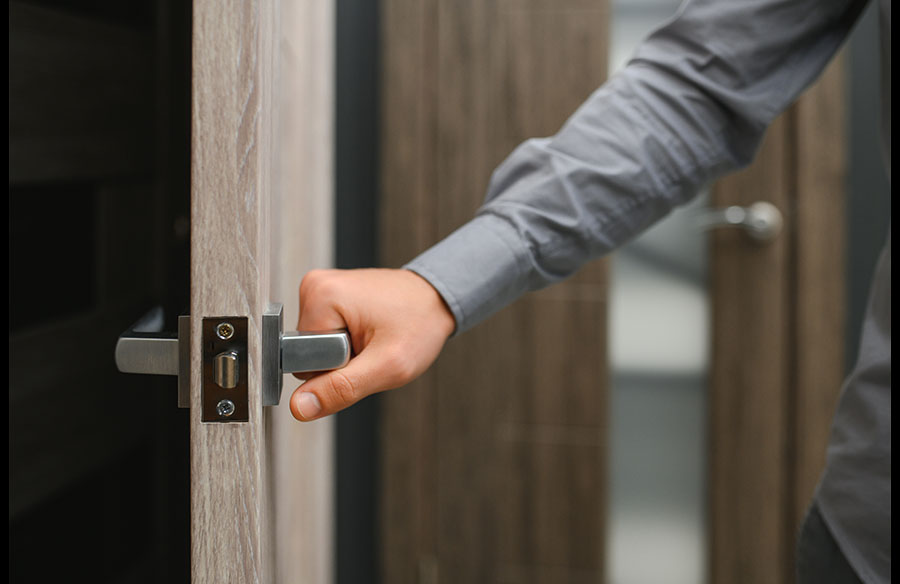
Door hardware is one of those details you touch every day but rarely think about—until it squeaks, tarnishes, or starts looking out of place. Most people spend time choosing the “style” of a handle (lever vs knob, modern vs traditional), yet the finish is often treated as an afterthought: pick something that matches the taps, job done.
In reality, finish is doing three jobs at once. It sets the visual tone, it determines how the hardware ages, and it influences how much maintenance you’ll be signing up for. Get it right and your doors quietly elevate the whole space for years. Get it wrong and even a beautiful handle can look tired within months.
Finish is both a design decision and a performance spec
A finish isn’t just colour. It’s a surface treatment with a particular chemistry and thickness, applied by a particular process, over a particular base material (brass, zinc, stainless steel, aluminium). Those variables affect everything from corrosion resistance to how fingerprints show up.
The “invisible” factors: traffic, touch, and cleaning products
Think about the doors you use most: the front door, kitchen, hallway, shared office doors. They get constant contact, and contact is abrasive. Add cleaning sprays—especially anything acidic or bleach-based—and some finishes will dull quickly.
High-contact areas tend to reward finishes that are:
- hard-wearing (resistant to micro-scratches)
- stable in colour (less prone to UV shift)
- tolerant of frequent wiping (less likely to cloud or peel)
That’s why a finish that looks flawless in a showroom can disappoint in a busy home or commercial setting.
The “visible” factors: light, undertones, and the rest of the room
Finishes read differently depending on lighting temperature and nearby materials. A brushed nickel that looks calm in daylight can feel cold under warm LEDs. Matte black can look architectural on a white door, but softer and almost charcoal against dark paint.
If you’re coordinating with hinges, escutcheons, locks, and even nearby cabinetry hardware, finish consistency matters. “Close enough” can turn into “why does that look off?” once everything is installed.
Know what you’re actually buying: common finish types (and how they behave)
People often shop by name—“satin brass,” “polished chrome”—but the method matters as much as the look. Two items described the same way can wear very differently.
Plated finishes: crisp, reflective, and common for a reason
Electroplated chrome and nickel are popular because they’re clean, consistent, and relatively tough. They also suit modern and transitional interiors. The downside? On lower-quality products, thin plating can wear through at edges and high-touch points, revealing a different tone beneath.
Lacquered vs “living” brass: do you want change, or consistency?
Brass is where expectations often diverge. Some people want brass to stay bright and uniform. Others want it to mellow and darken.
- Lacquered brass aims to freeze the look in time. It can stay stable for longer, but once the lacquer is compromised (chips, scratches), patina can develop unevenly.
- Unlacquered (“living”) brass is designed to evolve. It will oxidise with air and moisture, and it will show handling—sometimes beautifully, sometimes messily, depending on your taste.
If you’re still deciding on form factors as well as finishes, it helps to understand the broader landscape before you narrow down a spec. This overview is a useful companion when comparing options: learn about different types of door handles. Style and finish choices are intertwined more than most people expect.
PVD and powder coating: modern workhorses for durability
Two finishes you’ll hear more about now than a decade ago:
PVD (Physical Vapour Deposition) creates an extremely hard coating (often used for “stainless look,” black, or brass tones). It’s valued for scratch resistance and colour stability. It tends to perform well in busy environments, including hospitality.
Powder coating is a baked-on finish common in matte black and custom colours. A good powder coat can be very durable, but it’s not invincible—sharp impacts can chip it, and cheap formulations can fade or feel chalky over time.
Match finish to environment, not just taste
The same handle can have wildly different lifespans depending on where it’s installed.
Coastal or high-humidity spaces
Salt air and humidity accelerate corrosion. In these environments, stainless steel (especially marine grades) and robust coatings often outperform softer plated finishes. Bathrooms and pool-adjacent areas deserve similar caution—steam and cleaning routines take a toll.
Commercial and rental properties
If hundreds of hands touch a door every day, you want predictability and ease of cleaning. Finishes that hide micro-scratches (satin, brushed) often age more gracefully than high-polish surfaces. It’s less about being “indestructible” and more about looking acceptable with realistic wear.
Homes with kids (or just busy households)
Fingerprints and small marks are inevitable. Matte and brushed finishes usually disguise them better. Polished chrome looks fantastic—until the light hits the smudges at the wrong angle.
A simple way to choose: ask the right questions up front
Before you commit, run through a quick reality check:
- What’s the highest-traffic door in the building, and what finish will still look good there in two years?
- Will you accept patina and change, or do you want a consistent appearance?
- How will the finish look under your actual lighting (daylight + evening)?
- What cleaning products will be used, and are they compatible with the finish?
- Are you matching existing hardware, or setting a new “finish direction” for the space?
That short list prevents most finish regret.
Maintenance: the unglamorous part that protects your investment
Even the best finishes benefit from gentle care. The biggest enemy of door hardware isn’t time—it’s harsh chemicals and abrasive cloths.
What generally works (and what to avoid)
A soft microfiber cloth with mild soapy water is usually enough for routine cleaning. Avoid scouring pads, gritty cleaners, and bleach-based sprays unless the manufacturer explicitly says they’re safe. Also, be careful with “multi-surface” cleaners: they’re convenient, but some leave residues that dull certain coatings.
If you’ve chosen an unlacquered brass or bronze, accept that the finish is meant to evolve. You can slow patina with careful wiping and minimal moisture, or accelerate it for character—but trying to keep a “living” finish perfectly uniform is a recipe for frustration.
The takeaway: finish is the long game
Door handles are small objects with outsized influence. You see them, you touch them, and they’re often the first physical interaction someone has with a room. Finish determines whether that interaction feels crisp and intentional—or a little worn-out and neglected.
So yes, pick a shape you love. But give finish equal weight. It’s the difference between hardware that merely matches your décor today and hardware that still looks right after thousands of turns, wipes, knocks, and seasons.